
The Causes of the Chornobyl (Chernobyl) Nuclear Disaster, and Where Things Stand Today
On April 26, 1986, the world’s worst nuclear accident occurred at the Chornobyl (Chernobyl) Nuclear Power Plant. A huge quantity of radioactive material was released into the atmosphere, and residents nearby were forced to evacuate.
This article explains the background to the Chornobyl disaster, its effects on the natural environment and on people, and the situation there today.
If you want to know about Chornobyl today, or want to compare it with the Fukushima nuclear accident, please use this as a reference.
Where Is Ukraine’s Chornobyl Nuclear Power Plant?
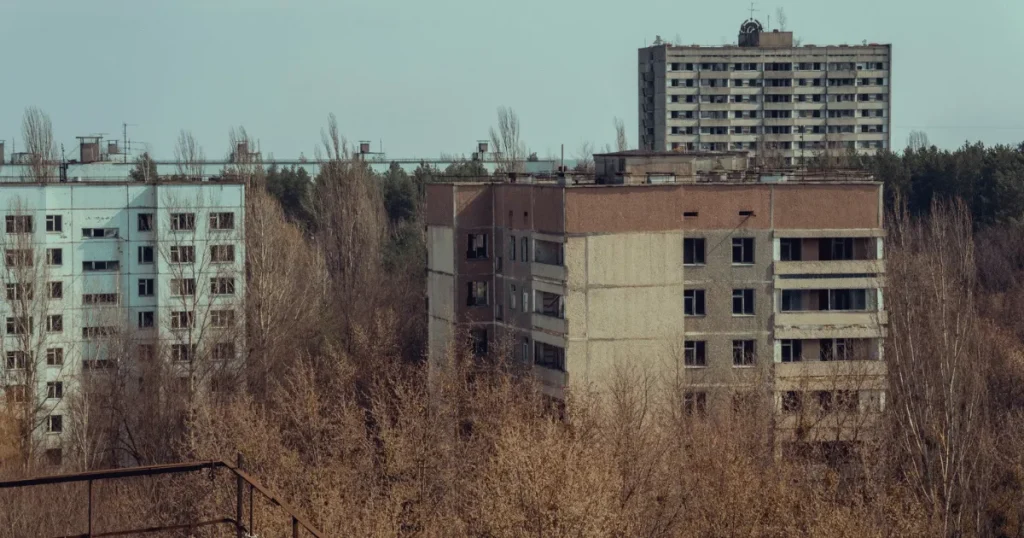
The Chornobyl Nuclear Power Plant is located in northern Ukraine, in an area close to the border with Belarus.
Before the accident, 45,000 people lived in the city of Pripyat, home to the plant’s employees and their families.
Because this area, centered on the Pripyat River, was farmland, the accident dealt a serious blow not only to the natural environment but to the everyday lives of the people living there.
After the accident, the area was designated an exclusion zone, and all residents within a 30-kilometer radius were forcibly evacuated.
Habitation has since been restricted in this zone, and it has been transformed into a place where nature and wildlife live freely.
Radioactive material from the Chornobyl plant was carried by wind toward the northwest, spreading as far as Belarus and other European countries.
The Causes of Ukraine’s Chornobyl Nuclear Disaster
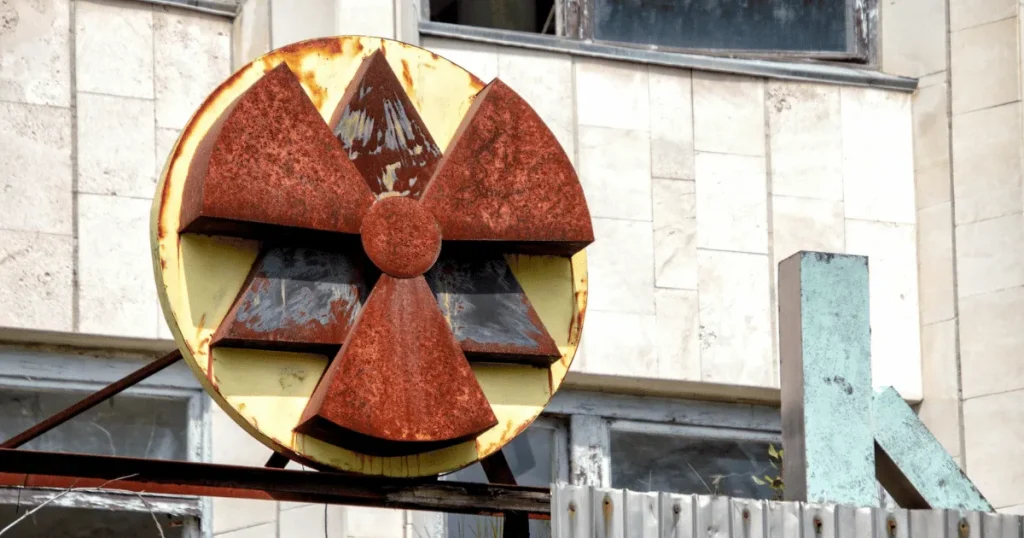
The Chornobyl disaster resulted from a combination of structural problems, technical problems, and human error. In particular, the RBMK-type reactor used at the time had design flaws that contributed to the accident.
Errors of judgment by the operating staff on the day of the accident, and the management system, were also key factors in failing to prevent the accident from escalating.
Structural Problems in the Reactor, and System Errors
The cause of the Chornobyl accident lay in the reactor’s structure. The Soviet-designed RBMK-type reactor in use had a serious weakness in its cooling system.
The RBMK reactor uses water as a coolant, using the resulting steam to turn turbines and generate electricity.
However, it has been pointed out that if the coolant does not circulate properly, there is a risk that the reactor’s reaction can become uncontrollable.
On the day of the accident, a test of the emergency power supply system was being conducted as part of routine maintenance.
Operators were manually controlling the system and reducing the flow of cooling water to lower the reactor’s output, but in the process, the circulation of coolant became unstable, and the reactor, which should have been shutting down, instead began to run away.
An emergency shutdown was carried out to bring this under control, but the structural problem worked against it and instead triggered a chain reaction. Pressure ultimately rose sharply, and the reactor exploded.
Human Error and Problems in the Management System
In addition to the technical flaws, human errors of judgment were also a major factor causing the accident.
On the day of the accident, the plant’s operating staff were carrying out a planned test, and in the process, operations that disregarded safety standards were carried out, including the following.
- The test was conducted at a lower output than planned
- A scram signal that should have been triggered when the turbine was disconnected had been bypassed by the operators
- The scram signals for water level and pressure had been disconnected
- The ECCS (Emergency Core Cooling System) had been disabled
The former Soviet Union’s rigid management structure also contributed to the accident’s escalation.
Operators on site are said to have had no choice but to carry out their work under pressure from higher-ups and excessively bureaucratic instructions, leaving them unable to make their own judgments to avoid risk.
As a result, the response to the emergency was delayed, and the explosion could not be prevented in its early stages.
The Response to the Chornobyl Disaster, from Then Until Now
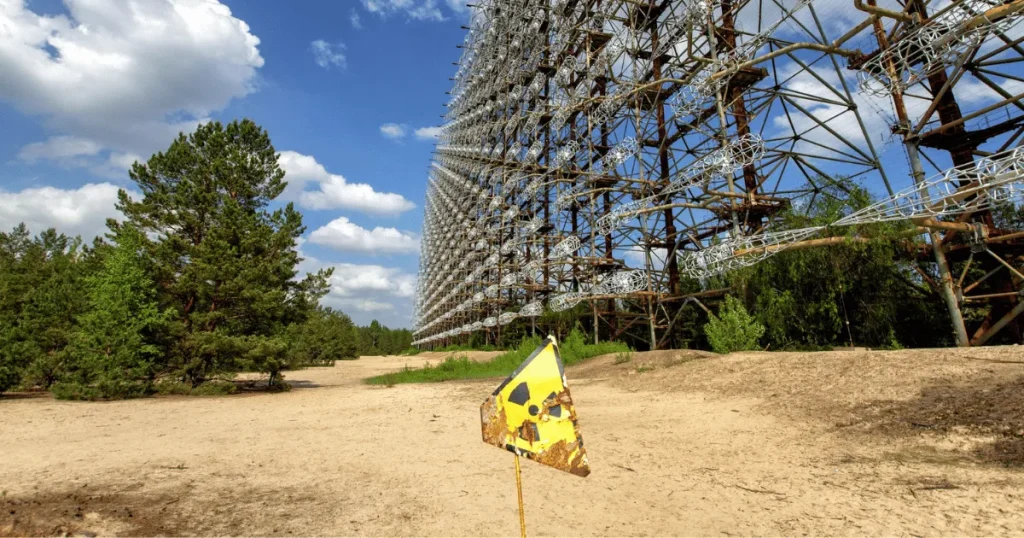
From immediately after the accident to the present day, the Soviet Union at the time, and later Ukraine, have continued for many years to work at minimizing the accident’s effects.
The response, from immediately after the accident through to decommissioning, is technically complex and long-running, involving containment of radiation and management of the affected area.
Here is an explanation of the progress made, from the emergency response right after the accident to where things stand today.
The Emergency Response Right After the Accident
Reactor No. 4 at the Chornobyl plant exploded, releasing a huge quantity of radioactive material into the air.
Firefighters and workers who rushed to the site right after the explosion were forced to fight the fire and cool the reactor without adequate protective equipment.
Because of this delayed initial response and inadequate protection, the workers were exposed to high doses of radiation, and as a result 134 people developed acute radiation syndrome (ARS).
Radiation levels at the site were especially high right after the accident, and some workers received a lethal dose in a short time, but their efforts extinguished the fire and prevented further explosions.
However, evacuating nearby residents was not simple.
It was not until the day after the accident that all 45,000 residents of Pripyat finally began to evacuate.
Until then, residents had continued their normal lives, and had barely been informed of the radiation danger from the accident.
As a result, many residents absorbed high concentrations of radiation, and the risk of thyroid cancer from radioactive iodine rose sharply among children.
The Sarcophagus, and Construction of the New Shelter
After the accident, a structure called the “sarcophagus” was built to cover Chornobyl’s Reactor No. 4 and prevent the spread of radioactive material.
This sarcophagus was installed to contain the leakage of radioactive material from the accident, but because it was built hastily, it was not suited to containing radiation over the long term.
Starting in the 1990s, the sarcophagus began to deteriorate, and the risk of radioactive leakage grew.
So a more robust structure that could ensure safety over the long term, the “New Safe Confinement (NSC),” was planned.
This enormous arch-shaped shelter was completed in 2016, fully covering Reactor No. 4, and sits over the sarcophagus.
The NSC is expected to contain radiation for 100 years, making it one of the key protective measures put in place after the accident.
The New Safe Confinement is also equipped with facilities that allow remotely operated decommissioning work. Immediately after Russia’s full-scale invasion, the area around the plant was occupied by Russian forces, and was retaken in March 2022. On February 14, 2025, according to a statement by Ukrainian authorities, the shelter was damaged and a fire broke out following a Russian drone attack. The IAEA confirmed that the fire had occurred, and reported that radiation levels were normal and stable.
On November 27, 2025, the IAEA announced that it had sent additional staff from its Department of Nuclear Safety and Security to the Chornobyl plant, and had begun a comprehensive safety assessment of the damaged New Safe Confinement (NSC). In a statement on December 5 of the same year, the IAEA revealed the results of that assessment, completed the previous week: that the NSC had lost its major safety functions, including containment. On the other hand, it stated that the structures supporting the NSC and its monitoring systems had suffered no permanent damage. These IAEA statements do not identify who carried out the attack.
Emergency repairs have been carried out on the roof, but timely and comprehensive restoration is essential to prevent further deterioration and ensure long-term nuclear safety.
IAEA Director General Rafael Mariano Grossi, statement of December 5, 2025 (translated by the editorial team)
Based on this assessment, the IAEA recommended updating humidity control and corrosion-monitoring arrangements, and improving the automated monitoring system for the sarcophagus built right after the accident. The plan is to carry out additional emergency repairs in 2026 with support from the European Bank for Reconstruction and Development (EBRD), restoring the NSC’s containment function, with full-scale restoration to follow once the conflict has ended.
Decommissioning Work at the Chornobyl Plant Today, and Its Progress
Decommissioning work at the Chornobyl plant is still ongoing, and there is no clear timeline for its completion. In particular, disposing of the fuel debris (melted nuclear fuel) remaining inside Reactor No. 4, and highly radioactive waste, remains a challenge.
Decommissioning work carried out so far has included the stable storage of radioactive material, removal of contaminated soil, and building waste-treatment facilities.
However, full decommissioning will require continued monitoring and management going forward.
Decontamination work across the wider Chornobyl area is also still ongoing, carried out in cooperation between the Ukrainian government and international organizations.
Wildlife and Nature Affected by the Chornobyl Disaster

The Chornobyl disaster drove people away by spreading radioactive material over a wide area, but as a result, wildlife made a remarkable recovery.
With human intervention almost gone, the area around Chornobyl after the accident has become a case study in “rewilding,” transformed into a region where a diversity of plants and animals thrive.
Here is an explanation of how Chornobyl’s wildlife and nature have changed.
Wildlife Thriving After the Nuclear Disaster
The exclusion zone set up because of the Chornobyl disaster, off-limits to people for more than 30 years since the accident, has become one of Europe’s largest nature reserves as a result.
Large animals such as wolves, elk, and wild horses have bred remarkably in this zone, and the wolf population in particular has grown larger than in surrounding areas.
This increase in Chornobyl’s animal populations is thought to result from the effects of radiation being less severe than expected, combined with the removal of pressure from human hunting and land use.
The Chornobyl exclusion zone has become a “paradise of nature without people” for animals, and researchers view it as an “accidental experiment,” studying in detail how ecosystems recover.
The Red Forest, and Plant Recovery
In the Chornobyl area, plants have shown a striking recovery even while affected by radiation. A coniferous forest west of the plant turned red and died, and became known as the “Red Forest.”
However, in other areas, a diversity of trees and plants grew over the decades after the accident, forming new ecosystems.
Through this “rewilding of nature,” the once-monotonous vegetation has evolved into a more diverse and stable forest ecosystem.
What is especially interesting is that, beyond new forests forming through the power of nature, plants with radiation tolerance have also survived.
Even under the environmental stress of radiation, plants have adapted, and some species have been observed continuing to grow while absorbing radioactive material.
The regeneration of nature after the Chornobyl disaster stands as a symbolic example of nature’s resilience, and remains an important subject for future ecological research.
Health Damage After the Chornobyl Disaster

The Chornobyl disaster did not just have a major effect on the environment and ecosystem; it also caused serious harm to people’s health.
Radiation exposure right after the accident caused severe short-term health harm to many residents and to the many people who worked on decontamination, and in the longer term, increased cancer rates and psychological effects have also become apparent.
Here is an explanation ranging from the acute effects right after the Chornobyl disaster to the long-term health risks.
Short-Term Health Harm to Residents
Right after the Chornobyl accident, the firefighters and workers who fought the fire at the site were exposed to intense radiation.
Because of this, they developed acute radiation syndrome (ARS) right after the accident, and 28 people died in 1986 alone.
ARS occurs when a person is exposed to high radiation over a short period, and symptoms such as loss of appetite, vomiting, skin burns, and immune deficiency appear rapidly.
Workers and residents who rushed to the accident site received high doses of radiation in a short time after the accident, and many were affected by that exposure.
Also, the spread of radioactive iodine caused a sharp rise in the risk of thyroid cancer, especially among people who were children at the time.
Radioactive iodine reached children through the milk and meat of dairy cows and accumulated in the thyroid, greatly increasing their cancer risk.
Long-Term Health Risks and Increased Cancer Rates
Even now, decades after the accident, the long-term health harm from the Chornobyl disaster continues.
According to data from Japan’s Ministry of the Environment, childhood thyroid cancer began appearing four to five years after the Chornobyl disaster, and had increased more than tenfold by ten years afterward.
Fortunately, early detection and treatment have succeeded in many cases, keeping the death rate low, though it is not unusual for patients to continue taking medication for the rest of their lives to compensate for reduced thyroid function.
In addition, leukemia and other cancers have also been reported as long-term risks after the accident.
In particular, the workers known as “liquidators,” who responded on-site after the accident, are said to have faced an increased risk of leukemia and other cancers from prolonged exposure to high radiation.
However, it is difficult to determine whether a given case of cancer results from radiation, and long-term epidemiological research is needed.
Comparing the Chornobyl Disaster and the Fukushima Daiichi Accident
The Chornobyl disaster and the Fukushima Daiichi accident are both known as historic nuclear accidents that caused large-scale releases of radiation.
There were major differences between the two in terms of cause, scale, and response. Here is a comparison of the Chornobyl disaster and the Fukushima Daiichi accident, in terms of scale and how each was handled.
Differences in Cause and Scale
On the INES (International Nuclear and Radiological Event Scale), both the Chornobyl disaster and the Fukushima Daiichi accident are rated at the same Level 7.
The Fukushima Daiichi accident was caused when the tsunami triggered by the Great East Japan Earthquake knocked out external power and the cooling system.
The earthquake itself did not cause major damage to the reactors, but the tsunami halted all cooling functions, causing the cores to overheat and melt down.
At Fukushima, there was no explosion like at Chornobyl, but the loss of cooling function resulted in radioactive material leaking into the atmosphere and the ocean.
Although the international rating is the same Level 7 for both, the amount of radiation released at Chornobyl was far larger, and the affected area was far more extensive.
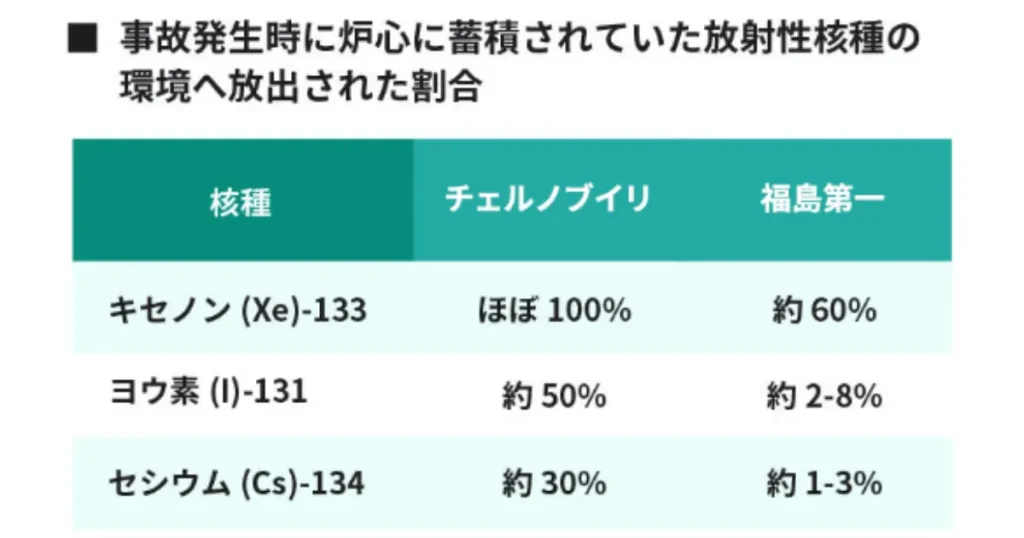
Source: Ministry of the Environment | About Fukushima Daiichi
Also, while a 30-kilometer radius around Chornobyl became a no-habitation zone, at Fukushima it was a 20-kilometer radius that effectively became a no-habitation zone.
Differences in the Response, and Lessons Learned
There were also major differences between Chornobyl and Fukushima in how each accident was handled. At Chornobyl, the Soviet government’s initial response was delayed, and evacuation orders for residents were not issued until the day after the accident.
This delay is said to have exposed many people to high levels of radiation, worsening the health harm.
At Fukushima Daiichi, by contrast, the Japanese government responded quickly, issuing evacuation orders immediately after the earthquake.
Once it became clear that the cooling system had stopped due to the tsunami, the evacuation zone for residents was quickly expanded, and evacuation was completed within a few days of the accident.
At Fukushima, cooperation with the international community was also arranged promptly, and international organizations including the IAEA (International Atomic Energy Agency) began providing support right after the accident.
How Should the Lessons of Ukraine’s Chornobyl Be Applied?
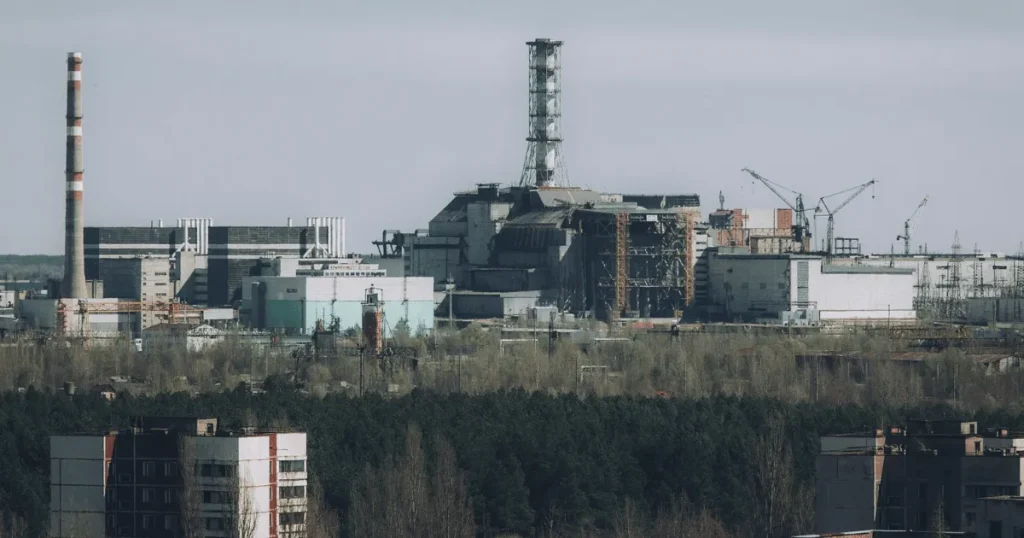
The Chornobyl disaster continues to have a huge historical and environmental impact.
The large-scale release of radioactive material right after the accident caused health harm such as increased childhood thyroid cancer, and caused serious environmental contamination in Ukraine and neighboring countries.
Even today, many areas remain no-habitation zones, and evacuated residents still cannot return home. Long-term health risks and the increase in thyroid cancer also remain unresolved.
However, the response after the accident and the construction of the new shelter have greatly reduced the spread of radiation, and nature is also recovering within the exclusion zone.
The lessons of the Chornobyl disaster serve as a warning for future energy policy and nuclear safety, and have points in common with the Fukushima Daiichi accident as well.
The world going forward needs new technology and stronger management systems to ensure nuclear safety.
Sources and article record
Sources and references
- Strike on Chernobyl: ‘No room for complacency’ says atomic energy watchdog
Published by UN News · Checked: 2026-09-23 - UNSCEAR 2000 Report, Annex J: Exposures and effects of the Chernobyl accident
Published by UN Scientific Committee on the Effects of Atomic Radiation (UNSCEAR) · Checked: 2026-09-23 - Update 331 – IAEA Director General Statement on Situation in Ukraineannouncement that the NSC assessment was complete, and that containment function had been lost
Published by IAEA · Checked: 2026-09-24 - Update 330 – IAEA Director General Statement on Situation in Ukraineannouncement of additional staff deployment and the start of the assessment
Published by IAEA · Checked: 2026-09-24
Corrections and updates
- Standardized the place name to “Chornobyl,” based on Ukrainian usage (the earlier spelling is given alongside it at first mention), and retitled the article (former title: “The Causes of Ukraine's Chernobyl (Chornobyl) Nuclear Disaster, and Where Things Stand Today”). The body content has not been changed.
- This article had stated that the release of radioactive material “caused health harm to millions of people,” but since this could not be confirmed, it has been changed to health harm such as increased childhood thyroid cancer. Regarding the exclusion zone, “no one is permitted to live there” has been changed to “habitation is restricted,” and the 2022 occupation by Russian forces and the February 2025 damage to the New Safe Confinement from a drone attack have been added.
- Added the results of the IAEA's December 5, 2025 assessment of the damage to the New Safe Confinement (NSC).
If you find an error in this article, please tell us via Corrections. Once we have checked it, we will record in the article what was corrected and why.