The History of Ukraine’s Economic Situation | IMF and International Support Explained
This article was published in July 2024, and its figures were revised in September 2026. The assumptions to state when citing wartime economic statistics (the area covered, the exchange rate, and whether a figure is an estimate or confirmed) are covered in Ukraine’s Economic Figures in Wartime — Telling Apart Scope, Exchange Rates, and Estimates.
Ukraine’s economy has weathered many difficult periods, from the turmoil after the Soviet collapse to the 2008 global financial crisis. Then, on February 24, 2022, Russia began its full-scale invasion of Ukraine. The large-scale fiscal support now underway is meant to cover the budget deficit that has resulted from this war.
This time, we explain the state of Ukraine’s economy from the Soviet era to today. The events since 2014 and the full-scale invasion of 2022 are treated as separate events.
Ukraine’s Economy Through the Turmoil of the 1990s
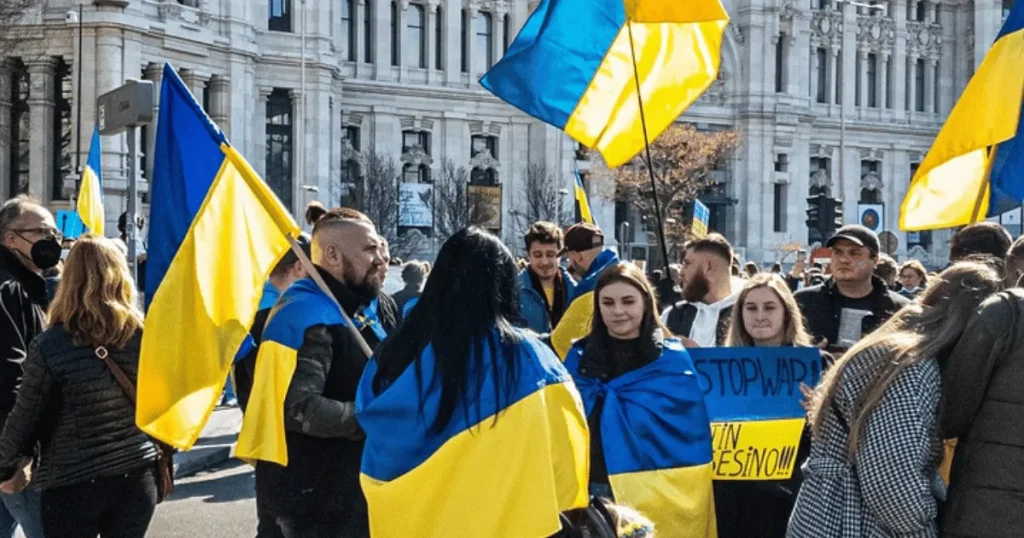
As part of the Soviet Union, Ukraine had carried heavy industry and grain production under the planned economy. But once it became independent from the Soviet Union, its domestic economy fell into major turmoil.
Here we explain Ukraine’s economy through the turmoil that lasted until 2000.
Ukraine’s Economy Under the Soviet Union
Under Soviet rule, Ukraine built up an important economic base. Heavy industries such as steel, shipbuilding, and aerospace were concentrated there, some tied to military production, and it was also an important region for grain production.
In particular, Ukraine’s steel and chemical industries played a key role in the Soviet economy.
However, because free market competition was restricted under the planned economy, there were limits to technological innovation and efficiency.
Furthermore, political repression and centralized management stripped Ukraine’s economy of flexibility — factors that could be said to have contributed to the collapse of the Soviet Union.
Hyperinflation After Independence, and IMF Loans
When the Soviet Union collapsed and Ukraine became independent in 1991, its economy fell into major turmoil. Rather than settling down, this turmoil worsened, and Ukraine was hit by severe hyperinflation.
In response to this crisis, the IMF (International Monetary Fund) extended loans on multiple occasions, helping stabilize Ukraine’s economy.
Ukraine’s Ministry of Foreign Affairs states that Ukraine has cooperated with the IMF since 1994, and that this cooperation has taken place under eight joint programs, including the STF (Systemic Transformation Facility), Stand-By Arrangements, and the EFF (Extended Fund Facility).
During this period, Ukraine gradually moved toward a market economy while aiming to join the international economic network.
Economic Reform in the 2000s, and the Lehman Shock
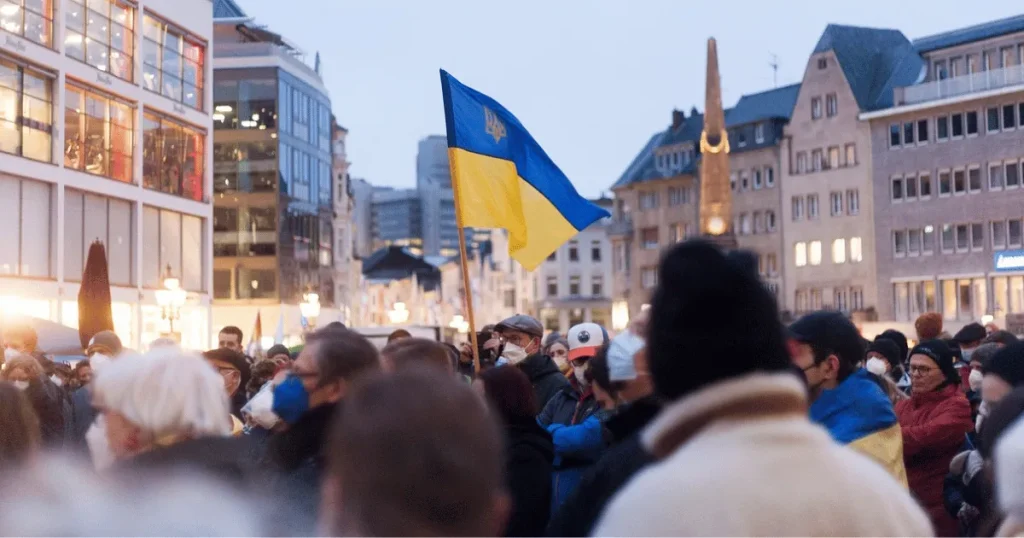
In the 2000s, Ukraine’s economy was working to rebuild itself. Amid this, the global financial crisis known as the “Lehman Shock” hit, and Ukraine’s economy once again faced a difficult period.
Economic Reform from 2000, and the Orange Revolution
In 2000, to rebuild its economy, Ukraine began market-oriented economic reforms under Viktor Yushchenko, who had become prime minister in December 1999.
These reforms aimed to move past the turmoil following the Soviet collapse and make a full transition to a market economy.
Looking at the World Bank’s real GDP growth rate (annual), Ukraine saw nine straight years of negative growth from 1991 to 1999. It turned positive at 5.9% in 2000, and then continued growing for nine straight years through 2008. The highest rate in this period was 11.8% in 2004 (World Bank indicator “GDP growth (annual %),” confirmed September 23, 2026).
However, these reforms had their limits. Deep-rooted corruption was not fully resolved, and collusion between politics and business remained an obstacle to economic development.
Also, in 2004, the “Orange Revolution” broke out, protesting fraud in the runoff round of the presidential election. The Supreme Court ruled that fraud made it impossible to determine the true result and ordered the runoff to be rerun, which was held on December 26 of that year.
Because the direction of reform sometimes changed with a change in government, carrying out a long-term economic strategy proved difficult in Ukraine.
The Impact of the 2008 Lehman Shock
The 2008 Lehman Shock also dealt a serious blow to Ukraine’s economy.
This was because the global financial crisis caused demand for steel products — one of Ukraine’s main exports — to plummet, sharply reducing export revenue.
Beyond the slump in stock markets, an outflow of foreign capital also dealt a major blow to Ukraine’s economy.
To respond to this crisis, the Ukrainian government once again requested IMF support. The IMF extended emergency loans, but imposed strict conditions on Ukraine.
Specifically, these included restructuring the banking sector, cutting the fiscal deficit, and reforming the energy sector. While these measures helped stabilize the economy, cuts to public spending and subsidies increased the burden on people’s daily lives.
The 2009 Gas Dispute
The gas dispute with Russia that broke out in 2009 dealt a further blow to Ukraine’s economy.
This dispute arose from a conflict between the two countries over gas pricing and transit, and as a result, Russia’s gas supply to Ukraine was temporarily halted.
This supply halt had a severe effect on Ukraine’s industrial activity. Energy-intensive manufacturing and the chemical industry in particular were hit hard.
It also directly affected ordinary people’s lives, disrupting heating in households.
This series of events raised questions about the sustainability of Ukraine’s economic development, pointing to low energy efficiency, excessive dependence on certain industries, and domestic political turmoil.
In the late 2000s, Ukraine was forced to rebuild its economy while facing both a financial crisis and energy problems.
Austerity in the 2010s, and Russia’s Occupation of Crimea

In the 2010s, Ukraine again found itself seeking support. Here we explain the austerity measures tied to its arrangement with the IMF, and Russia’s occupation of Crimea.
The IMF Arrangement Around 2010, and Austerity
Around 2010, as part of rebuilding its economy, Ukraine concluded a new Stand-By Arrangement with the IMF.
This agreement was essential to stabilizing Ukraine’s economy and pursuing structural reform.
To receive this loan, the Ukrainian government again accepted strict conditions, including cutting the fiscal deficit and reforming the public sector.
Specifically, these included restraining government spending, reviewing the pension system, and making the energy sector more efficient.
While these reforms were expected to put Ukraine’s economy on a sounder footing in the long run, in the short term they had a major effect on people’s daily lives.
In particular, cuts to the social security system and increases in public utility rates hit many citizens directly. With pension payments restrained and medical services cut back, the elderly and low-income households found themselves in a difficult position.
Although these measures were considered essential for rebuilding the economy, they also resulted in public dissatisfaction and backlash.
Russia’s Occupation of Crimea in 2014
In 2014, Russia occupied and unilaterally “annexed” the Crimean peninsula, and in the spring of that same year, fighting involving Russia began in the eastern Donbas region (in a July 9, 2025 ruling, the European Court of Human Rights found Russia responsible for human rights violations in this conflict since 2014). These events dealt a major blow to Ukraine’s economy. Note that these 2014 events are separate from the full-scale invasion of February 24, 2022, discussed later.
This is because, by occupying the Crimean peninsula, Russia deprived Ukraine at a stroke of an important tourism resource and economic base.
The Crimean peninsula was known as one of Ukraine’s major tourist destinations for its beautiful natural environment. Losing it not only greatly reduced tourism revenue but also had a severe effect on related industries.
Also, rights to develop undersea resources off Crimea were lost as well, taking away potential future economic development.
Economic Support from EU Countries to Ukraine Today
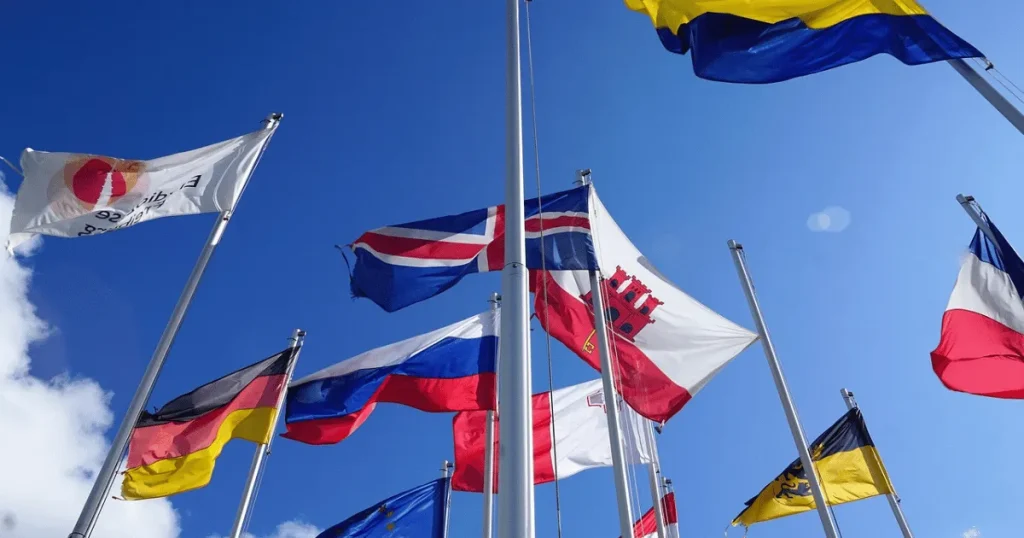
On February 24, 2022, Russia began its full-scale invasion of Ukraine. The National Bank of Ukraine fixed the hryvnia’s official exchange rate against the US dollar at 1 USD = 29.25 UAH under Board Decision No. 18 that same day, and in a July 21, 2022 statement, the bank explained that this measure was taken “at the start of the war.” All of the large-scale fiscal support discussed below is meant to sustain Ukraine’s state finances under this war.
Ukraine still faces a difficult situation today, but the EU is united in continuing to support Ukraine’s economy.
Here we explain support from the EU as a whole, and support from individual countries for Ukraine.
EU-Wide Support for Ukraine
The EU (European Union) has rolled out comprehensive economic support for Ukraine. The European Commission explains that the 2023 EU budget enabled €19.5 billion in macro-financial assistance, including €18 billion in concessional loans (MFA+).
This is a loan, not a grant. The Commission puts the cumulative total of macro-financial assistance the EU has provided since the war began at €43.3 billion (European Commission, “EU financial support to Ukraine,” updated September 18, 2026).
Furthermore, the EU established the Ukraine Facility, covering 2024 through 2027. It has a scale of up to €50 billion and entered into force on March 1, 2024. This is not a proposal under discussion but a framework already being implemented. According to the European Commission, cumulative disbursements of direct support through member states’ budgets (Pillar I) have reached €29.5 billion since the framework began. Ukraine’s Ministry of Finance also announced on December 30, 2025 that it received $12.1 billion from this framework over the course of 2025 (of which $668 million was a grant).
Individual Countries’ Own Support
Beyond support through the EU framework, individual member states have also rolled out their own support measures. However, the amount each country has provided varies depending on who compiles the figures, both in scope (military, financial, humanitarian) and cutoff date.
Poland’s Support
Poland has played a major role in taking in people who fled Ukraine. It has provided housing, education, and medical services. The number it has taken in is not given here, since the figure varies greatly depending on whether it refers to the cumulative number of people who crossed the border or the number currently staying in Poland.
Furthermore, Poland has also strengthened defense cooperation with Ukraine, actively providing military support as well, including plans for joint production of ammunition and weapons.
Economic Support from the United States to Ukraine Today
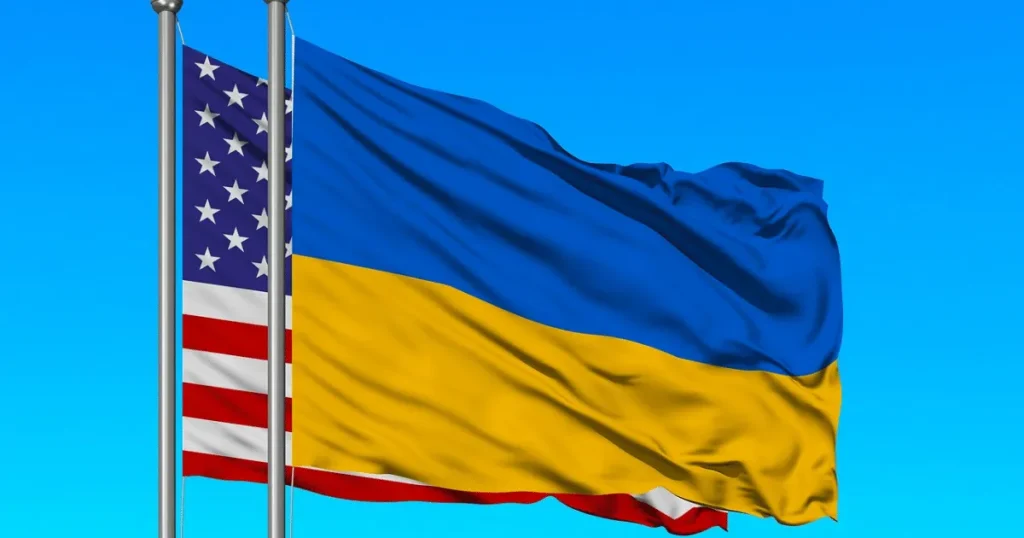
The United States has also budgeted for support to Ukraine, providing both economic and military assistance. Here we explain the support the U.S. has provided and the challenges involved.
Passage of the Emergency Budget, and Its Significance
In April 2024, the U.S. Congress passed a Ukraine-related FY2024 supplemental budget, enacted April 24 as Division B of Public Law 118-50, the “Ukraine Security Supplemental Appropriations Act, 2024.” This is not a budget for military support alone. The bill summary for H.R.8035, published by the U.S. Government Publishing Office (GPO), lists among the funds’ uses “economic support for Ukraine” and “refugee and entrant assistance,” alongside support for U.S. military operations in the region, the Ukraine Security Assistance Initiative, and replenishing equipment already provided.
With this budget’s passage, concrete military support was expected to begin within a few weeks. CIA Director William Burns emphasized the importance of this support.
This support goes beyond simple financial assistance, carrying a strategic significance directly tied to Ukraine’s survival as a state and regional security.
The Scale of Support, and Its International Role
U.S. support is part of the international community’s overall support for Ukraine. However, you cannot write that the cumulative amounts “pledged” by various countries “exceed” Ukraine’s annual GDP by simply placing the two side by side. This is because the former is an accumulation of pledges across multiple years, while the latter is a single year’s figure — they cover different periods.
Several institutions have published forecasts of how much external financing Ukraine needs. But because a forecast gets revised when its assumptions change, it cannot be quoted in the present tense without stating its version and publication date. Actual figures, however, can be confirmed. Ukraine’s Ministry of Finance announced on December 30, 2025 that it had secured $52.4 billion in external financing in 2025. Of this, more than 70% — $37.9 billion — came from the G7’s ERA (a framework repaid from proceeds generated by frozen Russian assets).
U.S. support not only helps close this financing gap but also plays a catalytic role in encouraging support from other countries and international institutions.
Economic Support, and “Ukraine Support Fatigue”
Whether U.S. support continues has a major effect on Ukraine’s fiscal outlook. In an August 6, 2026 statement, the National Bank of Ukraine projected total international support for 2026 at $87 billion (including indirect fiscal support), and forecast the fiscal deficit at the end of 2026 (excluding grants from revenue) at roughly 35% of GDP. Both are forecasts based on assumptions, not actual results.
However, U.S. economic support also faces challenges. A phenomenon known as “Ukraine support fatigue” is becoming apparent among donor countries, including the United States.
Declining public interest in prolonged support, and growing calls to focus on domestic issues, could affect the future framework of support.
Against this backdrop, the passage of this emergency budget carries great significance. It served as a signal to the international community of America’s strong intent to continue supporting Ukraine.
At the same time, this U.S. decision is also expected to influence other donor countries, encouraging the continuation of international support.
Economic Support from Japan to Ukraine Today
Japan too has continued its own support for Ukraine. Here we explain Japan’s economic and humanitarian support.
The Scale of Support, and Its Wide-Ranging Content
Japan’s support for Ukraine is notable for the breadth of what it covers.
On the humanitarian side, emergency assistance is provided to evacuees and disaster-affected people.
Infrastructure support aims at rebuilding infrastructure and building new social foundations.
Economic revitalization programs provide support to rebuild Ukraine’s economy and promote sustainable growth.
Worth noting in particular is the “Japan-Ukraine Accord on Support and Cooperation.” According to the Ministry of Foreign Affairs, Prime Minister Fumio Kishida, visiting Italy to attend the G7 Apulia Summit, signed it on June 13, 2024 (Reiwa 6), at the start of a summit meeting with President Zelenskyy. It clarifies fields of support and cooperation including security and defense, humanitarian aid, and recovery/reconstruction, and Japan was the first non-Atlantic country to sign a bilateral document based on the “Joint Declaration of Support for Ukraine.”
This shows that Japan’s support is not a temporary measure but a long-term commitment looking ahead to Ukraine’s full reconstruction.
Support Through International Institutions, and Features of Japan’s Support
Another feature of Japan’s support is that much of it is carried out in coordination with international institutions.
In Ukraine, urgent humanitarian needs are addressed swiftly, while emphasis is also placed on long-term development initiatives.
Through this, Japan aims to contribute not only to the present response but also to Ukraine’s future development and stability.
Through this continued support, the bilateral relationship between Japan and Ukraine is also expected to deepen further.
Ukraine’s Economy Is Weathering Its Crisis with Support from Many Countries
Ukraine’s economy has so far been sustained by support from many countries and international institutions. In particular since Russia’s full-scale invasion on February 24, 2022, international support has become the main source of funding for covering the fiscal deficit, as the National Bank of Ukraine stated on August 6, 2026.
Countries including Japan have each stated they will continue their economic support for Ukraine. This reflects their hope, through this stance of support, for Ukraine’s further development.
The world is watching closely to see how Ukraine’s economy will grow from here.
Sources and article record
Sources and references
- GDP growth (annual %) – UkraineWorld Bank indicator API. Real GDP growth rate 1991–2008. Nine straight years of negative growth 1991–1999, 5.9% in 2000, 11.7953...% in 2004, positive growth continuing through 2008
Published by World Bank · Checked: 2026-09-23 - Cooperation of Ukraine with international financial institutionscooperation with the IMF since 1994, under eight joint programs including the STF, Stand-By Arrangements, and the EFF
Published by Ministry of Foreign Affairs of Ukraine · Checked: 2026-09-23 - NBU Fixes Official UAH/USD Exchange Rate at a New Level and Takes Additional Measures...dated July 21, 2022. States that under Board Decision No. 18 of February 24, 2022, the rate was fixed at 1 USD = 29.25 UAH at the start of the war, and was devalued 25% to 36.5686 that same day
Published by National Bank of Ukraine (NBU) · Checked: 2026-09-23 - Inflation Will Accelerate in H2, but Will Begin to Decline Again Next Year – Inflation ReportJuly inflation report, published August 6, 2026. States “International assistance will remain the key source of financing for the budget deficit”; total international support for 2026 of $87 billion; fiscal deficit at end of 2026 of roughly 35% of GDP
Published by National Bank of Ukraine · Checked: 2026-09-23 - EU financial support to Ukraineupdated September 18, 2026. €19.5 billion under the 2023 EU budget, of which €18 billion in concessional loans = MFA+; cumulative macro-financial assistance since the war began of €43.3 billion
Published by European Commission · Checked: 2026-09-23 - Ukraine Facilityup to €50 billion, covering 2024–2027, entered into force March 1, 2024, Pillar I €38.5 billion, cumulative Pillar I disbursements €29.5 billion
Published by European Commission, Directorate-General for Neighbourhood and Enlargement Negotiations · Checked: 2026-09-23 - In 2025, Ukraine's Ministry of Finance secured USD 52.4 billion in external financing...December 30, 2025. $52.4 billion in external financing, of which $37.9 billion (more than 70%) via the ERA; $12.1 billion from the EU's Ukraine Facility ($11.5 billion loan, $668 million grant)
Published by Cabinet of Ministers of Ukraine (Ministry of Finance announcement) · Checked: 2026-09-23 - BILLSUM-118hr8035bill summary for H.R.8035, the “Ukraine Security Supplemental Appropriations Act, 2024,” listing “economic support for Ukraine” and “refugee and entrant assistance” among its uses
Published by U.S. Government Publishing Office (GPO / govinfo) · Checked: 2026-09-23 - Public Law 118-50enacted April 24, 2024. States that Division B is titled the “Ukraine Security Supplemental Appropriations Act, 2024”
Published by U.S. Government Publishing Office (GPO / govinfo) · Checked: 2026-09-23 - 「日本国政府とウクライナとの間のウクライナへの支援及び協力に関するアコード」への署名June 13, Reiwa 6 [2024]. Signed by PM Kishida and President Zelenskyy at the G7 Apulia Summit; covered fields; first signature by a non-Atlantic country
Published by Ministry of Foreign Affairs · Checked: 2026-09-23 - ウクライナ情勢に関する対応updated August 28, Reiwa 8 [2026]. Lists a February 24, 2026 event as marking “the 4-year milestone of Russia's aggression against Ukraine,” giving the invasion's start date as February 24, 2022
Published by Ministry of Foreign Affairs · Checked: 2026-09-23 - Yushchenko, Viktorprime minister December 22, 1999 – April 26, 2001; market-oriented, monetarist stance
Published by Internet Encyclopedia of Ukraine (CIUS) · Checked: 2026-09-23 - Orange Revolutionfraud in the runoff vote; the Supreme Court ordered a rerun, held December 26
Published by Internet Encyclopedia of Ukraine (CIUS) · Checked: 2026-09-23 - Q&A – Ukraine and the Netherlands v. RussiaGrand Chamber judgment, July 9, 2025. Covers the conflict in the east from spring 2014, the occupation and annexation of Crimea, and Russian-occupied territory
Published by European Court of Human Rights · Checked: 2026-09-23
Corrections and updates
- This article had never once mentioned Russia's full-scale invasion of Ukraine on February 24, 2022, concealing who was responsible behind euphemisms such as “political unrest”; the fact and date of the invasion have now been stated explicitly in the introduction, the support section, and the conclusion. At the same time, amounts whose source, reference date, or population could not be confirmed (a 2004 growth rate of 12.1%, a 2010 IMF loan of $15.1 billion, Lithuania's €200 million and €1 billion, Denmark's €4.3 billion and €408 million, the United States' $60.8 billion, a Western cumulative total of €242 billion, IMF external-financing forecasts of $37 billion and $21 billion, Japan's $12 billion, and Poland's number of evacuees taken in) have been removed rather than replaced with new figures, and the subsections on Lithuania and Denmark have been deleted. The figures retained now carry their issuing body and reference date, and a description of the EU's €50 billion as “under discussion” has been corrected to state that it entered into force on March 1, 2024 and is in the implementation stage.
- A 2010s section heading that read “political instability” has been changed, in line with the section's actual content, to austerity measures and Russia's annexation of Crimea, and a description of the fighting that began in the east in 2014 as a “dispute” has been changed to “fighting.”
- This article had called the 2000 economic reforms the “1000-Day Program,” but since that name could not be confirmed in any source, this has been changed to reforms under the Yushchenko government. A description of the Orange Revolution as “protest over the election result” has been changed to state that it was a protest over fraud in the runoff vote, which led to a rerun, and a description of the Soviet era as having “relatively stable economy” has been revised. The 2014 events in Crimea are now described as an “occupation,” and Russia's involvement in the fighting in Donbas is stated explicitly.
If you find an error in this article, please tell us via Corrections. Once we have checked it, we will record in the article what was corrected and why.