Section
Business & Recovery
Industries and companies, and the work and challenges of recovery and reconstruction.
-
From the Seven Lugano Principles to Tallinn: A Timeline of the Ukraine Recovery Conference
The Ukraine Recovery Conference has been held every year since Lugano in 2022, and the June 2026 conference in Gdańsk was its fifth as a recovery conference. Its predecessor was a reform conference that began in 2017. Drawing on each conference's outcome document, this article looks at the host cities and co-hosting countries, the seven Lugano Principles, the theme of each conference, and how to read the amounts announced, which cannot simply be added together.
-
Twenty Years of a Farmland Sale Ban: Ten Laws That Extended the Deadline
In Ukraine, most farmland could not be sold from 2001 until July 2021. This article traces, through the text of the laws and the court's ruling, the "shares" of land distributed to farmers in the 1990s, the laws that repeatedly rewrote the deadline, the 2018 European Court of Human Rights ruling that found a violation of property rights, and the law of 2020.
-
30.95 Billion Cubic Meters Underground: Is Ukraine’s Gas Storage Really “Europe’s Largest”?
Ukraine has 12 underground gas storage facilities, with a total capacity of 30.95 billion cubic meters according to the operator, Ukrtransgaz. Against what list does "Europe's largest" actually hold true? This article looks, using publications and legal texts as of September 2026, at the rules for the "customs warehouse" arrangement under which foreign companies store gas, and the target and results for the winter of 2026.
-
Gas Made from Farm Leftovers: Ukraine’s Biomethane and Its Export Rules
Biomethane, made from livestock manure and crop residues, can be sent through the same pipelines as natural gas. Ukraine sent its first shipment to the EU in February 2025, and a government agency states that as of February 2026, total exports had exceeded approximately 11.2 million cubic meters. This article looks, using the text of the law and government publications as of September 2026, at the legal definition, the conditions and transitional measures for exports, and the figures for the number of plants and "potential," which differ between sources.
-
The App Is “Monobank”; the Bank Holding the License Is Universal Bank
Monobank, which describes itself as "Ukraine's first branchless banking service," is a retail product of Universal Bank JSC. This article looks, using publications as of September 2026, at the licensing and supervisory structure, the number of depositors and the bank's ranking by assets according to National Bank statistics, how the claim of being the "largest online bank" is compared, and how the donation feature Banka works.
-
The EU’s €50 Billion Ukraine Facility: Paying Only for Reforms Delivered
The EU's "Ukraine Facility" is a framework that can provide up to €50 billion to Ukraine between 2024 and 2027. Payments are made quarterly, and only for the portion of promised reform steps that Ukraine is confirmed to have completed. This article sums up how the rules work, the preconditions attached, and the breakdown of the roughly €29.5 billion paid out through June 2026.
-
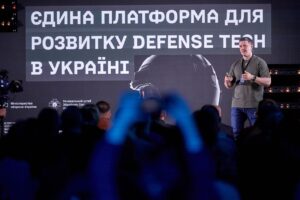
Brave1: Over 1,000 Grants to Grow Ukraine’s Defense Tech
Brave1 is a defense-tech support body that six Ukrainian government agencies launched in April 2023, in the midst of Russia's full-scale invasion. A state fund provides grants of up to 8 million hryvnias per stage that do not need to be repaid, and according to the Ministry of Defense, by September 2026 these had reached over 1,000 grants totaling 6.2 billion hryvnias. This article sums up how the program is run, the legal basis behind it, and where the money goes.
-
Ukraine’s National Cashback: Up to 15% Back on Ukrainian-Made Goods
Since September 2024, Ukraine has run a “National Cashback” program that returns part of the price when people buy Ukrainian-made goods. The refund rate has changed from a flat 10% to 5% or 15% depending on the share of imports in each product category, and in May 2026 the program entered its second stage. Based on the text of the Cabinet resolutions and announcements from the Ministry of Economy, this article sums up how the system works, what the money can be used for, and the scale of its use.
-
The Procedures and Contact Points for Importing Ukrainian Food Into Japan
Importing food from Ukraine to Japan runs through the Food Sanitation Act, the Plant Protection Act, the Act on Domestic Animal Infectious Diseases Control, the Food Labeling Act, the Customs Act, and the Foreign Exchange and Foreign Trade Act, each at a different checkpoint. This article lays out, statute by statute and against public materials, how to file an import notification, what became of the provisional limit set after the Chornobyl accident, why an EPA tariff rate is not available, and whether exporting-country certificates can be obtained in wartime. Item-specific requirements must be confirmed with the competent authorities.
-
From 10% to 25%, Now 16%: The National Bank of Ukraine’s Key Policy Rate
In June 2022, under the full-scale invasion, the National Bank of Ukraine raised its key policy rate from 10% to 25%. It began cutting the rate from July 2023, raised it again from December 2024, and has held it at 16% since 18 September 2026. This article summarises the inflation figures and reasons the National Bank gave for each decision, and the mechanics of its 5% inflation target.