
The Procedures and Contact Points for Importing Ukrainian Food Into Japan
Importing food from Ukraine to Japan runs through the Food Sanitation Act, the Plant Protection Act, the Act on Domestic Animal Infectious Diseases Control, the Food Labeling Act, the Customs Act, and the Foreign Exchange and Foreign Trade Act, each at a different checkpoint. This article lays out, statute by statute and against public materials, how to file an import notification, what became of the provisional limit set after the Chornobyl accident, why an EPA tariff rate is not available, and whether exporting-country certificates can be obtained in wartime. Item-specific requirements must be confirmed with the competent authorities.
Dairy products are subject to the import notification requirement under the Food Sanitation Act, and can at the same time fall under “designated quarantine items” of the Act on Domestic Animal Infectious Diseases Control. Grains and seeds fall under both the Food Sanitation Act and the Plant Protection Act. Change the item by even one, and the checkpoint it must pass, the documents it needs, and even whether it can be brought in at all, all change. The actual feasibility and procedure can only be confirmed, item by item, with the competent authority (a Ministry of Health, Labour and Welfare quarantine station, a Plant Protection Station, an Animal Quarantine Service office, or Customs).
Which Gate You Pass Through Depends on What You Are Carrying
| Law | Covers | Checkpoint |
|---|---|---|
| Food Sanitation Act (Act No. 233 of 1947) | Food, additives, apparatus, and containers/packaging offered for sale or used in business | MHLW quarantine station |
| Plant Protection Act (Act No. 151 of 1950) | Plants, designated quarantine articles | Plant Protection Station (MAFF) |
| Act on Domestic Animal Infectious Diseases Control (Act No. 166 of 1951) | Designated quarantine items (animals, their carcasses, bones, meat, eggs, hides, etc.) | Animal Quarantine Service (MAFF) |
This is not a matter of choosing just one. A single shipment can fall under multiple laws. And at the end, there is a stage where these procedures must be shown to have been completed, to Customs. Article 70, paragraph 2 of the Customs Act (Act No. 61 of 1954) provides that, for goods requiring inspection or the fulfillment of conditions for import under other laws and regulations, the completion of that inspection or the fulfillment of those conditions must be certified to and confirmed by Customs; paragraph 3 provides that goods for which this confirmation cannot be obtained shall not be permitted to be imported.
The Food Sanitation Act’s Import Notification (Article 27)
Article 27. A person who intends to import food, additives, apparatus, or containers/packaging for the purpose of sale, or for use in business, shall, as provided by Ministry of Health, Labour and Welfare Ordinance, notify the Minister of Health, Labour and Welfare on each occasion.
Food Sanitation Act (e-Gov Japanese Law Search, confirmed 23 September 2026)
Note that the article limits its scope to items “for the purpose of sale, or for use in business.” Whether notification is required is determined by use, not by quantity or mode of transport. The Ministry of Health, Labour and Welfare’s own “Import Procedures” page likewise states, of mail arriving from abroad, that “handling does not change according to the quantity imported or the mode of transport.”
The method is set out in Article 32, paragraph 1 of the Enforcement Regulations of the Food Sanitation Act (Ministry of Health and Welfare Ordinance No. 23 of 1948). The import notification form must state, among other things, the name of the item, the quantity to be shipped, and its use; for processed foods, its raw materials and method of manufacture or processing; and the name and location of the manufacturing or processing facility (or, for foods other than processed foods, the place of production). It is submitted, no earlier than seven days before the expected date of arrival, to the head of the quarantine station listed in Appended Table 11 of the same Regulations.
The Ministry of Health, Labour and Welfare explains the flow that follows on the same page. A food sanitation inspector at the quarantine station examines the notification form and related documents, and determines whether inspection is needed based on the country of production, manufacturer, item, ingredients, whether additives were used, the method of manufacture, and other factors. If there is no problem, a certificate of import notification for food, etc. is issued. If the item is found to violate the law, since it cannot be sold or otherwise distributed domestically, the importer must dispose of it, return it to the country of origin, or take other such measures.
To give a sense of scale, in figures the Ministry of Health, Labour and Welfare published on 28 August 2026 for fiscal year 2025 (April 2025 to March 2026), there were about 2.53 million import notifications, totaling about 32.28 million tons, of which 214,030 cases were inspected, and 791 cases (825 instances in total) were found in violation of the law and became subject to measures such as return or disposal. Not every shipment is inspected.
In April 2024, the Body That Sets Standards and the Body That Oversees Imports Split Apart
This is a place where outdated information tends to linger. The Food Sanitation Act was amended by the Act on the Development of Related Acts for Strengthening the Functions of Public Health and Other Related Administration (Act No. 36 of 2023), which came into effect on 1 April 2024. As a result, Article 13, paragraph 1, which sets food specifications and standards, now reads that “the Prime Minister may, from the standpoint of public health, and after hearing the opinion of the Food Sanitation Standards Council, establish” specifications and standards. Standard-setting has moved to the Consumer Affairs Agency’s side.
Article 27, which governs import notification, meanwhile still reads “shall … notify the Minister of Health, Labour and Welfare.” Article 30, paragraph 4 likewise provides that the Minister of Health, Labour and Welfare shall have food sanitation inspectors carry out monitoring and guidance related to imports, in accordance with the imported food monitoring and guidance plan. The Consumer Affairs Agency sets the standards; the Ministry of Health, Labour and Welfare (its quarantine stations) receives import notifications and inspects on the ground. Materials from before 2024 state that “the Minister of Health, Labour and Welfare sets standards,” so check the date the material was issued.
One more thing: Article 11 of the Food Sanitation Act adds further requirements. Paragraph 1 provides that food and other items designated by Ministry of Health, Labour and Welfare Ordinance may not be imported unless manufactured or processed in a country, region, or facility that the Minister of Health, Labour and Welfare has designated as one where management of important processes is assured. Paragraph 2 provides that food and other items designated by Ministry of Health, Labour and Welfare Ordinance may not be imported unless accompanied by a certificate, or a copy of one, issued by a government agency of the exporting country regarding the state of hygiene management at the place of production. In other words, there are things that must be obtained on the exporting country’s side before anything is submitted to the Japanese-side checkpoint. This article has not confirmed the content of the ministerial ordinance that specifies which items are covered.
Plants Go Through a Plant Protection Station; Animal-Derived Foods Go Through an Animal Quarantine Service Office
Article 6, paragraph 1 of the Plant Protection Act provides that plants or designated quarantine articles to be imported, and their containers and packaging, “may not be imported unless accompanied by a phytosanitary certificate, or a copy of one, issued by a government agency of the exporting country stating that inspection has confirmed, or given grounds to believe, that they are free of quarantine pests.” Under paragraph 3 of the same article, the ports and airports through which they may be brought in are also limited. Article 7, paragraph 1 designates certain plants, quarantine pests, soil, and plants to which soil adheres, dispatched from or transiting through regions designated by Ministry of Agriculture, Forestry and Fisheries Ordinance, as “prohibited items for import,” which no person may import. Article 8, paragraph 1 requires an importer to notify a Plant Protection Station and undergo inspection by a plant protection officer, and Article 9, paragraph 5 provides for certification when the item passes.
Article 37, paragraph 1 of the Act on Domestic Animal Infectious Diseases Control requires that designated quarantine items be accompanied by “a certificate of inspection, or a copy of one, issued by a government agency of the exporting country stating that quarantine inspection has confirmed, or given grounds to believe, that they will not spread the pathogens of a monitored infectious disease.” The Animal Quarantine Service explains that this certificate is what is called a Health Certificate or Veterinary Certificate. Article 36, paragraph 1 prohibits the import of designated prohibited items, Article 38 limits the ports and airports through which import is permitted, and Article 40, paragraph 1 requires notification to an Animal Quarantine Service office and inspection by a veterinary quarantine officer.
On top of this, there is a major condition that lies outside the text of the acts themselves. The Animal Quarantine Service has posted notice that, of countries where bovine spongiform encephalopathy (BSE) has occurred, “beef and similar products cannot be imported from countries or regions where import is currently suspended, or for which animal health conditions have not been established.” If bilateral animal health conditions have not been established, the certificate format itself does not exist. This article has not confirmed whether such conditions have been established for Ukraine, or whether Ukraine is included in the regions designated by the Plant Protection Act’s ministerial ordinance. In practice, these two points are settled before any of the steps discussed so far.
Where Do the Rules on Radioactive Substances Stand Today?
This too is a point where outdated information tends to circulate as though it were current. Japan once used a provisional limit of 370 becquerels per kilogram in monitoring and guidance for imported food, adopted following the 1986 accident at the Chornobyl nuclear power plant. This has since changed.
Q17. What happens to the provisional limit of 370 becquerels/kg used in monitoring and guidance for imported food?
Ministry of Health, Labour and Welfare, Director of the Standards and Evaluation Division and Director of the Inspection and Safety Division, Department of Food Safety, Pharmaceutical and Food Safety Bureau, “Q&A on the Setting of Standard Values for Radioactive Substances in Food” (Notice Shoku-an-ki 0705 No. 1 / Shoku-an-kan 0705 No. 1, 5 July 2012 (Heisei 24); first revision Shoku-an-ki 0320 No. 3 / Shoku-an-kan 0320 No. 3, 20 March 2015 (Heisei 27)), attachment
A. Since the new standard values and measurement methods will also apply to imported food, the provisional limit established after the Chernobyl nuclear power plant accident will be abolished.
The spelling “Chernobyl” in the quotation above is as in the original. The explanation the Ministry of Health, Labour and Welfare gives itself is this: following the 2011 accident at Tokyo Electric Power Company’s Fukushima Daiichi Nuclear Power Station, new standard values set in 2012 came to apply uniformly regardless of whether food was domestic or imported, and with that, the provisional limit for imported food set after the Chornobyl accident was abolished. According to the same Q&A, the new standard values are 10 becquerels/kg for drinking water, 50 becquerels/kg for milk and infant food, and 100 becquerels/kg for general food. Note that the article numbers this notice cites are from 2012; under the current law, the provision setting specifications and standards is Article 13.
However, the abolition of the general provisional limit is a separate matter from whether a particular item or country of origin is subject to an inspection order or monitoring inspection. The Ministry of Health, Labour and Welfare sets inspection orders from time to time under its imported food monitoring and guidance plan, and as of 2026 it has posted orders covering, among others, sesame seeds from Togo, sesame seeds from Côte d’Ivoire, and sorghum from India. Which items are currently subject to inspection must be checked on the Ministry of Health, Labour and Welfare’s “Monitoring and Guidance / Statistical Information” page.
Labeling Is Decided Before Arrival, Not After
Article 4, paragraph 1 of the Food Labeling Act (Act No. 70 of 2013) requires the Prime Minister to establish food labeling standards by Cabinet Office Ordinance, listing as their content matters that food business operators and others must display when selling food, such as “name, allergens, method of preservation, expiration date, ingredients, additives, nutrient content and calories, and place of origin.” Article 5 is a short provision that simply states, “A food business operator or other party shall not sell food that is not labeled in accordance with the food labeling standards.” How each item is actually to be labeled is decided not by this article but by the Food Labeling Standards (Cabinet Office Ordinance No. 10 of 2015), whose text this article has not confirmed. What matters for the process is that labeling is not a post-import task; it is a prior step that includes obtaining ingredient information from the exporter. If that information cannot be obtained locally, a Japanese-language label cannot be made.
Tariffs and Country of Origin
No EPA/FTA is in effect between Japan and Ukraine, nor is one listed as under negotiation. This was confirmed (23 September 2026) by going through all three of the Ministry of Foreign Affairs’ lists — “in effect / signed,” “under negotiation,” and “negotiations suspended” — on its “Japan’s FTA/EPA Initiatives” page, and finding Ukraine on none of them. An EPA tariff rate is not an available option. There is a separate system, the Generalized System of Preferences, and Ukraine appears as No. 14 on Customs’ “List of Countries and Regions Eligible for Preferential Tariff Treatment” (current as of 1 April 2026 (Reiwa 8)), without the mark indicating a Least Developed Country. But being on the list, and a preferential rate actually being applied to a given shipment, are not the same thing. Application depends on item-specific conditions and rules of origin, which this article has not confirmed.
Country of origin is also examined in contexts other than tariffs. In response to Russia’s full-scale invasion of Ukraine, Japan has taken measures under the Foreign Exchange and Foreign Trade Act. On the import side, according to the Ministry of Economy, Trade and Industry’s “Sanctions Related to Russia” page, Import Notice No. 2 is relevant, and, promulgated 12 April 2022 (Reiwa 4), “goods originating in or shipped from Russia” were added to the scope of the No. 2 approval system. Since the system draws its line at country of origin and shipping region, what matters is not the country name written on the documents but where a good was actually produced and shipped from. This article has not confirmed what import measures Japan applies, if any, to goods originating in territory of Ukraine currently occupied by Russia.
Wartime Logistics, and Whether Documents Can Be Obtained
Nearly every step described so far presupposes “a certificate issued by a government agency of the exporting country.” This is true of Article 6, paragraph 1 of the Plant Protection Act, Article 37, paragraph 1 of the Act on Domestic Animal Infectious Diseases Control, and Article 11, paragraph 2 of the Food Sanitation Act alike. Whether these are actually issued in wartime, and how long it takes, cannot be known from reading the Japanese-side statutes alone.
Two things could be confirmed from public sources regarding sea transport. One is the Black Sea Grain Initiative. According to the UN’s own account, under this framework, brokered in July 2022 by the UN and Türkiye, with Ukraine and Russia as the signatory parties, 730 vessels made 1,004 voyages, carrying 32.9 million tonnes of food. Russia did not agree to renew it after 18 July 2023 and withdrew its safety guarantee for navigation in the northwestern Black Sea. The other is the maritime corridor Ukraine subsequently set up on its own. In an article dated 18 August 2025, Ukraine’s State Service for Maritime, Inland Waterway Transport and Shipping states that it opened a temporary maritime corridor on 16 August 2023, and that within eight months of its start, agricultural exports had reached pre-war levels.
However, this article has not been able to confirm from primary sources how this corridor is operating as of September 2026, or how attacks on ports are affecting shipping and insurance. The same applies to the actual state of sea routes between Ukraine and Japan. This is a matter to be checked against the latest information each time, rather than something an article can settle.
What to Check, and in What Order
Here, the steps above are rearranged in the order to check them. Working in reverse order causes the earlier premises to collapse later, forcing you to redo the work.
- Identify the item. Decide on a specific name, not “Ukrainian food,” down to the raw materials, degree of processing, and even the container/packaging. Nothing below can be decided until this is fixed
- Confirm it is not subject to a prohibition or suspension. The Plant Protection Act’s Article 7 prohibited items, the Act on Domestic Animal Infectious Diseases Control’s Article 36 designated prohibited items, and import suspensions posted by the Animal Quarantine Service. If it is stopped here, there is no need to examine further
- Confirm the need for quarantine, and whether bilateral conditions exist. For animal-derived food, if animal health conditions have not been established, no certificate format exists
- Confirm whether documents obtained on the exporting country’s side can actually be obtained. Certificates from the exporting government’s agencies, certificates under Article 11, paragraph 2 of the Food Sanitation Act, and the like
- Prepare the Food Sanitation Act’s import notification. Besides the notification form, a description of raw materials and manufacturing process, a health certificate, and test results may be needed depending on the item. Submit no earlier than seven days before the expected date of arrival, to the head of the quarantine station
- Confirm whether labeling can be produced. Whether the information required by the food labeling standards can be obtained locally. If it cannot, the item cannot be sold
- Confirm the tariff rate, country of origin, and any measures under the Foreign Exchange and Foreign Trade Act. An EPA rate does not exist. Look at both country of origin and shipping region
- Confirm the transport route and how long it takes. For food with a shelf life, this is what determines success or failure
This article does not say that importing is possible, nor that it is easy. Many of these procedures carry penalties, or measures such as disposal or return, for a violation, and the responsibility for a mistaken judgment falls on the person attempting the import. For an individual case, decide on the item first, then confirm directly with each of the relevant authorities: the quarantine station, the Plant Protection Station, the Animal Quarantine Service, and Customs. The Ministry of Health, Labour and Welfare itself advises: “If you are importing food or similar items for the first time, please consult the quarantine station where you plan to file notification, or your nearest quarantine station.”
Sources and article record
Sources and references
- Food Sanitation Act (Act No. 233 of 1947), Articles 11, 13, 27, 28, and 30
Published by e-Gov Japanese Law Search (Digital Agency) · Checked: 2026-09-23 - Amendment history of the Food Sanitation Actamendment by the Act on the Development of Related Acts for Strengthening the Functions of Public Health and Other Related Administration, Act No. 36 of 2023; effective 1 April 2024
Published by e-Gov Japanese Law Search (Digital Agency), law_revisions API · Checked: 2026-09-23 - Enforcement Regulations of the Food Sanitation Act (Ministry of Health and Welfare Ordinance No. 23 of 1948), Article 32, paragraph 1matters to be stated on the import notification form, submission no earlier than seven days before the expected date of arrival, the head of the quarantine station under Appended Table 11
Published by e-Gov Japanese Law Search (Digital Agency) · Checked: 2026-09-23 - Plant Protection Act (Act No. 151 of 1950), Articles 6, 7, 8, and 9
Published by e-Gov Japanese Law Search (Digital Agency) · Checked: 2026-09-23 - Act on Domestic Animal Infectious Diseases Control (Act No. 166 of 1951), Articles 36, 37, 38, and 40
Published by e-Gov Japanese Law Search (Digital Agency) · Checked: 2026-09-23 - Food Labeling Act (Act No. 70 of 2013), Articles 4 and 5
Published by e-Gov Japanese Law Search (Digital Agency) · Checked: 2026-09-23 - Customs Act (Act No. 61 of 1954), Article 70Certification or Confirmation
Published by e-Gov Japanese Law Search (Digital Agency) · Checked: 2026-09-23 - Import Proceduresthe flow of import notification under Article 27 of the Food Sanitation Act, required documents, the handling of mail, review items, and the certificate of import notification
Published by Ministry of Health, Labour and Welfare · Checked: 2026-09-23 - Imported Food Monitoring Operationslist of topics; postings of 2026 inspection orders for sesame seeds from Togo, sesame seeds from Côte d'Ivoire, sorghum from India, and others
Published by Ministry of Health, Labour and Welfare · Checked: 2026-09-23 - Publication of "Monitoring and Guidance Results Based on the Imported Food Monitoring and Guidance Plan" and "Imported Food Monitoring Statistics" for Fiscal Year 202528 August 2026; about 2.53 million notifications, about 32.28 million tons, 214,030 inspections, 791 violations
Published by Ministry of Health, Labour and Welfare, Import Food Safety Section, Food Monitoring and Safety Division, Health and Sanitation Bureau · Checked: 2026-09-23 - Q&A on the Setting of Standard Values for Radioactive Substances in Food (Notice Shoku-an-ki 0705 No. 1 / Shoku-an-kan 0705 No. 1, 5 July 2012 (Heisei 24); first revision Shoku-an-ki 0320 No. 3 / Shoku-an-kan 0320 No. 3, 20 March 2015 (Heisei 27)), attachment, Q10, Q11, Q12, and Q17
Published by Ministry of Health, Labour and Welfare, Director of the Standards and Evaluation Division and Director of the Inspection and Safety Division, Department of Food Safety, Pharmaceutical and Food Safety Bureau · Checked: 2026-09-23 - Inspection Procedures for Imported Livestock Productsthe certificate issued by a government agency of the exporting country under Article 37, the Health Certificate / Veterinary Certificate, the import inspection application, NACCS
Published by Animal Quarantine Service, Ministry of Agriculture, Forestry and Fisheries · Checked: 2026-09-23 - There Are Regions Where Import/Export of Animals and Livestock Products Is Temporarily Suspended Due to the Outbreak of Infectious Animal Diseases Overseasthat beef and similar products cannot be imported from BSE-affected countries or regions where import is suspended or where animal health conditions have not been established
Published by Animal Quarantine Service, Ministry of Agriculture, Forestry and Fisheries · Checked: 2026-09-23 - Japan's FTA/EPA Initiativesconfirmed across all three lists, "in effect / signed," "under negotiation," and "negotiations suspended"; Ukraine appears on none of them
Published by Ministry of Foreign Affairs of Japan · Checked: 2026-09-23 - 1504 List of Countries and Regions Eligible for Preferential Tariff TreatmentCustoms Answer; current as of 1 April 2026 (Reiwa 8); Ukraine at No. 14, without the Least Developed Country mark
Published by Customs (Ministry of Finance) · Checked: 2026-09-23 - Sanctions Related to Russia and OthersImport Notice No. 2, promulgated 12 April 2022 (Reiwa 4), "Addition of Goods Originating in or Shipped from Russia to the No. 2 Approval System"; the public notice under Article 2, paragraph 1, item 1-5 of the Export Trade Control Order regarding the areas of Donetsk and Luhansk oblasts
Published by Ministry of Economy, Trade and Industry · Checked: 2026-09-23 - The Black Sea Grain Initiative: What was achieved? Why was it important?brokered by the UN and Türkiye in July 2022, with Ukraine and Russia as signatory parties; Russia did not agree to renew after 18 July 2023 and withdrew its navigation safety guarantee in the northwestern Black Sea; 730 vessels, 1,004 voyages, 32.9 million tonnes
Published by United Nations · Checked: 2026-09-23 - Two Years of the Ukrainian Maritime Corridor Operationpublished 18 August 2025; opening of a temporary maritime corridor on 16 August 2023; agricultural exports reaching pre-war levels within eight months of its start
Published by State Service for Maritime, Inland Waterway Transport and Shipping of Ukraine · Checked: 2026-09-23
If you find an error in this article, please tell us via Corrections. Once we have checked it, we will record in the article what was corrected and why.
Related articles
-

After Losing Azovstal, Where Has Ukraine’s Steel Been Made?
Ukraine's crude steel production fell from 21.4 million tonnes in 2021 to 7.4 million tonnes in 2025. The two steel plants in Mariupol were knocked out of production by occupation, and the remaining plants in Zaporizhzhia and Kamianske have carried most of the production since. Those two have also been shut down by attacks in August and September 2026. This article tracks the plant-by-plant figures through industry-association and company disclosures.
-

From ‘Shchedryk’ to ‘Carol of the Bells’: How One Melody Became Two Songs
The melody of the Christmas standard "Carol of the Bells" comes from the Ukrainian New Year's song "Shchedryk." It crossed to North America at a Carnegie Hall concert on October 5, 1922, and gained its English lyrics in 1936 — lyrics that are not a translation of the original. Drawing on primary sources, this article traces where one melody split into two songs.
-
The 14 Paintings Carried Out of a Burning Museum: Painter Maria Prymachenko
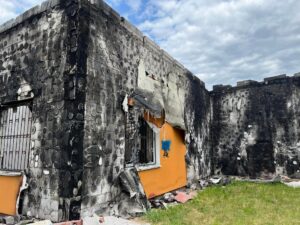
Painter Maria Prymachenko spent her life in a village in Kyiv Oblast painting fantastical animals and flowers. Immediately after the full-scale invasion, the museum in Ivankiv that held her work burned down, and the 14 paintings that staff and residents carried out were shown in Kyiv in September 2022. This article traces her life and work, the 100th anniversary of her birth in which UNESCO was involved, and the plan to rebuild the museum.