
From ‘Shchedryk’ to ‘Carol of the Bells’: How One Melody Became Two Songs
The melody of the Christmas standard "Carol of the Bells" comes from the Ukrainian New Year's song "Shchedryk." It crossed to North America at a Carnegie Hall concert on October 5, 1922, and gained its English lyrics in 1936 — lyrics that are not a translation of the original. Drawing on primary sources, this article traces where one melody split into two songs.


A short figure of just four notes rising and falling, repeated over and over. Every December, this melody can be heard in Japan too, in store music and in films. In the English-speaking world it is called “Carol of the Bells” and treated as a Christmas song.
This melody has another name: Shchedryk (Щедрик) in Ukrainian. And in Ukraine, it was not originally a Christmas song at all.
Shchedrivky — a different genre, sung at New Year
Ukrainian winter songs fall into two lineages. The “Carols” entry of the Internet Encyclopedia of Ukraine, compiled by the Canadian Institute of Ukrainian Studies at the University of Alberta, distinguishes the two this way: “Koliadky are festive, ritual songs sung at Christmas, while shchedrivky are sung on New Year’s Eve.”
According to the same entry, both lineages retain an old layer of “sun worship, ancestor worship, worship of nature, and belief in the magical power of the word,” and the lyrics “depict scenes of agrarian life and express wishes for a good harvest, prosperity, good fortune, and health.” The way of praising the person addressed — the master of the house, the mistress, a young man, a young woman — changes depending on who is being sung to. The explanation given is that the description itself functions as a spell meant to summon what it describes.
The lyrics of Shchedryk follow this same pattern. It begins:
Щедрик, щедрик, щедрівочка, / Прилетіла ластівочка
Opening lines of the original Ukrainian lyrics of “Shchedryk” (as given in the English Wikipedia article “Shchedryk (song)”)
The content is that a swallow flies to the house, calls the master, and announces the wealth the coming year will bring. Blessings follow — lambs being born, livestock increasing. Neither Christ’s birth nor Christmas appears anywhere in it.
So why does a swallow appear in a winter song? A commonly cited explanation is that the song’s original form predates Christianity, from a time when the New Year in Ukraine was celebrated in spring (March). The English Wikipedia cites the historian Timothy Snyder’s writing as the source for this claim, and Ukraine’s official website ukraine.ua likewise describes it as “a pre-Christian ritual song celebrating the New Year, when the swallow returns.” This is, however, a folkloric interpretation, and this article has not traced it back to a primary source.
Mykola Leontovych’s Arrangement
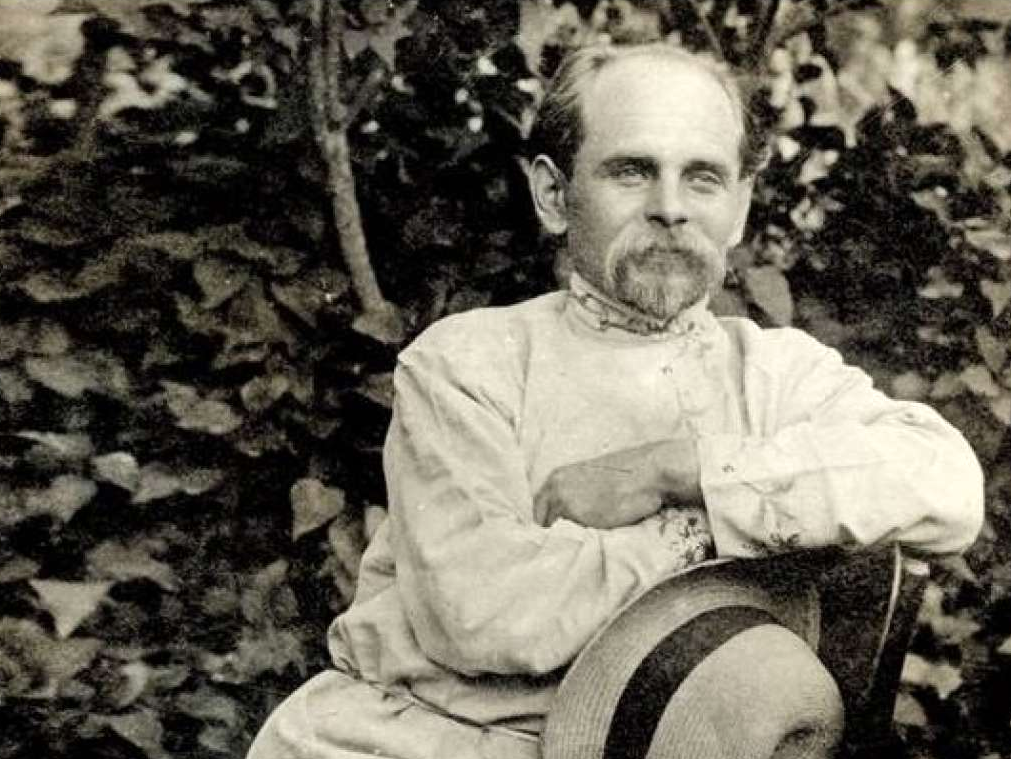
It was the composer Mykola Leontovych (Микола Леонтович) who turned this folk melody into a choral piece. The Internet Encyclopedia of Ukraine records his dates as “born December 13, 1877, in Monastyrok, Bratslav county, Podillia province; died January 23, 1921, in Markivka.”
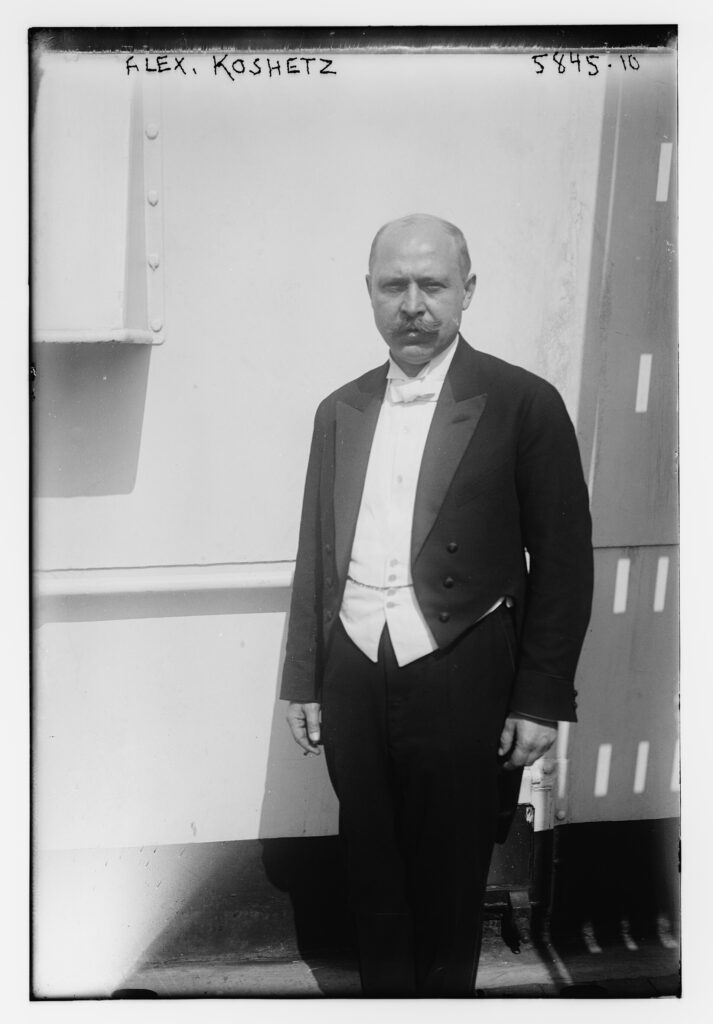
Sources disagree on when he began and finished the arrangement. Neither the starting year nor the completion year agree: some say “1901 to 1916,” others “1901 to 1919,” and others that he “began in 1910.” What sources do agree on are these two points: the score was sent to the conductor Oleksander Koshyts (Олександр Кошиць) in August 1916, and it premiered at the Merchants’ Assembly Hall in Kyiv on December 29 of the same year.


Leontovych was shot and killed at his parents’ house in Markivka on January 23, 1921. The Internet Encyclopedia of Ukraine writes that he was “shot dead at his parents’ house by an agent of the Cheka (the Soviet secret police).” Several explanatory articles name the perpetrator and describe the circumstances, but this cannot be confirmed in official documents, so it is not given here (see “What This Article Has Not Confirmed” at the end of the article).
October 5, 1922: Carnegie Hall
The route by which this melody crossed the ocean is less a story about music than one about diplomacy.
According to the English Wikipedia, the Ukrainian Republic Capella was a choir organized in January 1919, when Symon Petliura of the Ukrainian People’s Republic met with conductor Koshyts and others. The Ukrainian Institute, a Ukrainian state cultural institution, describes this project as having been “established on the initiative of the Ukrainian government and sent abroad to make Ukraine’s independence known in Europe and the Americas, and to counter Russian propaganda.” This needs to be read as an explanation from a Ukrainian public institution.
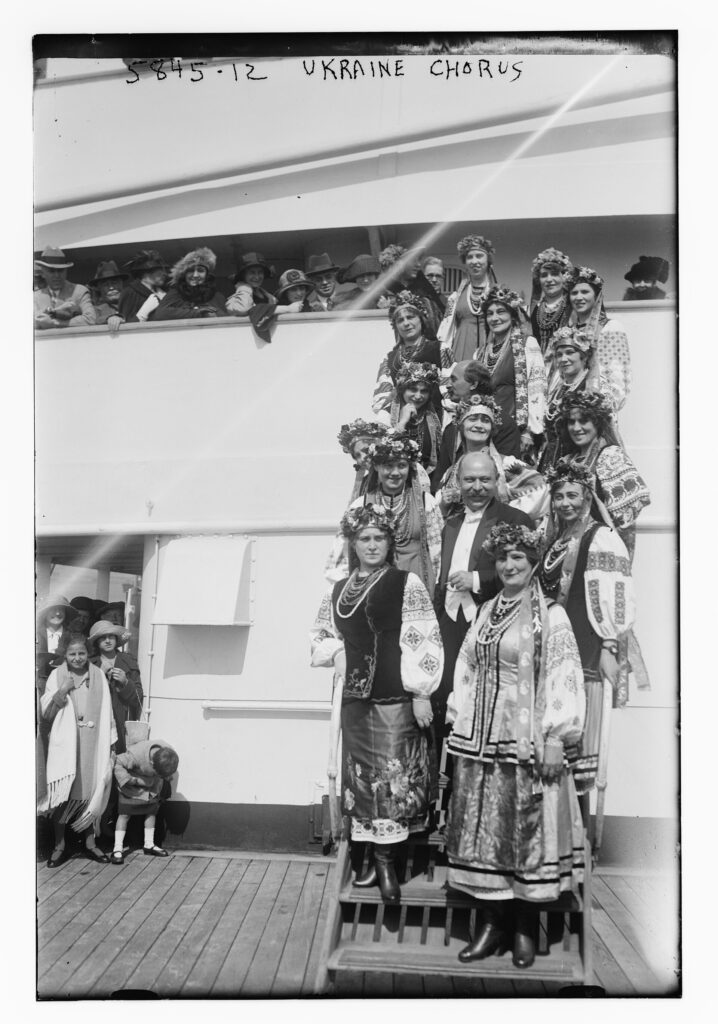
The choir toured Europe and then disbanded. Koshyts and others subsequently reorganized it as the “Ukrainian National Chorus,” which toured North America from 1922 to 1926. According to ukraine.ua, the group arrived in New York on September 26, 1922, and performed at Carnegie Hall on October 5. The site quotes the contemporary New York newspaper the Sun as writing that “Shchedryk” had to be repeated — that is, an encore was demanded.


| Date | Event |
|---|---|
| August 1916 | Leontovych sends the score of “Shchedryk” to conductor Koshyts |
| December 29, 1916 | Premiere at the Merchants’ Assembly Hall in Kyiv |
| January 1919 | The Ukrainian Republic Capella is organized (on Petliura’s initiative) |
| January 23, 1921 | Leontovych is shot dead at his family home in Markivka |
| September 26, 1922 | The Ukrainian National Chorus arrives in New York |
| October 5, 1922 | Performance at Carnegie Hall; North American premiere of “Shchedryk” |
| 1936 | Wilhousky’s English lyrics, “Carol of the Bells,” published by Carl Fischer, Inc. |
This October 5, 1922 performance was the North American premiere. A century later, on December 4, 2022, a commemorative concert titled “Notes from Ukraine” was held at the same Carnegie Hall, featuring performers including Kyiv’s Shchedryk Children’s Choir.
The English Lyrics Are Not a Translation of the Original
It was only after this that the song became a Christmas carol.
Peter J. Wilhousky (July 13, 1902 – January 4, 1978) was an American conductor and music educator of Rusyn descent. He served as music supervisor for the New York City public schools and also arranged music for NBC broadcasts. In 1936, he set his own English lyrics to Leontovych’s arrangement and published it, titled “Carol of the Bells,” through Carl Fischer, Inc. in New York. The company still calls it today one of its “best-selling works of all time.”
This is the key point: these English lyrics are not a translation of the original. As an explanation attributed to Wilhousky himself, ukraine.ua quotes him as saying: “I discarded the Ukrainian text about ‘Shchedryk’ and instead concentrated on the joyous sound of bells that I heard within the music.”
As a result, the lyrics were entirely replaced. The swallow, the livestock, and the coming year’s harvest all disappeared, and it became a different song about bells ringing and Christmas arriving. Same melody, different words. It is more accurate to think of the two not as a translation relationship but as separate works made from the same material.
The Same Melody, Sounding in Two Contexts
One of the routes by which this melody became widely known in Japan is film. The 1990 soundtrack album for Home Alone (released December 4, 1990, on CBS Masterworks) includes “Carol of the Bells,” with the composer credited as “Mykola Leontovych.” Many people must have listened to Leontovych’s arrangement for years without ever registering his name.
Even now, the same four-note repetition sounds in two contexts: on one hand as a shchedrivka wishing for prosperity at New Year, on the other as a song about Christmas bells. It is not a matter of one being right and the other wrong. Connect the three points — the 1916 arrangement, the 1922 Carnegie Hall concert, and the 1936 English lyrics — and you can see where one melody split into two songs.
When this tune plays in December, there is a swallow behind the sound of the bells. Knowing that or not changes, if only a little, how the same melody sounds.
Sources and references
- Carols (Definitions of koliadky and shchedrivky; the old layer; themes)
Published by Internet Encyclopedia of Ukraine (Canadian Institute of Ukrainian Studies, University of Alberta) · Checked: 2026-09-22 - Leontovych, Mykola (Dates of birth and death; place of death; cause of death; Shchedryk)
Published by Internet Encyclopedia of Ukraine (Canadian Institute of Ukrainian Studies, University of Alberta) · Checked: 2026-09-22 - Ukrainian origin of Carol of the Bells (The September 26, 1922 arrival; the October 5 performance; the Sun's account; Wilhousky's statement)
Published by ukraine.ua (Ukraine's official website) · Checked: 2026-09-22 - 「Carol of the Bells」at Carnegie Hall (The Capella's founding purpose; October 5, 1922)
Published by Ukrainian Institute · Checked: 2026-09-22 - From 'Shchedryk' to 'Carol of the Bells': the untold story (The August 1916 sending of the score; the December 29 premiere; the November 1936 Carl Fischer publication)
Published by Ukrainer · Checked: 2026-09-22 - Carol of the Bells: How a Ukrainian folk tune adapted by murdered composer became a Christmas classic (December 2019)
Published by Slate · Checked: 2026-09-22 - Carol of the Bells: the song that made the world speak about Ukraine
Published by The Kyiv Independent · Checked: 2026-09-22 - Shchedryk (song) (The opening of the original Ukrainian lyrics; the premiere date; the claim of a spring New Year and its citation)
Published by English Wikipedia · Checked: 2026-09-22 - Carol of the Bells (That the English lyrics are not based on the original; the 1936 copyright registration)
Published by English Wikipedia · Checked: 2026-09-22 - Peter Wilhousky (Dates of birth and death; Rusyn descent; NYC public schools music supervisor; NBC)
Published by English Wikipedia · Checked: 2026-09-22 - Ukrainian Republic Capella (Organized January 1919; Petliura; reorganization as the Ukrainian National Chorus and its 1922–1926 North American tour)
Published by English Wikipedia · Checked: 2026-09-22 - Carol of the Bells (Product page. Composer/arranger credit, 1936 publication, "one of its best-selling works of all time")
Published by Carl Fischer Music · Checked: 2026-09-22 - Home Alone (soundtrack) (Track 12, "Carol of the Bells": composer credit, and the December 4, 1990 release)
Published by English Wikipedia · Checked: 2026-09-22 - Notes From Ukraine concert celebrates centennial of Ukrainian「Carol of the Bells」at Carnegie Hall (The December 4, 2022 concert)
Published by Razom for Ukraine · Checked: 2026-09-22
If you find an error in this article, please tell us via Corrections. Once we have checked it, we will record in the article what was corrected and why.