
Three Companies Partnering with Ukrainian Businesses — An Interview with Operator Ryo Horiki
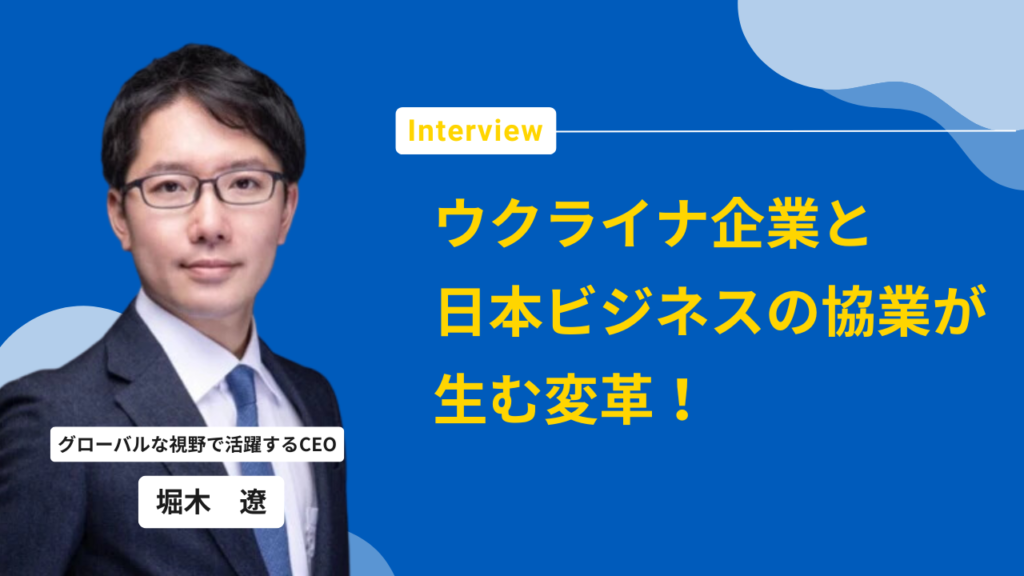
System development, cybersecurity, trade. We asked Ryo Horiki, who runs three companies working with Ukrainian businesses, how it started, how communication has gone since the war began, and what fields he wants to expand into next.
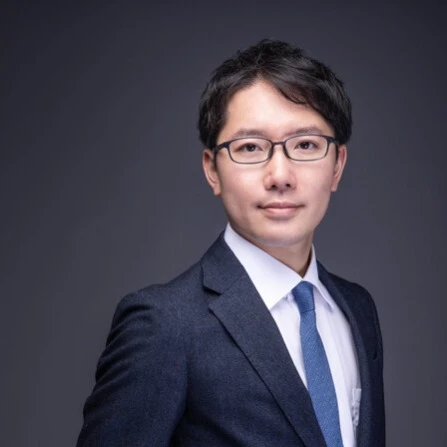
Representative Director and CEO, Kinobo Co., Ltd.; Representative, Vyshytech LLC; Representative, illnoa LLC
Works on business in partnership with Ukraine through each of these companies.
The Background and Business Strategy Behind Partnering with Ukraine
― What was your image of Ukraine before you started working together?
The partnership began before the Russian military’s invasion of Ukraine in 2022, so it wasn’t as well known in Japan as it is today. Personally, I knew the country’s name and roughly where it was, but not much more — my impression was just that it was a country with a strong agricultural sector and a lot of beautiful women.
So at first I never imagined that its education level and IT capabilities were this high, or the diligence and strength of character of its people.
― What led you to start working with Ukraine?
It started when a Japanese politician asked me for help building a website and with web marketing. I ran Kinobo Co., Ltd., which does web marketing and system development, so this was something I could help with.
Through the connection made while handling that project, I was introduced to a Ukrainian named Serhii, who worked as a guide at the Chornobyl (Chernobyl) nuclear plant and as an interpreter at government meetings.
Serhii had an engineering degree and had also worked in Japan — he was an extremely capable person. He then asked me for advice on importing and selling a well-known Ukrainian caviar, and that’s how my partnerships with many Ukrainian companies began.
― What led you to decide to partner with Ukraine?
The biggest factor was Serhii’s character and way of thinking, but the more I researched Ukraine, the more I realized what an appealing country it was, and that was a major factor too. The richness of its vast land, its education system — among the best in Europe at continually producing highly skilled people — its strong IT capabilities, and the appeal of the companies and products I was introduced to: all of these were things Japan lacked, and I found them compelling.
Ever since elementary school I had wanted to become an entrepreneur, and I had always thought about what Japan and humanity needed in order to develop. I became convinced that a business built on the relationship between Ukraine and Japan could contribute to strong growth in both countries, across a wide range of fields including trade and IT. That’s the background to my decision to partner with Ukraine.
When I decided to partner with them, I never imagined there would be a war. But even if I had known, I can say without a doubt I would make the same decision today.
Details of the Partnership with Ukraine
― Specifically, what companies or organizations in Ukraine are you working with?
I run three companies that work with Ukraine.
Let me tell you how each one works with Ukraine.
First, at Kinobo Co., Ltd., we work with development companies across Ukraine on system development. This spans a wide range — general web services, core DX systems, distributed computing, the metaverse, smartphone apps, IoT, and more. In terms of engineers, we’re effectively contracting indirectly with more than 2,500 of them.
Next, at Vyshytech LLC, we work together on cybersecurity — penetration testing, security measures, and our own proprietary security software. The white-hat hackers we work with are excellent people who continue to protect not only Ukrainian government agencies but banks in other countries as well. Actually, we named this company by combining “vyshyvanka,” the embroidered traditional Ukrainian garment, with “tech” from technology. A vyshyvanka’s colors and patterns express the individuality of each region, and it’s said that since ancient times, embroidery was sewn around the cuffs and neckline to ward off evil spirits from entering. That felt to me like cybersecurity custom-tailored to each client and situation, and it became a phrase I love.
Finally, at illnoa LLC, we work as a general trading company handling food, clothing, and equipment. Our partner companies range widely — from a farm with the world’s second-longest history in aquaculture producing caviar, and wheat and other foods, to Ukrainian cosplay studios and cosplayers in entertainment, and companies making hardware such as drones and anti-drone systems.
― What about the Ukrainian market appealed to your companies?
Let me tell you what appeals to each company.
First, for Kinobo Co., Ltd., what appeals to us is the quality and quantity of engineers with cutting-edge skills. Kinobo provides system development to clients in Japan and abroad. Our in-house development team — project managers, directors, engineers, and designers — has handled both our own services and client projects. But for distributed computing, blockchain, and mid-to-large-scale core DX systems, our in-house resources and hiring just weren’t enough, and we were increasingly having to turn projects down. And if we staffed everything with Japanese engineers alone, the cost would far exceed the budget, and we sometimes had to give up on projects for that reason. Ukraine’s appeal, which Japan doesn’t have, is that when we say we need engineers gathered at a certain skill level, people with that skill quickly come together, and the rates are cheaper than in Japan.
Next, for Vyshytech LLC, what appeals to us is the quality of the people handling cybersecurity and their hands-on experience. Because Ukraine faced routine cyberattacks from Russia even before the war, its defenses against them are highly developed. Japan, on the other hand, lags behind in cybersecurity, as has become a major issue reported in the news. I see cybersecurity as something that will be truly foundational to the IT society going forward, with growing demand.
Finally, for illnoa LLC, what appeals to us is the produce and seafood that comes from Ukraine’s vast, fertile land, and the freshness of a cultural sphere so different from Japan’s. Ukraine’s production of wheat, barley, and corn for feed is overwhelmingly high by world standards, and while relying further on imports is somewhat of a stopgap for Japan’s low food self-sufficiency, I recognize Ukraine as a very important and good partner country. The cultural differences are also fascinating — the buildings, the nature, all full of a beauty, appeal, and history that Japan doesn’t have. Interesting projects have also come out of that cultural difference through exchange between the two sides. What stayed with me most was the beauty of Ukrainians cosplaying Japanese anime characters. Not just the people, but the buildings in the background, the respect for the source material, the fine craftsmanship of the costumes — it was genuinely wonderful, and that’s what made me decide to also get into the cosplay business.
― What specific projects or initiatives are you working on?
For example, at Kinobo Co., Ltd., the Japanese team handles design and specifications, and we run projects jointly with Ukrainian project managers and project teams. Sometimes engineers from Singapore or Canada also join the team, and development proceeds with a multinational team. Since there are project managers on the Ukrainian side who speak native-level Japanese, development goes forward flexibly and smoothly. On Slack or Telegram, technical discussions can also be handled in English, so neither side has any problem not using Ukrainian or Japanese.
Also, at illnoa LLC, our Japan team handles design, PR, marketing, sales, and arranging trade logistics, purchasing products from Ukrainian producers and importing them. In recent years, the war has made this harder — airports and ports have been attacked, so imports now sometimes have to be trucked to a neighboring country first.
― How did you go about building relationships with your Ukrainian partner companies?
It happened through close communication with people on the ground in Ukraine, starting with Serhii. I think it just comes down to the basic things — keeping even small promises, and continuing to hold onto mutual respect.
Also, given how much potential and trust is there, it’s important to be prepared to invest actively. Even during the chaos of the war’s early days, they kept their trust in us without wavering, and as a human being, I feel it’s my responsibility to keep responding in kind.
Challenges Faced, and How They Were Solved
― What were the main challenges you faced in partnering with Ukraine?
At first, the challenge was sticking to being completely open with each other even when it meant taking a loss, and pushing forward for the sake of the customer and the client rather than our own company.
I believe that whether it’s a company you’re partnering with for the first time or not, and regardless of country, what matters is putting the end user or the client ahead of either side’s own profit. And I think what matters for reaching that level of quality is whether both sides can fully express the skills and technology they each bring, and push each other to improve.
― What measures did you take to address these challenges?
Rather than thinking short-term or medium-term, I put the long-term relationship first. That meant being prepared and willing to keep a project afloat — even out of my own pocket — rather than chasing immediate profit or an easier path for ourselves. There were times I actually used my own money to cover losses, but that’s what turned it into a strong, long-term partnership.
― How did you overcome differences in culture and business customs?
Before we started working together, I expected something more like a dry, strictly by-the-contract relationship, rather than people who hold themselves to a strong code of loyalty. But in reality, they were professionals who held themselves to a stricter code than I did — sticking to their principles, facing difficulties head-on without running from them — and at the same time, every one of them was emotionally warm. In that sense, I’ve never had trouble because of a difference in customs.
But during the chaos when the war began, I was deeply worried for my colleagues’ lives, and spent every day glued to the news and Twitter. On Instagram, seeing the woman who runs one of our partner companies on the ground, speaking about the state of Ukraine with just the clothes on her back and eyes swollen from crying, I couldn’t help but pray. And yet even then, contact from the shelter and updates on their work kept coming in remarkably, which shocked me — I had assumed they should be focused entirely on staying alive, not on work.
The war still isn’t over, so I can’t let my guard down, but they’ve held online meetings almost every week even amid missiles and blackouts, and development progress has kept exceeding expectations — I’m grateful, and frankly in awe.
― How would you rate the adaptability of Ukrainian engineers toward Japanese clients when unexpected problems come up?
At first I thought it would be a fairly dry, businesslike relationship, but in practice, many of the companies are surprisingly flexible, genuinely supportive, and accommodating in a hands-on, walk-alongside-you way. For example, in development, I turn the specs I’ve come up with into wireframes, and they’ll notice small details I hadn’t even caught myself. Things I, as the director, should have caught — the people on their side, taking part as development managers and PMs, accurately picture the user’s use cases and check in on the situation for me. It’s not just building what’s asked — I really appreciate that they walk alongside us, sometimes cracking jokes along the way. Like when it snows, they’ll send a selfie on Telegram saying “look, it’s snowing!” — that kind of exchange. We’re able to connect openly, culture and all, on both sides.
Growth and Future Outlook
― What concrete results or success stories have come out of partnering with Ukraine?
There have been a lot, but let me tell you about the ones that stood out most.
First, in system development, we succeeded in building a complex core system for a publicly listed company. From the requirements-definition stage, there was no Japanese precedent to draw on — it was all the company’s own unique logic and data, a completely custom build — but the Ukrainian and Japanese teams became one and pulled off a long-term development project. During this project, Russia’s invasion of Ukraine happened, and I braced myself for having to finish development with just the Japanese team and extend the timeline. But the Ukrainian side never once caused a delay — I could hardly believe it.
Another was succeeding in building a new system through our metaverse development partnership. This was a business that combined the apparel industry — hit hard as people stayed home during the pandemic and real-world shopping opportunities plummeted — with the metaverse, which was drawing attention at the time. At first I nearly turned it down, since we could design it ourselves but had no track record. But once I became confident we could pull it off with a specialist Japanese partner company, we moved forward with development. Partway through, though, the partner’s progress stalled, and it looked like development might grind to a halt over technical hurdles we couldn’t clear. So we consulted a Ukrainian VR and metaverse specialist company, and despite the tiny remaining budget, they resolved it more than perfectly and made the original plan a success. Developing a new system always involves an element of invention, and things often end up different from what you expected going in, but this company managed the schedule and budget with amazing rigor — as an engineer myself, it was a great experience and I have real respect for them.
― What has been the biggest thing you’ve gained from partnering with Ukraine?
That’s an interesting question. I’d say it’s how close I feel to people in Ukraine, even though I’ve only ever met them online. Put bluntly, it’s kind of a glitch that the emotional distance ends up exactly the same whether it’s a neighbor you only ever see online, or someone in Ukraine you only ever meet online. And the more you keep communicating, the more their personality, what they care about, what they feel strongly about, comes pouring through — you really get a sense of them as human beings. It’s not that being far apart online means you can’t understand each other; it’s more like, wait, we actually understand each other completely. Different cultures, different languages, but I’ve come to realize and learn how strong people are, and how strong their capacity to cooperate is, from people all over the world. That’s been my biggest takeaway. And through this, I feel like, every day, as I’m able to communicate with more people, the number of people any one individual can cooperate with just keeps growing.
― What fields do you plan to expand your partnership with Ukraine into going forward?
First is technology in fields like distributed computing — the kind that runs today’s nuclear power plant systems — as well as cutting-edge metaverse, AI, and NFTs.
Second is cybersecurity. This is a field I’m already working in, but I want to keep focusing on it going forward. I want to work with Ukraine’s white-hat hackers to properly spread security protections for Japanese companies. I feel it’s my role to bring white-hat hackers who’ve worked on the front lines to Japan, and I’d really like to make that happen.
Third is playing the role of a bridge between Japan and Ukraine. As things stand, I feel the two sides still haven’t fully exchanged what they each have to offer. Take cosplayers, for example. Ukrainians look amazing in outfits that wouldn’t necessarily suit Japanese people. On top of that, you can shoot photos against European streetscapes, so it looks incredible. So I see room to grow this through things like tourism packages in Ukraine for Japanese cosplayers, or placement services for Ukrainian cosplayers. On the food side too, Ukraine has an abundance of things like wheat flour and corn for feed, so I hope we can help secure a stable food supply from there. At the same time as pushing into the Japanese market, I also want to push into the Ukrainian market. Going forward, all kinds of technology, infrastructure, and goods will be needed for reconstruction support, so I want to focus on supporting areas like healthcare in particular. I’d like to convey the high quality of Japanese products while also creating movement that increases employment in Japan.
― How do you plan to develop your partnership with Ukraine going forward?
We’ll keep growing each of the businesses we’re currently working on, and keep pursuing customer satisfaction. And with reconstruction demand expected once the war ends, I think economic growth will likely be remarkable globally as well. I’m also preparing so that I can act on anything, including as a way of giving back.
And I want to take my family on a trip to Ukraine, properly express my gratitude, and learn more about Ukraine’s history and culture.
Sources and article record
Corrections and updates
- After checking with the interviewee, corrected five transcription errors: <span lang="ja">サイバーエージェント</span> (“CyberAgent,” an actual company name mistakenly entered) → <span lang="ja">サイバーセキュリティ</span> (“cybersecurity,” the field name meant in context); <span lang="ja">領国</span> → <span lang="ja">両国</span> (“both countries”); <span lang="ja">使用</span> → <span lang="ja">仕様</span> (“specification”); <span lang="ja">詩集</span> → <span lang="ja">刑繍</span> (“embroidery”); and a duplicated set of parentheses. The substance of what was said has not been changed.
- Corrected <span lang="ja">新貝</span> in the interviewee's remarks to <span lang="ja">自社</span> (“our own company”). As written, it was not possible to tell what the original word referred to; this reading was chosen because the sentence begins “even if it meant a loss at first” and is set against “the customer and the client.” Since this correction is not uniquely determined by the characters alone, it is noted here.
- Rewrote the title and the editorial team's introductory and closing text. The interviewee's own remarks were not changed.
If you find an error in this article, please tell us via Corrections. Once we have checked it, we will record in the article what was corrected and why.