
Ukraine’s Currency, the Hryvnia: Its Yen Exchange Rate and Features | Tips for Paying, Too
Ukraine’s currency, the hryvnia, is essential to any account of the country’s history, culture, and economic development.
This article explains the hryvnia’s exchange rate against the yen, its features, its economic impact, and practical information for Japanese tourists. If you’re interested in Ukraine’s economy or tourism, please use this article as a reference.
The History of Ukraine’s Currency, the Hryvnia (UAH)
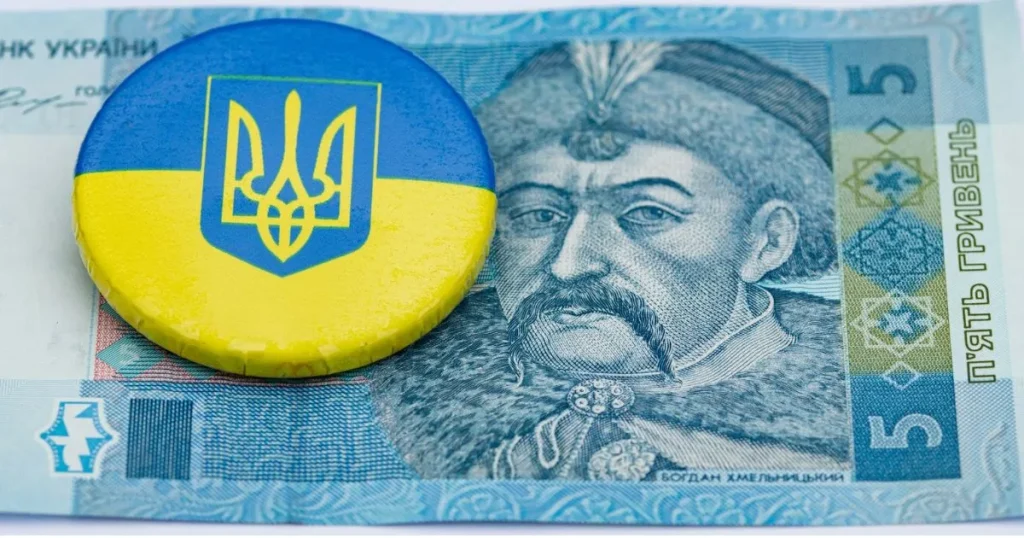
Ukraine’s currency, the hryvnia, was officially introduced on September 2, 1996.
This was not simply the birth of a new currency; it was an important milestone in Ukraine beginning to build an independent economy as a sovereign state.
Ukraine achieved independence from the former Soviet Union in 1991, but afterward faced many difficulties in establishing its own currency system.
The History of Ukraine’s Currency
After the collapse of the former Soviet Union, Ukraine, as a new state, faced the need for an independent currency.
In 1992, an interim currency called the “karbovanets” was introduced as a step toward its own currency, but it proved insufficient to support Ukraine’s economy.
In Ukraine, where the economy was in turmoil right after independence, hyperinflation set in and prices rose sharply, making everyday transactions difficult.
So in 1996 it was decided that a new currency, the hryvnia, would be introduced. This currency reform became an important turning point for restoring confidence in Ukraine’s economy.
The Challenge of Currency Independence from the Former Soviet Union
Because Ukraine had depended on the economic system of the former Soviet Union, introducing its own currency underscored its economic independence.
Ukraine aimed to establish its economic sovereignty by issuing an independent currency, but faced challenges such as the following along the way.
Curbing Inflation
In its early years of independence, Ukraine faced uncontrollable inflation. It therefore introduced the hryvnia and began a new monetary policy.
Ukraine’s economy struggled with high inflation for many years after independence.
In particular, the hyperinflation of the early 1990s had a severe effect on the lives of Ukrainians.
Because of the economic turmoil following the collapse of the former Soviet Union and the instability of being an emerging market, Ukraine experienced hyperinflation of over 10,000%, and its GDP also plunged to less than half.
In 1996, when the hryvnia was introduced, the inflation rate was 40%, falling to 10.1% in 1997.
Stabilizing the Exchange Rate
To move on from the former Soviet economy, it was necessary to stabilize the currency’s value on international markets.
However, because Ukraine was an emerging market, the currency’s value was often prone to fluctuation. Earning public trust in the new currency was not easy.
In a Ukraine that was economically unstable, many people also doubted whether the hryvnia would really function as a stable currency.
Features of Ukraine’s Currency, the Hryvnia
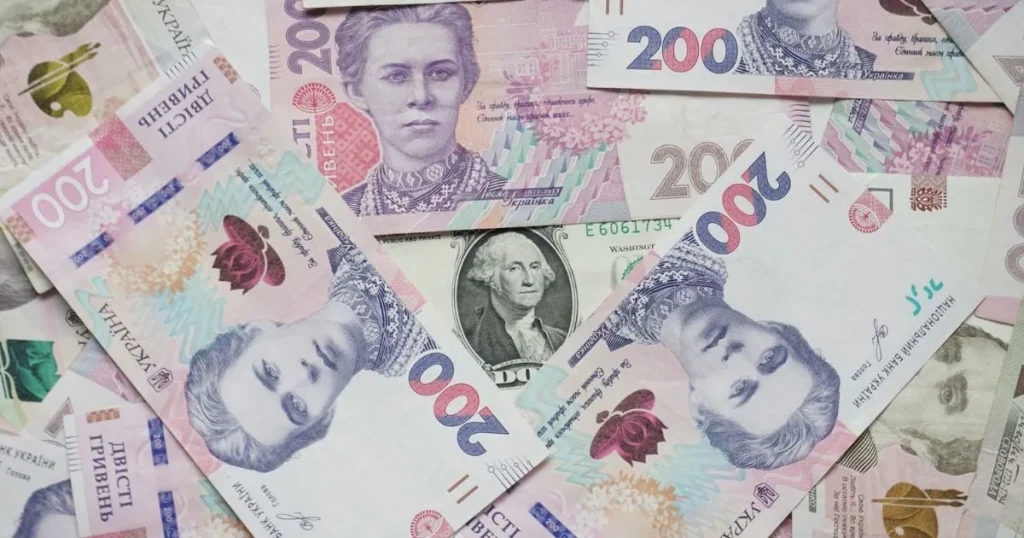
Ukraine’s rich history and culture are reflected in the hryvnia’s banknotes and coins. The banknote designs depict notable historical figures, expressing the country’s pride and cultural values.
This design underscores Ukraine’s national identity, and the banknotes themselves symbolize Ukraine’s history and culture.
According to the National Bank of Ukraine, as of September 23, 2026, seven denominations of banknotes are in circulation: 20, 50, 100, 200, 500, 1,000, and 2,000 hryvnias. The 2,000-hryvnia note (portraying the poet Vasyl Stus) was issued on September 4, 2026. Coins for the 1, 2, 5, and 10 hryvnia denominations were issued between 2018 and 2020, and the banknotes of the same denominations ceased to be legal tender on March 2, 2026 (they can still be exchanged at banks and elsewhere). The portrait on each denomination is as follows (the 1–10 hryvnia notes are the older banknotes).
- 1,000 hryvnias: Volodymyr Vernadsky (also spelled Vernatsky, geochemist)
- 500 hryvnias: Hryhorii Skovoroda (philosopher)
- 200 hryvnias: Lesya Ukrainka (writer)
- 100 hryvnias: Taras Shevchenko (poet)
- 50 hryvnias: Mykhailo Hrushevsky (historian and statesman)
- 20 hryvnias: Ivan Franko (writer)
- 10 hryvnias: Ivan Mazepa (statesman and military leader)
- 5 hryvnias: Bohdan Khmelnytsky (statesman)
- 2 hryvnias: Yaroslav I
- 1 hryvnia: Volodymyr I
The historical figures above are notable leaders and cultural symbols who have profoundly influenced the people of Ukraine, and the banknotes give them a lasting presence.
Ukraine’s Economy and Currency Value
The hryvnia’s exchange rate is sensitive to changes in the economic and political situation, and has repeatedly fluctuated significantly over the years.
International economic crises and domestic political turmoil in particular have a major effect on the hryvnia, which then ripples through the whole Ukrainian economy.
As of October 21, 2024, the rate between the hryvnia and the Japanese yen was 1 UAH = 3.652 yen.
In December 2019 it rose as high as 1 UAH = 4.7017 yen, but by December 2020 it had fallen to 1 UAH = 3.6395 yen.
2020 was the year a pandemic began spreading worldwide, and Ukraine’s economy was likewise affected by it.
The rate then recovered gradually, but as Russia’s full-scale invasion continued, it fell again to 1 UAH = 3.5313 yen in July 2022.
The Spread of Electronic Payments and Cryptocurrency in Ukraine
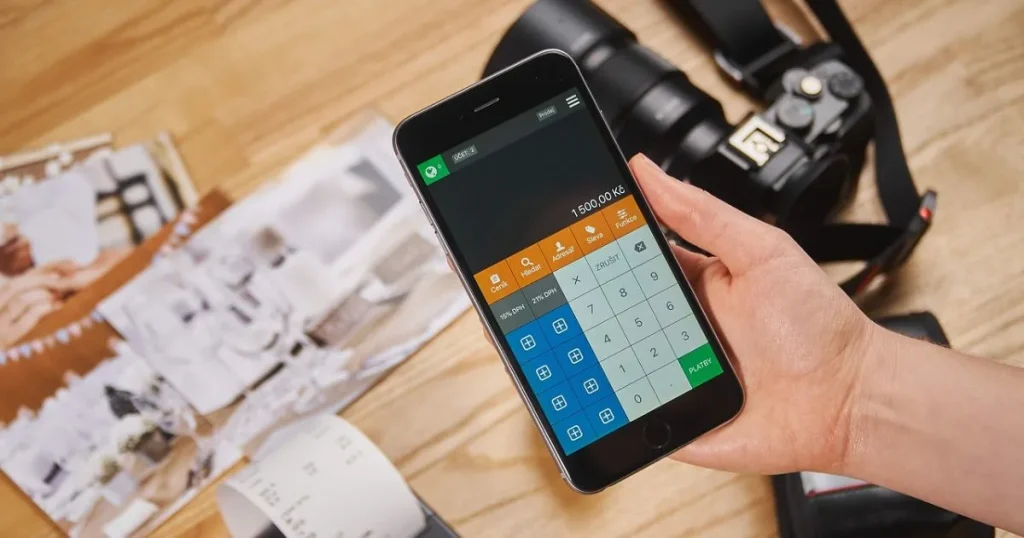
Ukraine is one of the countries where electronic payments and cryptocurrency have spread rapidly in recent years.
The use of cryptocurrency as a wartime fundraising tool, and the spread of cashless payment mainly in urban areas, symbolize the development of Ukraine’s digital economy.
The Spread of Electronic Payment Systems
Electronic payment systems have spread rapidly in Ukraine, and an environment where shopping and services can be paid for without cash has been built up, especially in urban areas.
As a result, Ukraine has succeeded in developing its digital infrastructure and improving convenience for consumers.
In a resolution passed in February 2022, the National Bank of Ukraine stated explicitly that it would guarantee that all cashless payments would continue without restriction even under the full-scale invasion.
As cashless payment has spread, everyday shopping has become more convenient, especially for younger people and urban residents.
Also, since 2019, Kyiv has offered an electronic transit card called “e-Kvytok” for use on public transportation.
Being able to pay with a transit card or a smartphone is also convenient for tourists.
The Rise of Cryptocurrency, and Regulation
Ukraine is one of the countries taking a globally proactive stance on adopting cryptocurrency.
Especially since Russia’s full-scale invasion in 2022, the Ukrainian government and private organizations have used cryptocurrencies such as Bitcoin and Ethereum to receive donations and support from around the world.
Cryptocurrency has played an important role as a fast and secure fundraising tool even in wartime, establishing itself as a new tool supporting Ukraine’s economy.
As cryptocurrency has spread, the Ukrainian government has been rapidly developing legislation on it.
Ukraine’s Ministry of Digital Transformation signed a memorandum with the Stellar Development Foundation (SDF), which works on cryptocurrency development, in 2021.
On February 17, 2022, the Verkhovna Rada adopted the Law “On Virtual Assets” (No. 2074-IX). However, the law itself states that it takes effect only once amendments to the Tax Code establishing taxation of virtual-asset transactions come into force, and the Verkhovna Rada’s legislative database lists it as “not yet in force” as of September 23, 2026.
Ukraine’s Cryptocurrency Market
Cryptocurrency trading volume within Ukraine has surged.
Cryptocurrencies such as Bitcoin, Ethereum, and Tether are widely used to protect assets and to send money internationally, and their flexibility is valued given how difficult it can be to obtain foreign currency.
In particular, demand for Tether surged after 2022.
The Wall Street Journal in the United States reported that, in February 2022, more than 8.5 million hryvnias’ worth of Tether was traded on two cryptocurrency exchanges.
Even as cryptocurrency trading has surged, risks of criminal use and money laundering have also been pointed out.
To address this, the Ukrainian government is strengthening regulation and international cooperation, aiming to develop the cryptocurrency market while ensuring transparency.
Plans for an e-Hryvnia
Beyond its proactive involvement in the cryptocurrency market, Ukraine is also moving forward with a central bank digital currency (CBDC).
This digital currency is called the “e-hryvnia,” a new form of currency to be issued and managed by the National Bank of Ukraine (NBU).
One advantage of introducing the e-hryvnia is that it can keep costs lower than using the conventional banking system for international transfers and domestic payments.
In international transactions in particular, where fees tend to be high, using the e-hryvnia would ease the economic burden.
Since 2022, even while affected economically by Russia’s full-scale invasion, the Ukrainian government has continued this project.
Introducing the e-hryvnia is expected to have a major impact not only on Ukraine’s economy but on society as a whole.
For example, the digitalization of financial transactions would reduce cash use and further advance a cashless society.
Furthermore, a state-issued digital currency is expected to speed up commercial transactions and make the government’s tax-revenue management more efficient.
A Guide to Using Currency When Visiting Ukraine
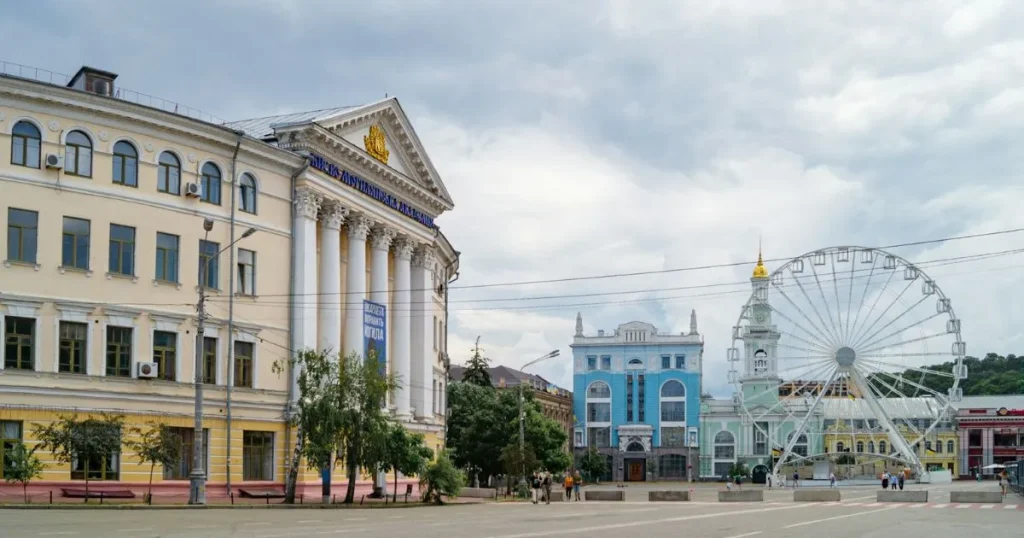
Japanese tourists visiting Ukraine may find themselves puzzled at times by the unfamiliar hryvnia.
So here is an explanation of how to exchange money for hryvnias, how widely credit cards are accepted, and points to watch for when paying. If you’re planning to visit Ukraine, please use this as a reference.
How to Exchange Money for Hryvnias, and Points to Watch For
There are several ways to obtain hryvnias in Ukraine, but tourists should weigh convenience against safety.
Some travelers have reported that rates were the same at the airport and around the main Khreshchatyk Street in the city center, so rather than exchanging a large sum at once, it’s more reliable to check several exchange offices.
You can also withdraw hryvnias directly from an ATM using a credit or debit card carrying an international brand (Visa, Mastercard, American Express).
Using an ATM is quick and convenient, but fees often apply, so always check the fee when withdrawing.
How Widely Credit Cards Are Accepted in Ukraine
Credit card use has spread in Ukraine, especially in major cities, but acceptance varies by region, so you’ll need to use both cash and cards depending on where you are.
In Ukraine’s major cities, many hotels, restaurants, and shopping malls accept credit cards.
In rural areas, on the other hand, small shops and tourist spots typically accept cash only.
Markets and privately run restaurants often don’t accept credit cards, so it’s worth keeping some cash on hand. Before using a credit card, ask, “Can I use a card?”
Points to Watch For When Paying in Ukraine
Making appropriate use of electronic payment and credit cards will make paying for things go smoothly during your stay in Ukraine.
Taxis and small shops sometimes can’t make change, so it’s important to always carry small banknotes and coins.
Tipping is not mandatory in Ukraine, but some hotels and restaurants may expect a tip of around 5–10%. If asked for a tip, give 5–10% of the total bill.
Will Ukraine’s Currency Change to the Euro?
Calls for Ukraine to join the EU have grown stronger. In June 2024, formal negotiations between the EU and Ukraine began.
Here is an explanation of the relationship between Ukraine and the EU.
Why Ukraine Wants to Join the EU
Within the EU, opinion is divided over Ukraine’s membership, and Hungary, which held the EU’s rotating presidency from July 2024, has taken the view that it is premature.
For that reason, formal accession negotiations were started in June, just before the presidency changed hands.
Would Ukraine’s Currency Change If It Joined the EU?
Negotiations between Ukraine and the EU have only just begun, so there is no prospect at this time of Ukraine actually joining the EU.
Also, even if Ukraine joins the EU, the hryvnia will not immediately change to the euro. To adopt the euro, a country must meet four convergence criteria — price stability, sound public finances, exchange-rate stability, and long-term interest rates — and for exchange-rate stability it must have participated in the Exchange Rate Mechanism (ERM II) for at least two years without devaluing against the euro during that time (European Commission, European Central Bank).
If Ukraine joins the EU, it would gain benefits such as the following.
- Promotion of trade with EU member states
- Free movement with EU countries
- Economic growth
If the euro is adopted in the future, it should become easier to limit exchange-rate risk in transactions with the eurozone.
Companies working with Ukrainian businesses and engineers may be affected by how Ukraine’s negotiations with the EU proceed.
The Future of Ukraine’s Currency and Digital Economy
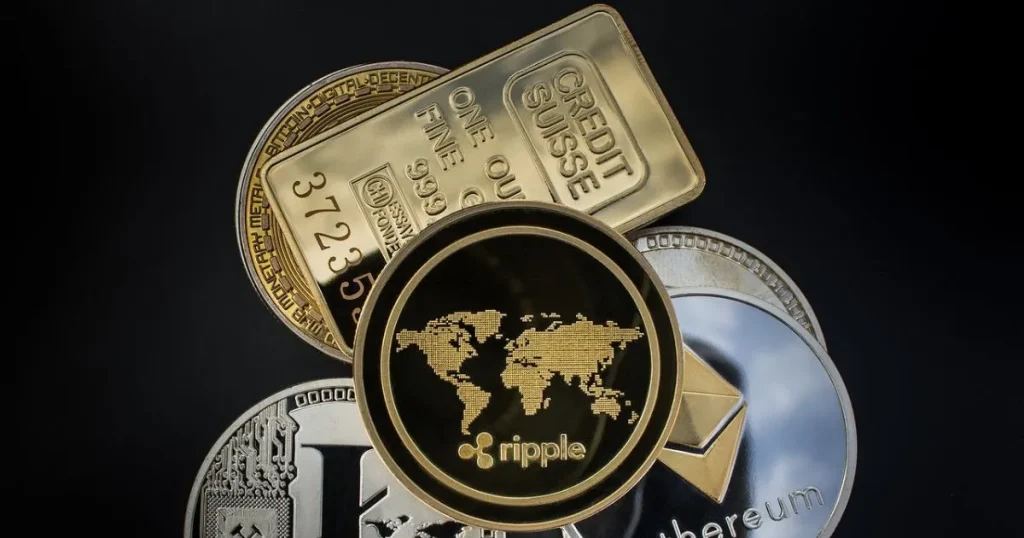
As it has pursued economic independence as a sovereign state, Ukraine introduced its own currency, the hryvnia, and has worked to stabilize it.
Since its introduction in 1996, the hryvnia has continued to serve as a currency both within Ukraine and abroad, even as it has been strongly affected by Ukraine’s political and economic conditions.
In recent years, Ukraine has made rapid progress in cryptocurrency and electronic payments.
To raise its standing in international financial markets, the Ukrainian government has been developing legislation on cryptocurrency, and trading in Bitcoin and Ethereum is now widespread.
The e-hryvnia, the digital currency the National Bank of Ukraine is pursuing, aims to make transactions both within Ukraine and abroad faster and more efficient, ensure transaction transparency, and modernize the financial system.
The future of Ukraine’s currency and digital economy depends on stabilizing the hryvnia and developing its digital currency.
Sources and article record
Sources and references
- About Banknotesbanknotes in circulation range from 20 to 2,000 hryvnias. The 1, 2, 5, and 10 hryvnia banknotes of the 2003–2007 design ceased to be legal tender on March 2, 2026
Published by National Bank of Ukraine (NBU) · Checked: 2026-09-23 - About Coinsthe 1 and 2 hryvnia coins entered circulation April 27, 2018; the 5 hryvnia coin December 20, 2019; the 10 hryvnia coin June 3, 2020
Published by National Bank of Ukraine (NBU) · Checked: 2026-09-23 - 2,000-Hryvnia Banknote Enters Circulation on 4 September 2026portrait is Vasyl Stus
Published by National Bank of Ukraine (NBU) · Checked: 2026-09-23 - Convergence criteria for joiningthe four convergence criteria for adopting the euro; exchange-rate stability is measured by performance under ERM II
Published by European Commission, Directorate-General for Economic and Financial Affairs · Checked: 2026-09-23 - Convergence criteriaArticle 140(1) of the Treaty on the Functioning of the EU; participation in ERM II for at least two years without devaluation
Published by European Central Bank · Checked: 2026-09-23 - Про віртуальні активи №2074-IXadopted February 17, 2022. Status “Не набрав чинності” [“not yet in force”]; takes effect once the Tax Code amendment law is in force
Published by Legislative database of the Verkhovna Rada of Ukraine · Checked: 2026-09-23
Corrections and updates
- Passages that described the aggressor obliquely, as “unrest,” have been revised to explicitly state Russia's full-scale invasion. An unsupported sentence claiming Ukraine began seeking EU membership “because of recent unrest” has been removed.
- This article had stated that the hryvnia would change to the euro upon EU accession, but adopting the euro requires meeting the convergence criteria and participating in ERM II for at least two years, so it would not change at the same time as accession. It had also stated that the 1, 2, 5, and 10 hryvnia banknotes were currently in circulation, but these have been replaced by coins, and the banknotes ceased to be legal tender on March 2, 2026 (and a 2,000-hryvnia banknote was issued in September 2026). It had also stated that holding and trading cryptocurrency had been officially recognized under a legal framework, but the "On Virtual Assets" law adopted in 2022 is not yet in force. These points have been corrected, and the names on the banknote portraits have been revised to spellings that follow Ukrainian.
If you find an error in this article, please tell us via Corrections. Once we have checked it, we will record in the article what was corrected and why.
Related articles
-
Still Built on a 1993 Law, as the Number Passes 1.3 Million: Ukraine’s War Veterans
The foundation of Ukraine's system of support for war veterans is a law enacted in 1993, two years after the Soviet collapse. The government's own strategy says that veterans, the families of the fallen, and people disabled by the war together number more than 1.3 million, and admits the old law no longer fits reality. This article covers the support available under “combatant” status and the review under way as of September 2026.
-
Russia’s Central Bank Is Also Covered: What Japan’s Sanctions on Russia Are Stopping
On March 1, 2022, Japan added President Putin and others, along with the Central Bank of the Russian Federation, to its asset-freeze measures. Asset freezes, export bans, and import bans based on the Foreign Exchange and Foreign Trade Act have since been joined by an oil price cap and tariff measures, with the most recent addition, as of September 2026, made on September 12, 2025. This article looks, from materials published by the Ministry of Finance and the Ministry of Economy, Trade and Industry, at what is being stopped.
-

No Sketch, Just a Cat-Hair Brush: The Floral Decorative Painting of Petrykivka
The decorative painting that grew up in the town of Petrykivka, in Dnipropetrovsk Oblast, began as paintings on the white walls of farmhouses and became a single picture on paper. The technique of laying down flowers with a cat-hair brush, without a preliminary sketch, was inscribed on UNESCO's Representative List of the Intangible Cultural Heritage of Humanity in December 2013 — the first Ukrainian element ever inscribed. This article covers the brushwork, the imaginary flowers, and the painters.