

Section
Culture & History
Food, music, literature and crafts: Ukrainian culture and the history behind it.
-
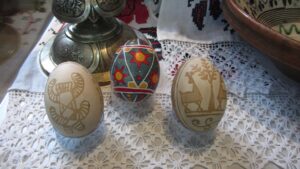
Pysanka: The Ukrainian Wax-Written Egg, and Its 2024 UNESCO Listing
In December 2024, what was added to UNESCO's Representative List was "Pysanka, Ukrainian tradition and art of decorating eggs," a joint submission by Ukraine and Estonia. How do dictionaries and museums distinguish between these eggs? What warnings do Ukrainian researchers give about decoding "this pattern means this"? And the oldest surviving clues are not eggs at all, but 12th-century pottery.
-
The Day ‘Kiev’ Became ‘Kyiv,’ and How Ukraine’s Place Names Get Their Spelling
On March 31, 2022, Japan's Ministry of Foreign Affairs changed how it referred to Ukraine's capital, from 'Kiev' to 'Kyiv.' What changed was not the city's name, but how Київ is transliterated. This article looks in turn at the Ukrainian government resolution that sets the Latin-alphabet spelling, the #KyivNotKiev campaign, place-name changes made by law, and how older spellings are treated in historical sources.
-
How Ukrainian and Russian Differ
Ukrainian and Russian both use the Cyrillic alphabet, but Ukrainian has і, ї, є, and ґ, and lacks ы, э, ъ, and ё. Differences also show up in the sound of "г," in the words for "yes" and "no," and in borrowings from Polish. Together with the history of Ukrainian being dismissed as "just a dialect" under imperial Russia, this article explains how close, and how far apart, the two languages are.