

Section
Culture & History
Food, music, literature and crafts: Ukrainian culture and the history behind it.
-
The Trojan Hero Becomes a Cossack ── Kotliarevsky’s Eneida
The Eneida rewrote Aeneas, the hero of Virgil's epic, as a Cossack youth who speaks Ukrainian vernacular. This article traces, through encyclopedias and the text itself, the feast scenes with halushky and borscht, the new ten-line stanza form, and what the work meant for turning Ukrainian into a literary language. In 2026, its first Japanese translation was published.
-
Closed in 1817, Revived in 1991: The Kyiv-Mohyla Academy
The brotherhood school that began in a donated estate in 1615 became a collegium under Petro Mohyla in 1632, and trained hetmans and clergy. The school declined under the Russian Empire and was closed in 1817, only to be revived as a university in 1991, right after independence. This article traces that history through encyclopedias and legal decrees.
-
The Tale of Bygone Years Was Compiled Three Times in 1110s Kyiv
The Tale of Bygone Years, the chronicle that carries the history of Kyivan Rus, was compiled at a monastery in Kyiv in the early 12th century and revised twice more within a few years. No original manuscript survives; what can be read today are copies made in the 14th to 16th centuries. Drawing on encyclopedias and critical editions, this article covers who is credited with compiling it, where the manuscripts are held, how its years are counted, and the title used in its Japanese translation.
-
The Queen of France Who Signed in Cyrillic: Anna, Princess of Kyiv
Anna, daughter of Yaroslav the Wise, married King Henry I of France at Reims Cathedral in 1051, and after her husband’s death became regent for the young King Philip I. This article looks at her Cyrillic signature, her second marriage and excommunication, her undocumented final years, and how much of the story that kings swore their coronation oath on “her Gospel” actually holds up.
-
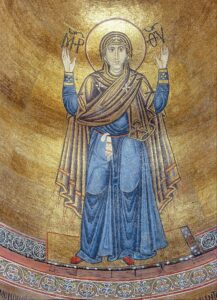
1011 or 1037? The Year Kyiv’s St. Sophia Cathedral Was Built
St. Sophia Cathedral in Kyiv was built in the time of Yaroslav the Wise and still preserves 11th-century mosaics and frescoes. But the year it was built differs by 26 years between the encyclopedia's date of 1037 and the Ukrainian government's 2011 celebration of the cathedral's 1000th anniversary. This article traces the origin of its Baroque exterior, its conversion to a museum in 1934, its inscription as a World Heritage site in danger in 2023, and the damage it suffered in 2025.
-
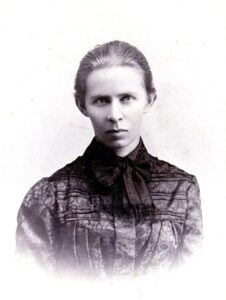
The Poet on Ukraine’s 200-Hryvnia Note: Lesya Ukrainka and Her Play Forest Song
The figure portrayed on Ukraine's 200-hryvnia banknote is the poet and playwright Lesya Ukrainka (1871–1913), born Larysa Kosach. Over thirty years of fighting illness, she left behind twenty dramatic works. Centered on Forest Song (1911), a play drawn from forest legends of the Volyn region, this article covers her work and life, the banknote's design, and Japanese translations available to read.
-

Pulled from Theaters After Nine Days: Dovzhenko’s Film Earth
Oleksandr Dovzhenko's silent film Earth, released in Kyiv on April 8, 1930, was attacked by critics in Moscow and vanished from Soviet theaters within nine days. It was shown and acclaimed in Western Europe that same summer, and in a 1958 international poll of film critics held in Brussels it was named one of the 12 greatest films in cinema history. This article covers the film itself, the events leading up to its withdrawal, and what happened to the director afterward.
-
From ‘Shchedryk’ to ‘Carol of the Bells’: How One Melody Became Two Songs
The melody of the Christmas standard "Carol of the Bells" comes from the Ukrainian New Year's song "Shchedryk." It crossed to North America at a Carnegie Hall concert on October 5, 1922, and gained its English lyrics in 1936 — lyrics that are not a translation of the original. Drawing on primary sources, this article traces where one melody split into two songs.
-

Ukraine’s Christmas Moves from January 7 to December 25
Under a July 2023 law, Ukraine removed January 7 from its list of national holidays, leaving only December 25 as Christmas. That same September, two of the country's major churches also switched to a calendar that celebrates Christmas on December 25. This article separates the law, the church calendars, and family customs, and explains the twelve dishes of Christmas Eve and koliadky along the way.
-

Vyshyvanka ── Embroidery That Differs by Region, Including a Pattern That Arrived in the Late 19th Century
The vyshyvanka, Ukraine's embroidered shirt, varies in technique and color from region to region. Among the patterns now displayed as "traditional" is a cross-stitch design that arrived from soap wrappers in the late 19th century. How far can the meanings often attached to these patterns actually be backed up by sources? This article also looks at how the vyshyvanka is treated in Ukraine's national heritage list and in UNESCO's list.