

Section
Culture & History
Food, music, literature and crafts: Ukrainian culture and the history behind it.
-
The Well for the Thirsty, Unreleased for 22 Years, and Ukraine’s “Poetic Cinema”
Yurii Illienko's The Well for the Thirsty, shot in 1965, was shelved over an “ideological deviation” and not released until 1987. This article covers the main works of “poetic cinema” that followed Shadows of Forgotten Ancestors (released in Japan as The Fiery Horse) at the Kyiv studio, the production years that differ between encyclopedias and the archive that holds the films, how the movement was shut down in 1974, and where the term “poetic cinema” itself comes from.
-
The 1921 Songs Before Dawn: Yeroshenko, Who Wrote Fairy Tales in Japanese
In 1921, the Tokyo publisher Sobunkaku brought out two collections by the blind poet Vasyl Yeroshenko, Songs Before Dawn and The Last Sigh. This article looks, through library catalogs and encyclopedias, at the Japanese-language books from his seven years in Japan from 1914, the portraits painted by Tsune Nakamura and others, and the points where encyclopedias disagree on his birthplace and his later life.
-
“Marusia” and the Kharkiv Theater: Kvitka-Osnovianenko
Stories such as “Marusia,” collected in the 1834 Little Russian Tales, are described by encyclopedias as showing that Ukrainian prose could handle serious subjects, not just comedy. Their author, Kvitka-Osnovianenko, was a landowner who also served as manager of the theater in Kharkiv. Drawing on two encyclopedias, this article covers his life and the dates of his works, and the debate over his connection to Gogol's The Government Inspector.
-
The 1574 Lviv Apostol and Azbuka
Printing began on February 25, 1573 and finished on February 15, 1574. The colophon of the Apostol, a liturgical book printed in Lviv, records the printer Ivan Fedorovych's own account of his career. Together with the small primer, the Azbuka, printed the same year, this article looks at their contents, the surviving copies, and the conditions behind the claim that this is “the first printed book in Ukraine.”
-
The Dimensions of the Cossack Boat “Chaika” Trace Back to a Single Book
The chaika (чайка) was the boat in which Zaporizhian Cossacks rowed out to the Black Sea. Much of what is cited for its length and crew size traces back to a book published in Rouen in 1660 by the French engineer Beauplan — a book that never actually calls the boat a "chaika." This article looks at how the boat was built, where encyclopedias' figures differ, and what has become of boats raised from the Dnipro River.
-
Sitting With a Bandura: The Folk Painting “Cossack Mamai”
A Cossack sitting cross-legged and playing a bandura, with a horse, an oak tree, and weapons nearby: this is “Cossack Mamai,” a folk painting that decorated the walls, doors, and chests of Ukrainian homes in the 17th–19th centuries. Drawing on an entry in a Ukrainian historical encyclopedia, this article traces the painting’s fixed composition, the figures added from the mid-18th century, the name “Mamai,” and the form it reached by the late 18th century.
-
The Town Where Port Work Began on September 2, 1794: Odesa and Its Age as a Free Port
Odesa was rebuilt as a port in 1794 on the site of Hadzhybei, where an Ottoman fortress had stood. A grid street plan, the governorship of the Duc de Richelieu, and decades as a duty-free “porto-franco” helped it grow rapidly through wheat exports. This article covers the encyclopedias’ figures, a discrepancy over how long the free-port era lasted, and the 2022 removal of the “Founders” monument.
-
Funded by Nobles and Merchants: Kharkiv’s Karazin University, Opened in 1805
Kharkiv National University was authorized in 1804 and opened in 1805, the first university on Ukrainian land ruled by the Russian Empire. This article covers its founder Vasyl Karazin, who persuaded nobles and merchants to fund it; the university’s swings between autonomy and censorship; lectures in Ukrainian; its changing names; differing claims about being the “oldest”; and the damage it has suffered since 2022.
-
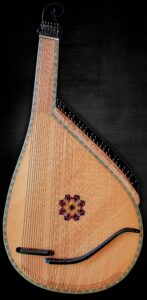
The Traveling Blind Bards Called Kobzari, and Their Instrument, the Bandura
The bandura, Ukraine's folk instrument, has no frets and produces one pitch per string. The kobzari, who traveled the country reciting epic songs with this instrument, were persecuted under both imperial Russia and the Soviet Union, and the tradition nearly died out in the 1930s. In 2024, the effort to safeguard it was recognized by UNESCO.
-
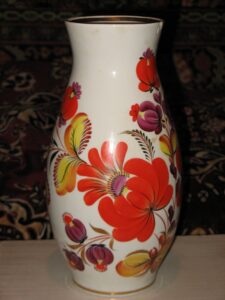
No Sketch, Just a Cat-Hair Brush: The Floral Decorative Painting of Petrykivka
The decorative painting that grew up in the town of Petrykivka, in Dnipropetrovsk Oblast, began as paintings on the white walls of farmhouses and became a single picture on paper. The technique of laying down flowers with a cat-hair brush, without a preliminary sketch, was inscribed on UNESCO's Representative List of the Intangible Cultural Heritage of Humanity in December 2013 — the first Ukrainian element ever inscribed. This article covers the brushwork, the imaginary flowers, and the painters.