
Pulled from Theaters After Nine Days: Dovzhenko’s Film Earth
Oleksandr Dovzhenko's silent film Earth, released in Kyiv on April 8, 1930, was attacked by critics in Moscow and vanished from Soviet theaters within nine days. It was shown and acclaimed in Western Europe that same summer, and in a 1958 international poll of film critics held in Brussels it was named one of the 12 greatest films in cinema history. This article covers the film itself, the events leading up to its withdrawal, and what happened to the director afterward.
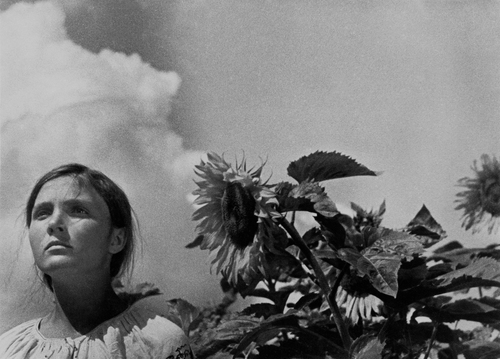


On April 8, 1930, director Oleksandr Dovzhenko’s silent film Earth (Ukrainian original title: Земля, Zemlia) was released in a Kyiv theater. According to the Dovzhenko Centre, Ukraine’s largest film archive, the film was pulled from theaters just nine days later. 28 years afterward, in 1958, international film critics gathered in Brussels named it one of the 12 greatest films in cinema history.
In a 2021 poll by the same center on the “best films in Ukrainian cinema history,” Earth ranked second. It stands as a landmark of Ukrainian cinema that was first rejected within the Soviet Union and only later recognized abroad.
A Village Story About the Coming of a Tractor
According to the Dovzhenko Centre’s film data, Earth was made in 1930 at the Kyiv studio of the All-Ukrainian Photo Cinema Administration (VUFKU, Vufku), the film agency of the Ukrainian Soviet Socialist Republic. It runs 79 minutes, was shot by cinematographer Danylo Demutsky, and stars Semen Svashenko, Stepan Shkurat, and Yuliia Solntseva, among others.
It is set in a Ukrainian village at the end of the 1920s, as agricultural collectivization is beginning. The center’s synopsis sums up the plot this way: Vasyl, a young Communist Party member, obtains a tractor with the help of the village party organization and plows away the boundaries of the “kurkul (kulak) fields.” For his zeal, he pays a heavy price.
In a commentary for the Ukrainian history magazine Local History (April 8, 2024), film critic Serhii Ksaverov describes how the film opens with the old man Semen dying quietly in an apple orchard, how Vasyl is shot while dancing home along a night road, and how his father Opanas turns away the priest as villagers carry the coffin singing a “new song.” In Ksaverov’s reading, death is portrayed as the start of new life, making this a very different film from an ordinary piece of Soviet propaganda.
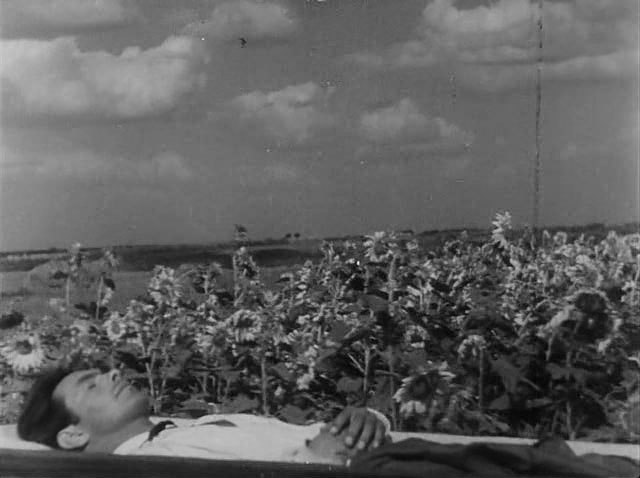


Filming began in the village of Yareski, in Poltava Oblast, at the end of June 1929 (Vufko, the Dovzhenko Centre’s film-history website).
The Nine Days to Its Disappearance
Vufko, the Dovzhenko Centre’s film-history website, traces the events from production to withdrawal.
| Time | Event |
|---|---|
| May 1929 | Dovzhenko begins a screenplay on the theme of collectivization; production is announced on May 24 |
| Late June–September 1929 | Filming in the village of Yareski; the crew returns to Kyiv in September and continues filming around Holosiiv and Kytaiv |
| December 1929 | Editing is finished |
| January 26, 1930 | A Vufku committee gives the film a highly favorable reception and accepts it; Dutch filmmaker Joris Ivens is present |
| March 1930 | Criticism emerges at a pre-release discussion; on March 24 the All-Union Central Council of Trade Unions reviews the film |
| Early April 1930 | Poet Demian Bednyi attacks the film in a verse review (Vufko dates this to April 4) |
| April 8, 1930 | A shortened version is released in Kyiv |
| Nine days after release | The film disappears from Soviet theaters |
The Dovzhenko Centre calls Bednyi “Stalin’s court poet.” According to Vufko, his review faulted the film for being incomprehensible to the masses, for not condemning the kurkuls harshly enough, and for its scenes of female nudity. The center writes that the film was pulled after being denounced as “biologism” and “naturalism.” The Local History commentary cited above states that, on April 17, the central film-censorship body (the Central Repertoire Committee) recommended halting screenings. Reception within Ukraine was more favorable: poet Mykola Bazhan wrote an admiring review, though it was not published until May 1930, after screenings had already been stopped.
The Summer It Was Recognized Abroad
Even as it was being suppressed within the Soviet Union, screenings began in Western Europe from June 1930. According to Vufko, Dovzhenko toured Europe from the summer into the autumn of 1930 with his wife, actress Yuliia Solntseva, and cinematographer Demutsky, and the film was shown in Germany, Czechoslovakia, France, Britain, the Netherlands, and elsewhere. The Dovzhenko Centre writes that reviews in the foreign press were “largely favorable.”
The Director’s Later Move to Moscow
According to the Encyclopedia of the History of Ukraine, published by the Institute of History of Ukraine at the National Academy of Sciences of Ukraine, Dovzhenko was born in 1894 to a peasant family in Sosnytsia County, Chernihiv Governorate. After working as a teacher, he was detained by the secret police in Zhytomyr in December 1919 on suspicion of having served in the army of the Ukrainian People’s Republic. In the early 1920s he worked in Warsaw and Berlin as part of a Ukrainian diplomatic mission, then drew satirical cartoons for a newspaper in Kharkiv before becoming a film director at a studio in Odesa in 1926.
The Internet Encyclopedia of Ukraine (published by the Canadian Institute of Ukrainian Studies at the University of Alberta — CIUS; hereafter IEU) calls Zvenyhora (1927) the film “regarded as the beginning of Ukrainian national cinema,” and names it, along with Arsenal (1929; released in Japan under the title 武器庫, Buki-ko) and Earth, as the trio of silent films that stand as Dovzhenko’s principal works. IEU further writes that Dovzhenko was harshly criticized as a “Ukrainian nationalist” for Earth and his next film, Ivan (1932), was forced to move to Moscow, and lived “as if in exile” until his death on November 25, 1956. Stalin banned the publication of his wartime film-novel Ukraine in Flames as nationalist.
1958: The 12 in Brussels
In 1958, an international poll of film critics from various countries on the “best films in the history of cinema” was held in Brussels. IEU writes that “an international jury counted Earth among the 12 best films in world cinema” in 1958, and the Dovzhenko Centre likewise states that it was chosen as one of the 12 at an international gathering of film critics held in Brussels that year. The Encyclopedia of the History of Ukraine records the same, calling it “one of the 12 best films.”
A film pulled from theaters nine days after its release was thus named a world classic two years after its director’s death. The Dovzhenko Centre writes that the film “was rediscovered only after the director’s death and won worldwide fame.”
Watching Earth Today
The Dovzhenko Centre restored the film in 2012 and premiered a version with a new score by the Ukrainian band DakhaBrakha at the Odesa International Film Festival on July 21, 2012. In 2017, another score was created by singer Mariana Sadovska.
In Japan, the film is known by the title 大地 (Daichi, meaning “Earth”), and some Japanese film databases list its country of production as the “USSR.” That is why Japanese sources call a film made in 1930 at a studio of the Ukrainian Soviet Socialist Republic a “Soviet film”; what the phrase “Ukrainian film” can mean is discussed in our article “Ukrainian Film” Can Mean Five Different Things — Country of Production, Setting, and Makers. The director’s name, too, is commonly rendered in Japanese-language sources using the Russian pronunciation, “Alexander Dovzhenko”; even a paper published by Hokkaido University’s Slavic Research Center uses the Russian form after noting that, based on Ukrainian, it would be “Oleksandr.”
The collectivization the film depicts led, two years after its release, to the Holodomor famine in Ukraine of 1932–33 (see our article, How Many Died in the Holodomor? Why Estimates Range from 2.6 to 5 Million). Ksaverov writes that Dovzhenko himself “genuinely believed” in what he had filmed. Earth captured the beginning of collectivization, before that famine came.
Sources and article record
Sources and references
- Земляthe screenplay in May 1929; the May 24 announcement; the end of June in the village of Yareski; editing in December; the Vufku committee and Ivens on January 26, 1930; the All-Union Central Council of Trade Unions on March 24; Bednyi's review on April 4; the shortened version's release on April 8; withdrawal nine days later; screenings in Europe from June 1930; Brussels 1958; the 2012 restoration and DakhaBrakha; Sadovska in 2017; second place in the 2021 poll
Published by Dovzhenko Centre (VUFKU. Lost & Found) · Checked: 2026-09-24 - "ЗЕМЛЯ" (1930) ДОВЖЕНКА ІЗ МУЗИЧНИМ СУПРОВОДОМ НАЖИВО МАР’ЯНИ САДОВСЬКОЇfilm data: 1930, Vufku's Kyiv studio, 79 minutes, cinematography by Demutsky, cast, synopsis; withdrawal nine days after release and the ‘biologism/naturalism’ denunciation; screenings and favorable reviews in Europe; posthumous rediscovery; Brussels 1958; Odesa International Film Festival, July 21, 2012
Published by Dovzhenko Centre · Checked: 2026-09-24 - DVD-БОКС "ДОВЖЕНКО. ТРИЛОГІЯ"January 13, 2015; Earth's release April 8, 1930, Kyiv; Vufku (Kyiv); 79 minutes
Published by Dovzhenko Centre · Checked: 2026-09-24 - Фільм, що так і не став пропагандоюSerhii Ksaverov, April 8, 2024; the plot; the Central Repertoire Committee's April 17 recommendation; Bednyi's review; Bazhan's review appearing in the May 1930 issue
Published by Local History · Checked: 2026-09-24 - ДОВЖЕНКО Олександр Петровичborn 1894; Sosnytsia County; the December 1919 detention; Warsaw and Berlin; films from 1926; the 12 in Brussels, 1958; the move to Moscow in 1933
Published by Institute of History of Ukraine, National Academy of Sciences of Ukraine (Encyclopedia of the History of Ukraine) · Checked: 2026-09-24 - Dovzhenko, Oleksanderborn 1894; died November 25, 1956, in Moscow; Zvenyhora, Arsenal, and Earth; criticism as a nationalist; the move to Moscow; the ban on publishing Ukraine in Flames; the 12 of 1958. An entry from volume 1, published 1984
Published by Internet Encyclopedia of Ukraine (CIUS) · Checked: 2026-09-24 - 井上彻「ドヴジェンコ無声映画における身体――『大地』を中心に――」Japanese title 大地 [Daichi]; a note on why the director's name is transliterated from the Russian pronunciation
Published by Slavic Research Center, Hokkaido University · Checked: 2026-09-24 - 大地(1930)作品情報lists country of production as ‘USSR’; the Japanese release title
Published by eiga.com · Checked: 2026-09-24
If you find an error in this article, please tell us via Corrections. Once we have checked it, we will record in the article what was corrected and why.
Related articles
-
Sitting With a Bandura: The Folk Painting “Cossack Mamai”
A Cossack sitting cross-legged and playing a bandura, with a horse, an oak tree, and weapons nearby: this is “Cossack Mamai,” a folk painting that decorated the walls, doors, and chests of Ukrainian homes in the 17th–19th centuries. Drawing on an entry in a Ukrainian historical encyclopedia, this article traces the painting’s fixed composition, the figures added from the mid-18th century, the name “Mamai,” and the form it reached by the late 18th century.
-
The “Father of Futurism” Lands at Tsuruga, 1920: Painter Davyd Burliuk’s Two Years in Japan
In October 1920, painter Davyd Burliuk, born in Kharkiv Province, arrived by ship at Tsuruga. From "the First Exhibition of Russian Painting in Japan" in Tokyo to life on Ogasawara and a co-authored book with young Japanese painters, this article traces his roughly two years in Japan through research into contemporary records and encyclopedias.
-
A Japan-Ukraine Timeline ── From the 1965 Sister-City Partnership to Yen Loans
From the 1965 sister-city partnership between the City of Yokohama and the City of Odesa, to the opening of diplomatic relations in 1992, to the yen loans and evacuee intake after 2022. This article puts Japan-Ukraine relations into a timeline made only of events whose date and announcing body can be identified. It also separates whether support figures are ceilings or amounts actually disbursed, and what an evacuee count is actually counting.