How Many Died in the Holodomor? Why Estimates Range from 2.6 Million to 5 Million
The Holodomor was a man-made famine in Soviet Ukraine in 1932–33. The death toll varies depending on who is counting: from the roughly 3.94 million excess deaths in a 2015 demographic paper, to lower estimates, to higher figures. This article sums up Ukraine's 2006 law, recognition by various countries' parliaments, and the Japanese government's Diet answer that it is “not in a position to assess” the events—attributing who said what.
.jpg)
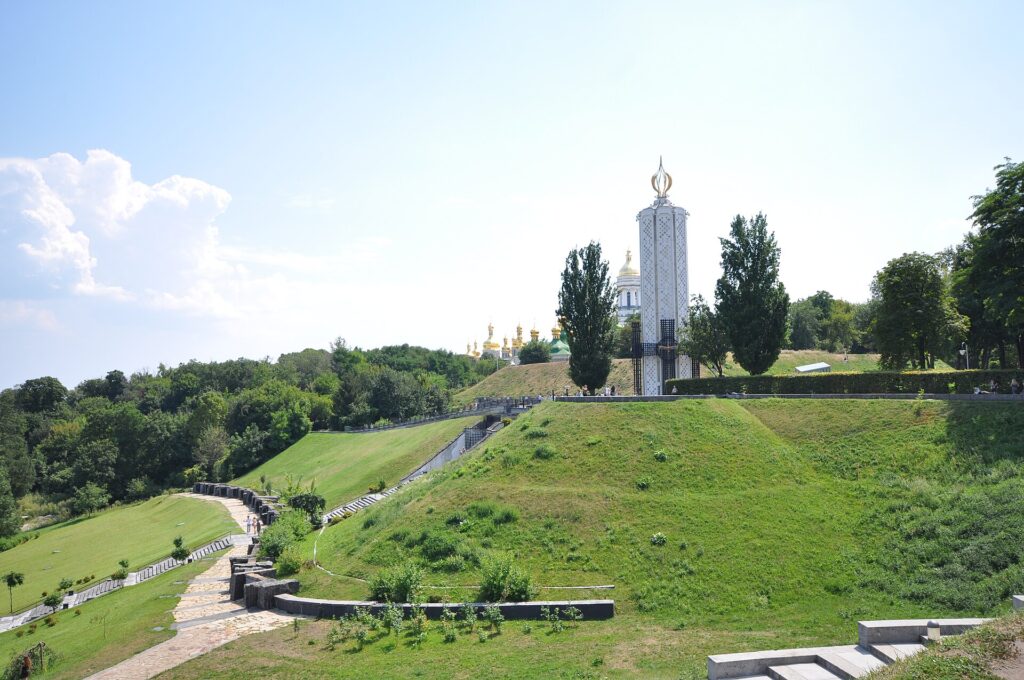
The Holodomor was a man-made famine that occurred in Soviet Ukraine from 1932 to 1933. The Encyclopaedia Britannica entry (written by Anne Applebaum) explains that the word comes from the Ukrainian for “hunger” (holod) and “to exterminate” (mor). Ukraine’s 2006 law defines it as “genocide against the Ukrainian people.”
Even so, the number of people who died has not been settled on a single figure. Estimates from different researchers and institutions range from 2.6 million to as high as 10 million. The number of countries that have recognized it as genocide also varies depending on who is counting. And the Japanese government has answered in the Diet that it is “not in a position to assess” it.
What Happened
According to the Britannica entry, it began with the collectivization of agriculture that Stalin decided on in 1929. Peasants were forced to hand over their land and property to collective farms, and people branded kulaks, along with peasants who resisted, were forcibly deported. Production fell, and in parts of Ukraine peasants rose in revolt, including armed uprisings.
In the autumn of 1932, the Politburo of the Soviet Communist Party made a series of decisions that spread and deepened the famine in Ukraine’s countryside. The entry lists measures such as the following:
- Placing entire farms, villages, and towns on “blacklists,” cutting off their access to food
- Banning peasants from leaving Ukraine in search of food
- Raising grain procurement quotas even as hunger spread, and failing to provide adequate aid
- In the winter of 1932–33, organized groups of police and party activists went from farmhouse to farmhouse, seizing everything edible, from crops to personal stores
The famine peaked in the late spring of 1933. Large-scale famines also struck Russia’s grain belt and Kazakhstan in the Soviet Union around the same time, but Britannica writes that the famine in Ukraine was made still more deadly by a series of political decisions aimed specifically at Ukraine alone. Alongside the famine, the suppression of Ukrainian intellectuals and politicians advanced, and the “Ukrainization” policy that had promoted the use of the Ukrainian language was effectively halted.
Soviet authorities concealed the famine. The results of the 1937 census were never published, and the officials responsible for it were arrested and executed; one reason, the entry says, was that the figures showed a sharp fall in Ukraine’s population. The famine was first spoken of publicly in the Soviet Union in 1986, after the Chornobyl nuclear disaster.
The traveling blind singers known as kobzars were also persecuted in this period (see The Traveling Blind Singers Called Kobzars, and the Bandura).
Death-Toll Estimates Differ Depending on Who Counted What
Because the Soviet Union kept population data hidden for a long time, the death toll can only be estimated after the fact using demographic statistics. The main estimates and who produced them are listed below.
| Estimate | Source and what was counted |
|---|---|
| Approx. 3.94 million excess deaths (1932–34) + approx. 600,000 lost births = 4.5 million total | Paper by Rudnytskyi and five co-authors (peer-reviewed journal Canadian Studies in Population, 2015). Covers the entire population of Soviet Ukraine at the time. Four of the authors were affiliated with the Ptoukha Institute for Demography and Social Studies in Kyiv |
| 2.6 million excess deaths + 1.1 million lost births | Study by Vallin et al. (2002). Figures introduced by the 2015 paper above as a point of comparison |
| Demographic-statistics-based estimates range from 2.6 to 5 million | Summary of prior research in the 2015 paper |
| At least 5 million starved to death across the Soviet Union as a whole (1931–34), of whom at least 3.9 million were Ukrainians | Encyclopaedia Britannica (written by Applebaum). Presented as the work of a team of Ukrainian demographers |
| Figures of 4 million to 10 million are cited in scholarly debate | Ukrainian Institute of National Remembrance (announcement, October 2023) |
The 2015 paper states it is the first study to estimate excess deaths separately for Ukraine’s rural and urban areas. Excess deaths totaled about 3.94 million in 1932–34, with 90% concentrated in 1933: about 3.65 million in rural areas and about 290,000 in urban areas. It states that this amounted to excess deaths equal to 16.5% of the rural population in 1933.
Care is also needed about what is being counted. What the 2015 paper counts is the entire population living within the territory of Soviet Ukraine at the time, not a figure broken down by ethnicity. Britannica writes its figure of 3.9 million as the number of “Ukrainians.” It is not stated explicitly whether the research Britannica relies on is the 2015 paper itself, but at minimum, the 2015 paper’s figure of 3.9 million is not broken down by ethnicity. This outlet corrected this point in September 2026 in Seventy Years as a Soviet Republic, and Japan During That Time.
The difference between the 2015 paper and the 2002 study mainly comes from differing estimates of population movement in 1933. The 2002 study assumed that about 1.4 million people left Ukraine in 1933, which produced a lower death count. The 2015 paper, finding no evidence to support such large-scale outmigration, estimates it at about 52,000. The same paper also states that estimates reaching as high as 10 million are based on anecdotal evidence and are doubtful. Meanwhile, the Ukrainian Institute of National Remembrance cites a range of “4 million to 10 million”—so even among Ukrainian sources, the ranges given do not agree.
A page on the website of Ukraine’s Embassy to France, part of the Ministry of Foreign Affairs’s site, explained in November 2023, citing “scientists’ data,” that at least 3.9 million people starved to death in 1932–33, and that combined with 600,000 lost births, the population loss reached at least 4.5 million. The size of the figure differs by study, but every estimate agrees that the death toll was in the millions.
Ukrainian Law Defines It as “Genocide”
On November 28, 2006, the Verkhovna Rada of Ukraine enacted Law No. 376-V, “On the Holodomor of 1932–1933 in Ukraine.” After referencing the Genocide Convention of December 9, 1948 in its preamble, the articles provide as follows:
Article 1. The Holodomor of 1932–1933 in Ukraine is genocide against the Ukrainian people.
Law No. 376-V (translation by this outlet)
Article 2. Publicly denying the Holodomor of 1932–1933 in Ukraine is deemed a desecration of the memory of the millions of victims of the Holodomor and an insult to the dignity of the Ukrainian people, and is unlawful.
The preamble also notes that the Holodomor had already been recognized as an act of genocide against the Ukrainian people by a Verkhovna Rada resolution of May 15, 2003. It also lists Australia, Argentina, Georgia, Estonia, Italy, Canada, Lithuania, Poland, the United States, and Hungary as foreign parliaments that had condemned the Holodomor. It also carries a list of signatories to the 70th-anniversary joint statement issued at the UN General Assembly in 2003, which includes Russia.
This law was amended in 2025 and 2026. Article 4-1, added by Law No. 4783-IX of February 11, 2026, provides for a nationwide moment of silence at 4 p.m. on the fourth Saturday of November each year, and for the launch of the “Light a Candle” action.
Countries and Parliaments That Have Recognized It as Genocide
International recognition began with a statement by the Estonian parliament on October 20, 1993, according to Ukraine’s Ministry of Foreign Affairs. The count since then varies depending on who counted, and when.
- Britannica: By early 2019, 16 countries and the Vatican had recognized it as genocide. The U.S. Congress passed resolutions in both the House and the Senate
- Ukraine’s Ministry of Foreign Affairs (April 2023): 8 countries were added from November 2022 onward: Ireland and Moldova (November 24, 2022), Germany (November 30), the Czech Republic (December 14), Bulgaria (February 1, 2023), Belgium (March 9), Iceland (March 23), and France (March 28)
- Ukraine’s Ministry of Foreign Affairs (November 25, 2023): Since independence, 28 countries and 3 international bodies, including the European Parliament and the Parliamentary Assembly of the Council of Europe, had recognized it as genocide
In a resolution of December 15, 2022, the European Parliament described the Holodomor as “a man-made famine in Ukraine caused by the deliberate policy of the Soviet regime,” and recognized it as genocide against the Ukrainian people, carried out with the intent to destroy the group. The Parliamentary Assembly of the Council of Europe adopted a similar resolution on October 12, 2023 (according to an announcement by the Ukrainian Institute of National Remembrance).
However, the strength of the word “recognition” varies from parliament to parliament. Regarding the resolution the German Bundestag adopted on November 30, 2022, the Bundestag’s own announcement reports that it called the Holodomor “a crime against humanity” and wrote that “from today’s perspective, it is appropriate to characterize it historically and politically as genocide.” When comparing the number of countries, one needs to check which parliament’s which document is being counted.
Japan Has Not Recognized It
As of September 2026, Japan is not among the countries Ukraine’s Ministry of Foreign Affairs lists as having recognized the Holodomor. No record has been found of Japan’s Diet adopting a resolution recognizing the Holodomor as genocide either.
The Japanese government’s position appears in its Diet answers. At the House of Councillors Committee on Foreign Affairs and Defense on March 8, 2022, when asked whether Japan recognizes the Holodomor as genocide, a government witness said the government understood that agricultural collectivization had caused “a great famine, in which the number of people who starved to death is said to be in the millions,” between 1932 and 1933, and then answered as follows:
“The Government of Japan is not in a position to assess this historical event that occurred in another country, but we believe that such a tragedy must never be repeated.”
Answer by a government witness at the House of Councillors Committee on Foreign Affairs and Defense (March 8, 2022)
Foreign Minister Yoshimasa Hayashi, who held the post at the time, repeated the same point on the same day and again at the House of Representatives Committee on Foreign Affairs on April 6, 2022. He went on to say that Japan stands with the people of Ukraine as they seek to defend their sovereignty and territory, and that Japan would support Ukraine through aid and by accepting evacuees.
Ukraine mourns the victims of the Holodomor every fourth Saturday of November. The fact that no single figure has been settled on is not because the scale of the loss was small, but because the Soviet Union concealed the records and took away the very means of counting.
Sources and article record
Sources and references
- Rudnytskyi, O., Levchuk, N., Wolowyna, O., Shevchuk, P., Kovbasiuk, A. “Demography of a man-made human catastrophe: The case of massive famine in Ukraine 1932–1933” Canadian Studies in Population 42(1–2), 53–80, 20153,942,500 excess deaths; 586,000 lost births; 90% in 1933; rural 3,654,900 / urban 287,600; 16.5% of the rural population; Vallin et al. 2002's figures of 2.6 million and 1.1 million; the 1933 net-migration estimate; other estimates of 2.6–5 million; the assessment that estimates of 10 million are anecdotal and doubtful; the authors' affiliations
Published by University of Alberta Libraries (the journal's publisher) · Checked: 2026-09-24 - Holodomorwritten by Anne Applebaum, displayed as updated July 28, 2026; the etymology; collectivization; the autumn 1932 decisions; at least 5 million across the Soviet Union in 1931–34, of whom at least 3.9 million Ukrainians; the 1937 census; 1986; 16 countries and the Vatican by early 2019
Published by Encyclopaedia Britannica · Checked: 2026-09-24 - Закон України «Про Голодомор 1932-1933 років в Україні» № 376-VNovember 28, 2006; the preamble; Articles 1 and 2; Article 4-1; notes on the 2025 and 2026 amendments; version of March 8, 2026
Published by Верховна Рада України (zakon.rada.gov.ua) · Checked: 2026-09-24 - Comment of the MFA of Ukraine on the 90th anniversary of the Holodomor of 1932-1933 in UkraineNovember 25, 2023; 28 countries and 3 international bodies
Published by Ministry of Foreign Affairs of Ukraine · Checked: 2026-09-24 - Deputy Foreign Minister of Ukraine Andriy Melnyk announced the expansion of the list of countries that have recognized the Holodomor…April 4, 2023; the 8 countries added from November 2022 and their dates
Published by Ministry of Foreign Affairs of Ukraine · Checked: 2026-09-24 - The Holodomor of 1932-1933November 21, 2023; at least 3.9 million and 600,000; the Estonian parliament's statement of October 20, 1993
Published by Embassy of Ukraine to the French Republic (Ministry of Foreign Affairs of Ukraine) · Checked: 2026-09-24 - ПАРЄ визнала Голодомор геноцидом українського народуOctober 13, 2023; the resolution of October 12, 2023; the figure “4 million to 10 million”
Published by Український інститут національної пам'яті · Checked: 2026-09-24 - European Parliament resolution of 15 December 2022 on 90 years after the Holodomor: recognising the mass killing through starvation as genocideP9_TA(2022)0449, OJ C 177, 17.5.2023
Published by European Parliament (EUR-Lex) · Checked: 2026-09-24 - Bundestag ordnet Holodomor als Völkermord einNovember 30, 2022; the wording of resolution 20/4681
Published by Deutscher Bundestag · Checked: 2026-09-24 - 第208回国会 参議院 外交防衛委員会 第2号March 8, 2022; the question by committee member Shun Otokita; the answers by government witness Hideki Uyama and Foreign Minister Yoshimasa Hayashi
Published by 国立国会図書館 国会会議録検索システム · Checked: 2026-09-24 - 第208回国会 衛議院 外務委員会 第8号April 6, 2022; the question by committee member Kazumi Sugimoto, the answer by Foreign Minister Yoshimasa Hayashi
Published by 国立国会図書館 国会会議録検索システム · Checked: 2026-09-24
If you find an error in this article, please tell us via Corrections. Once we have checked it, we will record in the article what was corrected and why.