Seventy Years as a Soviet Republic, and Japan During Those Years
This article lines up the period when Ukraine was a Soviet republic — from the 1932 famine to independence in 1991 — against Japan during the same years. It notes who counted the figures of 3.9 million, 33,771, and about 200,000, and how.

On the famine that struck Ukraine in 1932–33 (the Holodomor), a demographic paper published in 2015 in the peer-reviewed journal Canadian Studies in Population (four of its five authors affiliated with the Ptoukha Institute for Demography and Social Studies in Kyiv) estimates excess deaths in Ukraine in 1932–34 at 3.9 million and lost births at 600,000. This counts the entire population of the territory then known as Soviet Ukraine, not a figure broken down by ethnicity. The same paper also states that demographic estimates range from 2.6 million to 5 million, so this is not a settled figure. In the same 1932–33, Japan, according to the National Archives of Japan’s chronology, notified its withdrawal from the League of Nations in March 1933.
The “seventy years” in the title refers to the period during which the Ukrainian Soviet Socialist Republic was a constituent republic of the USSR. According to the Internet Encyclopedia of Ukraine’s (published by the Canadian Institute of Ukrainian Studies, CIUS, at the University of Alberta; hereafter IEU) entry on the Ukrainian Soviet Socialist Republic (whose print edition first appeared in Volume 5, 1993), this republic joined the USSR on 30 December 1922 and ceased to exist on 24 August 1991, when its Supreme Council declared Ukraine’s independence.
Every Figure Comes With Who Counted It
The period covered by this article involves several very large numbers. Each time one appears, it is necessary to state who counted it and how.
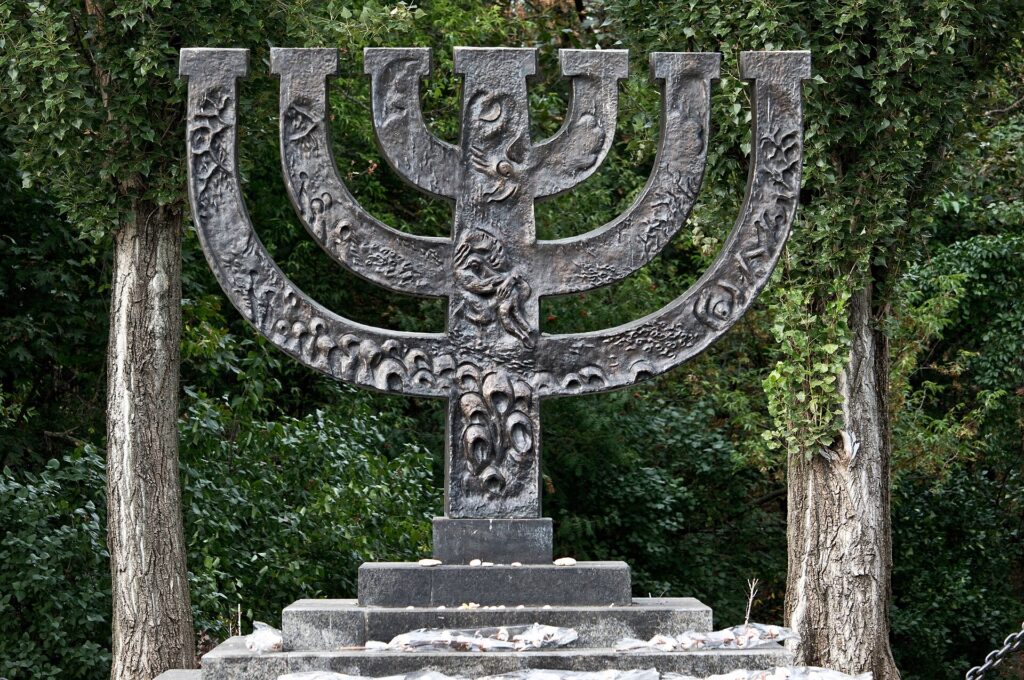
On Babyn Yar on the outskirts of Kyiv, the United States Holocaust Memorial Museum (USHMM) describes what happened there on 29–30 September 1941 as one of the largest mass shootings in German-occupied Europe. Of the widely cited figure of 33,771, the museum states explicitly that it comes “according to a report sent to Einsatzgruppen headquarters in Berlin.” This is a figure the perpetrators themselves reported to headquarters, not an independently verified count. The museum also records that killings continued at this site — of Jews and, among others, Roma — until shortly before Soviet forces retook Kyiv in 1943.
.jpg)
On the forced deportation of the Crimean Tatars, Britannica records that Stalin accused about 200,000 Crimean Tatars of collaboration with Germany and had them collectively deported to Uzbekistan and Kazakhstan, that use of the Tatar language was banned in the places they were resettled, and that Khrushchev’s de-Stalinization in 1956 restored their civil rights but did not permit their return to Crimea. It was not until the early 1990s that many were actually able to return.
Crimea in 1954, and Japan at the Same Time
According to Britannica’s entry on the Crimean Tatars, Crimea was transferred to the Ukrainian Soviet Socialist Republic in 1954.
For Japan around the same 1954, the National Archives of Japan’s chronology records that the Treaty of San Francisco and the Japan-US Security Treaty were signed in September 1951, and that the Japan-Soviet Joint Declaration was signed in October 1956, normalizing diplomatic relations.
According to the United Nations’ published list of the growth in its membership, the Ukrainian Soviet Socialist Republic is listed separately from the USSR among the 51 original member states in 1945. Japan joined in 1956, in December of that year according to the National Archives of Japan’s chronology.
A Postwar Chronology of Japan
According to the National Archives of Japan’s chronology: in March 1945 came the great air raid on Tokyo; in August, the atomic bombings of Hiroshima and Nagasaki and the acceptance of the Potsdam Declaration; in September, the signing of the instrument of surrender; and in December, revision of the House of Representatives Election Law to grant women’s suffrage. The Constitution of Japan was promulgated in November 1946; the Labor Standards Act, the Antimonopoly Act, and the Local Autonomy Act were enacted in April 1947, and the first National Diet convened in May of that year.
1964 was the year Japan joined the Organisation for Economic Co-operation and Development (OECD) in April and the Tōkaidō Shinkansen opened in October. Okinawa was returned to Japan in May 1972.
The Economic Planning Agency’s Annual Economic Report for 1969 (Shōwa 44) states that Japan’s gross national product in 1968 was a preliminary US$141.9 billion, making it, by this measure, the second-largest in the free world after the United States, surpassing West Germany. The same report also notes that, by per-capita national income in 1968 (US$1,110), Japan still ranked around 20th.
26 April 1986
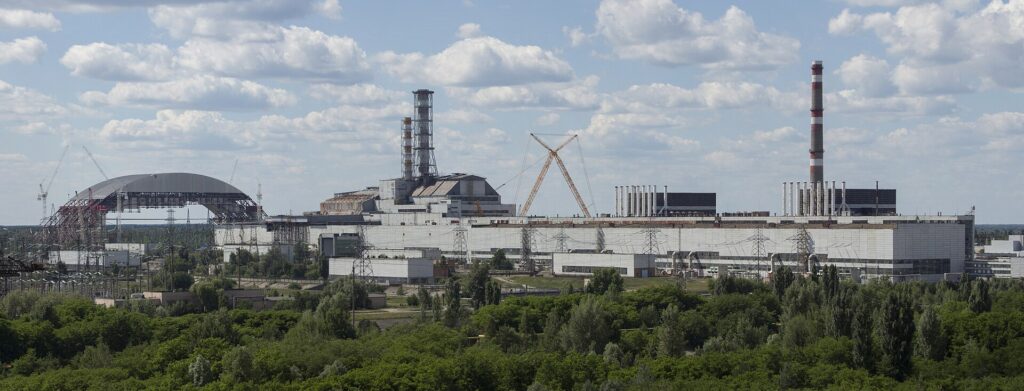
According to IEU’s entry on Chornobyl (updated 2017), the town of Chornobyl had a population of 12,500 in 1986 and served as a district center in Kyiv Oblast. The same entry records that, after the Chornobyl nuclear power plant accident on 26 April 1986, most of the population evacuated and the town became a ghost town. Britannica also gives 26 April 1986 as the date of the accident.
From 16 July 1990 to 1 December 1991
According to Britannica, the legislature of the Ukrainian Soviet Socialist Republic declared sovereignty on 16 July 1990 and declared independence on 24 August 1991. This was confirmed by a referendum on 1 December 1991. Ukraine gained full independence with the dissolution of the USSR that same December.
According to the Ministry of Foreign Affairs of Japan’s “Ukraine: Basic Data,” Japan recognized Ukraine as a state on 28 December 1991 and established diplomatic relations on 26 January 1992.
At the same time, Britannica notes that a fully independent Ukraine did not emerge until the very end of the 20th century, that it had long been under the rule of Poland-Lithuania, Russia, and the Soviet Union before that, that there was a brief period of independence in 1918–20, and that in the interwar period parts of the west were under Polish, Romanian, and Czechoslovak rule.
Events Lined Up by Year
| Year | Ukraine | Japan |
|---|---|---|
| 1922 | Joins the USSR on 30 December | — |
| 1932–33 | Famine (the Holodomor). A demographic estimate puts excess deaths in Ukraine in 1932–34 at 3.9 million (not a figure broken down by ethnicity) | Notifies withdrawal from the League of Nations, March 1933 |
| 1937 | — | Marco Polo Bridge Incident, July |
| 1941 | Mass shooting at Babyn Yar, 29–30 September | — |
| 1944 | About 200,000 Crimean Tatars forcibly deported to Uzbekistan and Kazakhstan | — |
| 1945 | Becomes an original member of the United Nations | Great air raid on Tokyo in March; atomic bombings and acceptance of the Potsdam Declaration in August; signing of the instrument of surrender in September; women’s suffrage in December |
| 1946 | — | Constitution of Japan promulgated, November |
| 1947 | — | Labor Standards Act, Antimonopoly Act, and Local Autonomy Act in April; first National Diet in May |
| 1951 | — | Treaty of San Francisco and Japan-US Security Treaty signed, September |
| 1954 | Crimea transferred to the Ukrainian Soviet Socialist Republic | — |
| 1956 | Crimean Tatars’ civil rights restored (return still not permitted) | Japan-Soviet Joint Declaration signed in October; joins the United Nations in December |
| 1964 | — | Joins the OECD in April; Tōkaidō Shinkansen opens in October |
| 1968 | — | GNP becomes second-largest in the free world after the United States (Economic Planning Agency, preliminary figure) |
| 1972 | — | Okinawa returned, May |
| 1986 | Chornobyl nuclear power plant accident, 26 April | — |
| 1990 | Declaration of sovereignty, 16 July | — |
| 1991 | Declares independence on 24 August, confirmed by referendum on 1 December | Recognizes Ukraine as a state, 28 December |
What Simply Lining Things Up Cannot Tell You
The Japan column of this table is drawn from the National Archives of Japan’s chronology; the column for Ukraine is drawn from entries in Britannica, the United States Holocaust Memorial Museum, and IEU. The fact that the Japan column lists mostly treaties, laws, and institutions, while the column for Ukraine lists mostly famine, mass shootings, forced deportation, and the nuclear accident, is partly a reflection of which sources and entries this article chose for each column. No conclusion about the difference between the two societies can be drawn from this table. A blank cell does not mean nothing happened in that place that year.
Sources and article record
Sources and references
- Holodomor
Published by Encyclopaedia Britannica · Checked: 2026-09-23 - Crimean Tatar
Published by Encyclopaedia Britannica · Checked: 2026-09-23 - Ukraine
Published by Encyclopaedia Britannica · Checked: 2026-09-23 - Kyiv and Babyn YarHolocaust Encyclopedia
Published by United States Holocaust Memorial Museum · Checked: 2026-09-23 - Chornobylupdated 2017
Published by Internet Encyclopedia of Ukraine (Canadian Institute of Ukrainian Studies, University of Alberta = CIUS) · Checked: 2026-09-23 - Chernobyl disaster
Published by Encyclopaedia Britannica · Checked: 2026-09-23 - 年表/日本のあゆみ
Published by 国立公文書館 · Checked: 2026-09-23 - Crimean Tatarsupdated 2014
Published by Internet Encyclopedia of Ukraine (CIUS) · Checked: 2026-09-23 - Ukrainian Soviet Socialist Republicprint edition first appeared in Volume 5, 1993; written by Vasyl Markus, Ihor Stebelsky
Published by Internet Encyclopedia of Ukraine (CIUS) · Checked: 2026-09-23 - Growth in United Nations membership
Published by 国際連合 · Checked: 2026-09-23 - 昭和44年 年次経済報告 第2部1(1)「高度成長の定着と国際的地位の向上」
Published by 経済企画庁(内閣府ウェブサイト掲載) · Checked: 2026-09-23 - 昭和44年 年次経済報告 第2部1(2)「“2位と20位”の意味」
Published by 経済企画庁(内閣府ウェブサイト掲載) · Checked: 2026-09-23 - ウクライナ基礎データ
Published by 外務省 · Checked: 2026-09-23 - Rudnytskyi, O., Levchuk, N., Wolowyna, O., Shevchuk, P., Kovbasiuk (Savchuk), A., "Demography of a man-made human catastrophe: The case of massive famine in Ukraine 1932-1933," Canadian Studies in Population 42(1-2), 53-80, 2015confirms total losses of 4.5 million = 3.9 million excess deaths + 600,000 lost births, that 90% of direct losses occurred in 1933, that other demographic estimates range from 2.6 to 5 million, and the figures of 2.6 million and 1.1 million from Vallin et al. 2002; four of the five authors are affiliated with the Ptoukha Institute for Demography and Social Studies of the National Academy of Sciences of Ukraine, and one with the University of North Carolina at Chapel Hill
Published by University of Alberta Libraries (publisher of the journal) · Checked: 2026-09-23
Corrections and updates
- Added statements on joining the USSR in 1922, becoming an original UN member in 1945 and Japan's membership in 1956, Japan's GNP in 1968, and Japan's recognition of Ukraine as a state on 28 December 1991.
- Corrected a passage that had described the Holodomor estimate of 3.9 million as a figure for "Ukrainians." In the 2015 paper on which the estimate is based, this is excess mortality for the entire population of the territory then known as Soviet Ukraine, not a figure broken down by ethnicity.
If you find an error in this article, please tell us via Corrections. Once we have checked it, we will record in the article what was corrected and why.
More in this series
-
From the Founding of Heian-kyō to the Ōnin War: What Was Happening in Kyiv
From the move of the capital to Heian-kyō in 794 to the end of the Ōnin War in 1477, this article lines up what was happening in and around Kyiv during the same years. The year 882, taken as the beginning of Kyivan Rus', comes from a chronicle compiled more than two hundred years after the events it describes. The periodization of Japanese history also varies by source in when each era is said to begin.
-

220 Years from the Founding to the Destruction of the Sich: Japan from Sengoku to Edo
This article lines up the roughly 220 years from around 1552, when a Sich was founded on the Dnipro River, to 1775, when the last Sich was destroyed, against Japan during the same period. The Sich was not a single site; there were eight of them. No original document of the Pereiaslav agreement survives. The Battle of Poltava has two dates.
-
The Year After Ukrainian-Language Publishing Was Banned in the Russian Empire, the University of Tokyo Opened in Japan
The Ems Ukase of 1876 banned the printing of Ukrainian-language books within the Russian Empire. The following April, in 1877, the University of Tokyo opened in Japan. Starting from Eneida (1798) and Kobzar (1840), published before the ban, this article lines up events from Perry's arrival to 1919, taking care over the difference between the two countries' calendars.
Related articles
-
7 Films Connected to Ukraine, and Their Directors and Actors
This article was published in October 2024. The different things the phrase “Ukrainian film” can mean (country of production, setting, and who made it) are covered in “Ukrainian Film” Means Five Different Things — Country of Production, Setting, and Who Made It. 20 Days in Mariupol, winner of the Best Documentary Feature at the 2024 Academy Awards; Atlantis, winner of the Best Film award in the Orizzonti section at the 2019 Venice Film Festival; and the family animated film Stolen Princess: Ruslan and Ludmila. This article covers seven films connected…
Published in
-
President Zelensky Was Set to Join Online — Then He Came to Hiroshima
President Zelensky was originally scheduled to take part in the May 2023 G7 Hiroshima Summit online. After he strongly requested to attend in person, he discussed Ukraine with G7 leaders in Hiroshima on the final day, May 21, and laid flowers at the Memorial Cenotaph for the Atomic Bomb Victims. Drawing on the Ministry of Foreign Affairs' records, this article traces the two days' events and the content of the leaders' statements.
-
What Do Ukraine’s President, Verkhovna Rada, and Cabinet of Ministers Each Decide?
Ukraine's Constitution sets the Verkhovna Rada, the parliament, at 450 seats, and provides that the prime minister is nominated by the parliamentary majority, proposed by the president, and appointed by parliament. This article lays out the powers of the three institutions along with their article numbers, and introduces the legal basis for why no elections have been held since 2022, together with the debate over how that basis should be read.