
220 Years from the Founding to the Destruction of the Sich: Japan from Sengoku to Edo
This article lines up the roughly 220 years from around 1552, when a Sich was founded on the Dnipro River, to 1775, when the last Sich was destroyed, against Japan during the same period. The Sich was not a single site; there were eight of them. No original document of the Pereiaslav agreement survives. The Battle of Poltava has two dates.
.jpg)
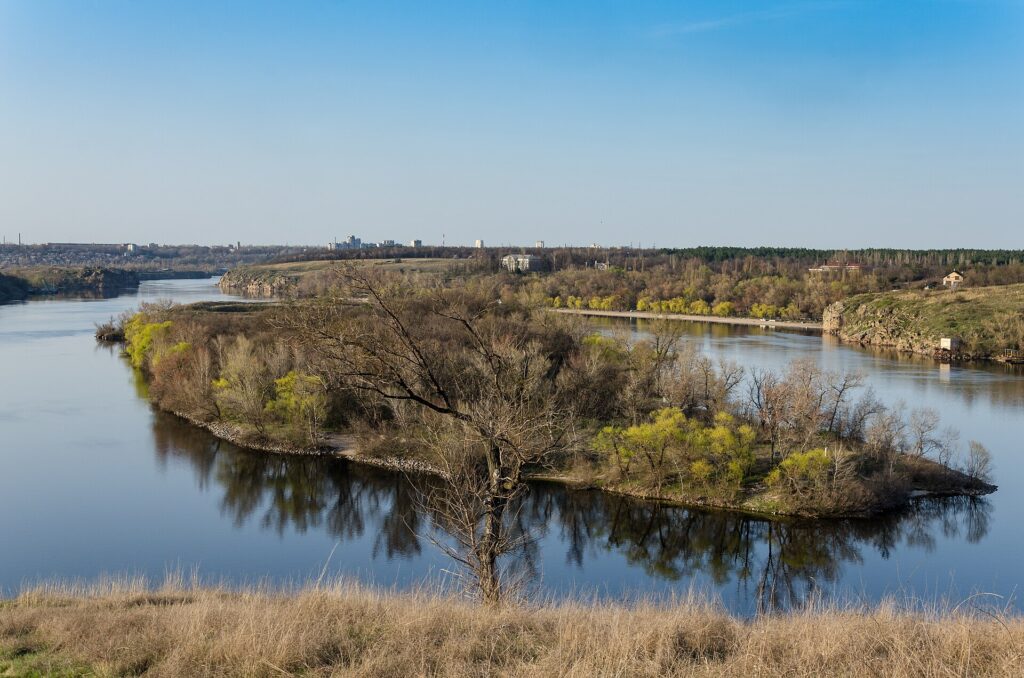
According to the Internet Encyclopedia of Ukraine’s (published by the Canadian Institute of Ukrainian Studies, CIUS, at the University of Alberta) entry on the Zaporozhian Sich, the first Sich was founded around 1552 on the island of Mala Khortytsia on the Dnipro River by Prince Dmytro Vyshnevetsky. Three years earlier, on 15 August 1549, a Portuguese ship carrying Francis Xavier and others entered a port in Kagoshima (Encyclopaedia Britannica). Six years before that, in 1543, the Portuguese landed on Tanegashima and introduced firearms and sugar cane to Japan for the first time (Britannica’s entry on the Ōsumi Archipelago).
The Zaporozhian Sich Was Not a Single Place
Japanese-language accounts sometimes describe the “Zaporozhian Sich” as if it were a single site, but IEU (written by Arkadii Zhukovsky; print edition first appeared in Volume 5, 1993) explains the Sich as a collective term for a series of Cossack fortresses along the Dnipro River, and lists eight of them. Five of these were on or near the river’s floodplain.
According to the same entry, the first Sich was besieged and destroyed by the Crimean Tatars in 1558, and the Tomakivka Sich, built on an island 60 kilometers to the south, was likewise destroyed in 1593. The Mykytyn Rih Sich first appears in the record in 1628, and in 1648 Hetman Bohdan Khmelnytsky took control of it. The Chortomlyk Sich, founded in 1652, was destroyed by Russian forces on 25 May 1709. The Cossacks went on to relocate their base to Kamianka, then Oleshky, and finally the New Sich in 1734.
The Sich was not a single site built once and maintained for a long time; it was a succession of bases, each destroyed and then rebuilt elsewhere.
Lublin in 1569, and Sekigahara on 21 October 1600
According to Britannica, the Union of Lublin of 1569 was an agreement that merged Poland and Lithuania into a single state. IEU’s entry on Kyiv states that, under this union’s provisions, Kyiv and the Kyiv region came under Polish rule and became part of the Polish-Lithuanian Commonwealth. This ended the rule of Lithuanian starostas that had continued since 1471.
According to IEU’s entry on the Church Union of Berestia (print edition first appeared in Volume 1, 1984), in 1596 the Orthodox Church of Rus’ (Ukraine-Belarus) in Poland-Lithuania proclaimed a union recognizing the pope as head of the church. This is also known as the Union of Brest. At the church council held in Berestia from 16 to 20 October of that year, opinion split between those for and against union with Rome, and two councils were held in parallel.
In Japan, according to Britannica, the Battle of Sekigahara took place on 21 October 1600, pitting the retainers of the late Toyotomi Hideyoshi against Tokugawa Ieyasu. The same Britannica gives the Edo (Tokugawa) period as running from 1603 to 1867.
From 1635 to 1667
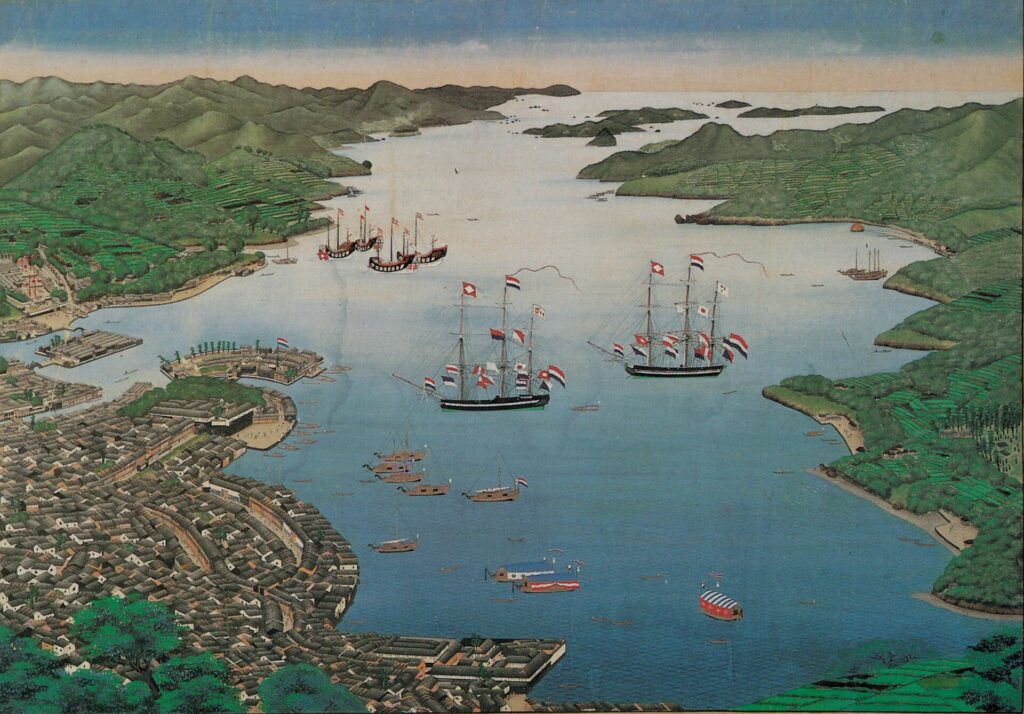
Britannica’s entry on sakoku sets out, year by year, how the Edo shogunate progressively restricted contact with the outside world. Christianity was banned in 1614, Spain was expelled in 1624, and in 1635 Tokugawa Iemitsu prohibited Japanese people from traveling abroad or returning home. After the Shimabara Rebellion of 1637–38, all Japanese were required to register with a Buddhist temple, and the set of edicts was completed in 1639 when Portuguese ships were banned from entering Japan. The same entry explains that the Dutch were left confined to Dejima in Nagasaki Bay, and describes this not as complete isolation but as the continuation of limited contact.


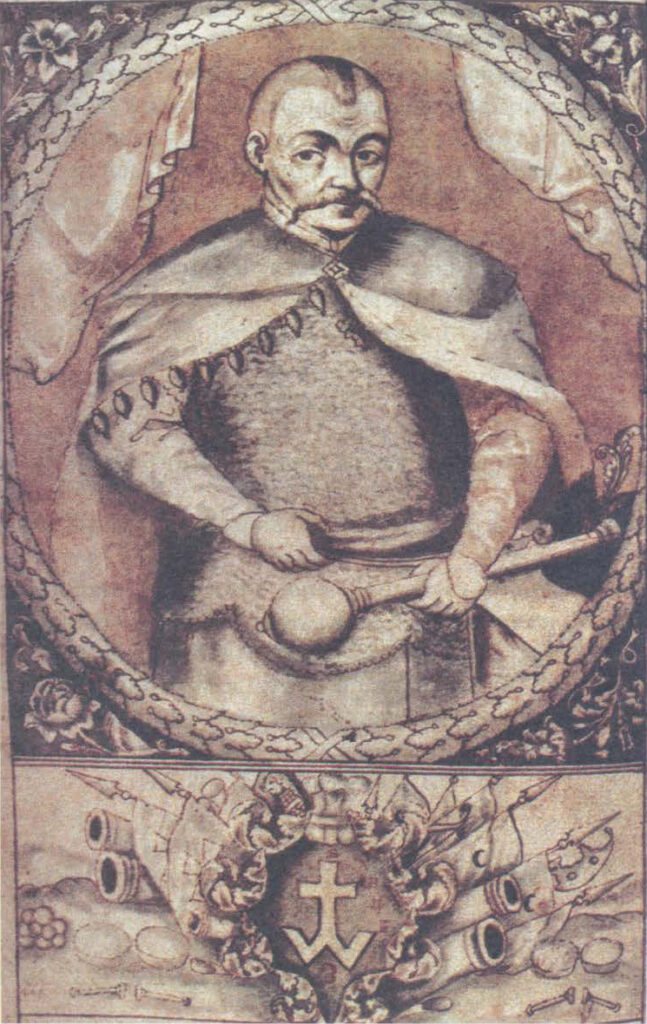
In the Ukrainian lands during the same period, the Khmelnytsky Uprising began in 1648. According to IEU’s entry on the Pereiaslav Treaty of 1654 (written by Oleksander Ohloblyn; print edition first appeared in Volume 3, 1993), negotiations began in Pereiaslav in January 1654 and were concluded in Moscow in April. The treaty consisted of two documents: a charter dated 6 April, granted by the tsar to the Zaporozhian Host, and eleven articles setting out military, political, and technical details.
.jpg)
.jpg#Licensing)
Whether this agreement amounted to union, alliance, or vassalage has long been debated, but IEU first sets out the underlying facts on which that debate rests. No original document has been preserved; what survives are only translations and drafts of the charter. The same entry also states that the treaty’s form and character were incomplete, and that some of its articles were not systematically organized and were ambiguous in content.
According to IEU’s entry on the Treaty of Andrusovo (print edition first appeared in Volume 1, 1984), the war between Poland and the Muscovite state, which began in 1654, ended with a peace treaty signed in the village of Andrusovo near Smolensk on 13 January 1667. The left bank of the Dnipro remained under Muscovite control, while the right bank passed to Poland. Kyiv was to remain on the Muscovite side for only two years, but Moscow never gave it up. The Zaporozhian Sich was placed under the joint protection of both states. The same entry calls this “the first partition of Ukraine.”
8 July 1709, or 27 June
For the Battle of Poltava, Britannica gives the date as “27 June 1709 (New Style, 8 July).” Russia at the time used the Julian calendar, so the same single day carries two dates. IEU gives the same battle’s date as 8 July, New Style (its entry “Poltava, Battle of”). The same encyclopedia does not specify which calendar underlies the date of 25 May given, in the same year, for the destruction of the Chortomlyk Sich.
Dates on the Japanese side have the same problem. According to the National Archives of Japan’s chronology, Japan adopted the solar calendar in November of Meiji 5 (1872); before that, dates followed the lunisolar calendar. Britannica’s date of “21 October 1600” for the Battle of Sekigahara is a converted date, not the date as it appears in Japanese records.
In the table in this article, the Japan column gives only the year, except for the Battle of Sekigahara and Xavier’s arrival at Kagoshima.
Until the Institutions of Self-Rule Disappeared
According to IEU’s entry on the Hetman state (written by Lev Okinshevych and Arkadii Zhukovsky; print edition first appeared in Volume 2, 1989), Ukrainian autonomy was dismantled in stages during the reign of Catherine II (1762–96): the office of hetman was finally abolished by the Russian government in 1764, its functions transferred to the Little Russian Collegium. In 1782 the regimental system was replaced with administrative districts (namestnichestva).
According to the entry on the Zaporozhian Sich, the last, New Sich was destroyed by Russian forces on 15–16 June 1775 — 66 years after the Battle of Poltava.
Eight years later, in 1783, the Russian Empire annexed the Crimean Khanate (Britannica’s entry on the khanate of Crimea; IEU’s entry on Crimea). According to IEU’s entry on the Crimean Khanate, the khanate had been under Ottoman suzerainty since the late 15th century, but from 1774 it was placed under Russian protection. The entry on Crimea cites the Ottoman Empire’s recognition of Crimean independence in the 1774 Treaty of Küçük Kaynarca as the diplomatic achievement that led to the Russian annexation.
For Japan in the same 18th century, Britannica’s entry on sakoku records that the study of Western books resumed under Tokugawa Yoshimune in 1716, that Dutch studies (rangaku) became an important field of scholarship, and that the shogunate itself established an institution to translate Dutch-language texts.
According to Britannica, Tokugawa Yoshimune became the eighth shogun in 1716 and held the position until 1745. It was Yoshimune who initiated the measures later known as the Kyōhō reforms. The same Britannica records that widespread famine struck during the Temmei era, from 1783 to 1787, causing many deaths from starvation, and that from 1787 to 1793 Matsudaira Sadanobu carried out a set of measures aimed at restoring the shogunate’s finances and discipline (the Kansei reforms).
Events Lined Up by Year
| Year | Ukrainian lands | Japan |
|---|---|---|
| 1543 | — | The Portuguese land on Tanegashima and introduce firearms |
| 1549 | — | A Portuguese ship carrying Xavier and others enters Kagoshima, 15 August |
| Around 1552 | First Sich founded on Mala Khortytsia island | Sengoku period |
| 1569 | Union of Lublin; the Kyiv region comes under Polish rule | Sengoku period |
| 1596 | Church Union of Brest (Berestia) | — |
| 1600 | — | Battle of Sekigahara, 21 October |
| 1603 | — | The Edo (Tokugawa) period begins |
| 1635 | — | Tokugawa Iemitsu bans Japanese people from traveling abroad or returning home |
| 1637–38 | — | Shimabara Rebellion |
| 1639 | — | The set of edicts is completed with the ban on Portuguese ships |
| 1648 | Khmelnytsky takes control of the Mykytyn Rih Sich | Edo period |
| 1654 | Negotiations begin in Pereiaslav in January, concluded in Moscow in April | Edo period |
| 1667 | Treaty of Andrusovo, 13 January; the left bank of the Dnipro to the Muscovite state, the right bank to Poland | Edo period |
| 1709 | Chortomlyk Sich destroyed 25 May; Battle of Poltava 27 June (New Style, 8 July) | Edo period |
| 1716 | — | Tokugawa Yoshimune becomes the eighth shogun (Kyōhō reforms); study of Western books resumes under Yoshimune |
| 1764 | The office of hetman is abolished | Edo period |
| 1775 | New Sich destroyed, 15–16 June | Edo period |
| 1782 | The regimental system is replaced with administrative districts | Edo period |
| 1783 | The Russian Empire annexes the Crimean Khanate | Temmei-era famine (1783–87) |
| 1787 | — | Matsudaira Sadanobu’s Kansei reforms (until 1793) |
What Simply Lining Things Up Cannot Tell You
This article lines up, by year, events that took place in different places during the same period. None of the sources used here indicate any contact or influence between the two.
Sources and article record
Sources and references
- Zaporozhian Sichprint edition first appeared in Volume 5, 1993; written by Arkadii Zhukovsky
Published by Internet Encyclopedia of Ukraine (Canadian Institute of Ukrainian Studies, University of Alberta = CIUS) · Checked: 2026-09-23 - Hetman stateprint edition first appeared in Volume 2, 1989; written by Lev Okinshevych, Arkadii Zhukovsky
Published by Internet Encyclopedia of Ukraine (CIUS) · Checked: 2026-09-23 - Pereiaslav Treaty of 1654print edition first appeared in Volume 3, 1993; written by Oleksander Ohloblyn
Published by Internet Encyclopedia of Ukraine (CIUS) · Checked: 2026-09-23 - Kyivupdated 2017
Published by Internet Encyclopedia of Ukraine (CIUS) · Checked: 2026-09-23 - Battle of Poltava
Published by Encyclopaedia Britannica · Checked: 2026-09-23 - Union of Lublin
Published by Encyclopaedia Britannica · Checked: 2026-09-23 - sakoku
Published by Encyclopaedia Britannica · Checked: 2026-09-23 - Battle of Sekigahara
Published by Encyclopaedia Britannica · Checked: 2026-09-23 - Tokugawa period
Published by Encyclopaedia Britannica · Checked: 2026-09-23 - Saint Francis Xavier
Published by Encyclopaedia Britannica · Checked: 2026-09-23 - Shimabara Rebellion
Published by Encyclopaedia Britannica · Checked: 2026-09-23 - 年表/日本のあゆみ
Published by 国立公文書館 · Checked: 2026-09-23 - Poltava, Battle ofupdated 2008; written by Theodore Mackiw
Published by Internet Encyclopedia of Ukraine (CIUS) · Checked: 2026-09-23 - Church Union of Berestiaprint edition first appeared in Volume 1, 1984; written by Atanasii Velyky
Published by Internet Encyclopedia of Ukraine (CIUS) · Checked: 2026-09-23 - Andrusovo, Treaty ofprint edition first appeared in Volume 1, 1984
Published by Internet Encyclopedia of Ukraine (CIUS) · Checked: 2026-09-23 - Crimeaupdated 2022
Published by Internet Encyclopedia of Ukraine (CIUS) · Checked: 2026-09-23 - Crimean Khanate
Published by Internet Encyclopedia of Ukraine (CIUS) · Checked: 2026-09-23 - khanate of Crimea
Published by Encyclopaedia Britannica · Checked: 2026-09-23 - Ōsumi Archipelago
Published by Encyclopaedia Britannica · Checked: 2026-09-23 - Tokugawa Yoshimune
Published by Encyclopaedia Britannica · Checked: 2026-09-23 - Kyōhō reforms
Published by Encyclopaedia Britannica · Checked: 2026-09-23 - Temmei era
Published by Encyclopaedia Britannica · Checked: 2026-09-23 - Kansei reforms
Published by Encyclopaedia Britannica · Checked: 2026-09-23
Corrections and updates
- Added statements on the introduction of firearms in 1543, the Union of Brest in 1596, the Treaty of Andrusovo in 1667, the annexation of the Crimean Khanate in 1783, and the Kyōhō and Kansei reforms and the Temmei famine.
If you find an error in this article, please tell us via Corrections. Once we have checked it, we will record in the article what was corrected and why.
More in this series
-
From the Founding of Heian-kyō to the Ōnin War: What Was Happening in Kyiv
From the move of the capital to Heian-kyō in 794 to the end of the Ōnin War in 1477, this article lines up what was happening in and around Kyiv during the same years. The year 882, taken as the beginning of Kyivan Rus', comes from a chronicle compiled more than two hundred years after the events it describes. The periodization of Japanese history also varies by source in when each era is said to begin.
-
The Year After Ukrainian-Language Publishing Was Banned in the Russian Empire, the University of Tokyo Opened in Japan
The Ems Ukase of 1876 banned the printing of Ukrainian-language books within the Russian Empire. The following April, in 1877, the University of Tokyo opened in Japan. Starting from Eneida (1798) and Kobzar (1840), published before the ban, this article lines up events from Perry's arrival to 1919, taking care over the difference between the two countries' calendars.
-

Seventy Years as a Soviet Republic, and Japan During Those Years
This article lines up the period when Ukraine was a Soviet republic — from the 1932 famine to independence in 1991 — against Japan during the same years. It notes who counted the figures of 3.9 million, 33,771, and about 200,000, and how.