
From the Founding of Heian-kyō to the Ōnin War: What Was Happening in Kyiv
From the move of the capital to Heian-kyō in 794 to the end of the Ōnin War in 1477, this article lines up what was happening in and around Kyiv during the same years. The year 882, taken as the beginning of Kyivan Rus', comes from a chronicle compiled more than two hundred years after the events it describes. The periodization of Japanese history also varies by source in when each era is said to begin.
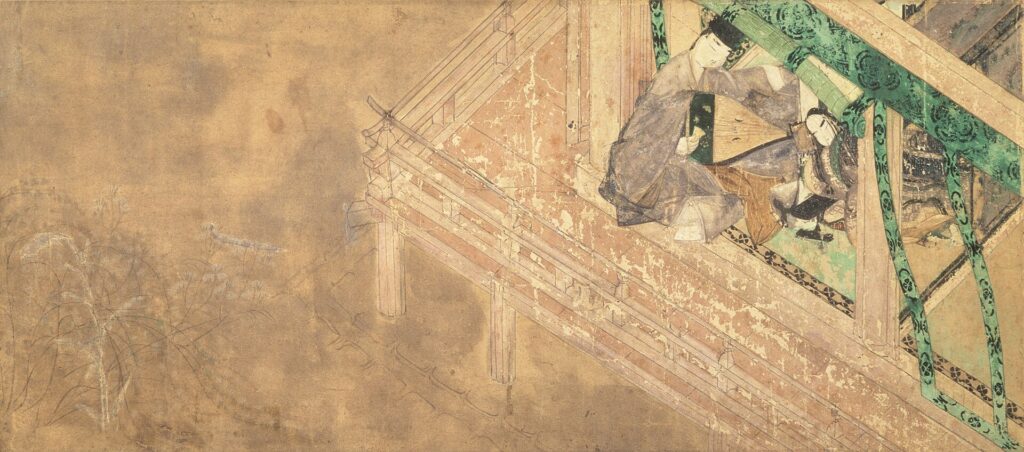


According to Encyclopaedia Britannica’s entry on the Heian period, Japan’s capital moved from Nara to Heian-kyō (Kyoto) in 794, and the Heian period runs from that year to 1185. According to the same Britannica’s entry on Kyivan Rus, Oleg, ruler of Novgorod, seized Smolensk and Kyiv in 882, and Kyiv became the capital of Kyivan Rus’ because of its position on the Dnipro River — 88 years after Heian-kyō was founded.
Where the Date 882 Comes From
Britannica presents 882 as the traditional account given by the Primary Chronicle. The same entry states explicitly that both the origins of the Kyivan state and the derivation of the name “Rus'” remain matters of debate among historians, and that the Primary Chronicle itself was compiled in Kyiv in the 12th century. The year 882, then, rests on a record written more than two hundred years after the events it describes.
The chronicle records that Oleg united the region’s Slavic and Finnic groups, defeated the Khazars, and concluded a commercial treaty with Constantinople in 911 (Britannica).
Around the Time of the 988 Baptism, in Heian-kyō
According to Britannica, Kyiv’s adoption of Christianity came in 988, arising from an arrangement in which the Byzantine emperor Basil II gave his sister in marriage in exchange for military support and the adoption of Christianity.
For Heian-kyō in the same period, Britannica’s entry on the Heian period states that, from the mid-9th century, the Fujiwara family dominated the court by marrying their daughters to imperial successors, and that their influence peaked under Fujiwara no Michinaga, who led the court from 995 to 1027. The year 988 falls shortly before that. Murasaki Shikibu’s The Tale of Genji is an 11th-century work that has been read as a record of aristocratic society (same entry).
Kyiv in December 1240, and Japan in 1274 and 1281
The first appearance of Mongol forces in this region came 17 years before Kyiv was sacked. According to Encyclopaedia Britannica’s entry on the Battle of the Kalka River, on 31 May 1223 forces led by Jebe and Subutai defeated a combined army of Rus’ princes and Cumans on the banks of the Kalka River. The same entry identifies the Kalka as the present-day Kalchyk River in southeastern Ukraine, which flows into the Sea of Azov. The Internet Encyclopedia of Ukraine’s entry on the Kalka River (whose print edition first appeared in Volume 2, 1989; hereafter IEU) likewise states that the army of Kyivan Rus’ was routed after a three-day battle in 1223. According to IEU’s entry on Batu Khan, Batu invaded Rus’ in 1237 and sacked Pereiaslav and Chernihiv in 1239 and Kyiv in 1240.
IEU’s entry on Kyiv (updated 2017) records that in December 1240 the Mongol-Tatar army of Batu Khan sacked Kyiv and drastically reduced its population. The same entry states that Kyiv recovered somewhat in the late 13th century under princes subordinate to the Golden Horde, and that in 1362–63 Grand Duke Algirdas of Lithuania incorporated the Kyiv region into his own domain.
Britannica’s entry on the Kamakura period records that two Mongol expeditions (in 1274 and 1281) were repelled, and that the financial burden of that defense worsened the shogunate’s internal weaknesses. The same entry goes on to cover Emperor Go-Daigo’s uprising in 1331 and the shogunate’s collapse in 1333.
Both are events involving Mongol forces, but the outcomes were different. Kyiv was sacked and then placed under princes subordinate to the Golden Horde, while Japan repelled two expeditions and bore the cost of that defense. None of the sources used here indicate any contact between the two regions.
The Decade of the Ōnin War, and Kyiv under Lithuanian Rule
According to Britannica, the Ōnin War began in 1467 and continued until 1477, with much of the fighting taking place within the city of Kyoto itself. The same entry states that this war effectively ended the power of the Ashikaga shogunate and led into the Sengoku (Warring States) period, roughly 1467 to 1600.
According to IEU’s entry on Kyiv, Algirdas’s descendants ruled Kyiv until 1470; from 1471 to 1569 it was governed by Lithuanian starostas, and in 1471 Kyiv became the seat of the Kyiv voivodeship. Between 1494 and 1497 the whole city came under Magdeburg Law. Meanwhile, in 1482, the Crimean khan Meñli I Giray, allied with Grand Prince Ivan III of Moscow, sacked Kyiv and sent chalices and other items taken from Saint Sophia Cathedral to Moscow. The same entry states that the upper town then remained devastated for more than a century.
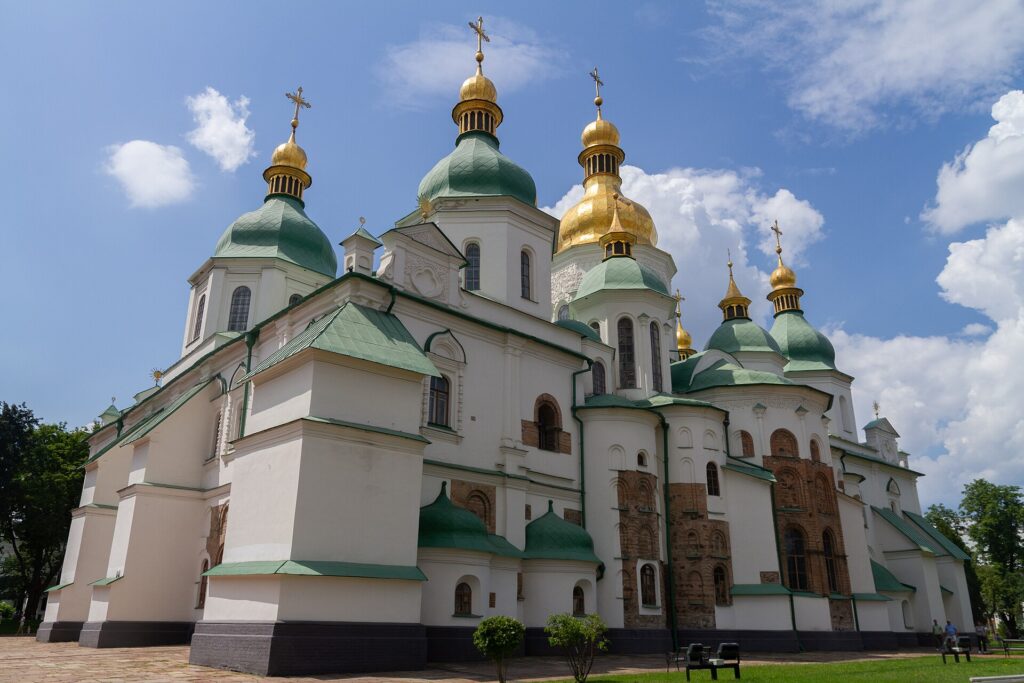

The Crimean Khanate that struck Kyiv was, at that point, a state only a few decades old. Sources differ on its founding year: Britannica’s entry on the khanate of Crimea gives 1443, while IEU’s entry on Crimea (updated 2022) gives 1449. The year it accepted Ottoman suzerainty is likewise inconsistent — 1475 in Britannica, 1478 in IEU. Both years fall around 1477, the year the Ōnin War ended.
Where One Era Ends and Another Begins Differs by Source
The periodization of Japanese history differs by source in the year each era is said to begin.
| Era | Japan Arts Council, Japan Cultural Expo | Columbia University Asia for Educators | Encyclopaedia Britannica |
|---|---|---|---|
| Jōmon | from around 13,000 BCE | from around 4000 BCE | not listed |
| Yayoi | from around 900 BCE | from around 300 BCE | not listed |
| Nara | from around 710 | 710–814 | 710–784 |
| Heian | from around 794 | 794–1185 | 794–1185 |
| Kamakura | from around 1190 | 1185–1333 | 1192–1333 |
| Muromachi | from around 1333 | 1336–1573 | 1338–1573 |
Whether the Kamakura period begins in 1185, around 1190, or 1192 depends on what is taken as its starting point. Britannica distinguishes between Minamoto no Yoritomo establishing his own military administration (the shogunate) after the Battle of Dan-no-ura in 1185, and his authority being formally recognized when he was granted the title of shogun in 1192 — and for periodization purposes adopts 1192. Asia for Educators adopts 1185.
Arranging events into a simple “in year X, this happened” format hides this kind of disagreement. When comparing the history of different regions, it is safer not to assume that one periodization is more certain than the other.
Events Lined Up by Year
| Year | Ukrainian lands | Japan |
|---|---|---|
| 882 | Oleg brings Kyiv under his control (per the Primary Chronicle) | 88 years after the move to Heian-kyō (794) |
| 988 | Christianity is adopted in Kyiv | Shortly before the period when Fujiwara no Michinaga led the court (995–1027) |
| 31 May 1223 | At the Battle of the Kalka River, a combined army of Rus’ princes and Cumans is defeated by Mongol forces | Kamakura period |
| December 1240 | Batu Khan’s army sacks Kyiv | Kamakura period (1192–1333 per Britannica) |
| 1274 and 1281 | Subordination to the Golden Horde continues | Two Mongol expeditions are repelled |
| 1362–63 | Grand Duke Algirdas of Lithuania annexes the Kyiv region | Muromachi shogunate period |
| 1467–77 | Under the rule of Lithuanian starostas; seat of the Kyiv voivodeship from 1471 | Ōnin War |
| 1475 or 1478 | The Crimean Khanate comes under Ottoman suzerainty (year differs between Britannica and IEU) | Around the end of the Ōnin War |
| 1482 | The Crimean khan Meñli I Giray sacks Kyiv | Early Sengoku period |
What Simply Lining Things Up Cannot Tell You
This article lines up events that took place in different places during the same period. Their appearing side by side does not mean they influenced each other. There are cases, such as the expansion of the Mongol Empire, where a single force reached both regions — but even then, the outcomes are recorded separately for each region.
Sources and article record
Sources and references
- Heian period
Published by Encyclopaedia Britannica · Checked: 2026-09-23 - Kamakura period
Published by Encyclopaedia Britannica · Checked: 2026-09-23 - Muromachi period
Published by Encyclopaedia Britannica · Checked: 2026-09-23 - Onin War
Published by Encyclopaedia Britannica · Checked: 2026-09-23 - Kyivan Rus
Published by Encyclopaedia Britannica · Checked: 2026-09-23 - Kyivupdated 2017
Published by Internet Encyclopedia of Ukraine (Canadian Institute of Ukrainian Studies, University of Alberta = CIUS) · Checked: 2026-09-23 - A Timeline of Japanese Historytext: Mari Hashimoto
Published by 日本芸術文化振興会「日本博」 · Checked: 2026-09-23 - Japan: Timeline of Historical Periods
Published by Columbia University Asia for Educators · Checked: 2026-09-23 - Battle of the Kalka River
Published by Encyclopaedia Britannica · Checked: 2026-09-23 - khanate of Crimea
Published by Encyclopaedia Britannica · Checked: 2026-09-23 - Kalka Riverprint edition first appeared in Volume 2, 1989
Published by Internet Encyclopedia of Ukraine (CIUS) · Checked: 2026-09-23 - Batu Khan
Published by Internet Encyclopedia of Ukraine (CIUS) · Checked: 2026-09-23 - Crimeaupdated 2022
Published by Internet Encyclopedia of Ukraine (CIUS) · Checked: 2026-09-23
Corrections and updates
- Added statements on the 1223 Battle of the Kalka River, Batu's invasion from 1237, and the founding of the Crimean Khanate and its Ottoman suzerainty.
If you find an error in this article, please tell us via Corrections. Once we have checked it, we will record in the article what was corrected and why.
More in this series
-

220 Years from the Founding to the Destruction of the Sich: Japan from Sengoku to Edo
This article lines up the roughly 220 years from around 1552, when a Sich was founded on the Dnipro River, to 1775, when the last Sich was destroyed, against Japan during the same period. The Sich was not a single site; there were eight of them. No original document of the Pereiaslav agreement survives. The Battle of Poltava has two dates.
-
The Year After Ukrainian-Language Publishing Was Banned in the Russian Empire, the University of Tokyo Opened in Japan
The Ems Ukase of 1876 banned the printing of Ukrainian-language books within the Russian Empire. The following April, in 1877, the University of Tokyo opened in Japan. Starting from Eneida (1798) and Kobzar (1840), published before the ban, this article lines up events from Perry's arrival to 1919, taking care over the difference between the two countries' calendars.
-

Seventy Years as a Soviet Republic, and Japan During Those Years
This article lines up the period when Ukraine was a Soviet republic — from the 1932 famine to independence in 1991 — against Japan during the same years. It notes who counted the figures of 3.9 million, 33,771, and about 200,000, and how.
Related articles
-
How Far Back Can the Faceless Cloth Doll “Motanka” Really Be Traced?
The motanka, a small doll made by wrapping cloth and tying it with thread, is sometimes introduced with claims that "the face is left blank to ward off evil" or that it "continues an unbroken line from the Trypillia culture." Reading encyclopedias and papers that document museum holdings, what can actually be confirmed is a 20th-century village doll, and a new form now being recreated.
-
Ukraine’s Last Census Was in 2001: The Plan Moved Five Times, Then Was Cancelled
The last time a census was held in Ukraine was December 5, 2001. Under Cabinet decisions, the planned date for the next one moved from 2011 to 2012, 2013, 2016, 2020, and 2023, and in October 2023 the plan itself was cancelled. This article lays out a timeline of censuses since 1897 and the text of the law providing that none will be held while martial law is in force.
-

Nearly 200,000 Damage Claims Filed: Where the Machinery to Make Russia Pay and Judge Its Leaders Stands Now
The Council of Europe's Register of Damage for Ukraine, which records damage caused by Russia's aggression, had received nearly 200,000 claims by September 2026. But the Register does not decide compensation amounts. The International Claims Commission, which will decide compensation, and the Special Tribunal, which will judge the leaders who decided on the aggression, had not yet been established as of September 2026. This article sums up the role and progress of all three mechanisms, and Japan's involvement.