Nearly 200,000 Damage Claims Filed: Where the Machinery to Make Russia Pay and Judge Its Leaders Stands Now
The Council of Europe's Register of Damage for Ukraine, which records damage caused by Russia's aggression, had received nearly 200,000 claims by September 2026. But the Register does not decide compensation amounts. The International Claims Commission, which will decide compensation, and the Special Tribunal, which will judge the leaders who decided on the aggression, had not yet been established as of September 2026. This article sums up the role and progress of all three mechanisms, and Japan's involvement.

The Register of Damage for Ukraine, based in The Hague, the Netherlands, announced on September 15, 2026 that the damage claims it had received so far had reached nearly 200,000, of which more than 65,000 had been reviewed and recorded. People who lost family members, had their homes destroyed, or were forced to flee the country because of Russia’s full-scale invasion of Ukraine file claims through Ukraine’s e-government portal, Diia (Дія).
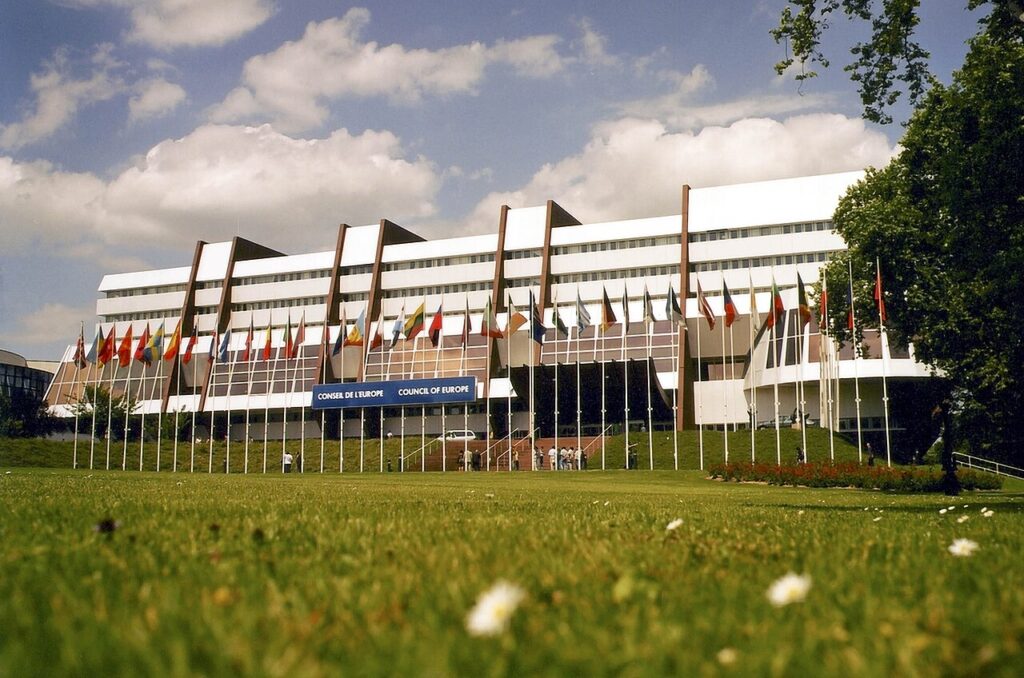
However, the Register does not decide compensation amounts, nor does it make payments. The “International Claims Commission,” which will decide compensation amounts, and the “Special Tribunal,” which will judge the leaders who decided on the aggression, had both not yet been established as of September 2026. All three mechanisms have been created within the framework of the Council of Europe.
Stage 1: The Register of Damage (established 2023)
The Register of Damage was established as an “Enlarged Partial Agreement,” open to any country that wishes to join, under Resolution CM/Res(2023)3, adopted by the Council of Europe’s Committee of Ministers on May 12, 2023. According to an announcement by Japan’s Ministry of Foreign Affairs, it was established on May 16 of the same year. The previous year, on November 14, 2022, the UN General Assembly had recommended, in Resolution ES-11/5, that an international register be created to document evidence of and claims for damage caused by Russia’s internationally wrongful acts.
The Register accepts damage that meets the following three conditions:
- Occurred on or after February 24, 2022
- Occurred within the territory of Ukraine inside its internationally recognized borders (including territorial waters)
- Resulted from Russia’s internationally wrongful acts in or against Ukraine
The Register began accepting claims on April 2, 2024. Categories corresponding to different types of damage have been opened in sequence for each of the three tracks: individuals (A), the Ukrainian state (B), and legal entities (C). On September 8, 2026, the final four categories for individuals were opened (including loss of access to medical care and loss of access to education), and on September 10 the final three categories for legal entities were opened (including the costs of evacuating or relocating a business), meaning all categories for individuals and legal entities are now open.
The Secretariat examines each claim, and the Board decides whether to record it. The Board’s decisions fall into four types: recording the claim, returning it to the Secretariat, dismissing it while allowing resubmission, or dismissing it without allowing resubmission. The Board does not rule on where responsibility lies or on payment.
| Announcement date | Claims received | Claims recorded |
|---|---|---|
| January 19, 2026 | 100,000 claims from individuals | — |
| April 30, 2026 | About 150,000 | More than 45,000 |
| June 5, 2026 | More than 160,000 | More than 45,000 |
| July 17, 2026 | More than 170,000 | About 58,000 |
| September 15, 2026 | Nearly 200,000 | More than 65,000 |
As of September 2026, 44 countries and the European Union (EU) take part in the Register. Of these, 41 are “Participants,” who pay contributions and have voting rights, and 4 are “Associate Members,” who have no obligation to contribute and no voting rights.
Stage 2: The International Claims Commission (treaty opened December 2025)
The International Claims Commission is the body that will review recorded claims and decide compensation amounts. The treaty establishing it (Council of Europe Treaty No. 229) was opened for signature at a diplomatic conference in The Hague on December 16, 2025.
Article 3 of the treaty defines the Commission as an “administrative mechanism” that decides claims for compensation for damage caused by Russia’s internationally wrongful acts. The Commission examines claims and decides the compensation amount to be paid for each. It is stated that the Commission will work on the premise that, under international law, Russia bears responsibility for all damage caused by its acts. The scope covers damage from February 24, 2022 onward, but the preamble states that this does not extinguish Russia’s responsibility for acts from February 20, 2014 onward, and mentions the possibility of extending the covered period through a future amendment.
For the treaty to enter into force, the following two conditions must both be met, and the first day of the month following the three months after that must arrive (Article 30):
- 25 signatory states must complete ratification or an equivalent process
- The total contributions those states made to the Register’s 2025 budget must amount to at least 50% of the Register’s budget for that same year
According to the Council of Europe, as of September 15, 2026, 40 states and bodies had signed, of which 9 states and the EU had ratified. Ukraine has already completed ratification. To prepare for entry into force, the Committee of Ministers established a preparatory committee in February 2026.
The treaty’s preamble positions a “Compensation Fund,” which would actually pay the compensation, as a “future third element” to follow the Register and the Claims Commission. In other words, even once the Claims Commission decides compensation amounts, the mechanism for paying them has not yet been decided. The treaty also provides that Russia may accede to it at any time (Article 31, paragraph 2).
The Special Tribunal: Judging the Aggression Itself
The International Criminal Court (ICC) can investigate war crimes, crimes against humanity, and genocide committed in Ukraine. However, the ICC cannot exercise jurisdiction in this situation over the “crime of aggression” itself—the fact that Russian leaders started a war of aggression. The preamble to the agreement between Ukraine and the Council of Europe also states that the jurisdictional arrangements the ICC’s Rome Statute sets out for the crime of aggression stand in the way of this.
To fill this gap, Ukrainian President Volodymyr Zelensky and Council of Europe Secretary General Alain Berset signed an agreement in Strasbourg on June 25, 2025 to establish the “Special Tribunal for the Crime of Aggression.” Ukraine’s Verkhovna Rada enacted a law ratifying the agreement on July 15 of the same year.
The main provisions of the Special Tribunal’s Statute, attached to the agreement, are as follows:
- It judges those “most responsible” for the crime of aggression against Ukraine. Jurisdiction is based on Ukraine’s territorial jurisdiction (Article 1)
- The crime of aggression is the planning, preparation, initiation, or execution, by a person in a position to effectively control or direct a state’s political or military action, of an act of aggression that constitutes a grave violation of the UN Charter (Article 2)
- Functional immunity arising from official capacity is not recognized (Article 23, paragraph 4)
- If the person indicted is a sitting head of state, head of government, or foreign minister, confirmation of the indictment and the proceedings are suspended until they leave that office or the immunity is waived (Article 23, paragraph 5)
- Trials may proceed without the accused present. In that case, however, defense counsel must be appointed, and if the accused later appears, they may request a retrial (Article 28)
For the agreement to enter into force, an “Enlarged Partial Agreement” among the countries that will operationally and financially support the Special Tribunal must be concluded (Agreement, Article 9). This Enlarged Partial Agreement was adopted at a meeting of the Council of Europe’s Committee of Ministers in Chișinău, Moldova, on May 15, 2026, with 36 countries and the EU indicating their intention to join. According to the Council of Europe, the Enlarged Partial Agreement has not yet entered into force because some participating countries have not completed their domestic procedures. The Netherlands has offered to host the Tribunal.
Where Does Japan Stand?
In May 2023, Japan, as an observer state to the Council of Europe, decided to join the Register of Damage as an Associate Member and notified the Council of Europe (announcement by the Ministry of Foreign Affairs). Associate Members have no obligation to contribute and no voting rights at the Conference of Participants. Japan appears on the Register’s list of participants.
As for the Enlarged Partial Agreement supporting the Special Tribunal, Japan is not among the 36 countries that joined its adoption on May 15, 2026. Japan’s involvement with the International Criminal Court is covered in The arrest warrant for President Putin was over the allegation of deporting children.
The Current Status of the Three Mechanisms
| Mechanism | Role | Legal basis | As of September 2026 |
|---|---|---|---|
| Register of Damage | Accepts damage claims and records those that meet the conditions. Does not decide compensation amounts | Committee of Ministers Resolution CM/Res(2023)3 (May 12, 2023) | Operating. Nearly 200,000 claims received, more than 65,000 recorded |
| International Claims Commission | Reviews recorded claims and decides compensation amounts | Council of Europe Treaty No. 229 (December 16, 2025) | Not yet in force. 40 signatories; ratified by 9 countries and the EU |
| Special Tribunal for the Crime of Aggression | Judges the leaders most responsible for the aggression | Agreement between Ukraine and the Council of Europe (June 25, 2025) and Enlarged Partial Agreement (adopted May 15, 2026) | Not yet in force. Awaiting domestic procedures for the Enlarged Partial Agreement |
Even once all three are in place, whether Russia actually pays compensation, or whether the accused appear before the tribunal, is a separate question. Even so, there is meaning in having an international body gather the record of harm and put a process for holding people accountable in place beforehand. For an overall estimate of the damage and reconstruction cost, see Five rounds of reconstruction-cost estimates, from $348.5 billion to $587.7 billion.
Sources and article record
Sources and references
- Register of Damage Strengthens Local Partnerships During Lviv VisitSeptember 15, 2026; nearly 200,000 received, more than 65,000 recorded, 7,672 at the 13th Board meeting
Published by Register of Damage for Ukraine (Council of Europe) · Checked: 2026-09-24 - Register of Damage for Ukraine launches final four claims categories for individualsSeptember 8, 2026
Published by Register of Damage for Ukraine · Checked: 2026-09-24 - Register of Damage for Ukraine launches final three claims categories for legal entitiesSeptember 10, 2026
Published by Register of Damage for Ukraine · Checked: 2026-09-24 - Statement of the Board of the Register of Damage for UkraineJuly 17, 2026; about 58,000 recorded, more than 170,000 received, the preparatory committee
Published by Register of Damage for Ukraine · Checked: 2026-09-24 - Conference of Participants Reviews Progress and Elects New BureauJune 5, 2026; claims acceptance began April 2, 2024; more than 160,000 received, more than 45,000 recorded; states that had completed ratification of the treaty
Published by Register of Damage for Ukraine · Checked: 2026-09-24 - 11th Board Meeting: Register of Damage for Ukraine Surpasses 45,000 Recorded ClaimsApril 30, 2026; about 150,000 received
Published by Register of Damage for Ukraine · Checked: 2026-09-24 - Register of Damage receives 100,000 claims submitted by individualsJanuary 19, 2026
Published by Register of Damage for Ukraine · Checked: 2026-09-24 - Mandate and Functions / Claims Processing / Membershipthe three acceptance conditions, what the Register does not do, the Board's four types of decisions, 44 countries and the EU, 41 Participants and 4 Associate Members
Published by Register of Damage for Ukraine · Checked: 2026-09-24 - Convention establishing an International Claims Commission for Ukraine, CETS No. 229December 16, 2025; preamble, Articles 3, 30, and 31
Published by Council of Europe · Checked: 2026-09-24 - The Netherlands ratifies Council of Europe convention establishing International Claims Commission for UkraineSeptember 15, 2026; 40 signatories, ratified by 9 countries and the EU, establishment of the preparatory committee
Published by Council of Europe · Checked: 2026-09-24 - Угода між Україною та Радою Європи про створення Спеціального трибуналу щодо злочину агресії проти України. Статут Спеціального трибуналуJune 25, 2025; preamble, Article 9 of the Agreement, Articles 1, 2, 23, and 28 of the Statute
Published by Верховна Рада України (zakon.rada.gov.ua) · Checked: 2026-09-24 - Закон України № 4518-IX «Про ратифікацію Угоди між Україною та Радою Європи про створення Спеціального трибуналу…»July 15, 2025
Published by Верховна Рада України (zakon.rada.gov.ua) · Checked: 2026-09-24 - Special Tribunal for the Crime of Aggression against Ukraine: Frequently asked questionsupdated May 15, 2026; adoption and non-entry-into-force of the Enlarged Partial Agreement, the relationship with the ICC, trials in absentia
Published by Council of Europe · Checked: 2026-09-24 - The EU participated in the adoption of the Enlarged Partial Agreement on the Management Committee of the Special Tribunalthe adoption on May 15, 2026, 36 countries and the EU, the Netherlands' offer to host
Published by EU Delegation to the Council of Europe (EEAS) · Checked: 2026-09-24 - Participation in the Register of Damage Caused by the Aggression of the Russian Federation against UkraineMay 18, 2023; Japan's participation as an Associate Member, the adoption of the framework document on May 12, the establishment on May 16
Published by 外務省 · Checked: 2026-09-24
If you find an error in this article, please tell us via Corrections. Once we have checked it, we will record in the article what was corrected and why.