
From 200,000 Registered Cases to a Verdict: How Ukraine Prosecutes War Crimes
According to Ukraine's Office of the Prosecutor General, 203,382 cases had had investigations opened under Article 438 of the Criminal Code (war crimes) between the full-scale invasion and the end of 2025. Meanwhile, only 102 people were convicted in this category in 2025. This article sums up the differences between registration, notice of suspicion, indictment, and verdict, the procedure for trying suspects who are abroad, and the division of labor with the International Criminal Court.
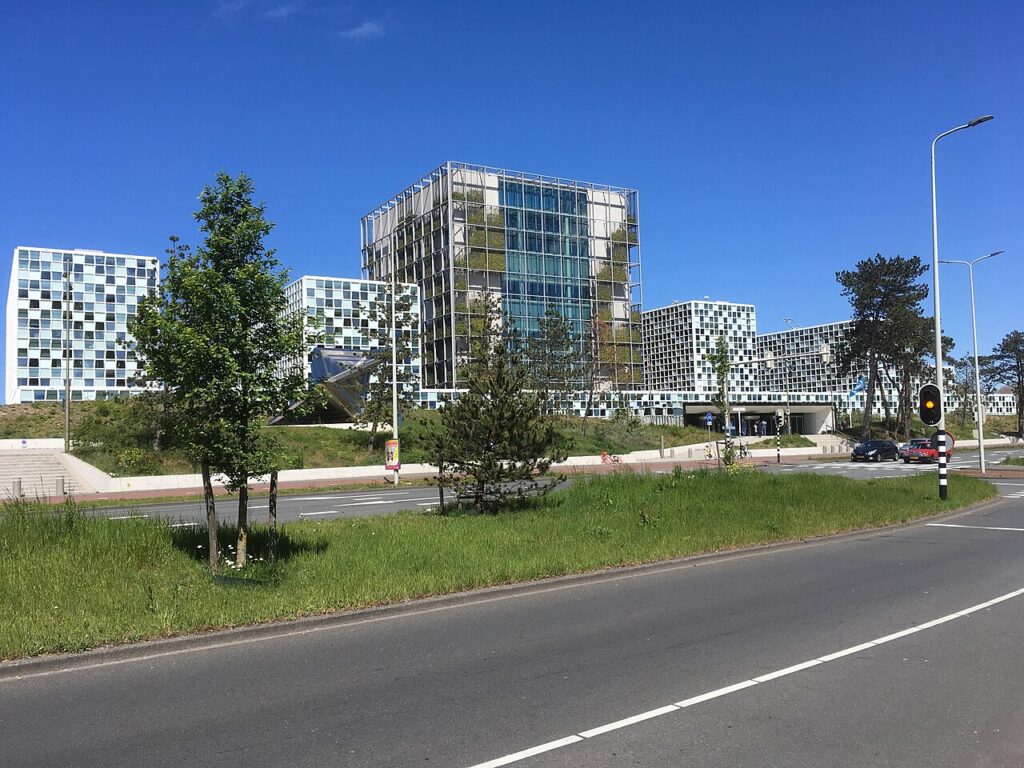
_in_The_Hague_01.jpg)
According to the 2025 annual report published by Ukraine’s Office of the Prosecutor General, law enforcement agencies opened investigations into 232,499 crimes related to the armed conflict between February 24, 2022, when Russia’s full-scale invasion of Ukraine began, and December 31, 2025. Of these, 203,382 are cases under Article 438 of the Criminal Code (war crimes).
The same report states that, in the single year 2025, 429 notices of suspicion were issued in this category, 171 indictments (296 defendants) were sent to the courts, and 77 guilty verdicts (102 people) were handed down. The gap between the figure of 200,000 and the figure of 102 arises from the difference between the stages of investigation and trial.
The 200,000 Figure Is a Count of “Investigations Opened”
Article 214 of Ukraine’s Code of Criminal Procedure requires that, upon receiving a report of a crime, or when an investigator or prosecutor discovers circumstances suggesting a crime, it must be entered within 24 hours in the Unified Register of Pre-Trial Investigations (Єдиний реєстр досудових розслідувань), and the investigation begins. The investigation is considered to have started at the moment of this entry.
Accordingly, the number of “registered war crimes” reported in the news is the number of cases for which investigations have been opened. It is neither the number of cases in which the perpetrator has been identified, nor the number recognized as crimes by a court.
Based on criminal case files, the Office of the Prosecutor General’s report tallies 16,445 civilian deaths from war crimes (including 677 children) and 39,003 injured (including 2,313 children), and 292,649 civilian facilities destroyed or damaged. The breakdown of facilities is 235,803 homes and buildings, 4,801 education and childcare facilities, 1,363 medical facilities, 905 cultural facilities, and 301 religious facilities, among others. The prosecution’s “Strategy for the Prosecution of International Crimes (2026–2028),” approved in 2026, also states that the registered count as of early 2026 was “more than 203,000.”
What Article 438 of the Criminal Code Punishes
Article 438 is headed “War Crimes” (Воєнні злочини). Paragraph 1 lists the acts it punishes as follows:
- Cruel treatment of prisoners of war or civilians
- Deporting civilians for forced labor
- Plundering national cultural property in occupied territory
- Using means of warfare prohibited by international law
- Unlawfully transferring or deporting children, wrongfully delaying the return of children, or recruiting or using children to take part in the armed conflict
- Other violations of the laws and customs of war set out in international treaties to which the Verkhovna Rada has consented
- Ordering these acts
The penalty is imprisonment for 8 to 12 years, or, where a person is caused to die (paragraph 2), imprisonment for 10 to 15 years or life imprisonment. The article carries notes on amendments made by Law No. 4012-IX of October 9, 2024 and Law No. 4499-IX of June 17, 2025.
The same chapter also includes waging a war of aggression (Article 437), “ecocide” (Article 441), which punishes large-scale destruction of ecosystems and similar acts, and genocide (Article 442). Law No. 4012-IX of 2024 added “crimes against humanity” (Article 442-1) here. This law amended the Criminal Code and the Code of Criminal Procedure to align with Ukraine’s ratification of the International Criminal Court’s (ICC) Rome Statute.
Suspicion, Indictment, and Verdict Are Separate Stages
Ukrainian news reports often use the phrase “notified of suspicion” (повідомили про підозру). This refers to the procedure under Articles 276–278 of the Code of Criminal Procedure and means the case has entered the stage of treating a person as a suspect. The notice is drawn up by a prosecutor, or by an investigator with a prosecutor’s consent, and states the Criminal Code article corresponding to the charge and a summary of the facts.
Once the investigation is complete, the investigator draws up an indictment (обвинувальний акт), which the prosecutor approves and sends to the court (Article 291). It is the court that decides whether the person is guilty.
Article 17 of the Code of Criminal Procedure provides that a person is presumed innocent until guilt is proven by a final guilty verdict. If the prosecution cannot prove guilt beyond a reasonable doubt, the person is acquitted. News reporting a “notice of suspicion” or an “indictment” does not mean guilt has been established.
| Stage | Legal basis (Code of Criminal Procedure) | 2025 figure (Office of the Prosecutor General) |
|---|---|---|
| Investigation opened (registration) | Article 214 | 203,382 cumulative since the invasion began (Article 438) |
| Notice of suspicion | Articles 276–278 | 429 cases |
| Indictment sent to court | Article 291 | 171 cases (296 defendants) |
| Guilty verdict | Article 17 (presumption of innocence) | 77 cases (102 people) |
The “Special Procedure” for Trying Suspects Abroad
Many war crimes suspects are in Russia or in occupied territory, beyond the reach of Ukraine’s investigative bodies. Ukraine’s Code of Criminal Procedure therefore provides procedures for advancing an investigation and trial without the suspect appearing.
Article 297-1’s “special pre-trial investigation” (in absentia) can be conducted by decision of an investigating judge, for crimes under Articles 437–442-1 and others, when the suspect is hiding in temporarily occupied territory or in the territory of a state the Verkhovna Rada has recognized as an aggressor state in order to evade responsibility, or when they are subject to an international wanted notice. Minors are excluded. A 2022 amendment added people handed over to the other side in a prisoner exchange to those covered.
At the trial stage, Article 323, paragraph 3 permits a “special trial procedure” that hears the same crimes without the defendant present. In this case, defense counsel must always be appointed, and the summons is published in national media and on the court’s website. If the defendant later appears or is handed over, the proceedings continue under ordinary procedure, and if the defense requests it, evidence examined in the defendant’s absence is examined again (paragraph 4).
The Office of the Prosecutor General’s report states that in 2025 it identified 46 Russian military commanders and, based on the evidence gathered, took proceedings to hold them accountable. These are people alleged to have ordered war crimes or to have had a duty to prevent them but failed to do so; their ranks include 2 colonel generals and 5 lieutenant generals, among others.
Division of Labor with the International Criminal Court
The ICC opened an investigation into the “Situation in Ukraine” on March 2, 2022. Japan is among the countries that requested this investigation (the background is summarized in this outlet’s article The arrest warrant for President Putin was over the allegation of deporting children).
Ukraine enacted the law ratifying the Rome Statute (No. 3909-IX) on August 21, 2024, deposited its instrument of ratification on October 25, and became a State Party on January 1, 2025. On ratification, under Article 124, it declared that for seven years from the Statute’s entry into force for Ukraine, it would not accept the ICC’s jurisdiction over alleged war crimes committed by its own nationals. Russia is not a State Party to the ICC; on November 30, 2016, it notified the UN Secretary-General of its intention not to become a party.
As of September 2026, the ICC’s page on the “Situation in Ukraine” lists six people against whom arrest warrants have been issued.
| Date of arrest warrant | Subject (position at the time) | Charge |
|---|---|---|
| March 17, 2023 | Vladimir Putin (President of Russia), Maria Lvova-Belova (Commissioner for Children’s Rights in the Office of the President of Russia) | Unlawful deportation and transfer of children from occupied areas to Russia (war crime) |
| March 5, 2024 | Sergei Kobylash (Commander of Long-Range Aviation, Aerospace Forces), Viktor Sokolov (Commander of the Black Sea Fleet) | Attacks on civilian objects, excessive incidental harm to civilians (war crimes), inhumane acts (crime against humanity) |
| June 24, 2024 | Sergei Shoigu (Minister of Defense), Valery Gerasimov (Chief of the General Staff) | Same as above |
There is a major difference between the ICC and Ukraine’s domestic courts. The Rome Statute sets the standard for issuing an arrest warrant as “reasonable grounds to believe” the person committed the crime (Article 58), while requiring proof “beyond reasonable doubt” for a conviction (Article 66). And Article 63 provides that “the accused shall be present during the trial.” Because the ICC cannot hold a trial without the accused present, an arrest and surrender are necessary for a case to proceed to trial.
According to the Office of the Prosecutor General, since the start of the full-scale invasion it has responded to 163 of the 175 requests for cooperation received from the ICC Office of the Prosecutor. Measured by the number of cases, the great majority of war crimes investigations take place within Ukraine. Note also that the ICC cannot judge the crime of aggression itself in this situation; the Council of Europe and Ukraine are proceeding to establish a separate Special Tribunal to handle it.
Notes for Reading These Numbers
- “Registered war crimes” is the number of cases for which an investigation has been opened.
- A “notice of suspicion” or an “indictment” does not mean guilt has been established.
- The Office of the Prosecutor General’s report also gives a figure of 8,476 people convicted at first instance of “crimes related to the armed conflict” from the start of the invasion through the end of 2025. This is a broader category, not limited to war crimes under Article 438, and covers a different scope than the 102 people in the table above.
- An ICC arrest warrant is an order to arrest a suspect. It is not a guilty verdict.
For a general approach to reading news figures, see Five Things to Check First When Reading Ukraine News, and on the treatment of prisoners of war, see 124 of 129 Returned Prisoners of War Testified to Torture or Abuse: Prisoner Exchanges and International Humanitarian Law.
Sources and article record
Sources and references
- Annual Report of the Prosecutor General’s Office for 2025English edition; 232,499 cases Feb. 24, 2022–Dec. 31, 2025, of which 203,382 under Article 438; 16,445 dead / 39,003 injured; breakdown of 292,649 civilian facilities; 2025 figures of 429 notices of suspicion, 171 indictments (296 people), 77 guilty verdicts (102 people); cumulative 8,476 convictions; 46 commanders; 163 of 175 ICC cooperation requests
Published by Офіс Генерального прокурора · Checked: 2026-09-24 - Стратегія з реалізації повноважень органів прокуратури у сфері кримінального переслідування за вчинення міжнародних злочинів на 2026–2028 рокиthe registered count of "more than 203,000" as of early 2026
Published by Офіс Генерального прокурора · Checked: 2026-09-24 - Кримінальний кодекс України № 2341-IIIArticles 437–442-1, the text of Article 438 and its amendment notes, version as of September 24, 2026
Published by Верховна Рада України (zakon.rada.gov.ua) · Checked: 2026-09-24 - Кримінальний процесуальний кодекс України № 4651-VIArticles 17, 214, 276–278, 291, 297-1, and 323
Published by Верховна Рада України (zakon.rada.gov.ua) · Checked: 2026-09-24 - Закон України № 3909-IX «Про ратифікацію Римського статуту…»August 21, 2024; the Article 124 declaration, conditions for entry into force
Published by Верховна Рада України (zakon.rada.gov.ua) · Checked: 2026-09-24 - Закон України № 4012-IXOctober 9, 2024; amendments to the Criminal Code and Code of Criminal Procedure, addition of Article 442-1
Published by Верховна Рада України (zakon.rada.gov.ua) · Checked: 2026-09-24 - Situation in Ukraine, ICC-01/22date the investigation opened, referring states, Ukraine's deposit of ratification and its effect, the six people with arrest warrants and the charges
Published by International Criminal Court · Checked: 2026-09-24 - Situation in Ukraine: ICC judges issue arrest warrants against Sergei Ivanovich Kobylash and Viktor Nikolayevich SokolovMarch 5, 2024
Published by International Criminal Court · Checked: 2026-09-24 - Situation in Ukraine: ICC judges issue arrest warrants against Sergei Kuzhugetovich Shoigu and Valery Vasilyevich Gerasimovissued June 24, 2024, announced the 25th
Published by International Criminal Court · Checked: 2026-09-24 - Rome Statute of the International Criminal CourtArticles 58, 63, and 66
Published by International Criminal Court · Checked: 2026-09-24 - Угода між Україною та Радою Європи про створення Спеціального трибуналу щодо злочину агресії проти УкраїниJune 25, 2025; the preamble's statement that the ICC cannot exercise jurisdiction over the crime of aggression in this situation
Published by Верховна Рада України (zakon.rada.gov.ua) · Checked: 2026-09-24 - Rome Statute of the International Criminal Court: StatusUkraine's ratification on October 25, 2024; Russia's notification on November 30, 2016
Published by United Nations Treaty Collection · Checked: 2026-09-24
If you find an error in this article, please tell us via Corrections. Once we have checked it, we will record in the article what was corrected and why.
Related articles
-
Ukraine’s Presidential Elections: Seven Held, Five Went to a Runoff. 1991 to 2019
Independent Ukraine held seven presidential elections between 1991 and 2019. Only in 1991 and 2014 was the outcome decided in the first round; in 2004, the Supreme Court ordered the runoff to be rerun. This article sets out a timeline based on Central Election Commission figures, the constitutional provisions on the term of office, the two-consecutive-term limit, and early elections, and the legal basis for why no election has been held under martial law.
-
Is Pavlovsky’s 1818 Grammar Really “the First Ukrainian Grammar”?
Oleksii Pavlovsky's Grammar of the Little Russian Dialect, published in St. Petersburg in 1818, is called by the Encyclopedia of the Ukrainian Language "the first printed grammar of the living, popular Ukrainian language" in Ukrainian linguistics. This article sets it against grammars going back to the 16th century, examines the conditions behind that "first," its title page and contents, its use of the letter і, and the wavering between "dialect" and "language" in its preface.
-

From Bulletproof Vests to High-Mobility Vehicles: What Japan’s Self-Defense Forces Have Sent to Ukraine
On March 8, 2022, a transport aircraft loaded with Self-Defense Forces bulletproof vests and steel helmets departed for Poland. The government amended the operational guidelines for the Three Principles on Transfer of Defense Equipment and Technology that same day. This article traces the course of the transfers that followed — protective masks, drones, 131 SDF vehicles, and medical supplies — and the rule against sending anything with lethal capability.