The Arrest Warrant for President Putin Was Over the Removal of Children
In March 2023, the International Criminal Court issued arrest warrants for President Putin and others. The charge was a war crime: the unlawful deportation and transfer of children from occupied areas of Ukraine to Russia. In March 2026, a UN commission of inquiry concluded it amounted to a crime against humanity. This article lines up where the numbers come from and the frameworks for bringing the children back.
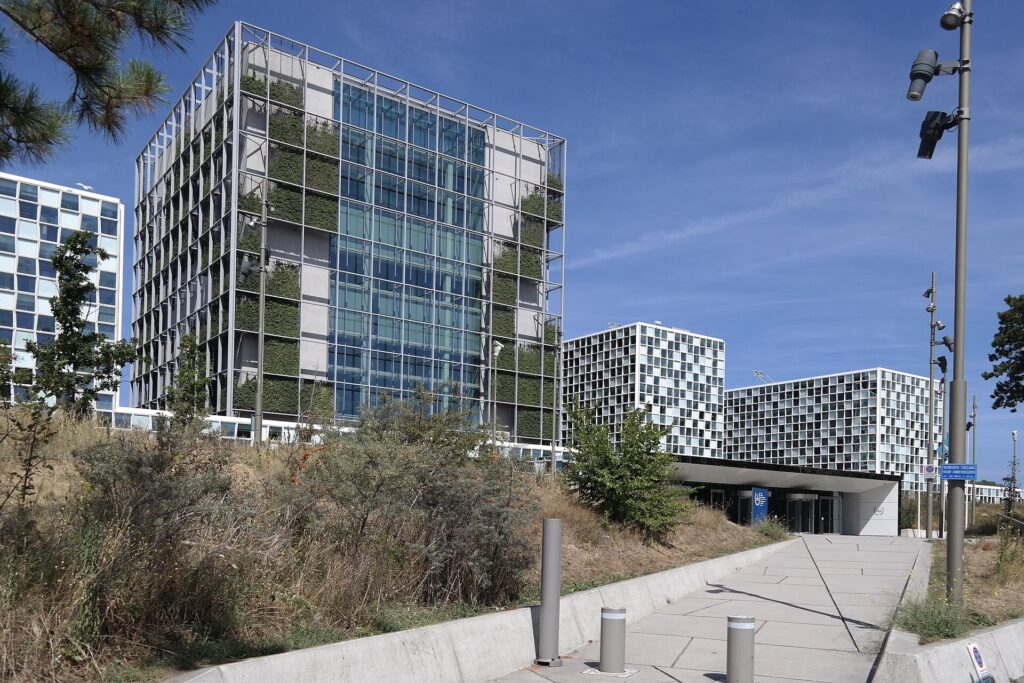

On March 17, 2023, Pre-Trial Chamber II of the International Criminal Court (ICC) issued an arrest warrant for Russian President Vladimir Putin. The charge was the removal of Ukrainian children from occupied territory to Russia.
Three years later, in March 2026, a UN commission of inquiry concluded that the same conduct amounted to a “crime against humanity.” Meanwhile, the numbers given by the Ukrainian government, the UN, and Russia for how many children were taken differ greatly.
Two Charges in the Arrest Warrant
According to the ICC’s announcement of March 17, 2023, arrest warrants were issued for two people: Vladimir Putin, President of the Russian Federation, and Maria Alekseyevna Lvova-Belova, Commissioner for Children’s Rights in the Office of the President of the Russian Federation.
Both face the same charges: the war crimes, under Article 8 of the ICC’s founding treaty (the Rome Statute), of “unlawful deportation of population (children)” and “unlawful transfer of population (children)” from occupied areas of Ukraine to the Russian Federation. The announcement states that the crimes were committed “at least from 24 February 2022” in occupied areas of Ukraine — that is, from the day Russia’s full-scale invasion of Ukraine began.
The arrest warrants themselves were kept confidential to protect victims and witnesses and to safeguard the investigation. Even so, the Chamber authorized public disclosure of just the suspects’ names and the charges, on the grounds that, since the conduct was said to be ongoing, making the warrants’ existence public could help prevent the crimes.
The ICC tries individual criminal responsibility, not the responsibility of states. According to the announcement, Putin is alleged to bear responsibility both for having committed the acts himself (or jointly with others, or through others) and, as a superior, for failing to properly control civilian and military subordinates under his command.
This arrest warrant is also included in this site’s timeline article, A Timeline of Ukraine’s Independence and Russia’s Aggression.
Japan Was Among the Countries That Called for the Investigation
According to the ICC’s “Situation in Ukraine” page, the Office of the Prosecutor opened an investigation on March 2, 2022. Around that time, States Parties referred the situation to the ICC one after another: Lithuania referred it on March 1, a group of 38 countries referred it together on March 2, and the Prosecutor confirmed that Japan and North Macedonia joined on March 11.
Ukraine was not a State Party to the ICC at the time, but it had made a declaration accepting the ICC’s jurisdiction over crimes on its own territory from 2014 onward. According to the same page, Ukraine deposited its instrument of ratification of the Rome Statute on October 25, 2024, and became a State Party on January 1, 2025.
The UN Commission of Inquiry Concludes “Crime Against Humanity”
The Independent International Commission of Inquiry on Ukraine, set up by the UN Human Rights Council, announced the following through the Office of the UN High Commissioner for Human Rights (OHCHR), regarding a report it published on March 12, 2026: the deportation and forcible transfer of children by Russian authorities, and their enforced disappearance, amount to crimes against humanity.
The main points of the announcement are as follows.
- The Commission has so far confirmed the deportation or transfer of more than 1,200 children from five Ukrainian oblasts.
- Russian authorities carried out large-scale movements from just before the full-scale invasion, describing them as “evacuation” for reasons of danger from the armed conflict. But the Commission’s investigation found that 80% of the children in the cases it recorded had not been returned even after 4 years.
- Under international humanitarian law, evacuation is permitted only where compelling reasons of health, medical treatment, or safety exist, and it must be temporary.
- Russian authorities did not inform parents or legal guardians of the children’s whereabouts, and placed the children long-term in families or institutions across 21 regions of the Russian Federation and in occupied areas. Children were systematically granted Russian citizenship, and in some cases entered into adoption databases.
- The Commission judged that the policy was designed and carried out “at the highest levels of the Russian Federation leadership,” and that the involvement of President Putin and Ms. Lvova-Belova was apparent from the start.
Russia has described the transfer of children as evacuation for their safety. The Commission points out that most of the cases it recorded have not been returned even after 4 years, which it says runs counter to international humanitarian law’s requirement that evacuation be temporary.
What the Geneva Conventions Prohibit
The basis for this is the Fourth Geneva Convention of 1949 (relative to the Protection of Civilian Persons in Time of War). Below is a translation, by Ukrainavi’s editors, of the relevant provision from the authoritative English text in the International Committee of the Red Cross’s (ICRC) treaty database.
Individual or mass forcible transfers, as well as deportations of protected persons from occupied territory to the territory of the Occupying Power or to that of any other country, occupied or not, are prohibited, regardless of their motive.
Fourth Geneva Convention, Article 49, Paragraph 1 (English authoritative text, ICRC IHL Databases; translated into Japanese by Ukrainavi’s editors for the source article)
The same Article 49 allows an occupying power to carry out “evacuation” where the security of the population or imperative military reasons so demand, but in principle such evacuation can only be to somewhere within the occupied territory, and persons evacuated must be transferred back to their homes as soon as hostilities have ceased. Movements must also avoid separating members of the same family.
Article 50 concerns children specifically. It requires the occupying power to take all necessary steps to facilitate the identification of children and the registration of their parentage, and states that it may not, “in any case,” change their personal status. The UN commission of inquiry’s findings on granting citizenship and registering children in adoption databases are raised as issues in light of this provision.
How Many Have Been Taken, How Many Have Returned
The numbers vary greatly depending on who is counting and how they define the count. Whenever you cite a figure, you need to check who counted it, when, and what.
| Figure | What it counts | Source and point in time |
|---|---|---|
| 20,651 | Children deported or forcibly transferred | Ukrainian government portal “Children of War” (listed as figures from Bring Kids Back UA), as of September 23, 2026 |
| 2,627 | Children returned to Ukraine (including those returned from deportation/transfer and those returned from occupied areas) | Same as above |
| 744,000 | A number of children reportedly based on information published by the Russian side (what was counted is not stated) | Listed by the same portal as “according to publicly available information reported by the Russian Federation” |
| More than 1,200 | Deportations or transfers individually confirmed by the commission | UN Independent International Commission of Inquiry, announcement of March 12, 2026 |
| About 1,600 | Children returned from Russia to Ukraine | Government of Canada page (updated August 17, 2026) |
The Ukrainian government portal “Children of War” (Діти війни) was created, at the request of the Office of the President, by the Ministry of Reintegration and the State Intelligence Service, and states that the figures are updated daily by law enforcement agencies. The figure of 744,000, on the other hand, is simply listed by the portal with a note, and it does not state what was counted or over what period. It cannot be placed alongside the 20,651 figure Ukraine has itself confirmed as if it meant the same thing.
The UN commission of inquiry’s figure of “more than 1,200” is the number of cases the commission itself could individually verify, not an estimate of the overall scale. At the UN General Assembly in December 2025, a Ukrainian deputy foreign minister stated that “at least 20,000” children had been deported (as reported by UN News).
Frameworks for Bringing the Children Back
Bring Kids Back UA
An initiative launched in 2023 by Ukrainian President Zelensky, bringing together the strength of government agencies, civil society organizations, and international partners. Its official site lists its work as: identifying and confirming the whereabouts of removed children, building mechanisms for their return, providing psychological and social support, education, and medical care after their return, international advocacy, and documenting the crimes and cooperating with the ICC and others.
The International Coalition for the Return of Ukrainian Children
According to the Government of Canada, the “International Coalition for the Return of Ukrainian Children” was launched in Kyiv on February 2, 2024, and is co-chaired by the governments of Ukraine and Canada. The list of participating countries and organizations on the Government of Canada’s page (updated August 17, 2026) includes Japan.
The UN General Assembly Resolution
According to UN News, the UN General Assembly, at an emergency special session on December 3, 2025, adopted a resolution, by a vote of 91 in favor, 12 against, and 57 abstentions, demanding that Russia immediately, safely, and unconditionally return all Ukrainian children who have been forcibly transferred or deported. The resolution calls for an end to practices such as changing children’s nationality, placing them for adoption or foster care, and indoctrination, and calls on the UN Secretary-General to intensify mediation efforts. Russia’s representative opposed the resolution, calling it “a particularly cynical lie.”
Reading This Issue
The removal of children did not begin with the full-scale invasion of February 24, 2022. The UN General Assembly’s resolution also expresses concern for children separated from their families since Russia’s annexation of Crimea in 2014. Bring Kids Back UA likewise states that the deportation of children by Russia has continued since 2015.
At the same time, the scale, and the materials that can be confirmed, differ between the events since 2014 and the large-scale removals since 2022. The arrest warrant and the UN’s conclusions covered in this article are both centered on conduct from February 24, 2022 onward.
Bring Kids Back UA reports that some children have had their names changed, and the UN commission of inquiry states that some children have been placed long-term in Russian families or institutions. There is a great deal of reporting and testimony conveying the experiences of children who have returned, but to protect the children’s safety and future lives, this article does not introduce individual cases.
Sources and article record
Sources and references
- Situation in Ukraine: ICC judges issue arrest warrants against Vladimir Vladimirovich Putin and Maria Alekseyevna Lvova-Belova2023年3月17日の逆捕状・罪名と根拠条文・2022年2月24日以降・逆捕状の非公表と公表の理由・責任の形態
Published by International Criminal Court · Checked: 2026-09-24 - Ukraine事態のページ。2022年3月2日の捕査開始・締約国の付託と日本の付託日・ウクライナの管轄受諾宣言と批准
Published by International Criminal Court · Checked: 2026-09-24 - UN Commission concludes that deportation and forcible transfer of Ukrainian children by Russian authorities, as well as enforced disappearances, amount to crimes against humanity2026年3月12日。人道に対する犯罪・1,200人超・五つの州・80%・21の地域・国籍付与と養子縁組データベース
Published by Independent International Commission of Inquiry on Ukraine(OHCHR) · Checked: 2026-09-24 - Geneva Convention (IV), Article 49強制移送・追放の禁止、避難の条件、家族を引き離さないこと
Published by International Committee of the Red Cross(IHL Databases) · Checked: 2026-09-24 - Geneva Convention (IV), Article 50子どもの身元確認と身分変更の禁止
Published by International Committee of the Red Cross(IHL Databases) · Checked: 2026-09-24 - Children of War2022年2月24日〜2026年9月23日の数字:国外追放・強制移送、2万651人、帰還、2,627人、ロシア側公開情報による74万4,000人
Published by ウクライナ政府(再統合省・国家情報局) · Checked: 2026-09-24 - Children of War: About the Platformポータルの作成主体と数字の更新方法
Published by ウクライナ政府(再統合省・国家情報局) · Checked: 2026-09-24 - Bring Kids Back UA: About2023年に大統領が開始・活動内容・2015年以降の国外追放という説明・国際連合の発足
Published by Bring Kids Back UA(ウクライナ大統領のイニシアティブ) · Checked: 2026-09-24 - International Coalition for the Return of Ukrainian Children2024年2月2日の発足・共同議長・参加国一覧・約16一00人の帰還。2026年8月17日更新
Published by Government of Canada(Global Affairs Canada) · Checked: 2026-09-24 - General Assembly demands return of Ukrainian children by Russia2025年12月3日・賛成90反対12棄杂57・決議の要求内容・2014年以降への言及・ウクライナ外務次官とロシア代表の発言
Published by UN News · Checked: 2026-09-24
If you find an error in this article, please tell us via Corrections. Once we have checked it, we will record in the article what was corrected and why.