
The Poet on Ukraine’s 200-Hryvnia Note: Lesya Ukrainka and Her Play Forest Song
The figure portrayed on Ukraine's 200-hryvnia banknote is the poet and playwright Lesya Ukrainka (1871–1913), born Larysa Kosach. Over thirty years of fighting illness, she left behind twenty dramatic works. Centered on Forest Song (1911), a play drawn from forest legends of the Volyn region, this article covers her work and life, the banknote's design, and Japanese translations available to read.
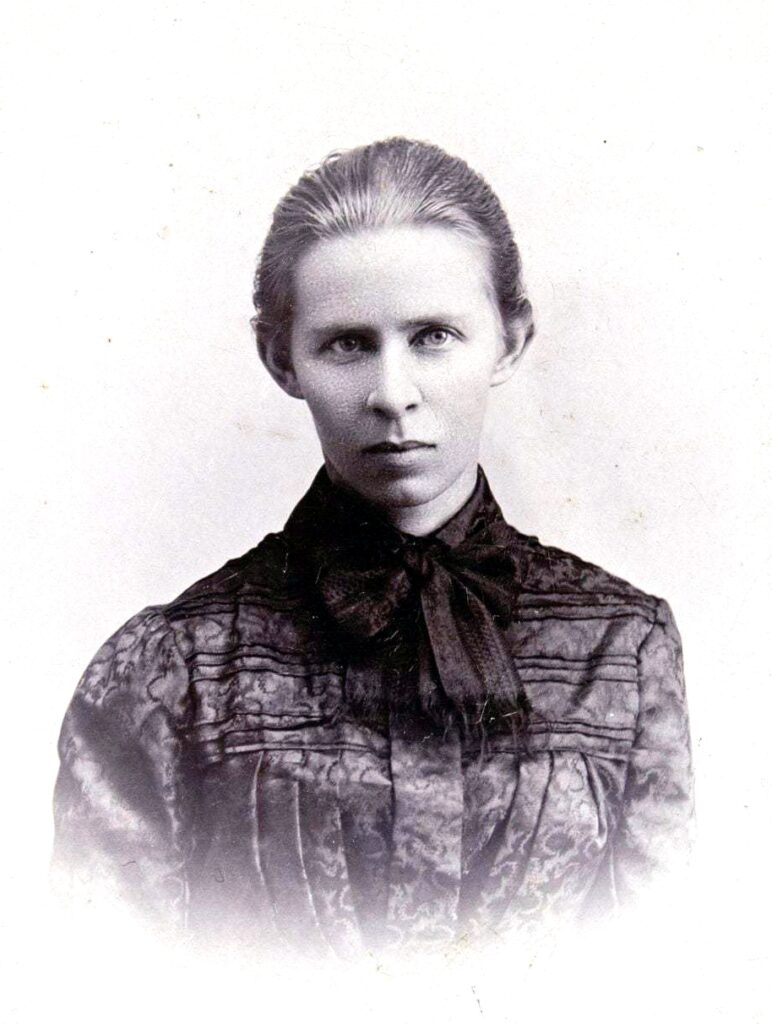


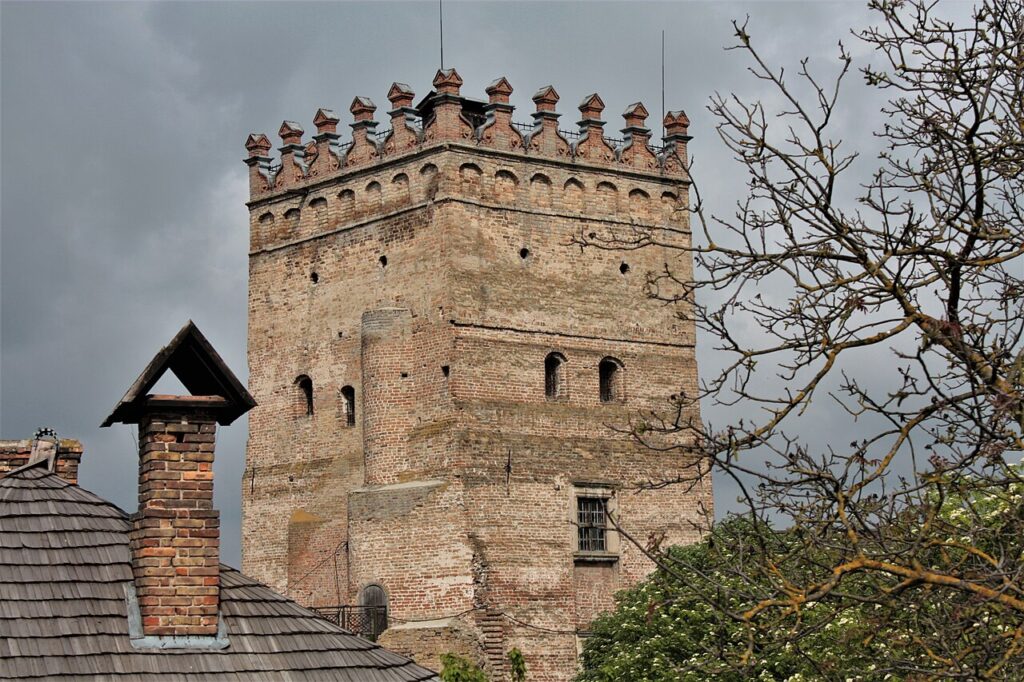
The front of Ukraine’s 200-hryvnia banknote bears the portrait of a woman: the poet and playwright Lesya Ukrainka (Леся Українка, 1871–1913). The back depicts the gate tower of Lutsk Castle, in Lutsk, the capital of Volyn Oblast.
In its description of the banknote, the National Bank of Ukraine (NBU) presents her as a writer spoken of alongside Taras Shevchenko and Ivan Franko, and notes that Franko called her “the only man in our literature.”
.jpg)
The Name Larysa Kosach
Her real name was Larysa Kosach-Kvitka (Лариса Косач-Квітка); her maiden family name was Kosach. According to the Internet Encyclopedia of Ukraine (IEU, published by the Canadian Institute of Ukrainian Studies), she was born on February 25, 1871, in Zviahel (Звягель), in Volyn Governorate. The Encyclopedia of the History of Ukraine (Institute of History of Ukraine, National Academy of Sciences of Ukraine) refers to the same town by its pre-renaming name, Novohrad-Volynskyi. The town’s name was restored to Zviahel by a resolution of the Verkhovna Rada (No. 2779-IX) on November 16, 2022.
Her mother was the writer Olena Pchilka (real name Olha Kosach), and her mother’s brother was the thinker Mykhailo Drahomanov. According to the Encyclopedia of the History of Ukraine, the pen name “Lesya Ukrainka” was chosen by her mother, and it is thought possibly to have followed the signature “Ukrainets” (“a Ukrainian”) that Drahomanov used on some of his works.
In childhood she lived in Zviahel, Lutsk, and the village of Kolodiazhne, all in Volyn, before later moving to Kyiv. According to the same encyclopedia, in 1881 she caught a chill while watching an Epiphany ritual held at a river, which triggered leg pain and the start of what is called her “thirty years’ war” against tuberculosis. She did not attend school, studying instead under her mother and private tutors. IEU states that, in addition to the main languages of Western Europe, she mastered Greek, Latin, and Slavic languages, and translated Gogol, Mickiewicz, Heine, Hugo, and Homer.
Her First Published Poem, at Thirteen
According to IEU, she wrote the poem “Hope” at age nine, and in 1884 her poems “Lily of the Valley” and “Sappho” appeared in the Lviv magazine Zoria — her first works to be printed. Her first poetry collection, On the Wings of Songs, was published in Lviv in 1893. The Encyclopedia of the History of Ukraine states that Ivan Franko helped bring out this collection.
Lviv was at the time part of Austria-Hungary. In the Russian Empire, where she lived, the printing of Ukrainian-language books had been banned since the 1876 Ems Ukase (see our article on the Ems Ukase). According to the same encyclopedia, when On the Wings of Songs was reissued in Kyiv in 1904, several works were cut by the censors.
What Her Dramatic Poems Portrayed
IEU places the peak of her literary output in her dramatic poems (plays written in verse). According to the Encyclopedia of the History of Ukraine, she wrote twenty dramatic works in all.
Many of her subjects were drawn from outside Ukraine: the Babylonian captivity of the Old Testament, ancient Troy, Christians in the Roman Empire, the legend of Don Juan, and more. IEU explains that her cycle of dramatic poems on the Babylonian captivity was written as a symbol of Ukrainians confined within the Russian Empire.
- Cassandra (1907): portrays Ukraine’s fate through the prophetess of a doomed Troy (IEU)
- The Nobleman’s Wife (1910): set in the late-17th-century era of the “Ruin.” IEU calls it the work in which her hostility toward Russian imperialism is most clearly expressed
- Forest Song (1911): based on legends of Polissia, in the northern part of the Volyn region
- The Stone Host (1912): retells the story of Don Juan as a conflict between social conformity and individual freedom (IEU)
According to the Encyclopedia of the History of Ukraine, of her twenty dramatic works, only two — The Nobleman’s Wife and Forest Song — take Ukraine itself as their subject.
Forest Song, Born from the Forests of Polissia
Forest Song (Лісова пісня) is a work from 1911. The Encyclopedia of the History of Ukraine grounds it in the folklore of Polissia, a region of forests and marshes stretching from northwestern Ukraine into southern Belarus. IEU describes it as a work depicting the clash between lofty ideals and the prosaic details of everyday life.
According to the Lesya Ukrainka Portal, a website compiling a bibliography of her works, the draft was written in ten to twelve days in the summer of 1911, while she was convalescing in Kutaisi, Georgia, and revisions continued into October of that year. It was published in 1912, in issue 3 of the magazine Literary-Scientific Herald. The same site quotes a passage from a letter to her mother dated December 20 of that year, recalling how, at Kolodiazhne, she once ran alone into the forest on a moonlit night and waited for the forest spirit Mavka to appear.
In Volyn Oblast, a literary festival called “Forest Song,” which began in Kovel in 2001, is held every year in early August. According to the Encyclopedia of Modern Ukraine (ESU), the festival’s timing matches the season the work was written in, and the surrounding villages that take part are places where Lesya Ukrainka heard legends and wrote down folk songs.
The same portal records that the play’s premiere was held, after the author’s death, at a theater in Kyiv on November 22, 1918.
Death in Surami, and a Funeral Under Watch
According to the Encyclopedia of the History of Ukraine, from the autumn of 1903 she lived mostly in Georgia with her husband, folklorist Klyment Kvitka. The two were formally married in 1907. She died at the resort town of Surami on August 1, 1913, at the age of 42.
Her body was brought to Kyiv by rail a week later and buried at Baikove Cemetery the following day. According to the same encyclopedia, the funeral procession from the station to the cemetery was accompanied by gendarmes, who directed it along side streets. Singing, reading eulogies, and even carrying flowers by hand were forbidden, and red ribbons and lettering the authorities deemed suspicious were cut from the wreaths. The encyclopedia states that she had long been under surveillance by the secret police.
The Portrait on the 200-Hryvnia Note
According to the NBU’s list of banknotes, the 200-hryvnia note bearing the portrait of Lesya Ukrainka and the gate tower of Lutsk Castle has existed since the version put into circulation on August 22, 2001. The main current version, designed in 2019, has been in circulation since February 25, 2020; the portrait moved from the right side to the center. As of September 2026, the 2007-design note is described as being “gradually withdrawn.”
On February 25, 2026, a version adding the slogan “Glory to Ukraine! Glory to the Heroes!” on the reverse also entered circulation.
Works Available in Japanese
According to the National Diet Library’s bibliographic records, as of September 2026 the following works are available to read in Japanese.
- 石の主 (The Stone Host), translated by Ayako Noriki, Gunzosha, 2023. Original title Камінний Господар
- “カッサンドラー” (Cassandra), translated by Shinichi Murata. Included in ウクライナ戲曲集 (Collected Ukrainian Plays), edited and translated by Shinichi Murata (Kokusho Kankokai, 2025)
- ウクライナの心 ウクライーンカの詩劇 スコヴォロダの寓話 (The Heart of Ukraine: Ukrainka’s Verse Dramas, Skovoroda’s Fables), edited and translated by Hidehiko Nakazawa and Inna Hadzhenko, Dnepr Publishing, 2021
Other Japanese translations of Ukrainian literature are covered in our article on Japanese translations of Ukrainian literature.
Timeline
| Year | Event |
|---|---|
| 1871 | Born in Zviahel on February 25 (February 13, Old Style) |
| 1881 | Illness begins after she catches a chill |
| 1884 | Her poems first appear in the Lviv magazine Zoria |
| 1893 | First poetry collection, On the Wings of Songs (Lviv) |
| 1896 | First play, The Blue Rose |
| 1903 | Begins living mostly in Georgia from the autumn |
| 1907 | Cassandra. Marries Klyment Kvitka |
| 1911 | Forest Song |
| 1912 | The Stone Host. Forest Song is published in a magazine |
| 1913 | Dies in Surami, Georgia, on August 1 (July 19, Old Style) |
| 1918 | Premiere of Forest Song on November 22 (per the portal) |
| 2001 | The 200-hryvnia note bearing her portrait enters circulation on August 22 |
| 2022 | On November 16, her birthplace’s name is restored to Zviahel |
Sources and article record
Sources and references
- Ukrainka, Lesiapen name and real name; born February 25, 1871, in Zviahel; died August 1, 1913, in Surami; childhood in Volyn; self-education and languages; translations; “Hope” at age nine; Zoria in 1884; the 1893 poetry collection; the dramatic poems and their dates; the symbolism of the Babylonian captivity; The Nobleman's Wife and Russian imperialism; the themes of Forest Song and The Stone Host. An entry from volume 5, published 1993
Published by Internet Encyclopedia of Ukraine (Canadian Institute of Ukrainian Studies) · Checked: 2026-09-24 - Українка Лесяreal name; birth and death dates in both calendars; born in Novohrad-Volynskyi; the 1881 onset of illness and the “thirty years' war”; Kolodiazhne; Georgia from autumn 1903; the 1907 marriage; the funeral and the gendarmes; secret-police surveillance; the origin of the pen name; the 1893 collection and Franko; 1904 censorship; the twenty dramatic works; the two works on Ukrainian themes; Forest Song and Polissia folklore
Published by Encyclopedia of the History of Ukraine (Institute of History of Ukraine, National Academy of Sciences of Ukraine) · Checked: 2026-09-24 - Лісова пісняthe ten-to-twelve-day draft in Kutaisi, summer 1911; revisions into October; Literary-Scientific Herald issue 3, 1912; the letter to her mother dated December 20, 1911; the November 22, 1918 premiere; the draft dated July 25, 1911
Published by Lesya Ukrainka Portal · Checked: 2026-09-24 - «Лісова Пісня»the literary festival in Kovel, begun 2001; early August; the surrounding villages and folk-song collection. 2016
Published by Encyclopedia of Modern Ukraine (Institute of Encyclopedic Research, National Academy of Sciences of Ukraine) · Checked: 2026-09-24 - Банкнота номіналом 200 грнthe portrait; the gate tower of Lutsk Castle; circulation from February 25, 2020; the portrait's move to the center; Franko's words
Published by National Bank of Ukraine · Checked: 2026-09-24 - Банкнота номіналом 200 гривеньcirculation start dates for each version: August 22, 2001; May 28, 2007; February 25, 2020; the February 25, 2026 version with the added slogan; the 2007 design being gradually withdrawn
Published by National Bank of Ukraine · Checked: 2026-09-24 - Постанова Верховної Ради України № 2779-IX «Про перейменування міста Новоград-Волинський Новоград-Волинського району Житомирської області»November 16, 2022
Published by Verkhovna Rada of Ukraine (zakon.rada.gov.ua) · Checked: 2026-09-24 - 石の主The Stone Host; translated by Ayako Noriki, Gunzosha, 2023; original title Камінний Господар
Published by National Diet Library Search · Checked: 2026-09-24 - ウクライナ戲曲集Collected Ukrainian Plays; edited and translated by Shinichi Murata, Kokusho Kankokai, March 2025
Published by National Diet Library Search · Checked: 2026-09-24 - カッサンドラーCassandra; by Lesya Ukrainka, translated by Shinichi Murata
Published by National Diet Library Search · Checked: 2026-09-24 - ウクライナの心:ウクライーンカの詩劇 スコヴォロダの寓話The Heart of Ukraine: Ukrainka's Verse Dramas, Skovoroda's Fables; edited and translated by Hidehiko Nakazawa and Inna Hadzhenko, Dnepr Publishing, 2021; published to mark the 30th anniversary of Japan-Ukraine diplomatic relations
Published by National Diet Library Search · Checked: 2026-09-24
If you find an error in this article, please tell us via Corrections. Once we have checked it, we will record in the article what was corrected and why.