
Two-Thirds of Ukraine’s Vineyards Are in Odesa Oblast: Wine Regions and Geographical Indications
Ukraine's vineyards covered 27,000 hectares in 2024, with about two-thirds in Odesa Oblast. This article looks, through statistics, legislation, and the intellectual-property office's register, at the Shabo settlement founded by Swiss settlers in the 19th century, the new wine law that took effect in January 2026, and the six wine geographical indications registered since 2023.
Ukraine’s vineyards are concentrated in the south, near the Black Sea. According to figures from the State Statistics Service, of the 27,000 hectares planted with grapevines in 2024, about two-thirds were in Odesa Oblast. This article looks, through official materials as of September 2026, at how the growing regions are distributed according to statistics, the Shabo settlement founded by people who came from Switzerland in the 19th century, and the wine “geographical indications” whose registration began in 2023.
This article is about regions and institutions; it does not introduce any specific wine or producer.
Two-Thirds of the Vineyards Are in Odesa Oblast
Ranking the oblasts with the largest grapevine-planted areas, based on the crop area and harvest statistics published by the State Statistics Service (updated February 2026), gives the following.
| Region (thousand hectares) | 2015 | 2021 | 2024 |
|---|---|---|---|
| Odesa Oblast | 27.6 | 22.9 | 17.8 |
| Mykolaiv Oblast | 6.4 | 5.5 | 4.5 |
| Zakarpattia Oblast | 3.8 | 3.2 | 3.1 |
| Kherson Oblast | 5.5 | 2.9 | 0.1 |
| Ukraine total | 45.4 | 36.6 | 27.0 |
In 2024, Odesa Oblast’s 17,800 hectares made up about 66% of the total, and together with Mykolaiv and Zakarpattia oblasts the share exceeds 90% (calculated from the table figures). The other oblasts have at most a few hundred hectares each. The national total fell by 40% from 2015 to 2024, reaching 24,000 hectares in 2025. In the same statistics, the grape harvest was 264,000 tonnes in 2021, 214,000 tonnes in 2024, and 217,000 tonnes in 2025.
The near-disappearance of Kherson Oblast’s figures is partly because the Statistics Service does not count occupied areas and some areas of fighting. The left bank of the Dnipro River remains under Russian occupation as of September 2026.
Crimea, Not Counted in the Statistics
The “Crimea” entry (updated 2022) of the Internet Encyclopedia of Ukraine (IEU), published by the Canadian Institute of Ukrainian Studies at the University of Alberta, describes Crimea as “the center of viticulture in Ukraine,” stating that bearing vineyards covered 90,250 hectares there in 1959. Crimea has been occupied by Russia since 2014 and is not included in the State Statistics Service’s figures.
The Shabo Settlement
A name that often comes up in the history of Odesa Oblast’s wine region is the village of Shabo, on the estuary (liman) of the Dniester River. According to the IEU’s “Switzerland” entry (first published in the 1993 print encyclopedia), the government of the Russian Empire, from 1820 to 1846, encouraged French-speaking people from the Swiss canton of Vaud to settle in southern Bessarabia. Led by L. V. Tardan (Louis-Vincent Tardan) of Vevey, these settlers founded the Shabo settlement near Akkerman (present-day Bilhorod-Dnistrovskyi), and spread the cultivation of grapes, winemaking, and fruit growing.
According to the same entry, 300 Swiss people lived in Shabo in the 1850s, and people from German-speaking cantons also arrived in the 1860s and 1870s. The settlers brought in Cabernet, Sauvignon, Riesling, and Muscat varieties. Romania’s 1930 census recorded 300 German-speaking Swiss and 250 French-speaking Swiss. When the Soviet Union occupied the region in 1940, most of the settlers returned to Switzerland.
A history published by the Shabo local administration (the Shabo village hromada) likewise states that in 1820 the botanist and educator Tardan came to Akkerman and, with the support of General Inzov, who governed Bessarabia, conceived of a wine-growing settlement. The origins of the town of Odesa itself are covered in our article on Odesa and its free-port era.
The New Wine Law of 2024
The basic law on grapes and wine was replaced in 2026. Law No. 2662-IV of June 16, 2005, “On Grapes and Wine,” was superseded by Law No. 3928-IX of August 22, 2024, “On Grapes, Wine, and Viticultural Products,” and ceased to have effect on January 1, 2026, the date the new law took effect (some provisions took effect the day after promulgation).
The new law sets the required proportion of local grapes for wine bearing a geographical indication. A wine registered under a “designation of origin” must be made entirely (100%) from grapes grown in the defined area, while a wine with a “geographical indication” must be made from at least 85% local grapes. Producers have until January 1, 2028, to come into compliance with the law.
The transitional provisions also address the relationship with the EU. Once the ten-year transition period set out in Article 208 of the EU–Ukraine Association Agreement ends, Ukrainian-made spirits and wines will no longer be able to use the EU-registered geographical indications Champagne, Madera, Porto, Jerez/Sherry, Marsala, Malaga, or Tokaj in their names, and derivative terms such as “champagne-style” or “Tokaj-style” will also be prohibited.
Wine Geographical Indications
Since December 2023, wines bearing the names of Ukrainian growing regions have been added to the register of geographical indications kept by Ukraine’s intellectual-property office (UKRNOIVI).
| Registration No. | Registered name | Approximate pronunciation | Registration date | Product |
|---|---|---|---|---|
| 3125 | Шабаг | Shabah | December 20, 2023 | Wine (still), sparkling |
| 3126 | Аша-Абаг | Asha-Abah | December 20, 2023 | Wine, sparkling |
| 3127 | Придунайська Бессарабія | Danubian Bessarabia | December 20, 2023 | Wine (still), sparkling |
| 3128 | Ялпуг | Yalpuh | December 20, 2023 | Wine (still) |
| 3129 | Закарпаття/Закарпатське вино | Zakarpattia / Zakarpattia wine | May 29, 2024 | Wine (still) |
| 3132 | Долина Фрумушика | Frumushyka Valley | July 24, 2024 | Wine (still) |
A May 2023 UKRNOIVI article explains the origin of the name: a settlement founded on the site of Shabo about 500 years ago was called “Asha-Abah,” later “Shabah,” and it also mentions Tardan’s 19th-century call for a community of Swiss producers to settle there. Yalpuh is the name of a lake. Regarding “Zakarpattia / Zakarpattia wine,” the office explained in May 2024 that the designation may be used for white, rosé, and red wines made in the Berehove, Uzhhorod, Khust, and Mukachevo districts in the southwest of Zakarpattia Oblast.
The same register also lists “designation of origin” wine names registered under the earlier system between 2007 and 2013 (such as Сонячна долина, Золота балка, Таврія, Меганом, Балаклава, and Магарач). Of these, Магарач and Золота балка appear in the IEU’s “Crimea” entry as the names of a Crimean wine research institute and a company, respectively. As of May 2024, the intellectual-property office counted 12 of Ukraine’s 25 geographical indications as wines.
Vineyards Since the Full-Scale Invasion
According to an explanation from the industry association Ukrvynprom, reported by UKRNOIVI in April 2023, many vineyards and warehouses were occupied immediately after the full-scale invasion began, and vineyards came under shelling or were mined. On the banks of the Dnipro-Buh estuary, about 585 hectares of vineyards were damaged by cluster munitions and are considered unlikely to be usable for growing again.
The procedures for importing food from Ukraine to Japan are covered in our article on food imports. Importing alcoholic beverages is not covered in this article.
Sources and article record
Sources and references
- Площі, валові збори та урожайність сільськогосподарських культур (річна)SDMX-format annual data. Indicators AREA_PERENNIAL_PLANTING and VOL_PERENNIAL_CROPS, product C_3770 "Виноград" [grapes], by region, 2015–2025. Updated February 20, 2026, with a note that occupied areas and the like are excluded
Published by State Statistics Service of Ukraine (data.gov.ua) · Checked: 2026-09-24 - Codelist CL_AREA_HARVESTS_CROP_YIELD_BREAKDOWN 4.0.1 / CL_UNITS_OF_MEASUREC_3770 = Виноград [grapes], 1020 = гектар [hectare], 2400 = центнер [centner]
Published by State Statistics Service of Ukraine SDMX registry · Checked: 2026-09-24 - Switzerlandfirst published in Volume 5 of the 1993 print edition; written by Arkadii Zhukovsky. The 1820–46 migration from Vaud, Tardan, Shabo, the 300 people in the 1850s, the varieties, the 1930 census, and 1940
Published by Internet Encyclopedia of Ukraine (CIUS) · Checked: 2026-09-24 - Crimeaupdated 2022. The center of viticulture, the 90,250 hectares in 1959, Maharach, and Zolota Balka
Published by Internet Encyclopedia of Ukraine (CIUS) · Checked: 2026-09-24 - Історична довідкаTardan's arrival in 1820 and General Inzov's support
Published by Shabo village hromada (Шабівська сільська рада) · Checked: 2026-09-24 - Закон України «Про виноград та виноградне вино»Law No. 2662-IV of June 16, 2005; superseded by Law No. 3928-IX
Published by Верховна Рада України (legal database) · Checked: 2026-09-24 - Закон України «Про виноград, вино та продукти виноградарства»Law No. 3928-IX of August 22, 2024. The proportions of local grapes in Article 12(3) and (4), the effective date, and the transitional provisions in items 2, 9, and 10
Published by Верховна Рада України (legal database) · Checked: 2026-09-24 - Реєстр географічних зазначеньregistrations 3125–3129 and 3132, and those under the earlier system
Published by UKRNOIVI (Ukrainian National Office for Intellectual Property and Innovation) · Checked: 2026-09-24 - Які українські вина отримали статус географічних зазначеньMay 25, 2023. The names Asha-Abah / Shabah, Tardan, and Lake Yalpuh
Published by UKRNOIVI · Checked: 2026-09-24 - Закарпатське вино отримало географічне зазначенняMay 30, 2024. The covered districts, and 12 of 25 geographical indications being wines
Published by UKRNOIVI · Checked: 2026-09-24 - Українське виноробство та захист прав ІВ під час війниApril 13, 2023. Occupation, shelling, mines, and about 585 hectares
Published by UKRNOIVI · Checked: 2026-09-24
If you find an error in this article, please tell us via Corrections. Once we have checked it, we will record in the article what was corrected and why.
Related articles
-
Ukraine’s Sunflower Oil: the Seeds Mostly Stay Home
Ukraine harvests more than 10 million tons of sunflower seeds a year, but only a small fraction is exported as raw seed — most is processed into oil and meal domestically before export. This article sets out the volumes of seed, oil, and exports from USDA estimates, Ukraine's share of world exports, and the export duty that has applied to seed since 1999.
-
Ride a Bicycle With Your Phone in Hand and Pay a ¥12,000 Fine: the “Blue Ticket” System From April 2026
From April 1, 2026, if a person aged 16 or older runs a red light or uses a smartphone while cycling, they can be issued a “blue ticket” and required to pay a fine, under a new system. The fines include ¥12,000 for using a phone and ¥6,000 for running a red light. Wearing a helmet is only an effort obligation. The National Police Agency’s materials are not available in Ukrainian.
-
The 14 Paintings Carried Out of a Burning Museum: Painter Maria Prymachenko
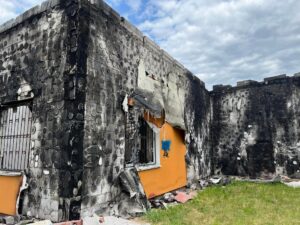
Painter Maria Prymachenko spent her life in a village in Kyiv Oblast painting fantastical animals and flowers. Immediately after the full-scale invasion, the museum in Ivankiv that held her work burned down, and the 14 paintings that staff and residents carried out were shown in Kyiv in September 2022. This article traces her life and work, the 100th anniversary of her birth in which UNESCO was involved, and the plan to rebuild the museum.