
Pysanka: The Ukrainian Wax-Written Egg, and Its 2024 UNESCO Listing
In December 2024, what was added to UNESCO's Representative List was "Pysanka, Ukrainian tradition and art of decorating eggs," a joint submission by Ukraine and Estonia. How do dictionaries and museums distinguish between these eggs? What warnings do Ukrainian researchers give about decoding "this pattern means this"? And the oldest surviving clues are not eggs at all, but 12th-century pottery.
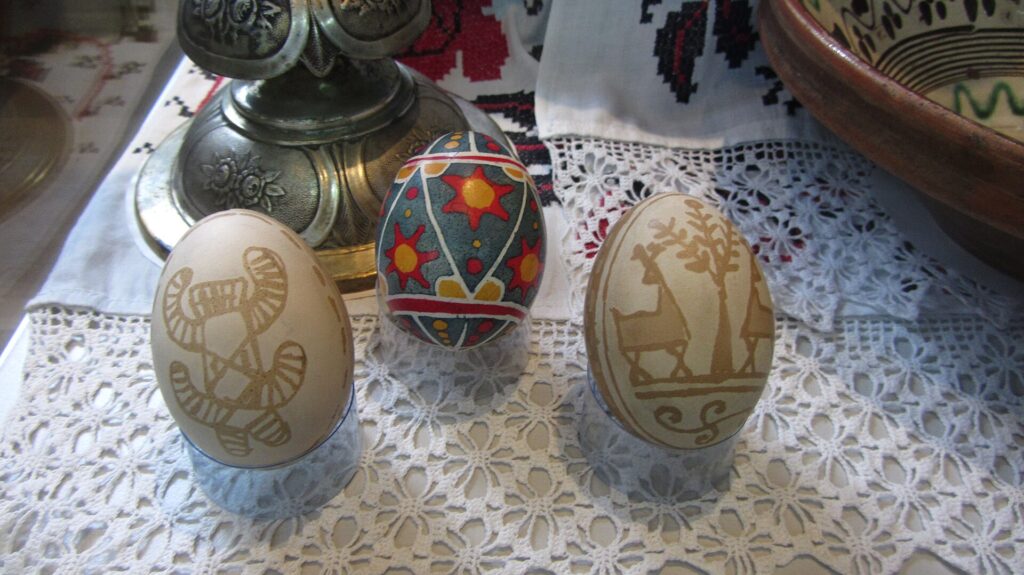

Pysanka (писанка) is a Ukrainian egg on which a pattern is “written” in beeswax before it is dyed in stages. The name comes from the same root as the verb писати, meaning “to write” (Etymological Dictionary of the Ukrainian Language). In December 2024, it was added to UNESCO’s Representative List of the Intangible Cultural Heritage of Humanity. In Japanese, it tends to be introduced under a single umbrella term, “the Ukrainian Easter egg,” but Ukrainian has a different name for each method of making it. Even on the meaning of the patterns, Ukrainian researchers themselves are quite careful about what they claim.
First, There Are Different Names
The distinction made by dictionaries is not very fine-grained. The Explanatory Dictionary of the Ukrainian Language describes писанка simply as “a painted Easter hen’s egg, or a decorative egg, usually made of wood,” and крашанка (krashanka) as “an egg dyed for Easter.” It is the folk museums that go further. An announcement for a pysanka class at the National Museum of Folk Architecture and Rural Life of Ukraine (Kyiv-Pyrohiv) lists four main techniques for coloring and decorating Easter eggs — крашанка, писанка, крапанка, and дряпанка — and states that pysanka is “not eaten.”
| Name | Method |
|---|---|
| крашанка | Dyed a single color |
| крапанка | Melted beeswax dripped on before dyeing |
| писанка | A pattern written in beeswax, dyed in layers |
| дряпанка | Pattern scratched into the surface of a dyed egg |
| мальованка | Painted with a brush |
‘Writing’ with Beeswax and a Pysachok
An announcement for a pysanka class at the Ivan Honchar Museum (Kyiv) says it teaches “the tradition of drawing pysanky using a писачок (pysachok), beeswax, and fire.” The Internet Encyclopedia of Ukraine calls this tool a kystka (кістка), describing it as “a small, cone-shaped metal tube attached to a wooden handle.”
According to the same entry, dyeing proceeds in the order yellow, red, and “a dark color (purple or black),” after which the wax is finally melted off. Since any part covered in beeswax keeps whatever color it had at that point, the order runs from light to dark colors. The entry describes this as “similar to batik.” UNESCO’s listing description gives the same account of the process.
How Far Can You Really Say ‘This Pattern Means This’?
Writing that introduces pysanka is often accompanied by a table matching patterns to meanings. This article does not include one, because we could not find one whose claims could be traced to who said it, when, and on what basis. Even UNESCO’s listing description goes only as far as the general statement that decorated eggs convey “personal wishes or messages”; it has no list of which pattern signifies what.
Ukrainian scholarship has warnings about this kind of “decoding.” Anatolii Shcherban, head of the ceramics studies department at the Institute of Ethnology of the National Academy of Sciences of Ukraine, quotes the art historian Tetiana Kara-Vasylieva in a 2010 paper published in Issue 21 of the Bulletin of the Lviv National Academy of Arts.
Studying the symbolic language of old ornamental motifs is a very compelling subject, and at the same time far too dangerous a one for a researcher. There, scholarly research can turn into scholarly speculation before one notices. The main difficulty is […] that a researcher who has no dictionary of the old sign-language is forced to rely on analogy, or on their own associations as a modern person. […] We do not know the language of pre-Christian pagan signs. This has produced a great deal of speculative interpretation about ornamental motifs that survive in folk art but have lost their original meaning, or have been given new interpretations.
Tetiana Kara-Vasylieva, “Antiquity in the Rushnyk” (Narodne mystetstvo [Folk Art], 1998, issue 1–2). Translated by the author from the version quoted in Anatolii Shcherban, “The History of Ceramic Ornamentation of Left-Bank Ukraine” (2010) — via the Japanese rendering, so the wording may not exactly match Shcherban’s quotation.
Shcherban himself also points out a weakness in research that presents ornamental motifs as decodable “pictorial writing”: it never asks how wide a circle of people could actually send and receive information through that puzzle.
What Survives Is Not the Egg
The “Easter egg” entry cited above states that “because eggs are fragile, not a single actual example of an ancient pysanka survives.” The same entry also opens by stating that “the custom originates in the prehistoric Trypillia culture,” but gives no supporting evidence. This entry first appeared in an encyclopedia compiled in Canada in 1984.
What survives is not the eggs themselves, but pottery and bone objects shaped like eggs. A holding that the National Sanctuary “Sofia Kyivska” made public in April 2026 was a 12th-century ceramic писанка-брязкальце (a “rattling pysanka”). It was unearthed in excavations of a cemetery within the city of Sudak between 1966 and 1972, and a ball of clay inside it makes a sound. That same spring, the National Museum of the History of Ukraine, together with the Vyshhorod Historical and Cultural Sanctuary and others, held an exhibition displaying similar 11th–12th-century objects and eggs made of antler.
We have not been able to confirm any source that discusses whether these objects are technically connected to the beeswax eggs made today.
Regional Differences, and Bias in the Records Themselves
Ukraine’s National List of Intangible Cultural Heritage Elements (the version dated July 28, 2023, comprising 77 items in all) contains two elements related to pysanka. “The Hutsul Pysanka Tradition” (012.нкс, Order No. 995 dated November 16, 2018) lists specific settlements in three oblasts — Ivano-Frankivsk, Chernivtsi, and Zakarpattia. “Ukrainian Pysanka: Tradition and Art” (046.нкс, Order No. 228 dated July 6, 2022) has “all of Ukraine” listed in its geographic-scope field.
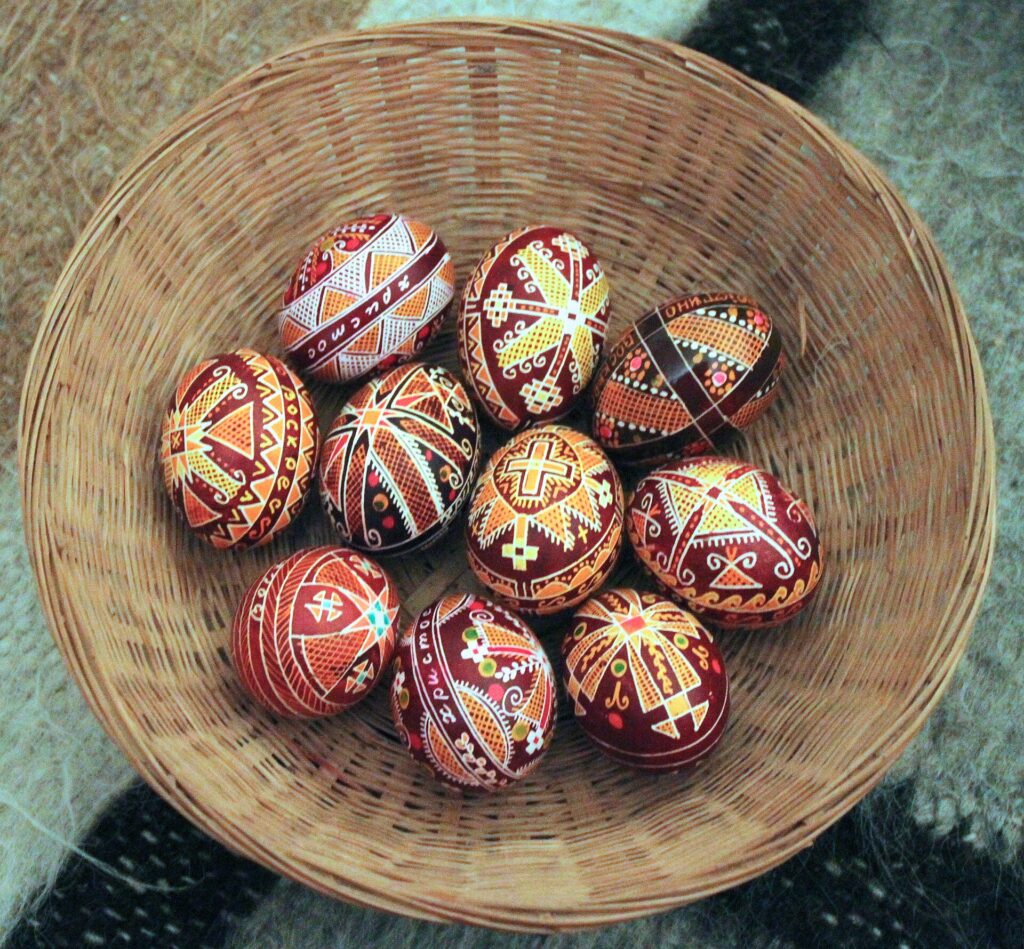

An explanation from the Kharkiv Oblast Organizational and Methodological Center for Culture and Art, a public institution in Kharkiv oblast, contrasts the two regions: “the geometric patterns of Hutsulshchyna are fine, densely covering the whole surface like engraving,” while Kharkiv pysanky “bloom with clear, fairly large designs, a cluster of plant and sun motifs, on a black, dark red, or green ground.”
However, the way records survive itself differs by region. According to what the Ivan Honchar Museum reported in April 2024, the pysanka artist Zoya Stashuk donated about 70 pieces to the museum. It was an attempt to rearrange the collection by current oblast rather than by historical-ethnographic region, with three pieces per oblast in principle. But Luhansk, Donetsk, and Zaporizhzhia oblasts had only one piece each, and for Luhansk oblast no historical illustrations could be found, so the design was reconstructed from a description in a 2006 magazine. Whether there was no pattern to begin with, or the record simply did not survive, is a separate question.
What Exactly Was Added to UNESCO’s List?
Its official name is “Pysanka, Ukrainian tradition and art of decorating eggs.” It was added to the Representative List at the Nineteenth Session of the Intergovernmental Committee, held in Asunción, Paraguay from December 2 to 6, 2024. This was a joint submission by Ukraine and Estonia. According to a December 3, 2024 announcement by Ukraine’s Ministry of Culture and Information Policy, the submission was built on two elements from Ukraine’s national list and one from Estonia’s, and the Ministry calls this the first internationally joint element.
If you come across an introduction that says only “UNESCO-listed,” the safe move is to check which list it means. Ukraine has seven elements (as of September 23, 2026), but they are not all on the same list.
| Element | List type | Year |
|---|---|---|
| Petrykivka decorative painting | Representative List | 2013 |
| Cossack songs of Dnipropetrovsk region | List of Intangible Cultural Heritage in Need of Urgent Safeguarding | 2016 |
| Tradition of Kosiv painted ceramics | Representative List | 2019 |
| Crimean Tatar ornamental art, Ornek | Representative List | 2021 |
| Culture of Ukrainian borscht cooking | List of Intangible Cultural Heritage in Need of Urgent Safeguarding | 2022 |
| Pysanka (joint with Estonia) | Representative List | 2024 |
| Safeguarding program for the kobza and lira traditions | Register of Good Safeguarding Practices | 2024 |
If You Want to See the Real Thing
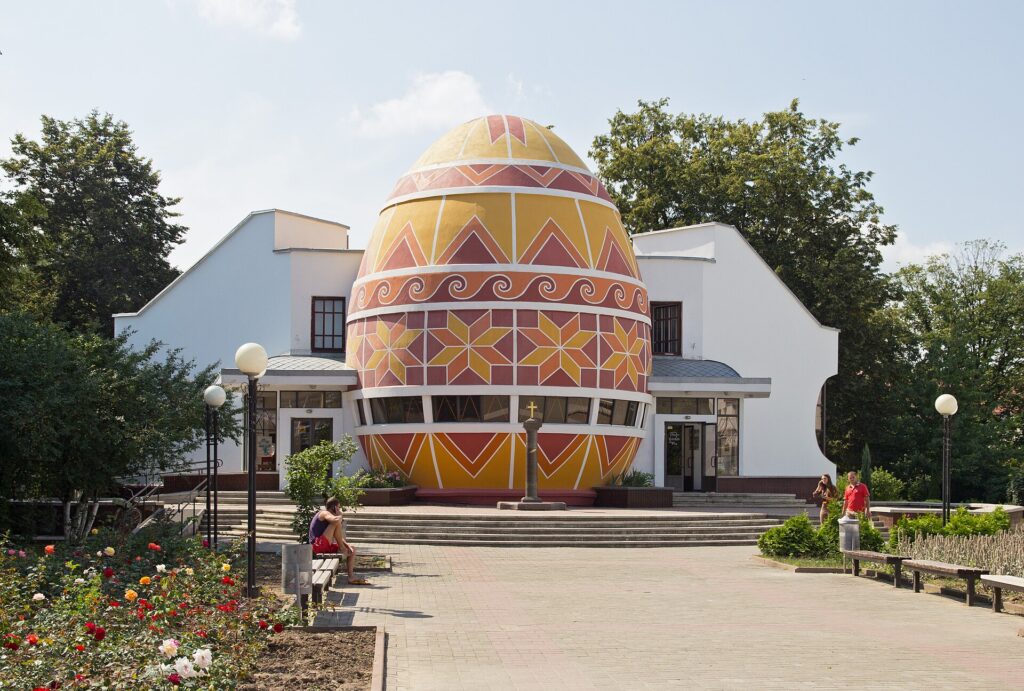
The Pysanka Museum (in Kolomyia, Ivano-Frankivsk oblast) opened in 1987 and holds more than 12,000 pieces. As preconditions for its founding, the museum cites the discovery of a method for preserving eggs, and “the decline of pysanka-making as a result of ideological pressure from every organ of the Soviet authorities.” An actual object with its region and date clearly recorded will probably tell you more, faster, than writing about what the patterns mean.

Sources and references
- Pysanka, Ukrainian tradition and art of decorating eggs (Official element name; 2024, 19.COM, inscription on the Representative List; joint submission by Ukraine and Estonia; description of the wax-resist and dye process; the phrase "personal wishes or messages")
Published by UNESCO Intangible Cultural Heritage · Checked: 2026-09-23 - Ukraine — Elements on the Lists of Intangible Cultural Heritage (Ukraine's seven element names, list type, and inscription year; and nominations pending review)
Published by UNESCO Intangible Cultural Heritage · Checked: 2026-09-23 - Nineteenth session of the Intergovernmental Committee (Session dates of the Nineteenth Intergovernmental Committee, December 2–6, 2024; venue Asunción)
Published by UNESCO Intangible Cultural Heritage · Checked: 2026-09-23 - The Ukrainian tradition and art of egg decoration recognized as the cultural heritage of humanity (Dated December 3, 2024. That the joint submission was built on three elements, two from Ukraine's national list and one from Estonia's; the phrase "first internationally joint element"; and that Ukraine's elements on the Representative List became four)
Published by Ministry of Culture and Information Policy of Ukraine · Checked: 2026-09-23 - Національний перелік елементів нематеріальної культурної спадщини України (The version dated July 28, 2023, 77 items in all. For 012.нкс «Традиція гуцульської писанки»: the settlement list and Order No. 995 dated November 16, 2018; for 046.нкс «Українська писанка: традиція і мистецтво»: the geographic-scope field and Order No. 228 dated July 6, 2022)
Published by Ministry of Culture and Information Policy of Ukraine · Checked: 2026-09-23 - Easter egg (The definition of писанка; the shape of the kystka; the yellow→red→dark dyeing order and the final wax-removal step; "similar to batik"; the description of the malovanka/krashanka/kapanka/driapanka techniques; "because eggs are fragile, not a single ancient pysanka survives"; the statement of Trypillia-culture origin; the reference to a 12th-century document. Written by Volodymyr Hodys; first published in Encyclopedia of Ukraine, vol. 1, 1984)
Published by Internet Encyclopedia of Ukraine(Canadian Institute of Ukrainian Studies, University of Alberta) · Checked: 2026-09-23 - Писанкарство (Class announcement. Lists крашанка, писанка, крапанка, and дряпанка as "the main techniques for coloring and decorating Easter eggs"; the use of писачок, beeswax, and dyes; that pysanka is not eaten)
Published by National Museum of Folk Architecture and Rural Life of Ukraine (Kyiv-Pyrohiv) · Checked: 2026-09-23 - Майстерня писанкарства (That a писачок, beeswax, and fire are used; instruction by Larysa Horovnia)
Published by Ivan Honchar National Center for Folk Culture / Museum · Checked: 2026-09-23 - Зоя Сташук відписала колекцію писанок з усіх областей України (Dated April 25, 2024. About 70 pieces; three per current oblast in principle; one each for Luhansk, Donetsk, and Zaporizhzhia; the Luhansk piece reconstructed from a 2006 magazine description; that the collection had previously been arranged by historical-ethnographic region)
Published by Ivan Honchar National Center for Folk Culture / Museum · Checked: 2026-09-23 - Історія орнаментації кераміки Лівобережної України VII тис. до н.е. – XVI ст. (Author: Anatolii Shcherban, pp. 205–216. The quotation of Kara-Vasylieva's 1998 text; methodological criticism of research that decodes ornamental motifs as "pictorial writing")
Published by Вісник Львівської національної академії мистецтв, Issue 21 (2010) · Checked: 2026-09-23 - Вісник 21/2010 (That Issue 21 of the same bulletin was published in 2010, and its table of contents)
Published by Lviv National Academy of Arts · Checked: 2026-09-23 - Українська писанка об'єднує Україну (046.нкс and Order No. 228 dated July 6, 2022; the full text of the geographic-scope field; the contrast between Hutsulshchyna and Kharkiv patterns)
Published by Kharkiv Oblast Organizational and Methodological Center for Culture and Art (КЗ «ООМЦКМ») · Checked: 2026-09-23 - Історія музею (The 1987 opening; the discovery of a method for preserving eggs and "the decline of pysanka-making due to ideological pressure from every organ of the Soviet authorities"; the 13-meter-tall egg-shaped building from 2000; a collection of more than 12,000 pieces)
Published by Pysanka Museum / National Museum of Hutsulshchyna and Pokuttia Folk Art (Kolomyia) · Checked: 2026-09-23 - У «Софії Київській» показали унікальну писанку XII століття (Dated April 10, 2026. Quotes the sanctuary's own social-media post. Pink clay, engobe, glaze; coil-built, fired, glazed, a fliandrivka technique; 3–3.5 × 5 cm; excavated from a cemetery in the city of Sudak, 1966–1972; led by Mykhailo Frondzhulo; made in the vicinity of Kyiv; speculated to be an amulet or a toy)
Published by Interfax-Ukraine · Checked: 2026-09-23 - У Києві відкрили виставку про тисячолітню історію писанки (The exhibition "Ukrainian pysanka: origins and the present"; joint effort of the National Museum of the History of Ukraine, the Vyshhorod Historical and Cultural Sanctuary, and the Kyiv City History Museum; 11th–12th-century ceramic писанки-брязкальця; antler eggs found at Vyshhorod; about 200 pieces; running through April 17)
Published by life.kyiv.ua · Checked: 2026-09-23 - Definitions from Тлумачний словник української мови (писанка = «Розмальоване великоднє куряче або декоративне, звичайно дерев'яне, яйце», крашанка = «Пофарбоване яйце, признач. для Великодніх свят»)
Published by via Горох (a Ukrainian-dictionary cross-search site) · Checked: 2026-09-23 - The писанка entry in Етимологічний словник української мови (Same root as писати)
Published by via Горох (a Ukrainian-dictionary cross-search site) · Checked: 2026-09-23
Corrections and updates
- Changed the title (previous title: What Is Pysanka? — The Wax-"Written" Egg, and How Far Can We Go in Explaining Its Patterns)
If you find an error in this article, please tell us via Corrections. Once we have checked it, we will record in the article what was corrected and why.