
Section
Connections with Japan
Life in Japan, cultural exchange, and ties built through work.
-
The Picture Book Tebukuro’s Original Title Was Rukavychka — and Its Roots in a Ukrainian Folktale
Fukuinkan Shoten's picture book てぶくろ (Tebukuro, “The Mitten”) has carried the words “Ukrainian folktale” in its title since its first edition in 1965. An earlier edition, テブクロ, had already been published by Nauka in 1956. The illustrator, Yevgenii Rachev, was born in Tomsk and began his career as an illustrator at a publishing house in Kyiv. This article traces the folktale, the picture book, and how it has been handled in Japan, through bibliographic records.
-

60,000 Children Screened in Kyiv and Korosten: Japan’s Cooperation After Chornobyl
From 1991 to 1996, a Japanese foundation screened more than 60,000 children in Kyiv and Korosten. The Japanese government contributed to the fund covering the sarcophagus, and the year after the Fukushima accident it signed an agreement with Ukraine, switching to the side learning from Chornobyl's experience. This article traces developments, using published materials, through to the aftermath of a 2025 drone strike.
-
1 Million Yen a Year for Up to Three Years: The Nippon Foundation’s Support for Ukrainian Evacuees Ended in March 2026
The Nippon Foundation paid about 2,000 Ukrainian evacuees with a guarantor in Japan a living allowance of 1 million yen per person per year, for up to three years. Including travel costs, a settling-in allowance, and support for those returning home, total payments came to about 5.38 billion yen. The program ended on March 31, 2026, and it is no longer possible to apply. This article organizes what was paid, to whom, and how much, based on the Foundation's own report.
-
Minpaku’s Ukrainian Embroidery and Clothing Arrived During the Soviet Era
A search for "Ukraine" in the specimen catalog of the National Museum of Ethnology (Minpaku) in Osaka turns up 120 items — embroidered shirts, sashes, towels, and aprons. The region field for 119 of them reads "USSR, Ukraine," and 104 were acquired together in fiscal 1981. This article traces the database's records, including a bandura and a medal related to Chornobyl that fall outside the catalog search itself.
-
Japan’s Support for Ukraine: About $20 Billion in Total — the Single Largest Item Is a Loan Repaid From Russian Assets
In February 2026, the Japanese government stated that its support for Ukraine totaled "about $20 billion in total." This figure combines amounts pledged and amounts actually disbursed, and the Ministry of Foreign Affairs' pages do not show a breakdown by field. The single largest item is a loan of 471.9 billion yen, to be repaid from the earnings on Russia's frozen assets. This article traces the announcements with a clear amount and date, starting from the $100 million pledge in 2022.
-
40 Minutes in Bucha, 2 Hours 40 Minutes of Summit Talks: Prime Minister Kishida’s Visit to Kyiv
On March 21, 2023, Prime Minister Fumio Kishida visited Ukraine at President Zelensky's invitation, laying flowers in Bucha on the outskirts of Kyiv before holding about two hours and 40 minutes of summit talks. The two countries' relationship was upgraded to a “Special Global Partnership,” and the information protection agreement whose negotiations were agreed to begin that day took effect in June 2025. Drawing on the Ministry of Foreign Affairs' records, this article follows that one day and what came after.
-
Crimea in 2014, Four Oblasts in 2022: Japan Recognizes Neither “Annexation”
Russia unilaterally declared it was “incorporating” Crimea in 2014 and four oblasts in eastern and southern Ukraine in 2022. Each time, Japan's government has stated through a Foreign Minister's Statement that it does not recognize this, and at the UN General Assembly it has joined as a co-sponsor of, and voted in favor of, the resolutions on both occasions. This article checks Japan's position against the wording of the statements and the UN's own records.
-
How Japan Established Relations with a New Country That Still Had Nuclear Weapons
Japan recognized Ukraine as a state on December 28, 1991, and opened diplomatic relations the following January 26. At the time, Ukraine still had strategic nuclear weapons left over from the Soviet Union. Drawing on Diet records and the Diplomatic Bluebook, this article traces what Japan asked for at the moment of recognition, the year before an embassy opened in Kyiv, cooperation on dismantling the nuclear weapons, and the 1995 visit by Ukraine's president.
-
183 Days for Salary, Your Country of Residence for Retirement Pensions: The New Japan-Ukraine Tax Treaty
The new tax treaty between Japan and Ukraine took effect on August 1, 2025, and has been used in tax calculations since January 2026. It fully revises the 1986 treaty with the Soviet Union: how the 183-day rule for salary is counted has changed, and the two-year tax exemption for teachers has been abolished. This article reads through the treaty's provisions on determining residency, pensions, students, and eliminating double taxation.
-
What Did Japan Say for Two Years on a Security Council Where the Aggressor Holds a Veto?
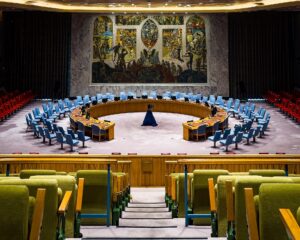
On February 25, 2022, Russia used its veto to kill a Security Council resolution calling for its own withdrawal. Japan was elected a non-permanent member that same year and, from 2023, spent two years condemning Russia's aggression from the Council floor. The Security Council did not adopt its first resolution on Ukraine until February 2025, after Japan's term had ended. This article follows the record chronologically, drawing on UN and Ministry of Foreign Affairs materials.