Crimean Tatars, Karaites, Krymchaks: Ukraine’s Law on Indigenous Peoples
In a 2021 law, Ukraine recognized three peoples formed on the Crimean Peninsula — Crimean Tatars, Karaites, and Krymchaks — as indigenous peoples. In April 2026, the Cabinet granted legal status to the Mejlis, the Crimean Tatars' representative body. This article also sums up what the International Court of Justice did and did not find regarding the Mejlis, which Russia has banned.
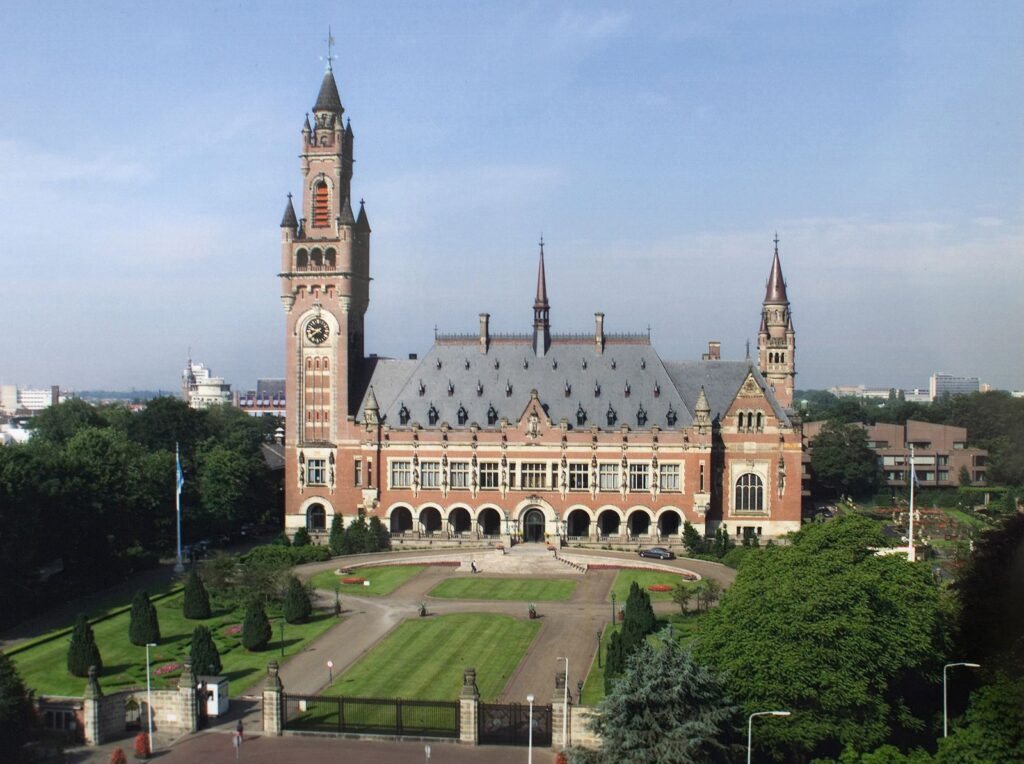


On July 1, 2021, Ukraine’s Verkhovna Rada adopted Law No. 1616-IX, “On the Indigenous Peoples of Ukraine.” It was published in the Verkhovna Rada’s official gazette on July 23 and has been in force from that date — seven years after Russia occupied Crimea in 2014.
The law is short, with only 11 articles. Even so, it was the first time Ukraine legally defined “indigenous peoples” and named which peoples fall under that definition.
The three peoples named in the law
Article 1 defines Ukraine’s indigenous peoples as follows: an autochthonous ethnic community formed within the territory of Ukraine, possessing its own language and culture, possessing traditional, social, or cultural institutions or a representative body, identifying itself as an indigenous people, forming an ethnic minority within the population, and having no state of its own outside Ukraine.
Paragraph 2 then names three peoples “formed on the territory of the Crimean Peninsula” as Ukraine’s indigenous peoples: Crimean Tatars, Karaites (караїми), and Krymchaks (кримчаки).
| People | Description from the Internet Encyclopedia of Ukraine (CIUS) and other sources |
|---|---|
| Crimean Tatars | 248,200 in the 2001 All-Ukrainian Population Census (as tallied by the State Statistics Committee) |
| Karaites | Followers of a branch of Judaism that recognizes only the Hebrew Bible as authoritative and rejects the Talmud. Ukraine’s Karaites are ethnically Turkic and lived in Crimea as well as near Lutsk and Halych in western Ukraine. Their language belongs to the Kipchak group of Turkic languages |
| Krymchaks | Turkic-speaking Jews living in Crimea who practiced Talmudic Judaism. Many were killed by the Nazis during World War II. 406 in the 2001 census |
In its preamble, the law cites as its basis the UN “Declaration on the Rights of Indigenous Peoples” and Verkhovna Rada Resolution No. 1140-VII of March 20, 2014. That resolution, issued immediately after the “unconstitutional referendum” (the resolution’s own wording) held in Crimea, declared the Crimean Tatars an indigenous people and guaranteed their right to self-determination within Ukraine. It recognized the Kurultai (national assembly) as the Crimean Tatars’ supreme representative body and the Mejlis as its executive body, and also expressed support for the UN Declaration.
The UN Declaration was adopted by the UN General Assembly on September 13, 2007, by a vote of 143 in favor, 4 against, and 11 abstentions. Ukraine abstained at the time, alongside Russia and others. It was seven years later that the Verkhovna Rada expressed its support.
The rights the law sets out
Articles 2 through 7 lay out the rights of indigenous peoples. The main ones are as follows.
- The right to self-determination within Ukraine: exercising self-governance over internal matters and deciding for themselves how to form a representative body (Article 2)
- The state guarantees protection from genocide and collective coercion or violence (Article 2). Legal protection against forced assimilation and expulsion from their land (Article 3)
- The right to revive their language, history, traditions, and writing system and pass them on to future generations. Denial of indigenous status is prohibited (Article 3)
- The right to establish educational institutions that teach in their own language. The state guarantees research into and preservation of languages at risk of extinction (Article 5)
- State support for media in which the representative body holds 51% or more of shares and so on, and which broadcasts 50% or more of its programming in the indigenous language (Article 6)
- The right to participate, under the principle of “free, prior, and informed consent,” in state and regional plans that affect indigenous peoples (Article 7)
The restoration of historical place names is also addressed. The Cabinet, after consulting the representative body, is to submit draft resolutions on renaming settlements to the Verkhovna Rada (Article 4).
Some rights are not yet usable. The right to have part of the revenue the state and local governments earn from the natural resources of Crimea and Sevastopol used for the benefit of indigenous peoples (Article 7, paragraph 3) is to take effect only once the occupied territory returns to Ukraine’s jurisdiction (Article 11).
How the Mejlis became a legally recognized representative body
The law does not name any representative body. Article 8 states that a representative body acquires legal rights and duties only once the Cabinet has issued a decision establishing its status, and that peoples without a representative body holding such status are not consulted by administrative bodies either.
The body long treated as the Crimean Tatars’ representative body is the Mejlis. According to the Mejlis’s official site, at the 2nd Kurultai held in Simferopol on June 26, 1991, 33 members of the Mejlis were elected from among the delegates, along with its chairman, Mustafa Dzhemilev (Мустафа Джемілєв).
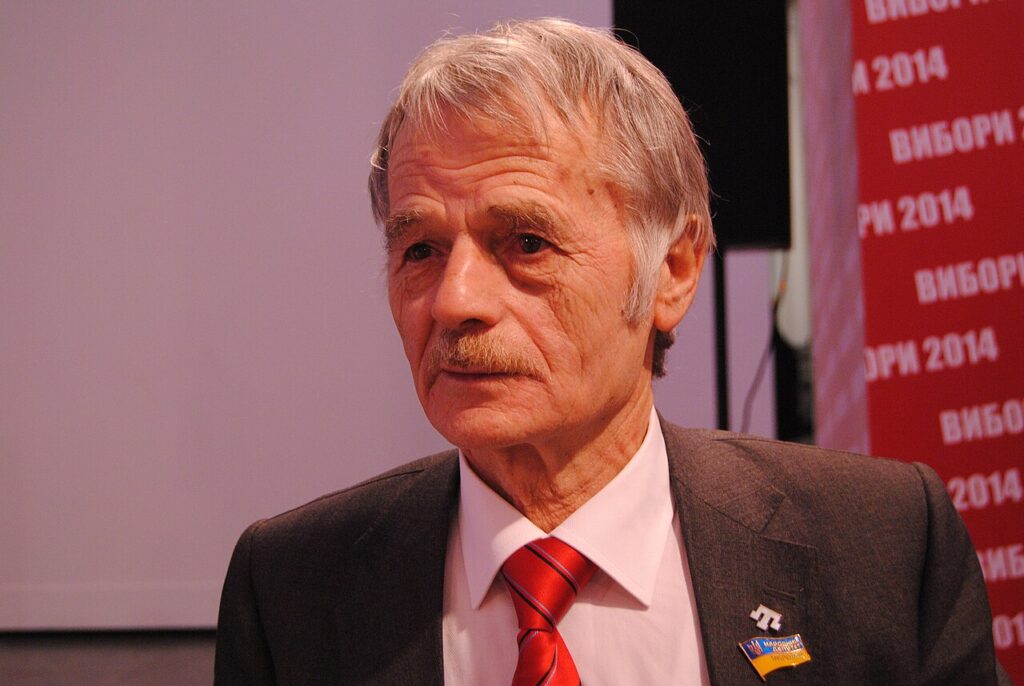


More than four years after the law took effect, on April 2, 2026, President Zelenskyy, in Presidential Decree No. 293/2026, called on the Cabinet to “immediately” proceed with granting the Mejlis legal status as the Crimean Tatars’ representative body. The next day, April 3, the Cabinet, in Resolution No. 303-r, granted the Mejlis that status. The resolution provided that administrative bodies must decide on matters such as the development of the Crimean Tatar language and culture, education in the Crimean Tatar language, Crimean Tatar-language media, and social integration only after consulting the Mejlis.
As of September 2026, no Cabinet decision granting status to a representative body for the Karaites or Krymchaks has been confirmed.
Russia’s ban on the Mejlis
In Russian-occupied Crimea, the Mejlis is banned from operating. UN General Assembly Resolution 71/205, adopted December 19, 2016, expressed grave concern that a decision of the “so-called Supreme Court of Crimea” of April 26, 2016 and a decision of the Supreme Court of the Russian Federation of September 29 that same year had designated the Mejlis an “extremist organization” and banned its activity. It called on Russia to immediately reverse this decision and to rescind the ban on Mejlis leaders entering Crimea.
Before the International Court of Justice, Russia argued that the Mejlis is not the sole representative body of the Crimean Tatars, that the ban was a measure for security and public order, and that it had nothing to do with ethnicity.
What the International Court of Justice found, and did not find
On January 16, 2017, Ukraine brought a case against Russia before the International Court of Justice (ICJ). It relied on two treaties: the International Convention for the Suppression of the Financing of Terrorism and the International Convention on the Elimination of All Forms of Racial Discrimination (CERD). On Crimea, it alleged that Russia was carrying out racial discrimination against Crimean Tatars and ethnic Ukrainian residents, citing the ban on the Mejlis, the persecution of its leaders, interference with commemorative events, disappearances and killings, searches and detentions, the suppression of media, and the suppression of Crimean Tatar-language education.
On April 19, 2017, the Court ordered two provisional measures pending judgment. Russia was ordered not to maintain or impose limitations on the ability of the Crimean Tatar community to conserve its representative institutions, including the Mejlis (13 votes to 3), and to ensure the availability of education in the Ukrainian language (unanimously).
The judgment of January 31, 2024 (which cannot be appealed and binds both parties) found as follows regarding CERD and the Mejlis.
| Finding | Content | Vote |
|---|---|---|
| Violation found | In the operation of Crimea’s education system from 2014 onward, Russia violated Articles 2(1)(a) and 5(e)(v) of CERD with respect to Ukrainian-language schooling | 13–2 |
| Dismissed | All of Ukraine’s other claims under CERD are dismissed | 10–5 |
| Violation found | By maintaining restrictions on the Mejlis, Russia violated the 2017 provisional-measures order (paragraph 106(1)(a)) | 11–4 |
| Violation found | Russia violated the provisional-measures order requiring it to refrain from actions that might aggravate the dispute (paragraph 106(2)) | 10–5 |
| Dismissed | All of Ukraine’s other claims regarding the provisional-measures order are dismissed | 11–4 |
In other words, the Court did not find that the ban on the Mejlis itself violated CERD. Nor did it find violations of the same Convention regarding the disappearances, killings, or Crimean Tatar-language education that had been raised at the filing stage. On the other hand, it did find that Russia’s continuing the restrictions on the Mejlis, despite the 2017 order not to maintain them, violated the Court’s order.
The same judgment found Russia in violation of the Terrorism Financing Convention for failing to investigate suspects based on information it received from Ukraine (13–2), and dismissed Ukraine’s other claims under that Convention (10–5).
How the Japanese government treats Russia’s “annexation” of Crimea is covered in Crimea in 2014, Four Oblasts in 2022: Japan Recognizes Neither “Annexation”.
Sources and article record
Sources and references
- Закон України № 1616-IX «Про корінні народи України»adopted July 1, 2021; bill No. 5506; effective July 23, 2021; preamble, Articles 1–8, Article 11
Published by Верховна Рада України (zakon.rada.gov.ua) · Checked: 2026-09-24 - Постанова ВРУ № 1140-VII «Про Заяву Верховної Ради України щодо гарантії прав кримськотатарського народу у складі Української Держави»March 20, 2014; indigenous peoples, self-determination, recognition of the Mejlis and Kurultai, support for the UN Declaration
Published by Верховна Рада України (zakon.rada.gov.ua) · Checked: 2026-09-24 - Указ Президента України № 293/2026 «Про деякі питання забезпечення прав кримськотатарського народу»April 2, 2026
Published by Президент України (zakon.rada.gov.ua) · Checked: 2026-09-24 - Розпорядження КМУ № 303-р «Про закріплення правового статусу представницького органу кримськотатарського народу»April 3, 2026
Published by Кабінет Міністрів України (zakon.rada.gov.ua) · Checked: 2026-09-24 - A/61/PV.107the UN General Assembly plenary meeting of September 13, 2007; the adoption of the Declaration on the Rights of Indigenous Peoples, 143–4, 11 abstentions, with Ukraine and Russia among the abstaining states
Published by United Nations General Assembly · Checked: 2026-09-24 - A/RES/71/205 Situation of human rights in the Autonomous Republic of Crimea and the city of Sevastopol (Ukraine)adopted December 19, 2016; concern over the decisions of April 26 and September 29, 2016; the call to reverse them
Published by United Nations General Assembly · Checked: 2026-09-24 - Application of the ICSFT and CERD (Ukraine v. Russian Federation), Order of 19 April 2017the content of Ukraine's claims, Russia's arguments, the provisional measures and vote under paragraph 106
Published by International Court of Justice · Checked: 2026-09-24 - Press Release No. 2024/8: The Court delivers its JudgmentJanuary 31, 2024; the filing date, the operative part of the judgment and the vote, the binding nature of the judgment
Published by International Court of Justice · Checked: 2026-09-24 - A/79/4 Report of the International Court of Justice, 1 August 2023–31 July 2024paragraphs 82–90; a restatement of the operative part, a summary of Ukraine's claims
Published by United Nations General Assembly · Checked: 2026-09-24 - About Kurultaithe 2nd Kurultai of June 26, 1991; the 33-member Mejlis; chairman Mustafa Dzhemilev
Published by Меджліс кримськотатарського народу · Checked: 2026-09-24 - Karaites; Krymchaks
Published by Internet Encyclopedia of Ukraine (CIUS) · Checked: 2026-09-24 - Всеукраїнський перепис населення 2001: Національний склад населенняCrimean Tatars: 248.2 thousand
Published by Державний комітет статистики України · Checked: 2026-09-24
If you find an error in this article, please tell us via Corrections. Once we have checked it, we will record in the article what was corrected and why.