
Ukraine Has 15 Reactors — 6 of Them at a Seized Power Plant
Ukraine has 15 reactors across four nuclear power plants. Six of them belong to the Zaporizhzhia plant, which has been under Russian control since March 2022 and has been shut down since that September. Before the invasion, nuclear power supplied half of Ukraine's electricity. This article shows, from IAEA, IEA, and Energoatom disclosures, how much electricity the remaining 9 reactors are now producing.
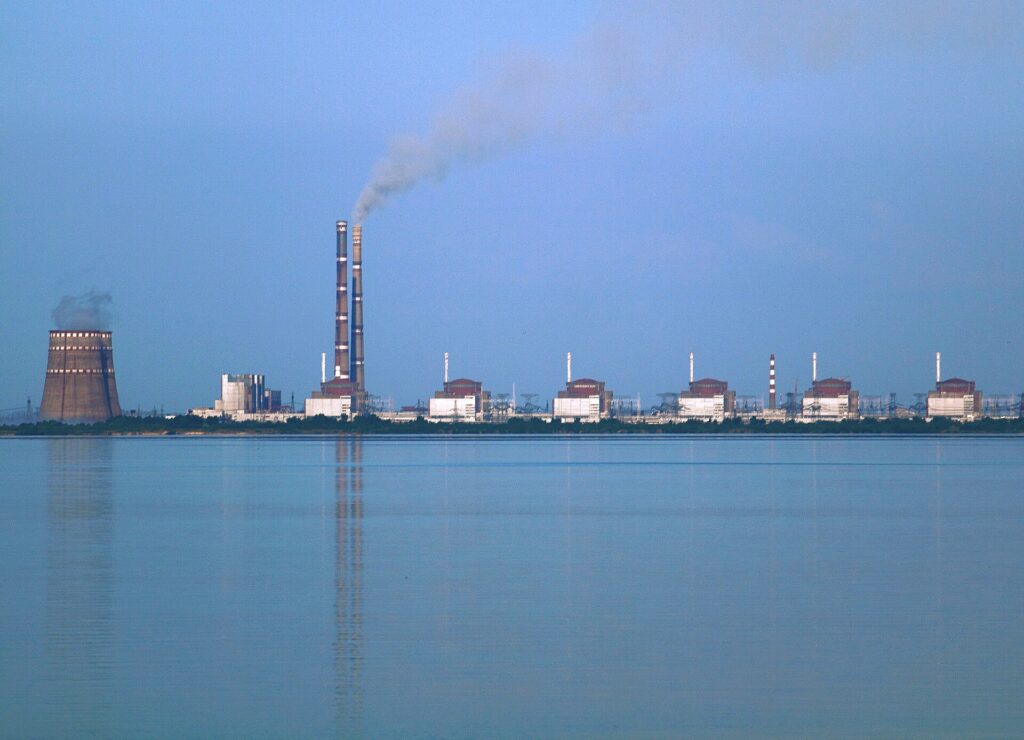

Energoatom, the state-owned company that operates Ukraine’s nuclear power plants, states on its own “About us” page that it operates 15 reactors across four nuclear power plants. The four sites — Zaporizhzhia, Rivne, South Ukraine, and Khmelnytskyi — have a combined installed capacity of 13,835 megawatts.
However, 6 of these 15 reactors are at the Zaporizhzhia Nuclear Power Plant, which has been under the control of Russian forces since March 2022. According to the International Atomic Energy Agency (IAEA), this plant has been shut down since September 2022. The reactors actually generating Ukraine’s electricity now are the 9 at the remaining three sites.
The Four Plants and the Breakdown of the 15 Reactors
Compiling the number of reactors from Energoatom’s page for each plant gives the following. The reactor type is known as VVER: 13 are VVER-1000 and 2 are VVER-440.
| Plant | Location (region) | Reactors | Start of operation (per the company) | Status as of September 2026 |
|---|---|---|---|---|
| Zaporizhzhia | Zaporizhzhia region | 6 × VVER-1000 | 1984–1995 | Under Russian control. Shut down since September 2022 (IAEA) |
| Rivne | Rivne region | 2 × VVER-440, 2 × VVER-1000 | — | Operating |
| South Ukraine | Mykolaiv region | 3 × VVER-1000 | 1982, 1985, 1989 | Operating |
| Khmelnytskyi | Khmelnytskyi region | 2 × VVER-1000 | 1987, 2004 (grid connection) | Operating |
The Zaporizhzhia plant is one Energoatom describes as “the largest nuclear power plant in Ukraine and Europe,” and is said to have generated more than 1.1 trillion kilowatt-hours cumulatively since it began operating. This one site alone held 6 of the 15 reactors — 40% of the total.
Before the Full-Scale Invasion, Half of Electricity Was Nuclear
According to a report the International Energy Agency (IEA) published in September 2024, before Russia’s full-scale invasion in 2022, half of Ukraine’s electricity was generated by nuclear power. Coal-fired power followed at 23%, gas-fired power at 9%, and renewables at 11%. The same report states that the Zaporizhzhia plant’s 6,000 megawatts accounted for about a quarter of Ukraine’s electricity supply before the invasion.
The IAEA’s reactor database (PRIS) page for Ukraine also shows a nuclear share of 55% and nuclear generation of 81,126 gigawatt-hours. However, these figures are for 2021. As of September 2026, this 2021 figure was still the most recent generation and share figure shown on PRIS’s Ukraine page.
Since March 4, 2022, the Zaporizhzhia Plant Has Been Under Russian Control
The IAEA records that two nuclear facilities came under the control of Russian forces after Russia’s full-scale invasion. One was the site of the Chornobyl Nuclear Power Plant, from February 24 to March 31, 2022. The other is the Zaporizhzhia Nuclear Power Plant, which has been under the control of the Russian Federation since March 4, 2022, and remains so today. The IAEA keeps staff stationed at all five of Ukraine’s nuclear power plant sites, including Zaporizhzhia.
Even a shut-down reactor needs electricity, because the pumps that cool the fuel and the spent fuel pools must keep running. According to an IAEA announcement in September 2026, the Zaporizhzhia plant lost its connection to its one remaining external power line — the 330-kilovolt Ferosplavna-1 line — on August 20, 2026, due to military activity north of the Dnipro River. This was the 26th time it had lost external power since the full-scale invasion began, and the 10th time since June alone.
For about three weeks after that, the plant kept its 6 reactors and spent fuel pools cooled using emergency diesel generators. To conserve fuel, it reduced the number of generators running from 4 to 2 and ran the cooling pumps intermittently, the IAEA reports. Under a seventh local ceasefire brokered by the IAEA, mine clearance and repairs were carried out from September 5 to 7, and the power line was reconnected. IAEA Director General Grossi stated that fuel for the emergency generators had nearly run out, and that urgent measures, including bringing in additional fuel, were still needed.
At the same time, the IAEA explains that, because the reactors have been shut down for a long time, the decay heat that needs to be removed is far lower than for an operating reactor, and the time before fuel damage would occur if all power were lost is considerably longer. Even so, it states, such a situation must still be prevented.
Regarding the 70th IAEA General Conference held in Vienna in September, Energoatom reports that a resolution on Ukraine’s nuclear safety submitted by Canada was adopted with 63 votes in favor, calling for the withdrawal of unauthorized Russian military personnel from the Zaporizhzhia plant.
How Much Electricity Are the 9 Reactors Producing?
In an October 2025 analysis, the IEA writes that Ukraine’s electricity remains heavily dependent on “the three remaining operating nuclear power plants.” These three sites, in the west and center of the country, account for 7.7 million kilowatts, or 50% of the country’s power generation capacity, it states.
According to Energoatom’s announcement of March 18, 2026, its nuclear power plants generated 54.1 billion kilowatt-hours of electricity in 2025, 100.8% of plan. It states this was an increase over 2024.
Compared with the 2021 figure of 81,126 gigawatt-hours (81.1 billion kilowatt-hours) in PRIS, the 2025 generation is roughly two-thirds. However, the 2021 figure is a value reported to PRIS by the country, and the 2025 figure is from Energoatom’s own announcement — the sources differ. No figure confirmable in official statistics could be found for nuclear power’s share of Ukraine’s total generation since 2022. Energoatom states in its company introduction that it “meets 55% of Ukraine’s electricity demand, and 70% in autumn and winter,” but does not indicate which year this figure is for.
The war also reaches the three operating plants. In September 2026, the IAEA reported that drones had been repeatedly detected in the surveillance zones around the South Ukraine, Khmelnytskyi, and Rivne plants and the Chornobyl site. The IEA’s 2024 report points out that damage to a substation near a nuclear plant can prevent a reactor from sending electricity to the grid, or threaten the external power supply that keeps a reactor safe. Attacks on power plants and the restoration of the grid are covered in In a Country Where Power Plants Keep Being Targeted, Generating Electricity in Small, Scattered Pieces.
Where the Fuel Comes From, and the Reactors Under Construction
Energoatom’s introduction to its plants positions the South Ukraine plant as the pioneer in diversifying nuclear fuel supply. It was the first plant in the country to load fuel made by the U.S. company Westinghouse, with Unit 3 running solely on Westinghouse fuel since 2018 and Unit 2 since 2020. At the Rivne plant, the use of Westinghouse fuel began in a VVER-1000 in 2022 and in a VVER-440 as well in 2023.
There are also plans for new reactors. PRIS classifies Ukraine’s reactors as 15 “operational” (13,107 megawatts net output), 2 “under construction” (2,070 megawatts), and 4 “permanent shutdown” (3,515 megawatts). The Khmelnytskyi plant was originally planned to have 4 units, and Energoatom lists construction of new reactors there as one of the plant’s priorities. At the Rivne plant, it has announced a plan for a Unit 5 using the U.S.-designed AP1000. The completion date for either project cannot be determined from the materials for this article.
One thing to note is that the 15 reactors PRIS counts as “operational” include Zaporizhzhia’s 6. On paper, Ukraine’s reactor count remains 15, but only 9 are sending electricity to Ukraine’s grid. When looking at these figures, it is necessary to check by what standard the 15 is being counted.
The Different Ways of Counting, in Table Form
| Figure | What is counted | Source and date |
|---|---|---|
| 15 reactors, 13,835 MW | The number of reactors Energoatom operates and their installed capacity (including Zaporizhzhia) | Energoatom company introduction (confirmed September 2026) |
| 15 reactors, 13,107 MW | Reactors classified “operational” in PRIS and their net output (including Zaporizhzhia) | IAEA PRIS (confirmed September 2026) |
| 7.7 million kW | Generation capacity of the three operating plants; 50% of the national total | IEA (October 2025) |
| 55%, 81.1 billion kWh | Nuclear power’s share of national generation, and nuclear generation | IAEA PRIS (2021 figure) |
| 54.1 billion kWh | Electricity Energoatom’s plants generated in one year | Energoatom (2025 figure, announced March 2026) |
Nuclear power has remained a pillar of Ukraine’s electricity both before and after the full-scale invasion. What has changed is that 6 of the 15 reactors now sit in a place cut off from the country’s own grid.
Sources and article record
Sources and references
- About us4発電所・15基〈VVER-1000 13基、VVER-440 2基〉・設備容量13,835MW、電力需要の55%・秋冬70%という記述. 4 plants, 15 reactors [13 VVER-1000, 2 VVER-440], installed capacity 13,835 MW; the statement of 55% of electricity demand, 70% in autumn/winter
Published by エネルゴアトム(Energoatom) · Checked: 2026-09-24 - Zaporizhzhia NPP6基・1984〜1995年の運転開始・累計1.1兆kWh超・ウクライナと欧州で最大. 6 units; operation began 1984–1995; more than 1.1 trillion kWh cumulative; the largest in Ukraine and Europe
Published by エネルゴアトム · Checked: 2026-09-24 - South Ukraine NPP3基・1982/1985/1989年・ウェスチングハウス燃料〈3号機2018年、2号機2020年から専用〉・燃料多様化の先駆け. 3 units; 1982/1985/1989; Westinghouse fuel [Unit 3 from 2018, Unit 2 from 2020, exclusively]; the pioneer in fuel diversification
Published by エネルゴアトム · Checked: 2026-09-24 - Rivne NPPVVER-440 2基・VVER-1000 2基・ウェスチングハウス燃料〈2022年VVER-1000、2023年VVER-440〉・5号機にAP1000. 2 VVER-440, 2 VVER-1000; Westinghouse fuel [VVER-1000 from 2022, VVER-440 from 2023]; AP1000 for Unit 5
Published by エネルゴアトム · Checked: 2026-09-24 - Khmelnytskyi NPP4基の計画・1号機1987年、2号機2004年に系統接続・新規建設は優先課題. Originally planned for 4 units; Unit 1 in 1987, Unit 2 grid-connected 2004; new construction as a priority
Published by エネルゴアトム · Checked: 2026-09-24 - The Committee for the Assessment of Financial and Operational Activities rated Energoatom's performance for 2025 as satisfactory2026年3月18日。2025年の発電量541億kWh・計画比100.8%・2024年比増. March 18, 2026; 2025 generation of 54.1 billion kWh, 100.8% of plan, an increase over 2024
Published by エネルゴアトム · Checked: 2026-09-24 - ZNPP must operate under Ukraine's control: international community calls for the plant de-occupation and release of illegally detained nuclear workers2026年9月18日。第70回IAEA総会のカナダ決議、賛成63. September 18, 2026; Canada's resolution at the 70th IAEA General Conference, 63 votes in favor
Published by エネルゴアトム · Checked: 2026-09-24 - Nuclear Safety, Security and Safeguards in Ukraineチョルノービリ2022年2月24日〜3月31日、ザポリッジャ2022年3月4日からロシア連邦の管理下・継続中、5つの原発サイトに職員常駐. Chornobyl, February 24 to March 31, 2022; Zaporizhzhia under Russian Federation control since March 4, 2022 and ongoing; staff stationed at all five nuclear plant sites
Published by 国際原子力機関(IAEA) · Checked: 2026-09-24 - Update 364 – IAEA Director General Statement on Situation in Ukraine2026年8月29日。8月20日にフェロスプラウナ1号線との接続喪失、ドニプロ川北側の軍事活動. August 29, 2026; loss of connection to the Ferosplavna-1 line on August 20, military activity north of the Dnipro River
Published by IAEA · Checked: 2026-09-24 - Update 365 – IAEA Director General Statement on Situation in Ukraine2026年9月5日。26回目の外部電源喪失、7回目の局地停戦、非常用発電機4台→2台、冷却ポンプの間欠運転、2022年9月から停止、崩壊熱. September 5, 2026; the 26th loss of external power, the 7th local ceasefire, emergency generators reduced from 4 to 2, intermittent cooling pump operation, shutdown since September 2022, decay heat
Published by IAEA · Checked: 2026-09-24 - Update 366 – IAEA Director General Statement on Situation in Ukraine2026年9月11日。約3週間の非常用発電機運転、6基と燃料プールの冷却. September 11, 2026; about three weeks of emergency generator operation, cooling of the 6 units and fuel pools
Published by IAEA · Checked: 2026-09-24 - Update 367 – IAEA Director General Statement on Situation in Ukraine2026年9月17日。6月以降10回・通算26回、9月5〜7日の作業で再接続、非常用発電機の燃料がほぼ枯渇、各原発周辺のドローン. September 17, 2026; 10 times since June, 26 in total; reconnection via the September 5–7 work; emergency generator fuel nearly exhausted; drones around each nuclear plant
Published by IAEA · Checked: 2026-09-24 - PRIS Country Statistics: Ukraine運転中15基・13,107MW〈正味〉、建設中2基・2,070MW、恒久停止4基・3,515MW、原子力比率55%・81,126GWh〈2021年〉. 15 operational reactors, 13,107 MW net; 2 under construction, 2,070 MW; 4 permanent shutdown, 3,515 MW; nuclear share 55%, 81,126 GWh [2021]
Published by IAEA 動力炉情報システム(PRIS) · Checked: 2026-09-24 - Ukraine's Energy Security and the Coming Winter2024年9月。侵攻前は原子力が電力の半分・石炭23%・ガス9%・再エネ11%、ザポリッジャ6GWで電力供給の約4分の1、変電所の損傷と原発. September 2024; before the invasion, nuclear was half of electricity, coal 23%, gas 9%, renewables 11%; Zaporizhzhia's 6 GW as about a quarter of electricity supply; substation damage and nuclear plants
Published by 国際エネルギー機関(IEA) · Checked: 2026-09-24 - Ukraine's energy security: A pre-winter assessment2025年10月。残る3か所の運転中の原発が発電設備容量の50%・7.7GW、西部と中部. October 2025; the three remaining operating plants at 50% of generation capacity, 7.7 GW, in the west and center
Published by IEA · Checked: 2026-09-24
If you find an error in this article, please tell us via Corrections. Once we have checked it, we will record in the article what was corrected and why.
Related articles
-
A ₴187 Million Budget: The Animated Film Mavka and the Studio Behind It
The animated film Mavka. The Forest Song, based on Lesia Ukrainka's play, was selected in a 2016 state competition and released in Ukraine in March 2023. This article traces the timeline from conception to release, the budget and state funding, what exactly the State Film Agency's claim of “the highest box office since independence” is being compared against, its release abroad, and the projects that followed, drawing on the production company's and the state's own announcements.
-

Features of Ukraine’s Education System | From Kindergarten to University, and Underground Schools
Ukraine has a reputation for producing many talented people, so you might wonder what kind of education makes that possible. This time, we explain the features of Ukraine’s education system. There are many differences from Japan, such as music schools for children and continuous education, so if you’re interested in education, please read to the end. Education at Ukrainian Kindergartens Kindergarten education in Ukraine places emphasis on early childhood education. Ukraine has a distinctive kind of educational institution not found in Japan: music schools (art schools) for children. Music Schools…
Published in
-
Ukraine’s Cities and Their World Heritage
Kyiv, Lviv, Odesa, Kharkiv, Dnipro. Eight UNESCO World Heritage sites, three of which are on the List of World Heritage in Danger; seven intangible cultural heritage elements; and 545 cultural sites confirmed as damaged as of 29 July 2026. This article traces Ukraine's cities and cultural heritage through UNESCO's published materials.