
Ukraine’s Export Rankings | Its Main Trading Partners, and Current Challenges
This article was published in July 2024, and the figures in it have not been updated since. The weight of each industry in wartime is covered in Ukraine’s Industries in Wartime — The Weight of Agriculture, Manufacturing, Services, and Energy, and the assumptions to keep in mind when reading economic statistics are covered in Ukraine’s Economic Figures in Wartime — Telling Apart Scope, Exchange Rates, and Estimates.
Ukraine is a country with abundant resources and vast farmland, and the industries supporting its economy are wide-ranging.
Ukraine’s exports are highly regarded in international markets, and it has placed importance on trade relationships with countries including Japan.
This article introduces Ukraine’s top 10 exports and its top 5 trading partners, and explains in detail its trade with Japan and the challenges involved in trade.
Let’s understand trade, the key to supporting Ukraine’s economic growth, and Ukraine’s position in international markets.
Ukraine’s Top 10 Exports
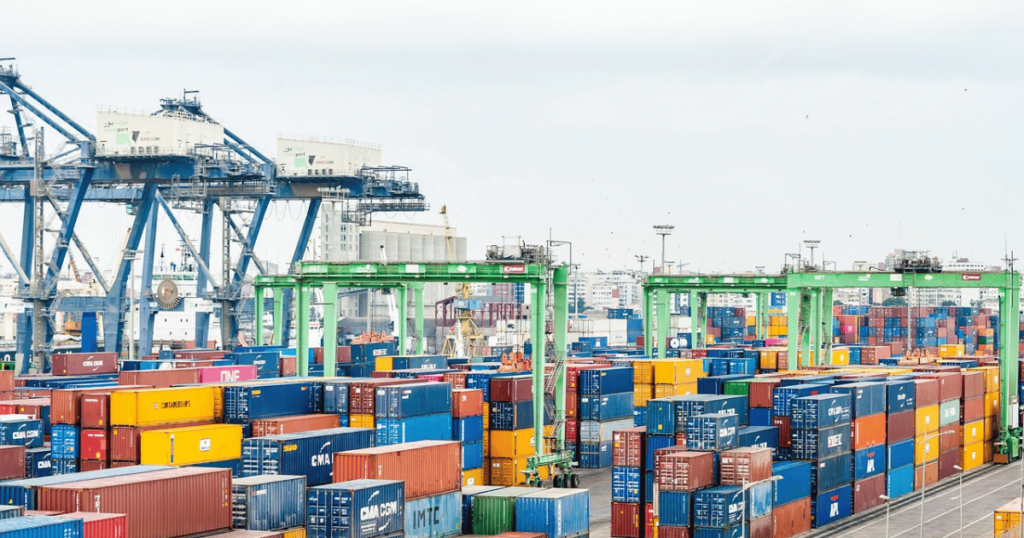
Ukraine makes use of its abundant resources and vast farmland to export a variety of products around the world. Here, we present Ukraine’s main exports for 2023 in ranking form, as reported by TrendEconomy.
1. Cereals (22%)
Ukraine grows so much grain that it’s known as “Europe’s breadbasket.” Its main exports include wheat, corn, and barley, with wheat in particular highly regarded worldwide.
Ukraine’s fertile soil and suitable climate are what make high-quality grain production possible.
Ukrainian grain is used in developed countries not only as food but as a raw material for bioethanol. In recent years, improvements in Ukraine’s agricultural technology and export infrastructure have boosted its competitiveness in world markets.
2. Fats, Edible Oils, and Waxes (15.6%)
Ukraine is also a major exporter of edible oil. Sunflower oil in particular is in high demand both at home and abroad, and is one of Ukraine’s main exports.
Sunflowers are grown throughout Ukraine, and are exported to many countries beyond domestic consumption.
Thanks to its quality and stable supply, Ukrainian sunflower oil is widely used in the food industry and as household cooking oil in many countries.
3. Oil Seeds, Miscellaneous Grains, Medicinal Plants, and Fodder (7.79%)
Oil seeds and miscellaneous grains are also important Ukrainian exports. These are often used as animal feed, essential to livestock farming both at home and abroad.
Medicinal plants also have steady demand. Ukraine’s oil seeds and miscellaneous grains are high in quality and nutritional value, making them ideal as livestock feed.
These medicinal plants are also used as raw materials for pharmaceuticals and health foods, and remain a Ukrainian export that can be supplied stably going forward.
4. Steel (7.31%)
Ukraine is also known for steel production. In particular, Kryvyi Rih, an iron-ore-producing region, and Donetsk Oblast in the east, have been the centers of production. However, part of Donetsk Oblast has been under Russian occupation since 2014.
The steel industry is an important pillar supporting Ukraine’s economy. Ukrainian steel products are widely used in construction and automotive manufacturing, valued for their high quality and durability.
Ukraine’s steel industry is also known for adopting efficient production processes and the latest technology to maintain international competitiveness.
5. Ores, Slag, and Ash (5.16%)
Ukraine is also rich in mineral resources. Iron ore and manganese ore are its main exports here, and are also important resources for its own steel industry.
Slag and ash are also put to industrial use. Ukraine’s ores can be supplied with high quality and stability, and are essential to steelmaking and other heavy industry in many countries.
Slag and ash are recycled as construction materials and fertilizer feedstock, materials that reduce environmental impact while making effective use of resources.
6. Electrical Machinery, Televisions and Audio Recording/Playback Equipment, and Their Parts and Accessories (4.59%)
Ukraine’s electrical machinery industry has developed mainly around manufacturing electronic equipment. These products are in high demand both at home and abroad, and have been widely used especially in the European market.
Exports of parts and accessories are also thriving, and Ukrainian electronics are highly regarded in many countries for their technical quality.
In particular, products such as electrical machinery, televisions, and audio recording equipment are in demand as high-performance products incorporating the latest technology. Parts and accessories are also essential for maintaining and upgrading these products.
7. Wood Products and Charcoal (4.11%)
Ukraine has vast forest resources, and exporting wood products and charcoal is also an important industry. Wood is used as a building material, and charcoal is in demand as household fuel.
These products supply not only domestic demand but also markets in Europe and Asia.
Ukrainian wood products have been widely used in construction and furniture-making, valued for their quality and durability.
Charcoal is popular as fuel for barbecues and heating, and its production and export remain stable. Ukraine’s forest management follows sustainable practices, also contributing to environmental protection.
8. Food Waste and Prepared Animal Feed (3.86%)
Byproducts from Ukraine’s agricultural industry are also put to effective use as animal feed. This helps reduce food waste and make effective use of resources.
Prepared animal feed is an important feed source for livestock farming. Ukrainian animal feed is highly nutritious and promotes livestock health and growth, so it’s in high demand both at home and abroad.
Also, recycling food waste reduces the burden on the environment, contributing to sustainable agriculture.
9. Nuclear Reactors, Boilers, Machinery, and Their Parts (2.64%)
Ukraine’s machinery industry is also well developed, manufacturing nuclear reactors, boilers, and various kinds of machinery.
These products have long been exported, in demand not only for domestic infrastructure but abroad as well.
Ukrainian machinery is still used in many countries today, valued for its technical quality and reliability. In particular, nuclear reactors and boilers play an important role in energy supply and industrial processes in many countries.
10. Meat (2.46%)
Ukraine’s livestock industry is highly regarded both at home and abroad. In particular, pork and chicken production are thriving, with large volumes of chicken exported to the EU and the Middle East.
Ukraine’s rich farmland and strict quality control form the basis of its meat production. Ukrainian meat is highly regarded by consumers in many countries for its freshness and quality.
Livestock farming also makes up an important part of Ukraine’s agricultural economy, and further growth is expected.
Ukraine’s Top 3 Trading Partners

Ukraine has many trading partners; this time, we introduce the top 3 export destinations for 2023, as reported by TrendEconomy.
Let’s learn about the trading partners supporting Ukraine’s economy and deepen our understanding of Ukraine’s relationships.
Poland
Poland is one of Ukraine’s important trading partners. Ukraine exports agricultural products to Poland, and imports dairy products, auto parts, and fruits and vegetables from Poland.
Ukraine and Poland are also geographically close, giving many advantages in trade efficiency and logistics costs.
However, even after the EU lifted its restrictions on imports of Ukrainian agricultural and livestock products, Poland independently kept its own restrictions in place.
Ukraine argues that this embargo violates international obligations, and has filed a complaint against Poland, Hungary, and Slovakia with the World Trade Organization (WTO).
This dispute has gone beyond agricultural trade, bringing tension to the relationship between the two countries.
Romania
Romania is also an important trading partner for Ukraine. Trade in agricultural products and industrial goods is especially active, with the two economies supporting each other.
Romania is also geographically close to Ukraine, and trade between the two countries is close-knit.
Ukraine exports grain and mineral resources to Romania, but no information could be obtained about what Ukraine imports from Romania.
In July 2023, Russia announced it was suspending implementation of the agreement on agricultural exports (the Black Sea Grain Initiative), and the agreement ended on the 17th of that month. Preparations then moved forward to export Ukraine’s agricultural products to the world via the Danube River, which separates Ukraine and Romania.
However, as some Ukrainian grain has flowed into the Romanian market, prices have fallen, putting pressure on Romanian farmers.
China
China is one of Ukraine’s important trading partners. In 2019, China overtook Russia to become Ukraine’s largest trading partner.
Exports of agricultural products and mineral resources are especially large, and supplying the Chinese market matters greatly.
Ukraine’s grain exports contribute significantly to China’s food security, and demand for high-quality Ukrainian grain, especially corn and barley, has been growing.
Electronics and machinery are imported from China, contributing to Ukraine’s industrialization and technological innovation.
Trade between the two countries has expanded along with economic growth, and as infrastructure investment progresses under China’s Belt and Road Initiative, trade volume will likely increase further.
Key Industries Behind Ukraine’s Trade
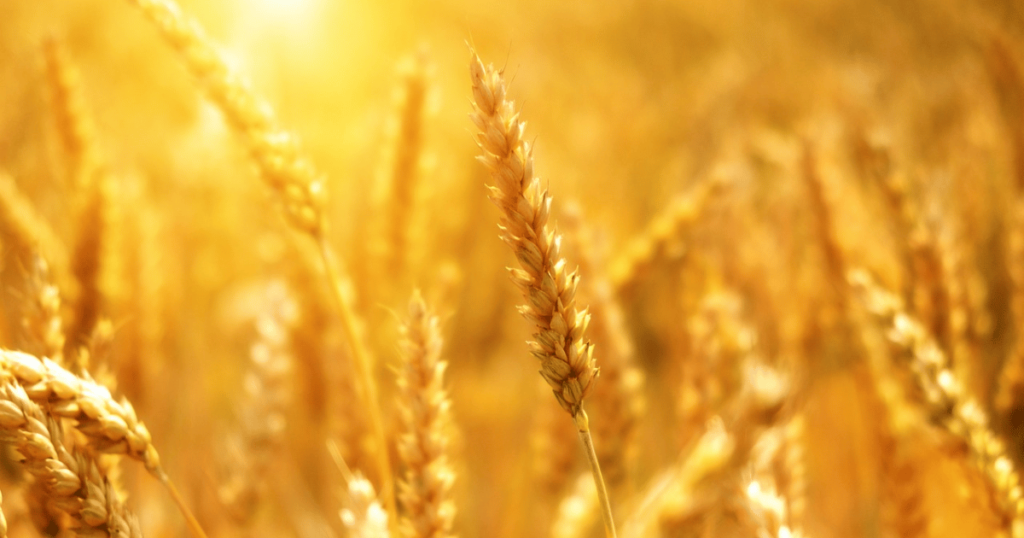
Ukraine’s trade is supported by its major domestic industries. Here, we explain Ukraine’s key industries.
Agriculture
Ukraine is such a strong agricultural producer that it’s known as “Europe’s breadbasket.” Blessed with vast farmland, fertile soil, and a suitable climate, it produces a wide variety of agricultural products, including cereals, oil seeds, vegetables, and fruit.
Its main exports include wheat, corn, barley, and sunflower oil, all in high demand in world markets.
Sunflower oil exports in particular have made up an important part of Ukraine’s edible-oil market. Agriculture contributes significantly to Ukraine’s GDP, and also contributes to job creation.
Furthermore, the introduction of sustainable farming technology and the development of export infrastructure are boosting its competitiveness in international markets.
Mining
Since Ukraine has abundant mineral resources, mining is also one of its important industries. Resources such as iron ore, manganese ore, and coal are major exports, and important resources for steelmaking and energy industries both at home and abroad.
Iron ore production in particular is an important pillar of Ukraine’s economy, thriving in the Kryvyi Rih region.
Ukraine’s mining industry is pursuing technological innovation and efficiency while also mining sustainably, with consideration for the environment. Exporting mineral resources improves Ukraine’s balance of payments and is an important factor supporting economic growth.
The IT Industry
In recent years, Ukraine’s IT industry has grown rapidly.
This is because Ukraine has advanced technical capability and an abundant workforce, earning international recognition across a wide range of fields including software development, IT services, and outsourcing.
In particular, many startups have emerged, centered on cities like the capital, Kyiv, and Lviv, forming IT clusters.
Ukrainian IT companies are active in global markets, armed with cost competitiveness and strong technical capability.
With many English-speaking engineers, partnerships with foreign companies are increasing, raising the international value of Ukraine’s IT industry.
The government is also actively supporting the IT industry’s development through tax incentives and infrastructure development, so the number of IT startups will likely continue to grow.
Details on Ukraine’s key industries and regional industry breakdowns are explained in detail in the article below.
Reference: Ukraine’s Industries in Wartime — The Weight of Agriculture, Manufacturing, Services, and Energy
Challenges Facing Ukraine’s Trade

Since Russia began its full-scale invasion on February 24, 2022, the war itself has become the biggest obstacle to Ukraine’s trade. The “Black Sea Grain Initiative,” involving the UN and others, was even set up to safely export grain and other goods from Black Sea ports (it ended July 17, 2023). Beyond this, Ukraine’s trade faces several other challenges. Overcoming these challenges is expected to improve Ukraine’s trade balance and support further economic growth.
Dependence on Russia for Energy
Ukraine has a history of depending on Russia for its energy supply, and this has been an economic risk.
However, regarding natural gas, the state gas company Naftogaz stopped purchasing from Russia’s Gazprom on November 25, 2015, and in an April 2016 statement explained that European suppliers offer more favorable terms.
Since Russia’s occupation of Crimea in 2014, relations between the two countries have deteriorated, and instability in the energy supply has become apparent.
To improve this situation, the Ukrainian government is aiming to diversify its energy sources, exploring renewable energy and importing energy from other countries.
Delays in Customs Procedures
Ukraine’s customs procedures sometimes experience delays, hindering the smooth flow of trade.
Complicated, time-consuming import/export procedures have reduced Ukraine’s international competitiveness.
Delays in customs procedures raise business costs and delay transactions, potentially undermining trading partners’ trust as a result.
To address this, the Ukrainian government is introducing an electronic customs system and providing one-stop services.
It’s also important to strengthen staff training and introduce a rigorous oversight system to prevent bribery and misconduct.
Establishing procedures that comply with international trade standards would improve Ukraine’s trade environment and encourage foreign companies to enter the market.
Trade Is a Vital Foundation Supporting Ukraine’s Economy

For Ukraine, trade is a vital foundation supporting its economy. Building competitiveness in international markets, centered on key industries like agriculture, mining, and manufacturing, is key to Ukraine’s economic growth.
Also, Ukraine’s grain and minerals matter to countries around the world. Ukraine’s cooperation is essential to ensuring a stable food supply and supporting manufacturing.
Ukraine is expected to continue raising its profile as the world’s granary and building a stable trading system going forward.
Sources and article record
Sources and references
- Uncompetitive terms prevent Naftogaz from resuming gas purchases from GazpromApril 1, 2016. States that purchases from Gazprom stopped on November 25, 2015
Published by Naftogaz · Checked: 2026-09-23 - Joint Coordination Centre for the Black Sea Grain Initiative – Backgroundestablished July 27, 2022; ended July 17, 2023
Published by United Nations · Checked: 2026-09-23 - Kryvyi Rihthe industrial center of the Kryvyi Rih iron-ore deposit
Published by Internet Encyclopedia of Ukraine (CIUS) · Checked: 2026-09-23 - Q&A – Ukraine and the Netherlands v. RussiaGrand Chamber judgment, July 9, 2025. Covers the conflict in the east from spring 2014, the occupation and annexation of Crimea, and Russian-occupied territory
Published by European Court of Human Rights · Checked: 2026-09-23
Corrections and updates
- A passage that had described “the 2014 Crimea crisis” has been changed to Russia's occupation of Crimea.
- This article had stated that Ukraine imports most of its natural gas from Russia, but the state gas company Naftogaz stopped purchasing from Russia in November 2015. Corrected: a description of Donetsk as the current center of iron-ore production and steelmaking, a claim that “weapons imports” from Poland had stopped, and a description of the 2023 end of the Black Sea Grain agreement as being “current.” Added that the full-scale invasion since 2022 is the biggest obstacle to trade.
If you find an error in this article, please tell us via Corrections. Once we have checked it, we will record in the article what was corrected and why.
Related articles
-
The Railway That Carried 4 Million People West Is Now Starting to Link Up with the EU’s Track Gauge
In the first year of the full-scale invasion, Ukraine's railways carried 4 million people to the west of the country. According to the State Statistics Service, freight fell to less than half its previous level in 2022 and stood at 161.3 million tonnes in 2025. This article draws on official announcements as of September 2026 to describe a business kept running by freight revenue despite passenger losses, and the first EU-gauge track, opened in 2025.
-
In Ukraine, Addresses Run from Street to Oblast, and Postal Codes Have Five Digits
The elements of an address listed in Ukraine's postal regulations are the name, street and building number, city/raion/oblast, postal code, and country. The postal code has five digits. This article explains the order of lines when sending mail from Japan, the fact that Latin-alphabet spelling is not fixed to one form, and the difference between the state-designated Ukrposhta and the private carrier Nova Poshta, using the regulations and a Universal Postal Union sample.
-
Seven Amendment Laws, One Struck Down as Unconstitutional: Thirty Years of Ukraine’s Constitution
Ukraine's Constitution, adopted on June 28, 1996, was amended by seven laws through 2019. The 2004 amendment was struck down by the Constitutional Court in 2010 for a procedural violation, and parliament restored it in 2014. This article traces, through the text of the amendment laws, the rewriting of the judiciary chapter, the policy of joining the EU and NATO, and the provision that bans amendments under martial law.