
Repair Money for a Damaged Home, a Housing Certificate for a Lost One: Ukraine’s “єВідновлення”
The Ukrainian state pays compensation for housing damaged or destroyed by Russian attacks. Under a 2023 law, No. 2923-IX, people can apply through Diia: for damaged housing, funds for repair; for housing that is lost, either a housing certificate to buy a new home or funds to rebuild. Only Ukrainian citizens who own the housing can receive it, and housing in territory that was already occupied when the full-scale invasion began is excluded.
.jpg)
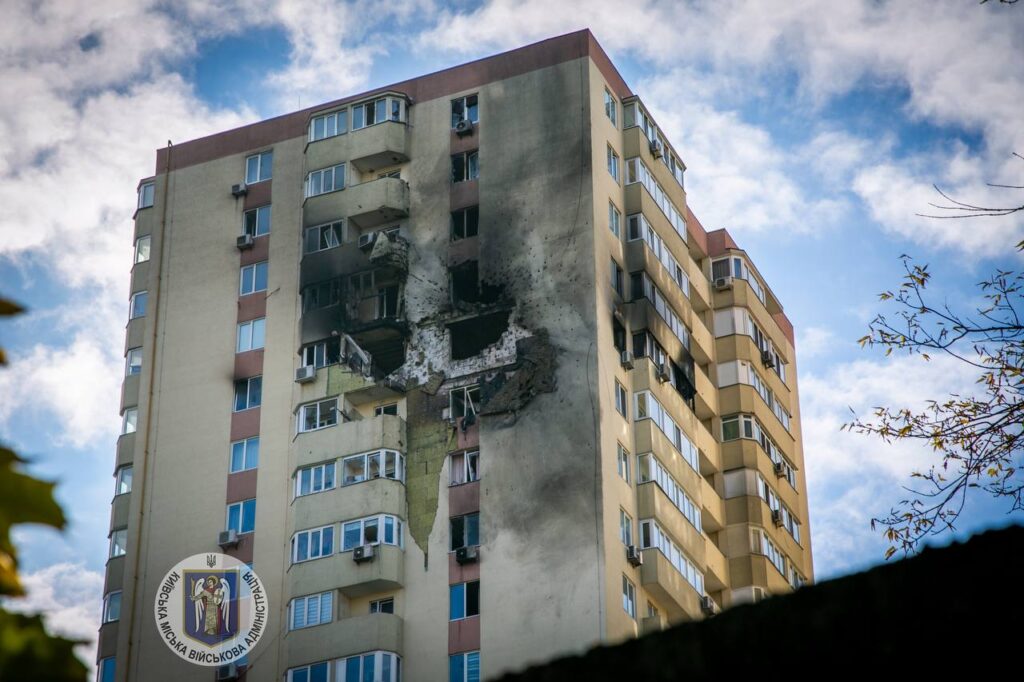
A home with a shattered window and a hole blown in the roof from a Russian attack. An apartment made unlivable by shelling. Ukraine has a system under which the state pays compensation to the owners of such housing, and it can be applied for through the e-government app “Diia” as a public service known as “єВідновлення” (“yeVidnovlennia,” roughly “e-Restoration”).
Its basis is Law No. 2923-IX of February 23, 2023, “On Compensation for Damage and Destruction of Certain Categories of Immovable Property as a Result of Combat Actions, Terrorist Acts and Sabotage Caused by the Armed Aggression of the Russian Federation Against Ukraine, and on the State Register of Property Damaged and Destroyed as a Result of Combat Actions, Terrorist Acts and Sabotage Caused by the Armed Aggression of the Russian Federation Against Ukraine.” The law provides that it takes effect two months after publication.
Housing That Is Damaged, and Housing That Is Lost
The law treats housing in two categories: “damaged” housing that can be made livable again through repair, and “destroyed” housing that can no longer be used for its original purpose. It covers apartments in multi-unit buildings, detached houses, garden or dacha homes and similar dwellings, as well as housing under construction that had reached a certain stage of completion (Article 1).
Compensation for damaged housing is provided in three forms (Article 10):
- Carrying out the repair work itself, or providing building materials
- Transferring funds into a dedicated account restricted to use for repair work and materials
- Reimbursing the owner afterward for repair and material costs they paid themselves
Compensation for destroyed housing takes three forms (Article 8):
- Transferring funds into a dedicated account restricted to building a detached house
- Issuing a “housing certificate” (житловий сертифікат) to buy a new home
- Handing over to the owner housing rebuilt under a community’s recovery plan (added by a September 2024 amendment)
Someone who has lost a detached house can choose among these, but compensation for someone who has lost an apartment in a multi-unit building is limited to the housing certificate (Article 8.2).
The Cap on Repair Compensation
The procedure for compensating damaged housing is set out in Cabinet of Ministers Resolution No. 381 of April 21, 2023. According to this resolution and the responsible ministry’s guidance page (dated June 18, 2026), compensation is divided into two tiers based on the extent of the damage.
| Type of compensation | Cap / how the amount is set | How and when it is paid |
|---|---|---|
| Repair (Category A: minor damage) | Up to 200,000 hryvnias | Paid in one installment. To be used within 12 months |
| Repair (Category B: major damage) | 200,000-350,000 hryvnias for an apartment, 200,000-500,000 hryvnias for a detached house | 70% paid first, remaining 30% after an interim inspection. To be used within a combined 18 months |
| Housing certificate (lost housing) | Set by the floor area of the lost housing and the price per square meter | Paid directly to the seller of the new home. The certificate is valid for five years |
| Rebuilding funds (lost detached house) | Same as above | Paid in two installments of 50% each. The first must be used within 18 months, and 90% or more of it spent before the second is paid. Construction must be completed within three years of the first payment |
The ministry’s guidance recommends that anyone whose home is damaged first report it to the State Emergency Service (101) and the police (102) so the damage is put on record. If the same home is damaged again, a new application can be filed based on the “repair report” from the previous application.
What the Housing Certificate Can, and Cannot, Buy
The housing certificate is an electronic document by which the state guarantees payment for a new home’s purchase price (Article 1). The procedure for compensating destroyed housing is set out in Cabinet of Ministers Resolution No. 600 of May 30, 2023. The main provisions relevant to users are as follows (Article 8):
- The compensation amount is set per owner and per property, based on the floor area of the lost housing and the price per square meter. For jointly owned property, it is based on the owner’s share
- It can be used to buy either new or existing housing, together with the land it stands on. Certificates belonging to several people, such as family members, can be combined to buy one home
- Housing cannot be bought in occupied territory, or in a hromada (basic local government unit) on the government’s list of combat zones or besieged areas
- If buying housing worth more than the certificate, the owner pays the difference themselves. Where a cheaper home is bought, the difference is recorded in the registry, to be paid, it is stated, from reparations obtained from Russia
- Housing bought with the certificate cannot be sold for five years
- An application to use the certificate must be made within five years of its issuance
There is one more rule specific to receiving compensation for destroyed housing. The recipient signs a contract transferring to the state or a local government, up to the amount received, their right to seek reparations from Russia for the damage to that housing (Article 8.18). According to the ministry’s guidance, before using a certificate or receiving rebuilding funds, ownership of the lost housing must first be terminated in the registry.
Who Can Apply, and Who Is Given Priority
Compensation is available to Ukrainian citizens who own the housing, and to their heirs and others (Article 2). For damage to the common areas of a multi-unit building, a homeowners’ association or similar body is the recipient. Excluded are people under sanctions and people convicted of crimes against national security.
The law states that its compensation provisions do not extend to housing in territory that was already occupied by Russia when martial law began, on February 24, 2022, in connection with Russia’s full-scale invasion of Ukraine (preamble). Housing in territory occupied since 2014 is outside the scope of this system.
The ministry’s guidance states that compensation is available only to owners whose ownership is registered in the State Register of Property Rights to Immovable Property. Housing acquired before 2013 is sometimes not in the electronic registry, and in that case it explains that the owner must first register it through a Administrative Services Center (CNAP), a notary, or a state registrar. Publicly owned housing that has not been privatized is not eligible for compensation.
Compensation for destroyed housing is, as a rule, reviewed in the order applications are received. The law then gives priority to combat participants, people with disabilities from the war, mobilized persons, families with many children, people with a Category I or II disability, and internally displaced persons meeting government-set criteria (Article 9; internally displaced persons were added by a December 2024 amendment).
How and When to Apply
Applications can be submitted electronically through the Diia app or portal (the unified state web portal of electronic services), or on paper through an Administrative Services Center, a social protection body, or a notary (Article 4.2). The law states that an application can be filed regardless of the applicant’s registered place of residence or the location of the housing (Article 4.5). Diia’s functions are covered in Diia’s E-Passport Cannot Be Used at the Border and Has No Legal Effect Abroad.
Applications are reviewed by a committee the local community forms where the housing is located. Review of an application for destroyed housing must be completed within 30 days, extendable by a further 30 days for housing in a combat zone or occupied hromada (Article 6.3). A decision can be appealed to the courts if the applicant disagrees (Article 11).
Applications for compensation for destroyed housing are to be filed during martial law and within one year after martial law ends in that area (Article 4.1). For housing damaged or destroyed by mines or mine clearance after martial law ends, applications may be filed within three years of the end of martial law (final and transitional provisions).
Where Does the Money Come From?
The law lists as funding sources the state and local budgets (including the Fund for Restoration of Property and Infrastructure and the Fund for Eliminating the Consequences of Armed Aggression), funds from international financial institutions, international technical and financial assistance, and “reparations and other recoveries from the Russian Federation” (Article 13). The law states that the procedure for paying purchase money through housing certificates may be halted when funds are unavailable (Article 8.12), and the ministry’s guidance likewise explains that payment follows the order of applications and the availability of funds.
The overall scale of housing damage from the full-scale invasion is estimated in damage and recovery-needs assessments by the World Bank and others. This is covered in Recovery Cost Estimates Have Grown from $348.5 Billion to $587.7 Billion over Five Assessments.
Sources and article record
Sources and references
- Закон України «Про компенсацію за пошкодження та знищення окремих категорій об'єктів нерухомого майна внаслідок бойових дій, терористичних актів, диверсій, спричинених збройною агресією Російської Федерації проти України, та Державний реєстр майна, пошкодженого та знищеного внаслідок бойових дій, терористичних актів, диверсій, спричинених збройною агресією Російської Федерації проти України» № 2923-IXLaw of Ukraine No. 2923-IX — current text as of the December 11, 2024 version. Preamble, Articles 1-4, 6, 8-11, 13, final and transitional provisions, list of amending laws
Published by Verkhovna Rada of Ukraine (zakon.rada.gov.ua) · Checked: 2026-09-24 - Постанова Кабінету Міністрів України від 21.04.2023 № 381procedure for compensating damaged housing. Category A and B amounts, the 70%/30% payment split, 12 and 18 months
Published by Cabinet of Ministers of Ukraine (zakon.rada.gov.ua) · Checked: 2026-09-24 - Постанова Кабінету Міністрів України від 30.05.2023 № 600procedure for compensating destroyed housing. Date, number and title of the resolution
Published by Cabinet of Ministers of Ukraine (zakon.rada.gov.ua) · Checked: 2026-09-24 - єВідновлення: Пошкоджене житло“yeVidnovlennia: Damaged Housing” — dated June 18, 2026. Reporting the damage, Categories A and B, payment stages
Published by Ministry for Communities' Restoration, Infrastructure and Transport of Ukraine · Checked: 2026-09-24 - єВідновлення: Знищене житло“yeVidnovlennia: Destroyed Housing” — dated June 18, 2026. Housing certificates, payment and deadlines for rebuilding funds
Published by Ministry for Communities' Restoration, Infrastructure and Transport of Ukraine · Checked: 2026-09-24 - єВідновлення: Як отримати компенсацію“yeVidnovlennia: How to Receive Compensation” — dated June 18, 2026. The registry, application channels, repeat damage
Published by Ministry for Communities' Restoration, Infrastructure and Transport of Ukraine · Checked: 2026-09-24 - єВідновлення: Поширені запитання“yeVidnovlennia: Frequently Asked Questions” — dated June 18, 2026. Registration before 2013, non-privatized housing, termination of ownership
Published by Ministry for Communities' Restoration, Infrastructure and Transport of Ukraine · Checked: 2026-09-24
If you find an error in this article, please tell us via Corrections. Once we have checked it, we will record in the article what was corrected and why.
Related articles
-
Ukraine’s Sunflower Oil: the Seeds Mostly Stay Home
Ukraine harvests more than 10 million tons of sunflower seeds a year, but only a small fraction is exported as raw seed — most is processed into oil and meal domestically before export. This article sets out the volumes of seed, oil, and exports from USDA estimates, Ukraine's share of world exports, and the export duty that has applied to seed since 1999.
-
Before You Contract with a Ukrainian Engineer — Three Employment Frameworks, and Intellectual Property
When working with talent in Ukraine, what actually helps you decide is not nationality but what can be written into a contract. The three employment frameworks that coexist within Ukraine; who intellectual property defaults to if the contract is silent; the arrangements for uptime and communication that became necessary after the full-scale invasion; and the points that need an expert's confirmation on the Japan side. Eight items you can put in a contract.
-
The 14 Paintings Carried Out of a Burning Museum: Painter Maria Prymachenko
Painter Maria Prymachenko spent her life in a village in Kyiv Oblast painting fantastical animals and flowers. Immediately after the full-scale invasion, the museum in Ivankiv that held her work burned down, and the 14 paintings that staff and residents carried out were shown in Kyiv in September 2022. This article traces her life and work, the 100th anniversary of her birth in which UNESCO was involved, and the plan to rebuild the museum.