
“Ukrainian Film” Means Five Different Things — Country of Production, Setting, and Who Made It
The phrase “Ukrainian film” refers to at least five different things: a film produced in Ukraine, a film with Ukraine as one of its co-producing countries, a film made by another country but set in Ukraine, a film made abroad by a filmmaker from Ukraine, and a film made in the former Soviet era. Using films whose stated country of production can be checked, this article shows how to sort them out and how to check.
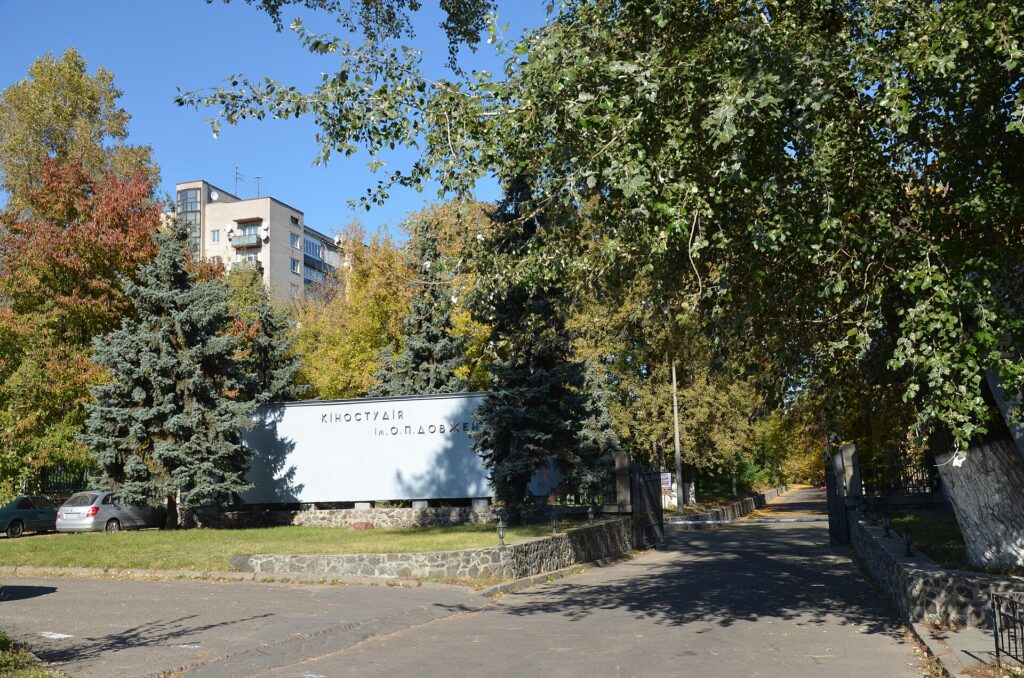

After Russia’s full-scale invasion of Ukraine on February 24, 2022, many films connected to Ukraine were also shown in Japan. But the phrase “Ukrainian film” refers to at least five different things at once.
Introducing them without distinguishing between them leads in one of two directions. Either a film made with another country’s funding and production apparatus gets treated as Ukraine’s own work, erasing the role of the country and company that actually financed and produced it — or a film on which Ukraine is officially listed as a co-producing country gets called only by the name of the majority producing country, making Ukraine’s involvement invisible. Films from the former Soviet era present a further difficulty of their own.
Five Ways to Sort Them
1. Films Produced in Ukraine
Films for which Ukraine alone is listed as the country of production. The official site of the Venice International Film Festival lists the country of production for Atlantis (2019 Orizzonti section, directed by Valentyn Vasyanovych) as Ukraine, the production companies as Garmata Film Studios and Limelite, and the language as Ukrainian.
2. Films Where Ukraine Is One of the Co-Producing Countries
The official site of the Venice International Film Festival lists the countries of production for The Painted Bird (2019, directed by Václav Marhoul) as “Czech Republic, Ukraine, Slovak Republic.” The database of the Slovak Film Institute (Slovenský filmový ústav) gives “CZ – SK – UA,” and names Directory Films as the Ukrainian co-production company. The film’s own official site also lists that company as a foreign co-producer and the Ukrainian State Film Agency as one of its funding bodies.
For Mr. Jones (2019, directed by Agnieszka Holland), the Polish film database FilmPolski.pl lists the countries of production as “Poland, United Kingdom, Ukraine,” names Kinorob as one of the co-production companies, and lists the Ukrainian State Film Agency as a funder. The project page of the Ukrainian production group FILM.UA also lists the same company name and the agency’s support.
3. Films by Other Countries, Set in Ukraine
Sunflower (I girasoli, 1970, directed by Vittorio De Sica) had a revival release in Japan in March 2022 through the distributor Unplugged, and was talked about in connection with Ukraine. But sources differ on its country of production. Eiga.com and Cinema Today both list only “Italy,” while an article on nippon.com describes it as “a co-production of Italy, France, the United States, and the Soviet Union,” and states that the sunflower field scenes were filmed in Ukraine. None of the three lists Ukraine as a country of production.
That the setting or filming location is Ukraine, and that Ukraine is a country of production, are two separate facts.
4. Films Made by a Filmmaker from Ukraine, Within Another Country’s System
The official site of 20 Days in Mariupol (2023) credits the production as “a FRONTLINE PBS and The Associated Press production.” FRONTLINE is a program of the American public broadcaster PBS, and The Associated Press is an American news agency. PBS describes Mstyslav Chernov — who served as director, writer, producer, and cinematographer — as a “Ukrainian filmmaker.” That it won Best Documentary Feature at the 96th Academy Awards is stated on the Academy Museum’s award-winner page.
A filmmaker’s origin, the country where the production company is based, and the “country of production” given in sources, can only be checked separately. It is not unusual for these three not to line up.
5. Films Made in the Former Soviet Era, on the Territory of Present-Day Ukraine
This is the hardest case. Ukraine at the time was one of the republics making up the Soviet Union, and films were made under state control. Studios existed in Kyiv, in Odesa, and in Moscow too. The single phrase “a film of the former USSR” doesn’t capture that difference.
For Shadows of Forgotten Ancestors (original title Тіні забутих предків, directed by Sergei Parajanov), the Dovzhenko Centre, Ukraine’s largest film archive, gives the production year as 1964 and the studio as the Oleksandr Dovzhenko National Film Studios in its own “Top 100” list, positioning it as “a turning point in the development of Ukrainian culture in the second half of the 20th century.” The Japanese distributor IVC gives the production year as 1965 and the country of production as “USSR = Ukraine,” and explains that it was produced at a studio in Kyiv.
Ivan’s Childhood (Иваново детство, 1962, directed by Andrei Tarkovsky), on the other hand, is listed in Moscow-based Mosfilm’s own catalog, and in Japan, Eiga.com gives its country of production as “USSR.” None of the sources checked mention any involvement by a Ukrainian production body. Even among films of “the former Soviet era,” which studio made a given film changes the picture.
So can a film made at a studio in Kyiv be called a work of present-day Ukraine? This article does not offer a conclusion. But the questions involved can be laid out separately.
- Where was the studio that produced it located? Its location, and the system that governed it at the time, can be stated separately.
- What language was the film made in, and whose local culture did it draw on as material?
- Which institution now preserves, studies, and restores the film?
- Where did the filmmaker themselves place their own identity? Some filmmakers, like Parajanov, cannot be fit into a single country by either origin or where they worked. Even the spelling of their name changes depending on the language.
These four are separate facts, and it is a stretch to use any single one of them as grounds for declaring “this film is a film of country X.” A film or filmmaker cannot be assigned to a single present-day country merely on the grounds of the former-Soviet framework — and, conversely, the fact that a film was made in Ukrainian at a studio in Kyiv cannot be erased by the single phrase “Soviet film” either.
What Sources Confirm About Each Film’s Country of Production
| Film | Country/entity of production, as stated by sources | Sources used to confirm |
|---|---|---|
| Atlantis (2019) | Ukraine | Official site of the Venice International Film Festival, Eiga.com |
| The Painted Bird (2019) | Czech Republic, Ukraine, Slovak Republic (CZ – SK – UA) | Official site of the Venice International Film Festival, Slovak Film Institute, the film’s own official site, Eiga.com |
| Mr. Jones (2019) | Poland, United Kingdom, Ukraine | FilmPolski.pl, FILM.UA Group, Eiga.com |
| Sunflower (1970) | Some sources say “Italy”; others say “a co-production of Italy, France, the United States, and the Soviet Union.” Ukraine does not appear in either | Eiga.com, Cinema Today, nippon.com |
| 20 Days in Mariupol (2023) | The official site credits FRONTLINE PBS and The Associated Press (both American). Japanese listings describe it as “a Ukraine-U.S. co-production” | The film’s own official site, PBS FRONTLINE, Academy Museum, Eiga.com |
| Shadows of Forgotten Ancestors (1964 or 1965) | Studio was the Oleksandr Dovzhenko National Film Studios (Kyiv). The Japanese distributor lists the country of production as “USSR = Ukraine” | Dovzhenko Centre, IVC |
| Ivan’s Childhood (1962) | USSR. Listed in Moscow-based Mosfilm’s own catalog | Mosfilm’s official site, Eiga.com |
Where to Check
- Official festival records. The Venice International Film Festival (labiennale.org) lists the country of production, production company, and language for each film it screens. If a film was selected for an official section, start here.
- National film-institute databases, such as the Slovak Film Institute or Poland’s FilmPolski.pl. These often list co-production companies’ nationality and funding bodies as well.
- The Ukrainian State Film Agency (usfa.gov.ua). It describes itself as “the central executive body implementing state film policy,” responsible for state-budget support and for administering co-production treaties with other countries. This is where to check whether a film had Ukrainian state involvement.
- The Dovzhenko Centre (dovzhenkocentre.org). By its own description, founded in 1994 and holding more than 7,000 titles, it is Ukraine’s largest film archive. It is a good starting point for researching films from the former Soviet era.
- The official sites of production companies and of the films themselves. These sometimes list co-producers and funders by country. But read them knowing they are the companies’ own account of themselves.
- Listings from Japanese distributors. These let you check how a film is described in Japanese.
IMDb and Wikipedia can be a useful lead to these sources, but should not be treated as evidence themselves. And when sources disagree, it is more accurate to show plainly what each source says than to pick one and state it as settled fact. That lets readers check for themselves, and makes it easier to correct if a new source appears.
What Sorting Them Out Lets You Say
Sorting films into these five categories is not about ranking them. The reason to sort them is that there are things you simply cannot state otherwise. The fact that Ukrainian production companies have kept making films together with co-producers from other countries even under the full-scale invasion disappears the moment everything gets lumped together as “Ukrainian film.” Only by stating separately who funded it, who filmed it, and which country’s system supported it does how a film actually came to be made become visible.
Sources and article record
Sources and references
- Biennale Cinema 2019
Published by Atlantis · Checked: La Biennale di Venezia - Biennale Cinema 2019
Published by The Painted Bird · Checked: La Biennale di Venezia - The Painted Birdofficial film site
Published by Silver Screen · Checked: 2026-09-22 - The Painted Birdfilm data
Published by Slovenský filmový ústav (Slovak Film Institute) · Checked: 2026-09-22 - MR. JONESfilm data
Published by FilmPolski.pl · Checked: 2026-09-22 - Mr. Jonesproject page
Published by FILM.UA Group · Checked: 2026-09-22 - Who we are
Published by Ukrainian State Film Agency · Checked: 2026-09-22 - About
Published by Oleksandr Dovzhenko National Centre (Dovzhenko Centre) · Checked: 2026-09-22 - Shadows of Forgotten Ancestors / Tini zabutykh predkivTop 100
Published by Oleksandr Dovzhenko National Centre · Checked: 2026-09-22 - 火の馬 セルゲイ・パラジャーノフ 2Kレストアfilm page
Published by IVC Inc. · Checked: 2026-09-22 - Иваново детствоfilm page
Published by Киноконцерн «Мосфильм» (Mosfilm) · Checked: 2026-09-22 - 20 Days in Mariupolofficial film site
Published by FRONTLINE PBS / The Associated Press · Checked: 2026-09-22 - 20 Days in Mariupol selected for shortlists for Documentary Feature Film, International Feature Film for the 96th Academy Awards
Published by FRONTLINE, PBS · Checked: 2026-09-22 - 96th Academy Award Documentary Feature Film Winner: 20 Days in Mariupol
Published by Academy Museum of Motion Pictures · Checked: 2026-09-22 - ウクライナ侵攻で全国に広がる『ひまわり』リバイバル上映の輪
Published by nippon.com · Checked: 2026-09-22 - ひまわり(1970)作品情報
Published by シネマトヅデイ · Checked: 2026-09-22 - ひまわり(1970)作品情報
Published by 映画.com · Checked: 2026-09-22 - アトランティス 作品情報
Published by 映画.com · Checked: 2026-09-22 - 異端の鳥 作品情報
Published by 映画.com · Checked: 2026-09-22 - 赤い闇 スターリンの冷たい大地で 作品情報
Published by 映画.com · Checked: 2026-09-22 - マリウポリの20日間 作品情報
Published by 映画.com · Checked: 2026-09-22 - 僕の村は戦場だった 作品情報
Published by 映画.com · Checked: 2026-09-22
Corrections and updates
- Retitled the article (former title: “What Gets Called a 'Ukrainian Film' — Separately Checking Country of Production, Setting, and Who Made It”)
If you find an error in this article, please tell us via Corrections. Once we have checked it, we will record in the article what was corrected and why.