
Section
Business & Recovery
Industries and companies, and the work and challenges of recovery and reconstruction.
-
Hire Two More People, Your Rate Drops to 5%: Ukraine’s “5-7-9” SME Loan Program
Since 2020, Ukraine's government has run a loan program in which the state shoulders part of the interest on money small and medium enterprises borrow from banks. It is known as “5-7-9” because it brings the rate a company actually pays down to 5%, 7% or 9%. Drawing on the wording of the Cabinet of Ministers' resolution, this article explains how the rate is set and the special provisions added after the full-scale invasion.
-
Ten Years Without Buying Russian Gas: Where Does Ukraine’s Gas Come From Now?
Ukraine's state gas company Naftogaz has not purchased gas from Russia since November 25, 2015. Today its gas comes mainly from domestic production, with the shortfall bought from Europe and stored underground for winter use. The contract carrying Russian gas to Europe through Ukraine also expired, on January 1, 2025.
-

Repair Money for a Damaged Home, a Housing Certificate for a Lost One: Ukraine’s “єВідновлення”
The Ukrainian state pays compensation for housing damaged or destroyed by Russian attacks. Under a 2023 law, No. 2923-IX, people can apply through Diia: for damaged housing, funds for repair; for housing that is lost, either a housing certificate to buy a new home or funds to rebuild. Only Ukrainian citizens who own the housing can receive it, and housing in territory that was already occupied when the full-scale invasion began is excluded.
-

The Day Ukraine’s Cellphone Network Went Dark Nationwide: The Cyberattack on Kyivstar
On the morning of December 12, 2023, communications from Kyivstar, Ukraine's largest mobile phone company, went down nationwide. Ukraine's Security Service (SBU) says the attack was carried out by a unit of Russia's military intelligence agency, the GRU. This article traces the week it took for all services to be restored, the compensation given to subscribers and its cost, and the company's 2025 listing in the United States, drawing on the company's disclosures and SBU's announcements.
-
Honey Quota Rises from 6,000 to 35,000 Tonnes: The EU’s New Tariffs for Ukraine
From June 2022, the EU suspended tariffs and quantity quotas on Ukrainian products for three years. That measure ended on June 5, 2025, and on October 29 a revision of the Association Agreement expanded the duty-free quotas for honey, sugar, wheat and other goods. In exchange for the quotas, Ukraine will align its laws with EU production standards by 2028.
-
If War Destroys a Factory, Who Pays? Political Risk Insurance for Investment in Ukraine
In Ukraine, where the war continues, private insurers have remained unable to underwrite political risk insurance. Filling that gap are public insurance and guarantee agencies such as the World Bank Group's MIGA, the United States' DFC, and Japan's NEXI. This article lays out, with dates attached, the ceilings and track record each agency has published, including the MIGA fund that Japan was the first to fund.
-
Ukraine’s Computer Services Exports: The United States Is the Largest Destination, Malta Second
According to National Bank of Ukraine statistics, computer services exports totaled $6.655 billion in 2025, of which 35.9% went to the United States. Malta ranked second, the United Kingdom third, and Cyprus fourth. The destination country is counted by where the trading partner is a resident, not necessarily the country where the software is actually used. This article looks, by country, at the growth since 2010 and the movements since the full-scale invasion.
-
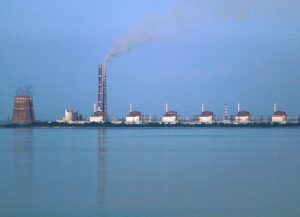
Ukraine Has 15 Reactors — 6 of Them at a Seized Power Plant
Ukraine has 15 reactors across four nuclear power plants. Six of them belong to the Zaporizhzhia plant, which has been under Russian control since March 2022 and has been shut down since that September. Before the invasion, nuclear power supplied half of Ukraine's electricity. This article shows, from IAEA, IEA, and Energoatom disclosures, how much electricity the remaining 9 reactors are now producing.
-
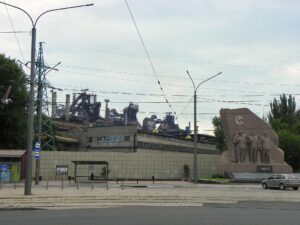
After Losing Azovstal, Where Has Ukraine’s Steel Been Made?
Ukraine's crude steel production fell from 21.4 million tonnes in 2021 to 7.4 million tonnes in 2025. The two steel plants in Mariupol were knocked out of production by occupation, and the remaining plants in Zaporizhzhia and Kamianske have carried most of the production since. Those two have also been shut down by attacks in August and September 2026. This article tracks the plant-by-plant figures through industry-association and company disclosures.
-

Wheat Harvest and Area Both Down 30%: Ukraine’s Three Big Crops, by the Numbers
According to statistics from the UN Food and Agriculture Organization (FAO), Ukraine's wheat production fell from 32.18 million tonnes in 2021 to 22.44 million tonnes in 2024, and the harvested area shrank by almost the same proportion. This article lays out production, area and yield for 2021-2024 for wheat, maize and sunflower seed together, and explains how the statistical coverage changed starting in 2022.