The Rose Means Woman, the Tulip Means Man: The Crimean Tatar Ornament Ornek
Ornek is a pattern that the Crimean Tatar people have used in embroidery, weaving, pottery and silverwork; each motif carries a meaning, and arranged together they can be read like a story. This article covers the content of the pattern, inscribed on UNESCO's Intangible Cultural Heritage list in 2021 at Ukraine's request, and the difficulty of passing it on in Russian-occupied Crimea.
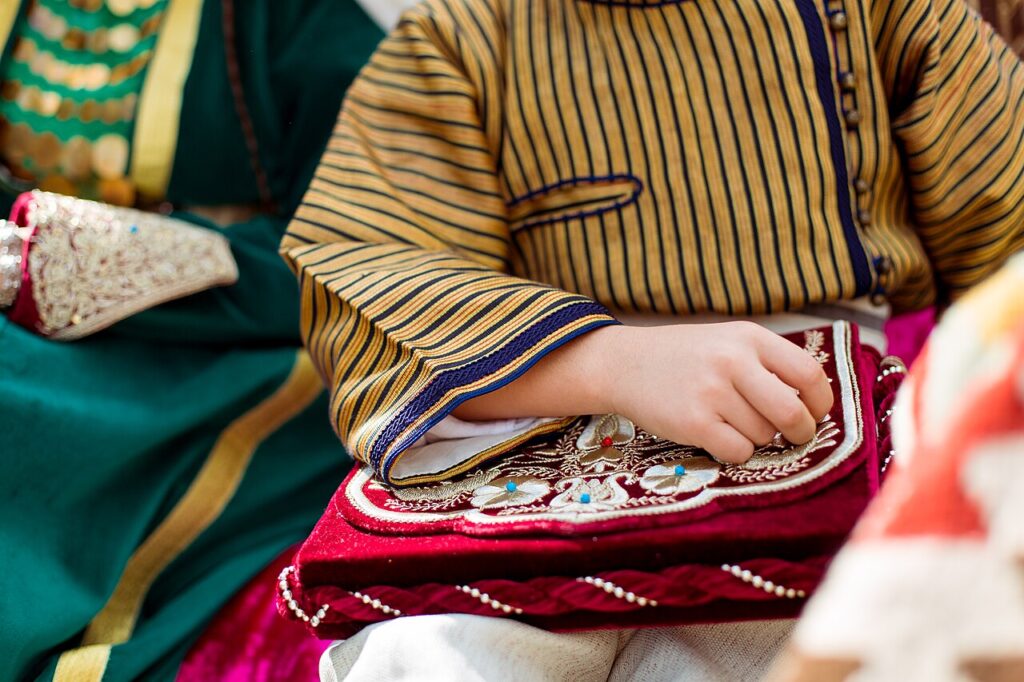

The rose stands for a married woman, the poplar or cypress for an adult man, the tulip for a young man, the almond for an unmarried woman or girl, and the carnation for an elder, wisdom and life experience. Unusually for a UNESCO Intangible Cultural Heritage decision, the meaning of each motif is written in. In December 2021, at its 16th session held online, UNESCO’s Intergovernmental Committee inscribed “Ornek, a Crimean Tatar ornament and knowledge about it” on the Representative List. The nomination was submitted by Ukraine.
A Pattern That Becomes a Story When Arranged
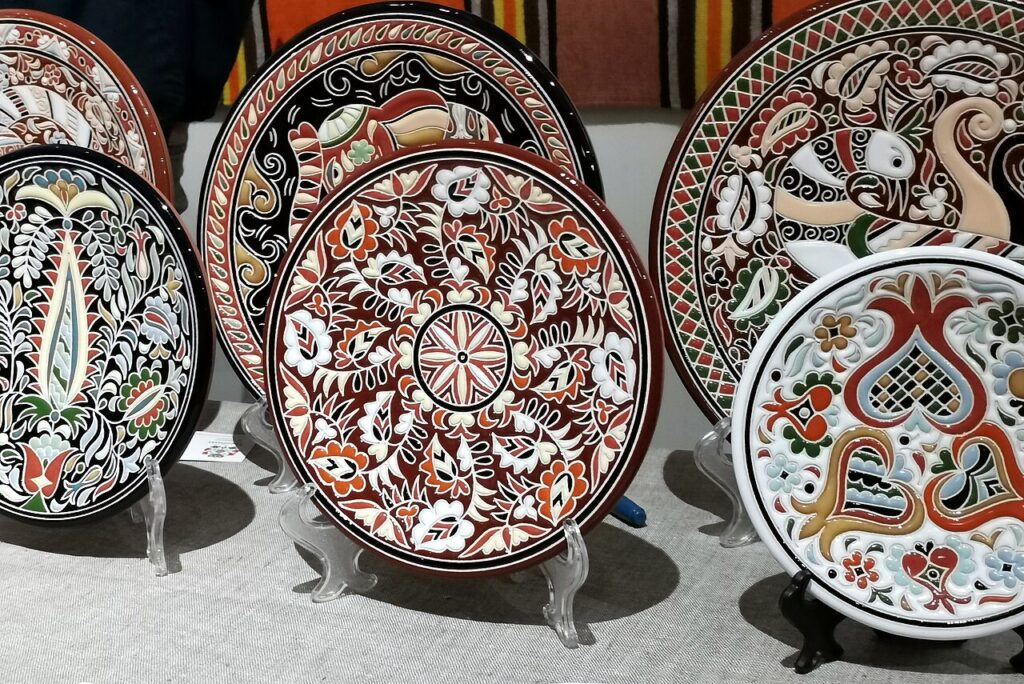
According to the decision, ornek is a system of symbols and their meanings, now used in embroidery, weaving, pottery, metal chasing, jewelry, wood carving, glass painting and murals. The symbols are arranged to create story-like compositions, and Crimean Tatars are said to understand the meaning of the symbols, often commissioning craftspeople for a composition with a specific meaning. There are about 35 symbols in all. Geometric patterns are used mainly in weaving, while plant patterns are used in all other crafts, and have spread even into fields that were not originally part of Crimean Tatar tradition, such as glass painting and murals.
The meaning of a plant symbol is reinforced by a distinctive color scheme and combination of symbols. The example the decision gives is that placing a tulip inside a rose represents love or a bond between a man and a woman. It also states that many symbols are used as amulets.
The Symbols Listed on the Inventory Card
The nomination to UNESCO was accompanied by Ukraine’s national inventory registration card, with an English translation. The card lists the symbols divided into “female symbols,” “male symbols,” and “other.” The main ones are tabled below.
| Symbol (as romanized on the card) | Motif | Meaning per the card |
|---|---|---|
| Kobek | Navel (diamond shape) | A female symbol; traced back to Neolithic imagery |
| Gul | Rose | Woman |
| Badem | Almond | Girl |
| Egri dal | Bent branch (S-shape) | A female symbol |
| Lyale | Tulip | Man |
| Lyale gondjesy | Tulip bud | Young man |
| Emen yapragy | Oak leaf | Man |
| Servy | Cypress | Man; steadfastness |
| Karanfil | Carnation | An elder past childbearing age |
| Gul cherep | Vase | Home |
| Nar | Pomegranate | Fertility and prosperity; the many seeds express a wish for the family to grow |
As amulet symbols, the card lists thorns, a double-bladed axe, an arrow, scissors, a comb, a fortress, a triangular amulet, horns, a house, and a chili pepper, stating that they were added to whatever needed protection. Small elements shaped like berries, flowers or leaves are said to represent diligence and richness of spirit, material things and body. Unexpected color combinations, not tied to how things actually look, are also listed as a feature of this pattern.
Even within the materials for the same nomination, the wording differs slightly. The decision describes the rose as a “married woman,” while the card says only “woman”; the carnation is also described as an “older woman” in the card’s Ukrainian text. When citing what a symbol means, it is safest to note which source’s explanation you are using.
Women Embroider, Men Chase Metal
According to the inventory card, the pattern is used mainly in embroidery on clothing, shoes and hats, in jewelry, pottery and metal vessels, woodwork, furniture, and carpets. Items bearing the pattern are used at every stage of life — a child’s birth, a marriage proposal and wedding, a boy’s circumcision, moving into a new home, and funerals. Its practitioners range from teenage students to the oldest, at 89.

The decision states that embroidery is done mainly by women, and metal chasing and wood carving mainly by men. Knowledge is passed down within families and at venues such as embroidery classes, and is also taught at universities. The decision names the Kyiv State Institute of Decorative and Applied Arts and Design, and Kyiv National University of Culture and Arts.
A Pattern That Survived Deportation and Return
According to the Internet Encyclopedia of Ukraine (Canadian Institute of Ukrainian Studies at the University of Alberta), the Crimean Tatars are a Turkic people who arose in Crimea, taking shape as a nation with the formation of the Crimean Khanate in the mid-15th century. In 1944, they were collectively deported from Crimea by the Soviet government, and their return was permitted only at the end of the 1980s.
The inventory card states that, precisely because the pattern was a means of passing knowledge from generation to generation, knowledge of ornek was preserved even through the era of deportation. According to the decision, in the 1980s and 90s, the Crimean Tatar organization Chatyr Dag conducted fieldwork, interviewing elders about the meanings of the patterns they had at hand. The Ukrainian government is said to have advanced learning in educational settings, a virtual museum, an illustrated catalogue, and exhibitions, from 2001 to 2019.
In Occupied Crimea
Russia has occupied Crimea since 2014. UN General Assembly Resolution 76/179, adopted on December 16, 2021, calls Crimea “temporarily occupied” Ukrainian territory, and expresses deep concern that Ukrainians and the Crimean Tatars, Crimea’s indigenous people, face restrictions on preserving their identity and culture and on being educated in Ukrainian and Crimean Tatar.
Condemns the reported destruction of cultural and natural heritage, illegal archaeological excavations, the illicit transfer of cultural property, and the persecution of religious traditions, which deliberately erase Ukrainian and Crimean Tatar cultural identity from Crimea’s ethnocultural landscape.
From UN General Assembly Resolution 76/179 (adopted December 16, 2021). Translated by the author.
The same resolution calls on Russia to immediately reverse its decision banning the activities of the Mejlis, the Crimean Tatars’ representative body, as an “extremist organization.”
The shadow of the occupation also appears in the inventory card attached to the UNESCO nomination. Many of the practitioners the card lists are craftspeople living in Crimea, and as measures to protect the pattern, it lists inviting Crimean craftspeople to events on mainland Ukraine, holding online lectures, and adding courses on the pattern to classes at mainland universities. Besides Crimea, the places listed as using the pattern include Kyiv, Kherson, Kharkiv, Lviv, Lutsk, Melitopol, and Vinnytsia. The card called for a state support mechanism, stating that protecting ornek was in an unprecedented situation in post-independence Ukraine.
The decision lists, as the significance of inscription, that it strengthens the Crimean Tatar community’s sense of belonging and identity, and deepens dialogue with Crimean Tatars living abroad. UNESCO’s introduction of the element opens by describing ornek as “a Ukrainian system of symbols and meaning.” Other intangible cultural heritage elements from Ukraine on UNESCO’s list are covered in our article “Ukraine’s Cities and World Heritage”.
Sources and article record
Sources and references
- Ornek, a Crimean Tatar ornament and knowledge about itthe introduction of the element; 2021, 16.COM, the Representative List; "a Ukrainian system of symbols"
Published by UNESCO Intangible Cultural Heritage · Checked: 2026-09-24 - Decision of the Intergovernmental Committee: 16.COM 8.B.45the decision text; the crafts it is used in; about 35 symbols; the rose, poplar/cypress, tulip, almond, carnation; the tulip inside the rose; the division between men and women; the two universities; the Chatyr Dag fieldwork; the 2001–2019 state measures; the significance of inscription; the session held online in 2021
Published by UNESCO Intangible Cultural Heritage · Checked: 2026-09-24 - Inventory card: Ornek – a Crimean Tatar ornament and knowledge about itthe national inventory registration card, in Ukrainian and English; the list of symbols and their meanings; the amulet symbols; the color schemes; the items used and life rituals; the age of practitioners; the places where it is used; the era of deportation; protection measures
Published by Ministry of Culture of Ukraine (published by UNESCO) · Checked: 2026-09-24 - A/RES/76/179 Situation of human rights in the temporarily occupied Autonomous Republic of Crimea and the city of Sevastopol, Ukraineadopted December 16, 2021; the restrictions on the indigenous Crimean Tatars' culture and education; the condemnation of the destruction of cultural heritage; the demand to reverse the ban on the Mejlis; since 2014
Published by United Nations General Assembly · Checked: 2026-09-24 - Crimean Tatarsa Turkic people that arose in Crimea; the mid-15th-century Crimean Khanate; the 1944 deportation; the return at the end of the 1980s
Published by Internet Encyclopedia of Ukraine (CIUS) · Checked: 2026-09-24
If you find an error in this article, please tell us via Corrections. Once we have checked it, we will record in the article what was corrected and why.