
Ivan Franko: The Writer Who Died the Year He Was Nominated for the Nobel Prize
The Nobel Prize nomination archive records the name of Ivan Franko (1856–1916) as a candidate for the 1916 Literature Prize. That May, Franko died in Lviv. This article traces the life of a man born the son of a village blacksmith, arrested three times, who left behind about 6,000 works of fiction, poetry, drama, translation and scholarship, and the university and town that were named after him.
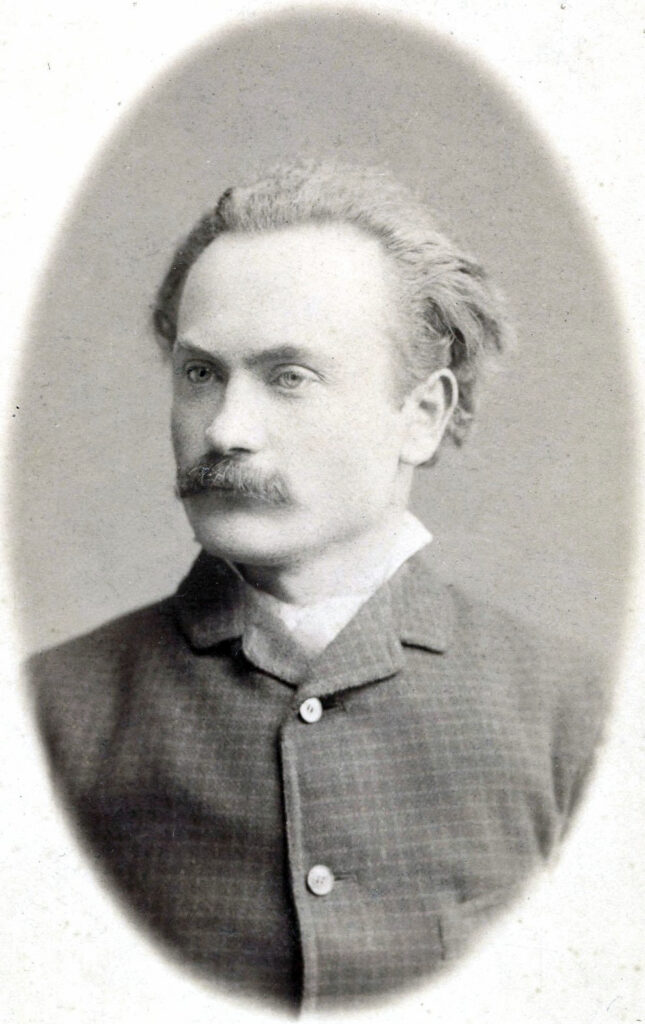


The nomination archive published by the Nobel Foundation includes the name “Ivan Franko” as a candidate for the 1916 Literature Prize. There were two nominators: Professor Josef Zastyrets of Vienna, and Harald Hjärne of the Swedish Academy.
According to the Encyclopedia of the History of Ukraine (Institute of History of Ukraine, National Academy of Sciences of Ukraine), the nomination process was begun by Father Zastyrets in 1915. But Franko died in Lviv on May 28, 1916. The encyclopedia writes that “he did not live to take part in the selection.”
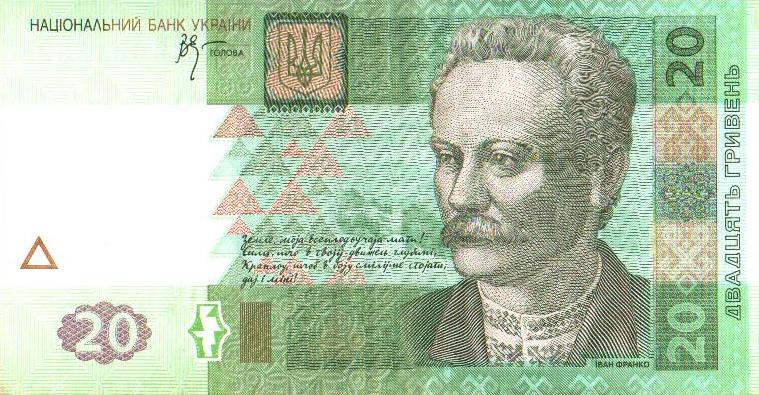
Ivan Franko (Іван Франко) is the figure portrayed on the 20-hryvnia banknote. The Internet Encyclopedia of Ukraine (IEU, published by the Canadian Institute of Ukrainian Studies) calls him one of Ukraine’s greatest creative talents, alongside Shevchenko.

Born a Blacksmith’s Son in Habsburg Galicia
Franko was born on August 27, 1856, in the village of Nahuievychi, Drohobych county, Galicia, the son of the village blacksmith. Nahuievychi is in present-day Lviv oblast. Galicia at the time was territory of the Austrian Empire (later Austria-Hungary), under a different empire from the Russian Empire, which ruled Ukraine along the Dnipro River.
In 1875, he graduated from the gymnasium in Drohobych and began studying classical philology and Ukrainian language and literature at Lviv University. His first poem (1874) and first novel (1875) appeared in the student magazine Druh (Friend).
Three Arrests
As a student, Franko was a socialist. According to IEU and the Encyclopedia of the History of Ukraine, he was arrested three times by the Austrian authorities.
- 1877: arrested along with associates for socialist propaganda; spent eight months in prison (IEU)
- 1880: arrested again for inciting peasants; after a three-month sentence he remained under police surveillance and was unable to continue his university studies (IEU)
- 1889: detained from August 16 to October 20, triggered by contact with students who had come from Dnipro Ukraine (the Russian Empire side) (Encyclopedia of the History of Ukraine)
In 1890, with the support of Mykhailo Drahomanov, he co-founded the Ruthenian-Ukrainian Radical Party and wrote its program. He ran three times for election to the Austrian parliament and the Galician diet, but, according to IEU, lost each time due to administrative manipulation and other factors.
Fiction, Poetry, Drama, Translation: About 6,000 Works
According to the Encyclopedia of the History of Ukraine, Franko’s literary, critical and scholarly works number about 6,000, written in Ukrainian, Polish, German and Russian. He used more than 100 pen names. From 1887 to 1897 he made his living working for Polish- and German-language newspapers, which he himself called “hired work for the neighbors” (IEU).
The following are his main works, based on IEU’s account.
- The novellas Boa Constrictor (1878) and Boryslav Laughs (1881): from a cycle set in the Galician town of Boryslav. IEU calls them the first works to depict the beginnings of the workers’ struggle
- The historical novel Zakhar Berkut (1883): depicts Ukrainian mountain people confronting the Mongol invasion of 1241
- The poems “Stonecutters” (1878) and “The Eternal Revolutionary” (1880): as patriotic songs, they influenced the thinking of a generation
- The poetry collection From the Heights and the Depths (1887): banned in Russian-ruled Ukraine
- The long poem Moses (1905): taking its subject from the Bible, it depicts conflict between a leader and his people. IEU calls it his greatest poem
- The play Stolen Happiness (IEU dates it to 1894, the Encyclopedia of the History of Ukraine to 1893)
- The children’s work Mykyta the Fox (1890)
He translated from 14 languages, rendering Homer, Dante, Shakespeare, Goethe, Heine, Ibsen and others into Ukrainian. IEU calls Franko a “golden bridge” between Ukrainian and world literature. The composer Mykola Lysenko set “The Eternal Revolutionary” to a choral melody, and the young poet Lesya Ukrainka’s first poetry collection (1893) was published through Franko’s efforts (ESU, the Encyclopedia of the History of Ukraine).
As a Scholar
On July 1, 1893, Franko passed the defense of his doctoral dissertation at the University of Vienna, on the medieval religious tale Barlaam and Josaphat, supervised by the Slavist Vatroslav Jagić. The following year, 1894, he qualified to teach the history of Ukrainian literature at Lviv University, but was blocked from taking up the professorship by the opposition of Kazimierz Badeni, the governor of Galicia (IEU, the Encyclopedia of the History of Ukraine).
He continued his research based at the Shevchenko Scientific Society. In 1906 he received an honorary doctorate from Kharkiv University. In 1907, the Russian scholars Shakhmatov and Korsh nominated him for membership in the Saint Petersburg Academy of Sciences, but, according to the Encyclopedia of the History of Ukraine, the imperial Russian government blocked his election.
The Franko Image the Soviet Union Remade
According to IEU, veneration of Franko was put to political use in Soviet Ukraine. To portray him as a fighter for Ukrainian-Russian unity, a devoted socialist, and a militant atheist, the authorities suppressed several of his works, including the patriotic poem “Not the Time.” Essays that criticized socialism were falsified or cut.
The real Franko, after studying Marx as a student, later criticized socialism sharply. In the preface to his 1898 poetry collection My Emerald, he called Marxism “a religion built on hatred and the doctrine of class struggle” (IEU). According to IEU, a reassessment of his work began in the mid-1980s and has advanced in earnest in independent Ukraine.
The University and Town Named After Him
| Name | Details |
|---|---|
| Lviv National University | After the Soviet annexation of Galicia in 1939, it was named for Ivan Franko by a decree of the Presidium of the Supreme Soviet of the Ukrainian SSR on January 8, 1940 (Lviv University, ESU). It gained national university status in 1999 |
| The city of Ivano-Frankivsk | In 1962, renamed after Franko from Stanislav (Stanislaviv until 1939) (ESU, IEU) |
| The 20-hryvnia banknote | Franko’s portrait has appeared from the version put into circulation on September 2, 1996. The 2018 design’s reverse depicts the Lviv Opera House (National Bank of Ukraine) |
In Japanese, the play Stolen Happiness can be read in ウクライナ戯曲集 (Collected Ukrainian Plays), edited and translated by Shinichi Murata (Kokusho Kankokai, 2025). For other Japanese translations, see our article on Japanese translations of Ukrainian literature.
Timeline
| Year | Event |
|---|---|
| 1856 | Born August 27 in the village of Nahuievychi, Galicia |
| 1875 | Graduates from the gymnasium in Drohobych; enters Lviv University |
| 1877 | First arrest (8 months) |
| 1880 | Second arrest |
| 1883 | Zakhar Berkut |
| 1889 | Third arrest (August 16 – October 20) |
| 1890 | Co-founds the Ruthenian-Ukrainian Radical Party |
| 1893 | Doctoral dissertation defended at the University of Vienna, July 1 |
| 1905 | The long poem Moses |
| 1906 | Honorary doctorate from Kharkiv University |
| 1915 | The Nobel Literature Prize nomination process begins |
| 1916 | Nominated as a candidate for the Nobel Prize in Literature; dies in Lviv on May 28 |
| 1940 | Lviv University is named after him |
| 1962 | Stanislav is renamed Ivano-Frankivsk |
Sources and article record
Sources and references
- Nomination archive: Ivan Frankothe 1916 Literature Prize; nominators Josef Zastyretz [professor, Vienna] and Harald G Hjärne [Swedish Academy]; one nomination
Published by The Nobel Foundation (NobelPrize.org) · Checked: 2026-09-24 - Franko, Ivanbirth and death dates; the village of Nahuievychi; the son of a blacksmith; graduation in 1875 and Lviv University; his first works of 1874 and 1875; the arrests of 1877, 1880 and 1889; the Radical Party; the elections; "hired work for the neighbors"; the July 1, 1893 dissertation and Jagić; Badeni's opposition; the 1906 honorary doctorate; his works and their dates; translation from 14 languages; the "golden bridge"; the preface to My Emerald; the Soviet suppression and falsification of his works. Revised 2007
Published by Internet Encyclopedia of Ukraine (Canadian Institute of Ukrainian Studies) · Checked: 2026-09-24 - Франко Іван Якович [Franko, Ivan Yakovych]birth and death dates; more than 100 pen names; the 1907 block on his academy election; the 1915 nomination process by Zastyrets and "he did not live to take part in the selection"; the detention of August 16 – October 20, 1889; about 6,000 works in 4 languages; Stolen Happiness, 1893; Moses. Volume 10, published 2013
Published by Encyclopedia of the History of Ukraine (Institute of History of Ukraine, National Academy of Sciences of Ukraine) · Checked: 2026-09-24 - Українка Леся [Ukrainka, Lesia]Franko's role in publishing her first poetry collection, On the Wings of Songs, 1893
Published by Encyclopedia of the History of Ukraine (Institute of History of Ukraine, National Academy of Sciences of Ukraine) · Checked: 2026-09-24 - Лисенко Микола Віталійович [Lysenko, Mykola Vitaliiovych]his choral setting of Franko's poem "The Eternal Revolutionary"
Published by Encyclopedia of Modern Ukraine (Institute of Encyclopedic Research, National Academy of Sciences of Ukraine) · Checked: 2026-09-24 - Львівський університет у вирі століть [Lviv University Through the Whirlwind of Centuries]the naming by decree of the Presidium of the Supreme Soviet of the Ukrainian SSR on January 8, 1940
Published by Ivan Franko National University of Lviv · Checked: 2026-09-24 - Львівський національний університет ім. І. Франка [Lviv National University named after I. Franko]the naming in 1940 after the Soviet annexation; national status in 1999; Franko's attempt to obtain the post in 1894–95 and the opposition to it
Published by Encyclopedia of Modern Ukraine (Institute of Encyclopedic Research, National Academy of Sciences of Ukraine) · Checked: 2026-09-24 - Івано-Франківськ [Ivano-Frankivsk]the 1962 renaming after Franko
Published by Encyclopedia of Modern Ukraine (Institute of Encyclopedic Research, National Academy of Sciences of Ukraine) · Checked: 2026-09-24 - Ivano-FrankivskStanislaviv until 1939, Stanislav until 1962
Published by Internet Encyclopedia of Ukraine (Canadian Institute of Ukrainian Studies) · Checked: 2026-09-24 - Банкнота номіналом 20 гривень [The 20-Hryvnia Banknote]the portrait; the Lviv Opera House on the reverse; the circulation start date of each version from September 2, 1996
Published by National Bank of Ukraine · Checked: 2026-09-24 - 盗まれた幸せ:五幕のドラマ [Stolen Happiness: A Drama in Five Acts]by Ivan Franko, translated by Shinichi Murata
Published by National Diet Library Search · Checked: 2026-09-24 - ウクライナ戯曲集 [Collected Ukrainian Plays]edited and translated by Shinichi Murata, Kokusho Kankokai, March 2025
Published by National Diet Library Search · Checked: 2026-09-24
If you find an error in this article, please tell us via Corrections. Once we have checked it, we will record in the article what was corrected and why.