987 Towns and Villages Renamed: Ukraine’s Two Place-Name Laws
In Ukraine, a 2015 law targeted place names honoring communist-party leaders and others for renaming, and a 2023 law targeted names commemorating the Russian Empire and Russian rule. Under the first law, 987 settlements and 25 raions were renamed; under a September 2024 Verkhovna Rada resolution, 327 settlements and 4 raions were renamed. This article sums up the grounds and procedure for these renamings.
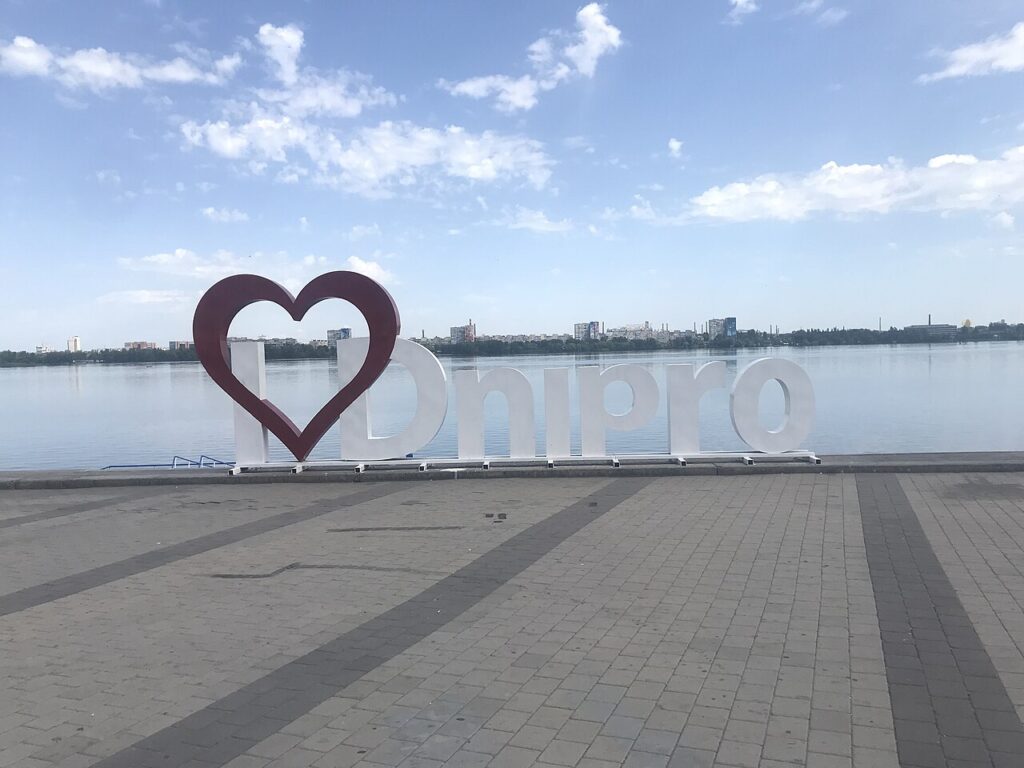

Dnipro, an industrial city on the Dnipro River, was called “Dnipropetrovsk” until May 2016. It was originally named “Katerynoslav” after Catherine II of the Russian Empire, and was renamed in 1926 to honor Hryhorii Petrovsky, a Communist Party leader who held senior posts in Soviet Ukraine (according to the Internet Encyclopedia of Ukraine, CIUS).
Over the past decade or so, the names of towns, villages, and streets across Ukraine have been changed under two laws: a 2015 law targeting names commemorating the communist system, and a 2023 law targeting names commemorating the Russian Empire and Russian rule. How place names are rendered in the Latin alphabet or in Japanese (such as the difference between “Kiev” and “Kyiv”) is covered in The Day “Kiev” Became “Kyiv,” and How Place-Name Spelling Is Decided. Here, this article looks at why the names themselves changed, and how.
The Verkhovna Rada decides town names
Article 85, paragraph 1, item 29 of Ukraine’s Constitution gives the Verkhovna Rada authority over naming and renaming settlements and raions. The names of cities and villages change by parliamentary resolution. The names of streets, squares, and parks, by contrast, are decided by municipal councils and similar bodies.
Oblast names are listed individually in Article 133 of the Constitution. As of September 24, 2026, this article still carries the names “Dnipropetrovsk oblast” and “Kirovohrad oblast.” Even after the cities were renamed Dnipro and Kropyvnytskyi, the oblast names have not changed.
The 2015 law and 987 settlements
On April 9, 2015, the Verkhovna Rada adopted Law No. 317-VIII, “On the Condemnation of the Communist and National Socialist (Nazi) Totalitarian Regimes and the Prohibition of Propaganda of Their Symbols.” It was promulgated on May 20 and took effect the following day.
The law names, as one category of “symbols of the communist regime,” place names honoring people who held senior Communist Party posts of district-committee secretary or above, leaders of the supreme bodies of the USSR or Soviet Ukraine, and people who worked for Soviet state-security bodies, as well as names commemorating the anniversary of the October Revolution or the establishment of Soviet power. It excludes, however, names tied to resistance against the Nazi occupiers or to the development of Ukrainian scholarship and culture (Article 1).
The procedure carried a deadline. Local governments and similar bodies were to hold public hearings within six months of the law’s taking effect and submit renaming proposals for their settlements to the Verkhovna Rada, which was to decide on renaming within three months of that deadline. Where no proposal was submitted, the Verkhovna Rada would decide based on a recommendation from the Ukrainian Institute of National Remembrance (Article 7, paragraphs 7 and 8).
According to the Institute of National Remembrance’s 2016 annual report, the Verkhovna Rada adopted 13 resolutions based on these recommendations, renaming 987 settlements and 25 raions. The breakdown was 32 cities, 58 urban-type settlements, and 897 villages and hamlets. The report also states that, as of December 2016, 51,493 streets, squares, and similar places had been renamed.
The report states that the renamings restored more than 300 historical names, of which about 70 were tied to the culture of indigenous peoples and ethnic communities, including Crimean Tatars, Bulgarians, Greeks, and Jews. It also states that many of the renamings in the Autonomous Republic of Crimea restored place names the Stalinist regime had erased from the map after the 1944 deportation of the Crimean Tatars. One example given is a village named after a Bulgarian Communist Party leader that was renamed after a 19th-century Bulgarian national hero (Blahoieve, in Odesa oblast, became Khrysto Botev).
Dnipro and Kropyvnytskyi
Renamings of major cities continued during this same period.
| New name | Former name | Verkhovna Rada resolution |
|---|---|---|
| Dnipro (Дніпро) | Dnipropetrovsk (Дніпропетровськ) | May 19, 2016, No. 1375-VIII |
| Kropyvnytskyi (Кропивницький) | Kirovohrad (Кіровоград) | July 14, 2016, No. 1468-VIII |
The two resolutions are not worded the same way. The Kropyvnytskyi resolution explicitly states that it is based on Article 7, paragraph 8 of the 2015 law. The Dnipro resolution consists of a single sentence, “Rename the city of Dnipropetrovsk the city of Dnipro,” without citing the law it rests on.
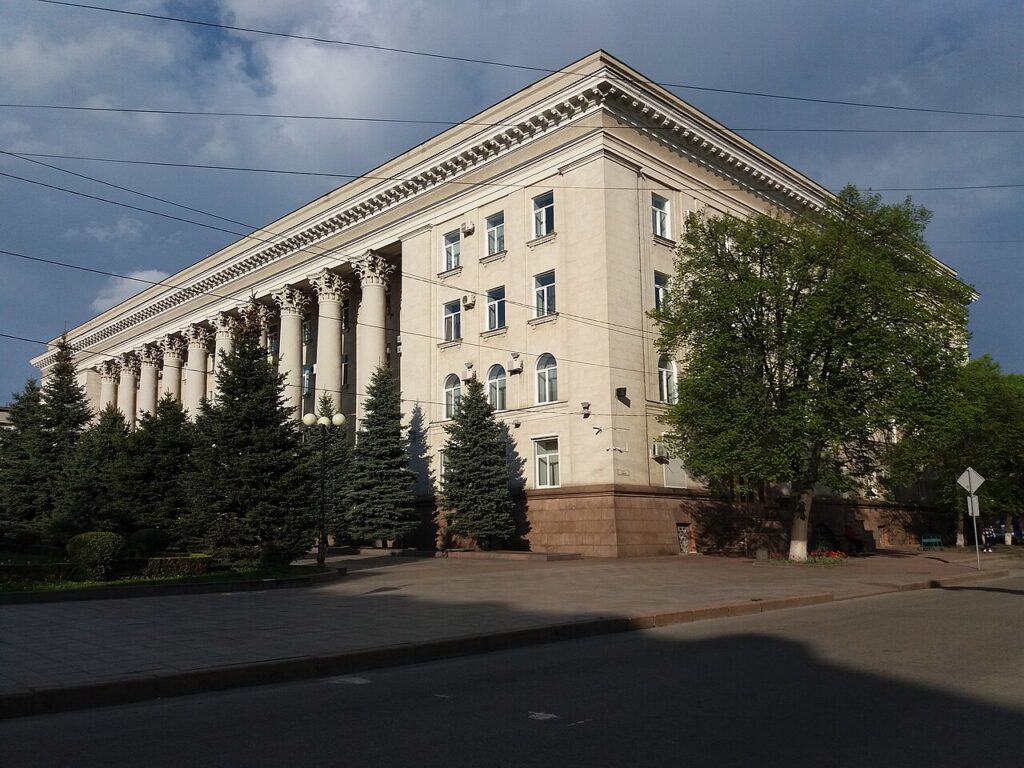
According to the Internet Encyclopedia of Ukraine, Kropyvnytskyi was known as Yelysavethrad from 1775 to 1924, then renamed Kirove in 1934 and Kirovohrad in 1939. The 2016 renaming gave it the name of Marko Kropyvnytskyi, a playwright and director connected to the city.
_01.jpg)
The 2023 law added “policies of the Russian Empire”
After Russia’s full-scale invasion, the Verkhovna Rada adopted Law No. 3005-IX on March 21, 2023, “On the Condemnation and Prohibition of Propaganda of Russian Imperial Policy in Ukraine and the Decolonization of Toponymy.” It was promulgated April 27 and took effect three months later, on July 27.
The preamble states that the aim of Russia’s armed aggression is to strip the Ukrainian people of their independence and sovereignty and return them to a state of subjugation like that of the Russian Empire and Soviet eras. The law then defines “Russian imperial policy” as the policies pursued, from the Grand Duchy of Moscow through the Russian Empire, the USSR, and the Russian Federation, to subjugate and assimilate the Ukrainian people, and prohibits using place names that commemorate it (Articles 2 and 4).
The place names covered include, for example, the following (Article 2, paragraph 1, item 4):
- Names of people who held senior state or military posts in Russia and pursued Russian imperial policy, or who publicly supported or glorified it
- Names of events connected with carrying out Russian imperial policy
- Names of Russian cities and other geographic, historical, or cultural landmarks of the Russian Federation
Exceptions are also written into the law: names connected with defending the rights of the Ukrainian people, or with the development of the Ukrainian state, scholarship, or culture, and names connected with “the cultures of the peoples subjugated by the Russian Federation.”
The procedure follows the same form as the 2015 law. Local governments and military administrations are to consult residents and submit renaming proposals for their settlements to the Verkhovna Rada within six months of the law’s taking effect, and the Verkhovna Rada decides within three months of that deadline. For settlements on the Crimean Peninsula, the Cabinet is to submit renaming proposals after consulting the indigenous peoples’ representative bodies (Article 8, paragraph 7).
In Russian-occupied territory, the removal of monuments is to take place only after the occupation ends, and for streets and other places not renamed by then, the deadline for renaming begins counting from the day Ukrainian administration returns. In the meantime, the Institute of National Remembrance, with the cooperation of scholars, local historians, internally displaced persons, and others, is to collect renaming proposals for place names in the occupied territories (Article 8, paragraph 10). A 2025 amendment (No. 4579-IX, effective August 30) also required that draft renaming resolutions be published together with an opinion from the Institute of National Remembrance (Article 4, paragraph 3).
327 settlements changed under the September 2024 resolution
The major Verkhovna Rada resolution under the 2023 law is No. 3984-IX of September 19, 2024, “On the Renaming of Certain Settlements and Raions.” A proposal to rename 333 settlements voted on the day before, the 18th, fell short of passage; it was reworked and adopted the following day. The resolution cites as its basis Article 8, paragraphs 8 (symbols of Russian imperial policy) and 13 (names not meeting state-language standards) of the 2023 law.
Counting the text of the resolution, 327 settlements were renamed — 10 cities, 56 urban-type settlements (selyshche), and 261 villages — along with 4 raions. Twenty separate places named Pervomaiske (Первомайське), after the May 1 holiday, were each given a different new name.
| New name | Former name | Oblast |
|---|---|---|
| Samar (Самар) | Novomoskovsk (Новомосковськ) | Dnipropetrovsk oblast |
| Sheptytskyi (Шептицький) | Chervonohrad (Червоноград) | Lviv oblast |
| Berestyn (Берестин) | Krasnohrad (Красноград) | Kharkiv oblast |
| Zlatopil (Златопіль) | Pervomaiskyi (Первомайський) | Kharkiv oblast |
| Siverskodonetsk (Сіверськодонецьк) | Sievierodonetsk (Сєвєродонецьк) | Luhansk oblast |
When a city’s name changed, the raion sharing that name was renamed too. The raion containing Samar went from Novomoskovsk Raion to Samarskyi Raion, and the raion containing Sheptytskyi went from Chervonohrad Raion to Sheptytskyi Raion.
In its 2024 annual report, the Institute of National Remembrance states that its expert committee met six times that year and issued 14 opinions on place-name renamings and the removal of monuments. The framework of raions and local governments created by the administrative reorganization is covered in Ukraine, Divided Into 24 Oblasts, 136 Raions, and 1,469 Hromadas.
Sources and article record
Sources and references
- Конституція УкраїниArticle 85, paragraph 1, item 29; the list of oblasts in Article 133
Published by Верховна Рада України (zakon.rada.gov.ua) · Checked: 2026-09-24 - Закон України № 317-VIII «Про засудження комуністичного та націонал-соціалістичного (нацистського) тоталітарних режимів в Україні та заборону пропаганди їхньої символіки»April 9, 2015; the definition and exceptions for place names in Article 1, Article 7 paragraphs 6–8; promulgated May 20, 2015
Published by Верховна Рада України (zakon.rada.gov.ua) · Checked: 2026-09-24 - Закон України № 3005-IX «Про засудження та заборону пропаганди російської імперської політики в Україні і деколонізацію топонімії»March 21, 2023; preamble, Article 2, Article 4, Article 8 paragraphs 6–10; promulgated April 27, 2023; effective July 27; amended by 4579-IX
Published by Верховна Рада України (zakon.rada.gov.ua) · Checked: 2026-09-24 - Постанова ВРУ № 1375-VIII «Про перейменування міста Дніпропетровськ Дніпропетровської області»May 19, 2016
Published by Верховна Рада України (zakon.rada.gov.ua) · Checked: 2026-09-24 - Постанова ВРУ № 1468-VIII «Про приведення назви міста Кіровоград … у відповідність із вимогами Закону…»July 14, 2016; renaming based on Article 7, paragraph 8
Published by Верховна Рада України (zakon.rada.gov.ua) · Checked: 2026-09-24 - Постанова ВРУ № 3984-IX «Про перейменування окремих населених пунктів та районів»September 19, 2024; the basis cited, the list of renamings
Published by Верховна Рада України (zakon.rada.gov.ua) · Checked: 2026-09-24 - Звіт 2016 рік13 resolutions, 987 settlements and 25 raions, 32 cities/58 urban-type settlements/897 villages, 51,493 place names, the restoration of historical names, the Crimea renamings, the Bulgarian example
Published by Український інститут національної пам'яті · Checked: 2026-09-24 - Звіт за 2024 рікthe expert committee's six meetings and 14 opinions
Published by Український інститут національної пам'яті · Checked: 2026-09-24 - Dnipro; Kropyvnytskyi; Petrovsky, Hryhoriithe former names, the years of renaming, the origins of the names
Published by Internet Encyclopedia of Ukraine (CIUS) · Checked: 2026-09-24 - Верховна Рада підтримала нову постанову про перейменування 327 населених пунктівSeptember 19, 2024; how a proposal for 333 places the day before fell short of passage
Published by РБК-Україна · Checked: 2026-09-24
If you find an error in this article, please tell us via Corrections. Once we have checked it, we will record in the article what was corrected and why.
Related articles
-
What Do Ukraine’s President, Verkhovna Rada, and Cabinet of Ministers Each Decide?
Ukraine's Constitution sets the Verkhovna Rada, the parliament, at 450 seats, and provides that the prime minister is nominated by the parliamentary majority, proposed by the president, and appointed by parliament. This article lays out the powers of the three institutions along with their article numbers, and introduces the legal basis for why no elections have been held since 2022, together with the debate over how that basis should be read.
-
авторка and директорка: Feminine Job Titles in Ukrainian
Ukrainian forms nouns denoting women by adding a suffix, as in автор (author) → авторка and директор → директорка. First made an explicit rule in the 2019 orthography, the pattern was carried over into §32 of the 2026 State Language Standard. This article sets out the four suffixes involved, how the 1993 edition differed, and how the dictionaries and encyclopedia describe the pattern, with comparison tables.
-
1883: Ismail Gasprinsky Publishes the Newspaper Tercuman
On April 10, 1883, the first issue of the newspaper Tercuman appeared in Bakhchysarai, Crimea, published by Ismail Gasprinsky. Its Crimean Tatar- and Russian-language pages were read across the Russian Empire's Turkic peoples and were tied to a movement to reform schools. This article looks, source by source, at his two names, the year the paper ended, and even a claimed Nobel Prize nomination.