
All articles
-
Resident Tax Is Set by Your Address on January 1, and Does Not Disappear Even If You Leave the Country
If you receive a salary in Japan, you are subject to two taxes: the national income tax and the municipal resident tax. Income tax is withheld from your monthly salary and settled through year-end adjustment, while resident tax is billed from around June of the following year, based on the previous year’s income. If you had an address in Japan on January 1, your resident tax liability remains even if you leave the country afterward. This article sets out how the system works, and the tax administrator procedure you need before leaving.
-
Yokohama by 8 a.m., Fukuoka’s Designated Bags: The Rules for Putting Out Trash in Japan
In Japan, how you sort and put out trash is decided by the city, town, or ward you live in. The City of Yokohama asks you to use a clear or semi-transparent bag by 8 a.m. on the collection day, while the City of Fukuoka uses a paid, designated bag. Oversized trash (sodai gomi) requires an advance application and a fee in every city. No Ukrainian-language sorting guide could be found; the basics can be read in the Ukrainian-language edition of the national guidebook.
-
Ride a Bicycle With Your Phone in Hand and Pay a ¥12,000 Fine: the “Blue Ticket” System From April 2026
From April 1, 2026, if a person aged 16 or older runs a red light or uses a smartphone while cycling, they can be issued a “blue ticket” and required to pay a fine, under a new system. The fines include ¥12,000 for using a phone and ¥6,000 for running a red light. Wearing a helmet is only an effort obligation. The National Police Agency’s materials are not available in Ukrainian.
-
Minimum Wage Rises to a ¥1,177 National Average: The Rules That Protect People Working in Japan
Anyone employed to work in Japan is covered by the Labor Standards Act and the Minimum Wage Act, regardless of nationality. The recommended fiscal year 2026 minimum wage is a ¥1,177 national average, and ¥1,280 in Tokyo, due to take effect starting in October. The law also sets a 40-hour week and 8-hour day, premium pay, 10 days of paid leave after six months, and 30 days' notice of dismissal.
-
A 12-Year-Old Can Still Ride at the Child Fare: How Trains and Buses Work in Japan
Fares on Japan's trains and buses are split by age into adult, child, toddler, and infant, and the child fare is, in principle, half the adult fare. Transit IC cards require a ¥500 deposit, and a named card asks for your name and date of birth. This article also covers the 2023 suspension and 2025 resumption of anonymous IC card sales, and the difference between front-door and back-door boarding on buses.
-
Public Libraries Are Free by Law, but a Library Card Requires an Address Check
Japan's Library Act requires public libraries to be free for entry and for using materials. To borrow a book, you register for a library card at a library in the city, town, or ward you live in, showing a document that confirms your name and address. Using Yokohama and Kobe as examples, this article covers the registration conditions and gives examples of libraries that hold books in Ukrainian.
-
Residence Card and My Number Card in One: The Specified Residence Card, From June 2026
From June 14, 2026, you can receive a “specified residence card” (特定在留カード) that adds My Number Card functions to your residence card. Switching is optional, and you can also keep the two cards separate. This article covers where and when you can apply, when there is no fee, how long it takes to receive the card, the expiry of your electronic certificate, and other points worth knowing before you switch.
-
Refugee, IDP, Evacuee — Words That Don’t Mean the Same Thing
"Refugee," "internally displaced person," "temporary protection," and "evacuee" are each terms defined by a different system, in a different way. Mixing them up describes a real person's status in a way that doesn't match the facts. This article works from the primary sources — the Refugee Convention, the UN's Guiding Principles, EU law, and Japan's Immigration Control Act — to set out what each term actually means, and a procedure writers can follow to check.
-
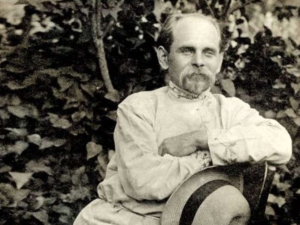
From ‘Shchedryk’ to ‘Carol of the Bells’: How One Melody Became Two Songs
The melody of the Christmas standard "Carol of the Bells" comes from the Ukrainian New Year's song "Shchedryk." It crossed to North America at a Carnegie Hall concert on October 5, 1922, and gained its English lyrics in 1936 — lyrics that are not a translation of the original. Drawing on primary sources, this article traces where one melody split into two songs.
-

Ukraine’s Christmas Moves from January 7 to December 25
Under a July 2023 law, Ukraine removed January 7 from its list of national holidays, leaving only December 25 as Christmas. That same September, two of the country's major churches also switched to a calendar that celebrates Christmas on December 25. This article separates the law, the church calendars, and family customs, and explains the twelve dishes of Christmas Eve and koliadky along the way.