
All articles
-
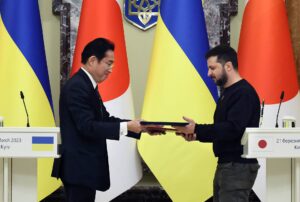
A Japan-Ukraine Timeline ── From the 1965 Sister-City Partnership to Yen Loans
From the 1965 sister-city partnership between the City of Yokohama and the City of Odesa, to the opening of diplomatic relations in 1992, to the yen loans and evacuee intake after 2022. This article puts Japan-Ukraine relations into a timeline made only of events whose date and announcing body can be identified. It also separates whether support figures are ceilings or amounts actually disbursed, and what an evacuee count is actually counting.
-
What Did Yokohama-Odesa and Kyoto-Kyiv Actually Agree To As Sister Cities?
There is no legal definition of a "sister city." What agreement documents typically state is friendship and mutual understanding. What kind of documents formed the Yokohama-Odesa and Kyoto-Kyiv partnerships, who has carried them forward, and what has continued? A 2023 memorandum between Yokohama and Odesa was a more concrete document, spelling out both a purpose and a deadline.
-

What Kind of Country Is Ukraine? — Area, Population, Language, Daily Life
A basic overview of Ukraine's area, population, languages, and daily life. The last census was in 2001, so every population figure since then is an estimate. For each number, we note the date and scope it covers, moving through geography, language, and daily life in that order.
-

Ukraine’s Wartime Industries — The Weight of Agriculture, Manufacturing, Services, and Energy
This article shows the weight of Ukraine's industries in the order of agriculture, manufacturing, services, and energy. The sector-by-sector breakdown is only available through 2024. The scope covered by the statistics has changed partway through, some indicators have stopped being published, and others have switched to estimates. Drawing on data published by the State Statistics Service of Ukraine and the National Bank of Ukraine, we attach the scope, point in time, and basis to each figure.
-

Vyshyvanka ── Embroidery That Differs by Region, Including a Pattern That Arrived in the Late 19th Century
The vyshyvanka, Ukraine's embroidered shirt, varies in technique and color from region to region. Among the patterns now displayed as "traditional" is a cross-stitch design that arrived from soap wrappers in the late 19th century. How far can the meanings often attached to these patterns actually be backed up by sources? This article also looks at how the vyshyvanka is treated in Ukraine's national heritage list and in UNESCO's list.
-
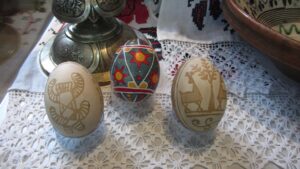
Pysanka: The Ukrainian Wax-Written Egg, and Its 2024 UNESCO Listing
In December 2024, what was added to UNESCO's Representative List was "Pysanka, Ukrainian tradition and art of decorating eggs," a joint submission by Ukraine and Estonia. How do dictionaries and museums distinguish between these eggs? What warnings do Ukrainian researchers give about decoding "this pattern means this"? And the oldest surviving clues are not eggs at all, but 12th-century pottery.
-
The Day ‘Kiev’ Became ‘Kyiv,’ and How Ukraine’s Place Names Get Their Spelling
On March 31, 2022, Japan's Ministry of Foreign Affairs changed how it referred to Ukraine's capital, from 'Kiev' to 'Kyiv.' What changed was not the city's name, but how Київ is transliterated. This article looks in turn at the Ukrainian government resolution that sets the Latin-alphabet spelling, the #KyivNotKiev campaign, place-name changes made by law, and how older spellings are treated in historical sources.
-
How Ukrainian and Russian Differ
Ukrainian and Russian both use the Cyrillic alphabet, but Ukrainian has і, ї, є, and ґ, and lacks ы, э, ъ, and ё. Differences also show up in the sound of "г," in the words for "yes" and "no," and in borrowings from Polish. Together with the history of Ukrainian being dismissed as "just a dialect" under imperial Russia, this article explains how close, and how far apart, the two languages are.
-
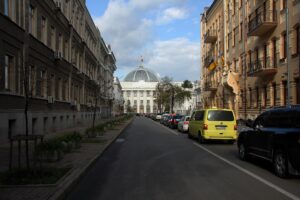
What Do Ukraine’s President, Verkhovna Rada, and Cabinet of Ministers Each Decide?
Ukraine's Constitution sets the Verkhovna Rada, the parliament, at 450 seats, and provides that the prime minister is nominated by the parliamentary majority, proposed by the president, and appointed by parliament. This article lays out the powers of the three institutions along with their article numbers, and introduces the legal basis for why no elections have been held since 2022, together with the debate over how that basis should be read.
-
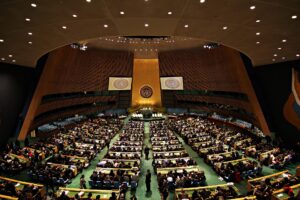
A Timeline of Ukraine’s Independence and Russia’s Aggression, 1991–2026
From the declaration of independence on August 24, 1991, to the extension of martial law that began on August 2, 2026. This timeline covers events whose dates are recorded in UN General Assembly and Security Council resolutions, the records of the International Court of Justice and the International Criminal Court, and Ukrainian presidential decrees and laws. It does not cover the course of the fighting. Legal assessments are given together with the body that made them.