
All articles
-
The Queen of France Who Signed in Cyrillic: Anna, Princess of Kyiv
Anna, daughter of Yaroslav the Wise, married King Henry I of France at Reims Cathedral in 1051, and after her husband’s death became regent for the young King Philip I. This article looks at her Cyrillic signature, her second marriage and excommunication, her undocumented final years, and how much of the story that kings swore their coronation oath on “her Gospel” actually holds up.
-

1011 or 1037? The Year Kyiv’s St. Sophia Cathedral Was Built
St. Sophia Cathedral in Kyiv was built in the time of Yaroslav the Wise and still preserves 11th-century mosaics and frescoes. But the year it was built differs by 26 years between the encyclopedia's date of 1037 and the Ukrainian government's 2011 celebration of the cathedral's 1000th anniversary. This article traces the origin of its Baroque exterior, its conversion to a museum in 1934, its inscription as a World Heritage site in danger in 2023, and the damage it suffered in 2025.
-
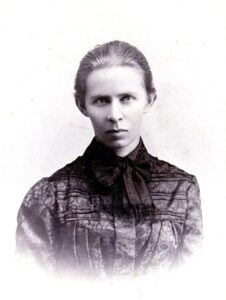
The Poet on Ukraine’s 200-Hryvnia Note: Lesya Ukrainka and Her Play Forest Song
The figure portrayed on Ukraine's 200-hryvnia banknote is the poet and playwright Lesya Ukrainka (1871–1913), born Larysa Kosach. Over thirty years of fighting illness, she left behind twenty dramatic works. Centered on Forest Song (1911), a play drawn from forest legends of the Volyn region, this article covers her work and life, the banknote's design, and Japanese translations available to read.
-

Pulled from Theaters After Nine Days: Dovzhenko’s Film Earth
Oleksandr Dovzhenko's silent film Earth, released in Kyiv on April 8, 1930, was attacked by critics in Moscow and vanished from Soviet theaters within nine days. It was shown and acclaimed in Western Europe that same summer, and in a 1958 international poll of film critics held in Brussels it was named one of the 12 greatest films in cinema history. This article covers the film itself, the events leading up to its withdrawal, and what happened to the director afterward.
-
To Use a Nursery School in Japan, Both Parents Need a Qualifying Reason — Such as Work
To enroll a child in a nursery school in Japan, you need a certification of “need for childcare” from your municipality. The recognized reasons include working, job-seeking, illness, and being in school, and both parents need one. The Children and Families Agency says eligibility is judged by whether you actually live in the municipality, not by nationality or resident registration. This article also covers the fee waiver for children ages 3 to 5 and facilities you can use even if you are not working.
-
You Can Still Attend Junior High Past 15: Japan’s 69 Night Junior High Schools
A night junior high school (yakan chugaku) is a public junior high school for people who passed 15 without completing compulsory education; MEXT counts 69 of them nationwide as of April 2026. Tuition is free, and more than 60% of students are not Japanese nationals. This article covers example enrollment conditions, what classes cover, how many people attend, and where to ask.
-
The Child Allowance: Paid From the Month After You Apply, at the Municipality Where You Are Registered
Japan’s child allowance was expanded from the October 2024 payment onward to cover children through their high-school-age years, and the income cap was removed. Nationality is not a condition; for foreign nationals, address is confirmed through the certificate of residence. The allowance is paid from the month after you apply, with a special rule for applications made within 15 days of moving in or of a birth. This article sets out the monthly amounts, the documents needed to apply, what happens when a child is not in Japan, and how things are handled when you leave the country.
-
The 5,200 Yen Monthly School Lunch Subsidy and School Enrollment Assistance: Two Kinds of Help With School Costs
From April 2026, national support for public elementary school lunch fees began, based on a standard of 5,200 yen per child per month. However, junior high schools and private schools are not covered, and some out-of-pocket cost can remain depending on the municipality. This article also covers “school enrollment assistance” (就学援助, shugaku enjo), which helps with school supplies and school trip costs, who is eligible, how families of foreign nationality are treated, and when to apply.
-
Move-In Costs Run 4 to 7 Months’ Rent: How Renting an Apartment in Japan Works
When renting a private apartment in Japan, you are usually asked to use a rent guarantee company or provide a joint guarantor, and the cost at signing is typically 4 to 7 months’ rent. Based on a guidebook from the Ministry of Land, Infrastructure, Transport and Tourism (MLIT), this article covers the documents needed for screening, the deposit and key money, emergency contacts, how to find housing that does not refuse foreign tenants, and examples of public housing offered to people who evacuated.
-
A Child’s Medical Costs: the Age Covered and What You Pay Depend on Your Municipality
Under Japan’s health insurance, the copayment for a child’s medical costs is 20% or 30%, but every municipality in the country subsidizes this. The age covered, income caps, and what you pay at the counter differ by municipality. Drawing on a Children and Families Agency survey and the examples of Yokohama and Tokyo, this article sets out how the system works and what to check before applying.