
“The World Tried to Catch Me, But Could Not”: The Philosopher Skovoroda
Hryhorii Skovoroda (1722–1794), the figure portrayed on the 500-hryvnia banknote, was a philosopher who, after being dismissed from his teaching post, spent 25 years walking from place to place and writing poems and dialogues while staying with friends. Drawing on encyclopedias, this article traces his life and works and his idea of "congenial work," and records how the museum dedicated to him was destroyed by a Russian missile in 2022, the year of his 300th birth anniversary.
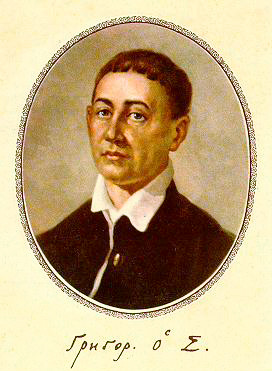


The front of Ukraine’s 500-hryvnia banknote carries the portrait of one man: the 18th-century philosopher and poet Hryhorii Skovoroda (Григорій Сковорода). The reverse shows the building of the Kyiv-Mohyla Academy, where he studied. In its description of the banknote, the National Bank of Ukraine introduces Skovoroda as “the most original folk thinker and enlightener, who walked a path no one else had taken.”
He Left the Classroom and Lived on the Road
His birth and death years agree between the Internet Encyclopedia of Ukraine (IEU), published by the Canadian Institute of Ukrainian Studies (CIUS) at the University of Alberta, and Ukraine’s national encyclopedia, the Great Ukrainian Encyclopedia (ВУЕ). He was born on December 3, 1722, into a Cossack family in Chornukhy (in present-day Poltava Oblast), in the territory of the Lubny Regiment, and died on November 9, 1794, in Pan-Ivanivka (present-day Skovorodynivka, Kharkiv Oblast). Drawing on both encyclopedias, the main points of his career are as follows.
- 1734: Enters the Kyiv-Mohyla Academy. He studies there, with interruptions, until the early 1750s.
- Early 1740s: Serves as a singer in the court choir of the Russian Empress Elizabeth, spending time in Saint Petersburg and elsewhere. The IEU gives 1741 as the year he joined; the ВУЕ gives the autumn of 1742.
- 1745–1750: Joins a Russian mission stationed at Tokaj, Hungary, and travels through parts of Central Europe.
- 1751: Teaches poetics at the college in Pereiaslav, but according to the ВУЕ, is dismissed for refusing an order to teach in the conventional way.
- 1753–1759: Works as a private tutor in the household of a landowner.
- 1759–1769: Teaches poetics, syntax, Greek, and other subjects at the college in Kharkiv, with a period in between when he left the college.
- 1769: Dismissed from the college. From then until his death, he walks around Sloboda Ukraine, centered on present-day Kharkiv Oblast, staying at the manor houses of friends and at monasteries.
According to the IEU, it was the support of friends that allowed Skovoroda, having given up a settled position, to devote himself to thought and writing. Many of his works were dedicated to friends and circulated as hand-copied manuscripts.
According to the ВУЕ, Skovoroda left instructions for his gravestone to be inscribed “The world tried to catch me, but could not.” He is buried in what is now Skovorodynivka, Kharkiv Oblast.
Poems, Fables, and Dialogues
The IEU writes that in Skovoroda’s writings, the line between literature and philosophy is not clear-cut. His main works are as follows (the English titles are this article’s own renderings; the years follow the ВУЕ).
- The poetry collection Garden of Divine Songs: contains 30 songs (1753–1785).
- The fable collection Kharkiv Fables: 30 fables.
- The dialogue Narcissus: a dialogue on knowing oneself (1769).
- Alphabet of the World (1774): the book Skovoroda is shown holding in his well-known portrait.
- Parables combining fable and dialogue, The Grateful Erodii and The Poor Lark (both 1787).
On the language he wrote in, the ВУЕ explains: in daily life Skovoroda spoke “in the Ukrainian manner,” while he wrote his works either in Latin or in a distinctive literary language that mixed Ukrainian word forms with corresponding Church Slavonic and Russian ones. This style was often criticized later, but according to the linguist Peredriienko’s calculations, 84% of the word forms in Garden of Divine Songs correspond to the new Ukrainian literary language that later developed on a dialect basis. According to the IEU, most of his letters were written in Latin, and he also left translations of Cicero, Plutarch, Horace, Ovid, and others.
“Congenial Work” and Happiness
How to read Skovoroda’s thought has divided researchers. The IEU lists interpretations ranging from a loose collection of ideas, a strict system of rationalism, Christian mysticism, and Christian Platonism rooted in the patristic tradition, to moral philosophy, and says that one reason for the dispute is that his style is more literary than philosophical and his ideas are not presented as a system. The ВУЕ states that the best-grounded reading places him within the current of Christian Neoplatonism.
According to Taras Zakydalsky, who wrote the IEU entry, for Skovoroda the purpose of philosophy was practical: to show the way to happiness. Happiness is described as an inner state made up of peace of mind, cheerfulness, and confidence, one that is within everyone’s reach.
At the center of this is the idea of “congenial work” (сродна праця): God has given each person a calling suited to them. Fulfilling that calling, regardless of reward, is happiness; pursuing work that does not suit oneself for the sake of wealth, fame, or pleasure leads to despair. Because callings are distributed so as to keep society in harmony, choosing work that does not suit oneself also brings unhappiness to others. The IEU places this idea at the center of Skovoroda’s system of morality. The National Bank’s description of the banknote likewise cites this “congenial work” as a trait of the Ukrainian character that Skovoroda embodied.
According to the IEU, his influence on 19th-century writers was small, but his poetic style, thought, and way of life played a large role in the 20th-century revival of Ukrainian culture. The poets Pavlo Tychyna, Vasyl Stus, and Ivan Drach, among others, drew inspiration from Skovoroda. According to the ВУЕ, institutions named after him include the Institute of Philosophy of the National Academy of Sciences of Ukraine and the Kharkiv National Pedagogical University.
The Museum Destroyed in the Year of His 300th Anniversary
On November 4, 2020, the Verkhovna Rada of Ukraine, in Resolution No. 973-IX, decided to hold a nationwide commemoration in December 2022 to mark the 300th anniversary of his birth. The resolution recommends that the Cabinet of Ministers, as part of the commemoration plans, repair buildings including the National Literary Memorial Museum in Skovorodynivka, and recommends that the Ministry of Foreign Affairs propose adding the 300th anniversary to UNESCO’s calendar of anniversaries for 2022–2023. According to the Permanent Mission of Ukraine to UNESCO, the 300th anniversary became one of the Ukrainian anniversaries associated with UNESCO.
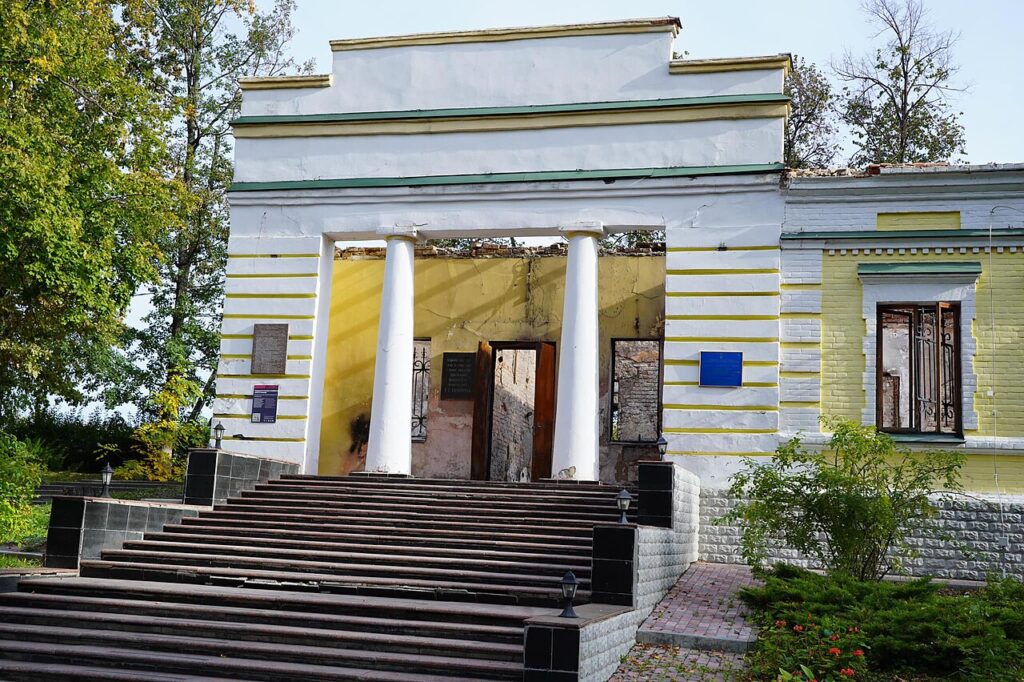
That museum was lost in the spring of the anniversary year. According to the ВУЕ, the National Literary Memorial Museum (founded in 1972), housed in the building where Skovoroda lived in his later years, was destroyed by a direct hit from a Russian missile on the night of May 6–7, 2022. In an announcement in August 2024, Ukraine’s Ministry of Culture stated that the museum was destroyed by a Russian missile on May 6, 2022, and that Skovoroda’s statue survived. According to the same announcement, the museum’s team started a project called “Museum of the Future” to let people visit the destroyed museum online.
_01.jpg)
Attacks have continued since then. On May 15, 2026, the Ministry of Culture announced that a Russian drone attack had damaged the protective shelter built to protect the building. Eight sections of the shelter’s roof were damaged, but the building itself, which is designated a national historical monument, and the structure supporting the shelter were unharmed, the ministry said. The ministry stated that it had reported this damage to UNESCO.
Where to start reading Ukrainian literature is covered in our article on where to start with Ukrainian literature, and a 19th-century poet is covered in our article on Taras Shevchenko.
Sources and article record
Sources and references
- Skovoroda, HryhoriiWritten by Taras Zakydalsky, updated 2007. Birth and death years and places, Kyiv-Mohyla Academy 1734–53, court choir 1741–44, Tokaj 1745–50, Pereiaslav 1751, tutoring 1753–59, the college in Kharkiv, friends' support and manuscripts, the structure of his works (30 songs, 30 fables, translations, Latin letters), differing interpretations, happiness and "congenial work," influence on 20th-century poets, the 2011 scholarly complete edition
Published by Internet Encyclopedia of Ukraine(Canadian Institute of Ukrainian Studies) · Checked: 2026-09-24 - Сковорода, Григорій СавичWritten by L. V. Ushkalov, published October 18, 2022. Birth and death years and places, Cossack family, admission in 1734, court choir autumn 1742–1744, the mission to Tokaj, dismissal at Pereiaslav, the college in Kharkiv and dismissal in 1769, wandering, epitaph, dates of works, lingua mixta and Peredriienko's 84%, the Neoplatonist interpretation, institutions named after him, the museum founded in 1972 and its destruction on the night leading to May 7, 2022
Published by Велика українська енциклопедія · Checked: 2026-09-24 - Банкнота номіналом 500 грнThe portrait on the obverse, the Kyiv-Mohyla Academy on the reverse, the description of Skovoroda and "сродна праця"
Published by Національний банк України · Checked: 2026-09-24 - Постанова Верховної Ради України від 04.11.2020 № 973-IX «Про відзначення 300-річчя з дня народження Григорія Сковороди»The nationwide commemoration in December 2022, repair of the museum, the proposal to add it to UNESCO's calendar of anniversaries
Published by Верховна Рада України(zakon.rada.gov.ua) · Checked: 2026-09-24 - Anniversaries of Eminent Personalities and Historic Events Celebrated in Ukraine with which UNESCO is AssociatedPublished December 1, 2021. The 300th birth anniversary in 2022
Published by Permanent Mission of Ukraine to UNESCO · Checked: 2026-09-24 - Музей Сковороди, який зруйнували росіяни, відтепер можна відвідати онлайнAugust 16, 2024. Destruction by missile on May 6, 2022, the surviving statue, "Museum of the Future"
Published by Міністерство культури України · Checked: 2026-09-24 - Російський обстріл пошкодив захисне укриття музею Григорія Сковороди на ХарківщиніMay 15, 2026. Damage to the shelter by a drone attack, 8 sections, the building unharmed, report to UNESCO
Published by Міністерство культури України · Checked: 2026-09-24
If you find an error in this article, please tell us via Corrections. Once we have checked it, we will record in the article what was corrected and why.