
Jugs, Pitchers and Clay Animals ── The Pottery of Opishnia, Poltava Oblast
Blessed with good-quality local clay, the town of Opishnia in Poltava Oblast has made pottery for centuries. This article covers what was designated as intangible cultural heritage in 2012, a family of potters, the factory that began as a cooperative in 1929 and stopped operating in 2002, and the national ceramics museum-reserve founded in 1986. As of September 2026, it is not on UNESCO's list.
Why did pottery take root in this town? The Ukrainian Centre for Cultural Studies, a state institution under the Ministry of Culture, states in its commentary on the national list of intangible cultural heritage that the main reason was “the large quantity of good-quality local clay.” The pottery of the town of Opishnia (Опішня), Poltava Oblast, was designated intangible cultural heritage in 2012 and remains the third entry on the national list.
As of September 2026 it is not on UNESCO’s list. The Ukrainian pottery inscribed by UNESCO is “Kosiv painted ceramics,” from 2019 (see the article on Kosiv painted ceramics). Opishnia’s pottery has been sustained by the national inventory and by the National Museum-Reserve of Ukrainian Pottery in the town.
A Town on the Vorskla River
According to the Internet Encyclopedia of Ukraine (IEU, published by the Canadian Institute of Ukrainian Studies (CIUS) at the University of Alberta; updated 2013), Opishnia is a town on the Vorskla River, with a population of 6,003 in 2011. Its history goes back to the 17th century, and in the era of the Hetmanate (the Cossack state) it was a company town belonging at various times to the Hadiach, Poltava and Zinkiv regiments. IEU states that it has been known for handicrafts, especially weaving and pottery, since the 18th century. Nearby are the remains of an 8th–9th-century fortified settlement (IEU).
Following the 2020 reorganization of districts, Opishnia now belongs to Poltava district (see the article on oblasts, raions and hromadas). The national inventory still gives the pre-reorganization entry, “Opishne in Zinkiv district.” Opishne (Опішне) is an alternate form of the same town’s name, and the Ministry of Culture’s 2012 order likewise refers to the ceramics museum as being “of Opishne.”
From Pipes to Jugs, from Jugs to Clay Animals
The Ukrainian Centre for Cultural Studies’ commentary describes what has been made in Opishnia over time, as follows.
| Era | Mainly produced (as described in the commentary) |
|---|---|
| 15th–16th centuries | Tobacco pipes, candlesticks, censers, jugs and the like |
| 17th century | Glazed earthenware becomes dominant |
| Late 19th century | Pipes, candlesticks and censers are replaced by metal and bone items; ceramic animal figures become purely decorative |
| Early 20th century | Patterned jugs, bowls, plates and pitchers for everyday use |
The same commentary states that Opishnia is characterized by pitchers, bowls and barrel-shaped vessels of various forms, vessels called “makitra,” “bakhlai” and “kumanets,” as well as vessels shaped like people or animals and figures depicting animals or scenes of daily life.
IEU’s entry “Ceramics” explains it from a somewhat different angle: glaze was not much used in Opishnia, but the vessels were of very high quality and decorated with geometric patterns. From the late 19th century, a technique called “fliandrivka,” painting the unfired clay, gave way to a variant that produced a more restrained, tasteful finish. And today, it states, Opishnia is a centre for ceramic toys and small figurines.
On glazing, the Cultural Studies Centre’s commentary states that “glazed earthenware became dominant in the 17th century,” while IEU states that “glaze was not much used.” IEU’s entry is a broad survey of the history of ceramics, and the difference may reflect how each source divided up periods or types of vessel, but this article cannot judge which is correct.
A Family of Potters: The Poshyvailo Family
Opishnia’s pottery has been passed down within families. IEU devotes a separate entry to one family of potters, the Poshyvailos.
- Taras (late 19th–early 20th century): the first known potter of the family. He made glazed jugs, bowls, cups and pots
- Kylyna (d. 1930): Taras’s wife. Known for ceramic toys
- Nykyfor (late 1880s – October 1936): their son. Specialized in glazed tableware
- Havrylo (b. 7 April 1909): Nykyfor’s son. Made everyday vessels and small decorative pieces; his wife Yevdokiia (b. 14 March 1910) painted flowers and animals on them
- Mykola (b. 27 May 1930): Havrylo’s son. Besides plates and toys, he made figure groups such as The Farmer and Natalka and Petro (both 1974)
According to IEU (the entry in volume 4, published 1993), the family’s works have been exhibited in France, Belgium and Bulgaria, and are held in museums in Kyiv, Poltava and Vilnius. IEU’s entry “Ceramics” also names Oleksandra Seliuchenko and M. Zhdenko, among others, as contemporary makers in Opishnia.
From Cooperative to Factory, 1929 to 2002
No account of 20th-century Opishnia pottery is complete without the town’s factory. According to the entry “Opishnia Factory ‘Khudozhnii Keramik’” in the Encyclopedia of Modern Ukraine (ESU; volume 24, 2022), it began in 1929 as a production cooperative formed by potters, was renamed the cooperative “Khudozhnii Keramik” (Art Ceramics, with around 40 potters) in 1932, and became a factory in 1961. It made everyday and decorative vessels, folk toys and bricks.
According to ESU, the factory continued operating under German occupation, and the occupying forces destroyed the factory buildings as they withdrew. It was rebuilt after the war, employing 320 people by the mid-1960s and 360 in 1972. The factory’s art ceramics were shown at international exhibitions including Paris in 1937 (winning a second-class diploma), Brussels in 1958, Montreal in 1967 and Osaka in 1970, and in the 1970s were exported to 28 countries including Japan. An art laboratory was set up in 1970, employing 14 people.
At the same time, ESU also notes that when the factory reached its designed production capacity in 1986, speeding up work and standardizing products led to “levelling out the local tradition.” The factory stopped operating in the spring of 2002. The Cultural Studies Centre’s commentary credits this factory with having been, from the 1950s to the 1990s, the central force preserving Ukraine’s pottery tradition.
Third on the National Inventory of Intangible Cultural Heritage
By Order No. 1521 of 14 December 2012, the Ministry of Culture designated elements of national intangible cultural heritage. This order instructs the National Museum-Reserve of Ukrainian Pottery in Opishnia and other institutions to gather information on the designated elements within one month and complete registration record forms.
In the “National Inventory of Ukraine’s Intangible Cultural Heritage” published by the Ministry of Culture (approved by Order No. 105 of 12 February 2018; version published January 2026), “Opishnia pottery” is number 3, protection number 003н.к.с. It appears not in the list of elements requiring urgent safeguarding, but in the general “inventory of intangible cultural heritage” section. Its domains are “customs, rituals and festive events,” “knowledge and practices concerning nature and the universe,” and “traditional craftsmanship,” with two orders cited as the basis: Order No. 1521 of 2012 and Order No. 105 of 2018.
The National Ceramics Museum-Reserve
Opishnia has a national museum-reserve devoted to pottery. According to the new version of its charter published by the Ministry of Culture in January 2026, it began in 1986. The “Opishnia Ceramics Museum” was created by an instruction of the Council of Ministers of the Ukrainian SSR dated 11 March 1986 and a decision of the Poltava Oblast executive committee dated 12 August of the same year; it became the “State Museum-Reserve of Ukrainian Pottery” (Державний) by a decision of the Council of Ministers dated 3 November 1989. Presidential Decree No. 220/2001 of 29 March 2001 granted it “National” status, giving it its current name, the “National Museum-Reserve of Ukrainian Pottery” (Національний).
The charter defines the institution as a state-funded research, cultural and educational body, positioning it as “an all-Ukrainian centre for researching, preserving and promoting the heritage of Ukrainian pottery.” It falls under the Ministry of Culture. Among the units listed in the charter are an institute of ceramology, memorial departments set up in the former houses of the potter Seliuchenko, the Poshyvailo family, the potter Mykola Poshyvailo and the potter Vasyl Omelianenko, and a museum devoted to the Krychevsky family of painters. According to IEU, the Krychevsky family memorial is housed in a building designed by the painter and architect Vasyl Krychevsky, and opened in 2013.
One of the people who first proposed founding the museum was the ceramics researcher Leonid Smorzh (1927–2009). Resolution No. 4748-IX of the Verkhovna Rada, dated 18 December 2025, lists 7 November 2027 as a nationally commemorated date marking the centenary of Smorzh’s birth, and describes him as “one of the founders of the National Museum-Reserve of Ukrainian Pottery in Opishnia.” The units listed in the charter also include a memorial department in Smorzh’s former house.
Sources and article record
Sources and references
- 003 н.к.с. Опішнянська керамікаthe national inventory's domains and location, the abundance of clay, items from the 15th–16th, 17th, late 19th and early 20th centuries, types of vessels and figures, the factory's role in the 1950s–1990s
Published by Український центр культурних досліджень (Ministry of Culture of Ukraine) · Checked: 2026-09-24 - Національний перелік елементів нематеріальної культурної спадщини Україниapproved by Order No. 105 of 12 February 2018; No. 3 “Опішнянська кераміка,” 003н.к.с., the general inventory, the three domains, the underlying orders — No. 1521 of 2012 and No. 105 of 2018; the version published January 2026 and the version as of 16 July 2025
Published by Міністерство культури України · Checked: 2026-09-24 - Наказ Міністерства культури України від 14.12.2012 № 1521approving the format of the registration form and designating elements of intangible cultural heritage; instructing the National Museum-Reserve of Ukrainian Pottery in Opishnia and others to gather information
Published by Верховна Рада України (zakon.rada.gov.ua) · Checked: 2026-09-24 - Elements on the Lists of Intangible Cultural Heritage: Ukrainethat Opishnia pottery is not among Ukraine's seven listed elements
Published by UNESCO Intangible Cultural Heritage · Checked: 2026-09-24 - Opishniathe Vorskla River, a population of 6,003 in 2011, its history from the 17th century, the regiments, handicrafts from the 18th century, the factory's toys, the museum; updated 2013
Published by Internet Encyclopedia of Ukraine (CIUS) · Checked: 2026-09-24 - Opishnia fortified settlementthe 8th–9th-century fortified settlement
Published by Internet Encyclopedia of Ukraine (CIUS) · Checked: 2026-09-24 - CeramicsOpishnia: glaze not much used, geometric patterns, fliandrivka from the late 19th century, toys and small figurines, the names of makers
Published by Internet Encyclopedia of Ukraine (CIUS) · Checked: 2026-09-24 - Poshyvailothe birth years and works of each member of the family of potters, exhibitions and museum holdings; the entry in volume 4, published 1993
Published by Internet Encyclopedia of Ukraine (CIUS) · Checked: 2026-09-24 - Krychevsky, Vasyl H.the memorial opened in Opishnia in 2013
Published by Internet Encyclopedia of Ukraine (CIUS) · Checked: 2026-09-24 - Опішнянський завод «Художній керамік»V. M. Khanko; the 1929 cooperative, the 1932 renaming, becoming a factory in 1961, operation and destruction under occupation, employee numbers, international exhibitions and exports, the 1970 laboratory, the 1986 standardization, the closure in spring 2002; volume 24, 2022
Published by Енциклопедія Сучасної України · Checked: 2026-09-24 - Опішняthe town in Poltava district
Published by Велика українська енциклопедія · Checked: 2026-09-24 - Статут Національного музею-заповідника українського гончарстваthe new version; the 11 March 1986 instruction and the 12 August decision, Decision No. 272 of 3 November 1989, the 2001 presidential decree, its purpose, oversight, location and list of departments; published by the Ministry of Culture on 29 January 2026
Published by Міністерство культури України · Checked: 2026-09-24 - Указ Президента України № 220/2001 «Про надання Державному музею-заповіднику українського гончарства статусу національного»29 March 2001
Published by Верховна Рада України (zakon.rada.gov.ua) · Checked: 2026-09-24 - Постанова Верховної Ради України № 4748-IX «Про відзначення пам'ятних дат і ювілеїв у 2026-2027 роках»18 December 2025; the centenary of Leonid Smorzh's birth on 7 November 2027 and the accompanying description
Published by Верховна Рада України (zakon.rada.gov.ua) · Checked: 2026-09-24
If you find an error in this article, please tell us via Corrections. Once we have checked it, we will record in the article what was corrected and why.
Related articles
-
Ukraine’s Language Situation | Differences from Russian, and How to Translate into Ukrainian
In Ukraine, both Ukrainian and Russian are used, reflecting the country’s historical background. When visiting Ukraine for business or communicating with Ukrainians, knowing even a little Ukrainian can make it easier to build a good relationship. This article explains Ukraine’s language situation, its differences from Russian, and how to translate from Japanese into Ukrainian. It also introduces some Ukrainian greetings, so please use them when communicating. The History of Ukraine’s Language Before independence, the Supreme Council (Verkhovna Rada) of the Ukrainian Soviet Socialist Republic adopted a language law in October…
Published in
-
How Much Will the State Pay for One Film? Ukraine’s Film Support Law and Its Open Calls
Ukraine's film support was established by a 2017 law and substantially rewritten by an amendment in June 2026. The state can cover up to 70% of production costs for a commercially oriented film, up to 80% for a children's or festival-oriented film, and up to 100% for an educational film or a debut work. This article traces, from the statutory text, where the money comes from, how open calls are decided, the rebate for foreign shoots, and the provisions that shut out Russian films.
-
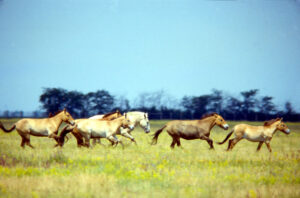
In Ukraine’s Protected Areas: Steppe That Was Never Plowed, and 28 Lakes
In southern Ukraine, steppe that has never been plowed survives; at the western edge, in the Carpathians, old-growth beech forest remains; and in the northwest, in Polissia, lakes and peat wetlands endure. The nature reserves at the heart of these areas were established not as tourist sites but as places of research. Drawing on the records of biosphere reserves and Ramsar wetland sites, this article traces what is being protected, and what is studied there.