
From the End of Cossack Self-Rule to the Ban on Ukrainian-Language Publishing
This article traces the period from the Khmelnytsky Uprising of 1648, through the 1654 Pereiaslav Agreement (whose original document does not survive), the abolition of the office of hetman in 1764 and the destruction of the Sich in 1775, to the bans on Ukrainian-language publishing in 1863 and 1876, up to the eve of the First World War. The harm the Jewish community suffered during the uprising is presented through the divergence between different estimates, rather than a single figure.


This is the second of four articles tracing the history of the land that is now Ukraine. It covers the period from the emergence of Cossack groups in the late 15th century, through the dismantling of Hetmanate self-rule and the growth of separate national movements in the land divided between the Russian and Habsburg empires, up to the eve of the First World War.
Who Were the Cossacks?
The Internet Encyclopedia of Ukraine (published by the Canadian Institute of Ukrainian Studies, CIUS, at the University of Alberta) writes that peasants and townspeople who fled to the sparsely populated steppe called themselves “free people” — Cossacks. The Encyclopaedia Britannica describes them as “a semimilitary community that developed from runaway serfs, brigands, and merchants.”
It was among the organizers and leaders that people of noble origin were found. Bohdan Khmelnytsky himself came from the petty nobility.
The Zaporozhian Sich had a mechanism of collective deliberation. The same encyclopedia’s entry “Sich Council” records that the council elected the officer corps (the starshyna) and its head, the kish otaman, and that decisions were made by majority vote. The hetman was elected at a general military council. This, however, was the practice of a military community within a society organized by estate, and should not be read as equivalent to modern democracy.
1648 — The Uprising, and What Happened Within It
The same encyclopedia (entry title “Cossack-Polish War”) writes that on 21 January 1648, Khmelnytsky, leading a small detachment of registered Cossacks, was elected hetman. Britannica gives his leadership as running from 1648 to 1657 and states that he marched against the Polish side in April 1648. Behind this lay the expansion of forced-labor obligations, the suppression of the Orthodox Church, and a policy of Catholicization.
This uprising was accompanied by large-scale violence against Jewish communities. This is the part where the numbers are hardest to handle. The entry “Ukraine” in the YIVO Encyclopedia of Jews in Eastern Europe (written by Henry Abramson) states that massacres occurred across the right bank of the Dnipro, bringing death to as much as half of the Jewish population. The same encyclopedia’s entry “Gzeyres Takh Vetat” (written by Shaul Stampfer) estimates that the Jewish population in the affected region was about 40,000, that the number of dead was fewer than half of that — fewer than 20,000 — and probably far fewer than half. The same entry also states that recent research shows the account of Nathan Note Hannover, long used as a contemporary record, was often inaccurate, and that its casualty estimates were greatly exaggerated.
This article does not give the number of victims as a single figure. The two estimates above come from separate authors within the same YIVO Encyclopedia. Told only as a story of state formation, this harm would disappear from the account.
Pereiaslav 1654 — An Agreement With No Surviving Original
The Internet Encyclopedia of Ukraine writes of this agreement that “the original document has not been preserved, but translations and drafts of the tsar’s charter survive.” There is no complete document one can read to see what was agreed.
Understanding of it also diverges. The same encyclopedia records that the Ukrainian side’s government regarded it as a temporary political and military alliance, while the Muscovite state used it as grounds to deepen its own interference. Among historians as well, multiple interpretations sit side by side — vassalage, protectorate, personal union.
Soviet historiography portrayed this, the same encyclopedia writes, as “the culmination of a desire on the part of two brotherly peoples to be united in a single Russian state.”
Partition, and the “Era of Ruin”
Under the Treaty of Andrusovo, signed between Poland and the Muscovite state on 13 January 1667, the left bank of the Dnipro remained under Muscovite control while the right bank passed to Poland. The same encyclopedia calls this “Ukraine’s first partition.” The turmoil before and after this is called the Ruin (Руїна), though historians divide the period differently: one view places it from 1663 to 1687, another from 1657 to 1687. Both the dates and the period divisions given here come from the Internet Encyclopedia of Ukraine.
The Dismantling of Self-Rule — 1708 to 1783
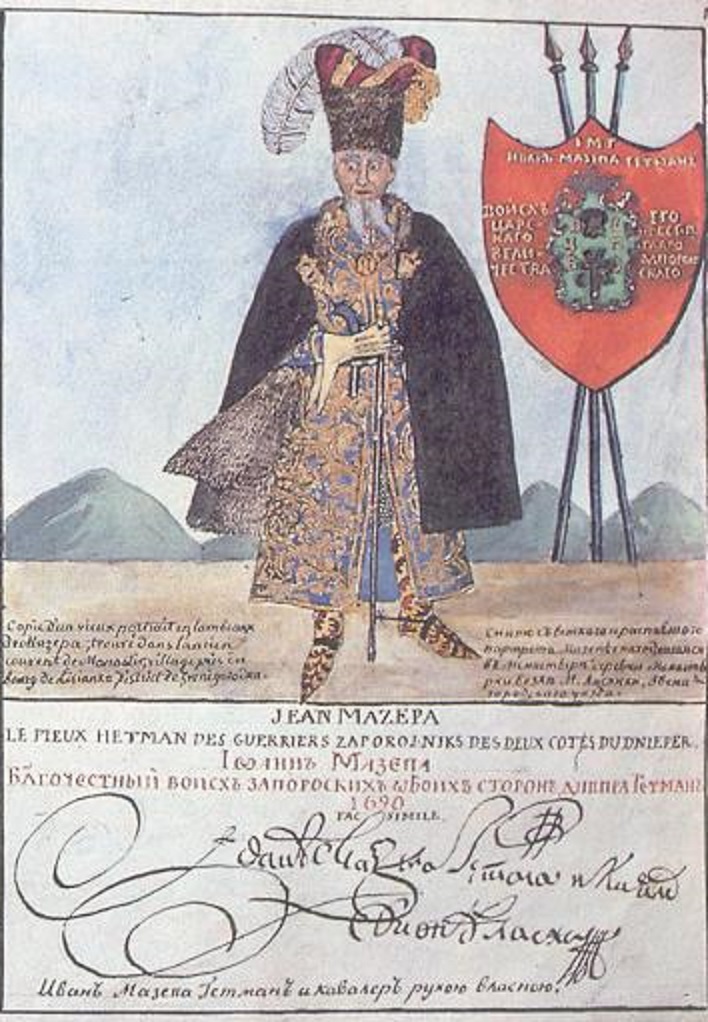
In 1708, Hetman Ivan Mazepa formed an anti-Muscovite alliance with King Charles XII of Sweden, and was defeated at the Battle of Poltava on 8 July 1709.
The office of hetman was then abolished in 1764, the Zaporozhian Sich was destroyed by Russian forces on 15–16 June 1775, and the Russian Empire annexed the Crimean Khanate in 1783.
The Russian Empire called the annexed southern territory “Novorossiya” (New Russia). The same encyclopedia explains this as an administrative designation, used from 1764 onward, for the southern Ukrainian territory the Russian Empire acquired from the Zaporozhian Cossacks, the Hetmanate, the Crimean Khanate, and the Ottoman Empire. It is the name of an imperial administrative division, not a statement that no one lived there before.
In the same period, Poland was partitioned three times, in 1772, 1793, and 1795. The Internet Encyclopedia of Ukraine’s entry “Poland” writes that in these partitions Russia gained all of Poland’s Ukrainian territory except Galicia and Bukovyna, which were annexed by the Austrian Empire. But according to the same encyclopedia’s entry “Bukovyna,” Bukovyna belonged to Moldavia until 1774 and was land Austria annexed by taking advantage of the Russo-Turkish War of 1768–74. Galicia became Austrian territory in the First Partition of 1772, and that rule continued until 1918. Podilia was split, with its western part passing to Austria in 1772 and its eastern part to Russia in the Second Partition of 1793.
The 19th Century — Serfdom, Ports, and Coal
Serfdom was abolished in 1861 in the Russian Empire, and in 1848 in the Habsburg lands of Galicia, Bukovyna, and Zakarpattia. Sources give two different dates for 1848 — 16 April and 22 April — so this article does not give a specific date.
Odesa became the largest wheat-exporting port on the Black Sea, and the Internet Encyclopedia of Ukraine records that by 1874 it had become the largest in all of Europe. In the heavy industrialization of the Donbas, John Hughes, a Welshman, built an ironworks on the site of what is now Donetsk. Both the same encyclopedia and Britannica give this as 1872.
On the spread of literacy, the same encyclopedia’s entry “Literacy” (written by Volodymyr Kubijovyč, 1993) cites figures from the 1897 Russian Empire census. Of the population aged nine and over in the Ukrainian gubernias, 26 percent were literate; among ethnic Ukrainians the figure was 23.6 percent (38.6 percent for men, 12.4 percent for women). The same entry also states that, through the expansion of schooling, this reached about 42 percent of the total population by 1914 — but this figure uses “total population” as its denominator, a different basis from the 1897 figure.
What, Concretely, Did the Empire Do to the Language?
The 1863 Valuev Circular, according to both the Internet Encyclopedia of Ukraine and Britannica, banned nearly all publication in Ukrainian except for belles lettres.
The 1876 Ems Ukase, according to the same encyclopedia, banned the printing and import from abroad of Ukrainian-language publications, the staging of Ukrainian-language theater and public readings, and the printing of Ukrainian song lyrics. Britannica states that it extended to education as well.
Taras Shevchenko was born on 9 March 1814 and died on 10 March 1861 (New Style). Britannica records that he was born a serf and became free in 1838. According to the Internet Encyclopedia of Ukraine, his first collection of poems, Kobzar (containing eight poems), was published in St. Petersburg in 1840. Earlier still, in 1798, the first three parts of Ivan Kotliarevsky’s Eneida — a burlesque rendering of Virgil’s Aeneid — were published, also in St. Petersburg.
What Was Different in the Habsburg Lands
In Galicia, the revolution of 1848 and the abolition of serfdom opened room for parliamentary politics, associations, and publishing. But the shift in self-identification from “Rusyn” to “Ukrainian” was not smooth. The Internet Encyclopedia of Ukraine’s entry “Galicia” records that it appeared as a factional conflict between the conservative “Old Ruthenians” and the pro-Ukrainian populists (narodovtsi).
Cultural and academic societies were also born in this period. Prosvita was founded in Lviv on 8 December 1868, and the Shevchenko Scientific Society was founded on 11 December 1873, reorganized into a scholarly society in 1893.
Jewish Society
The origins of Hasidism, according to the YIVO Encyclopedia’s entry “Hasidism,” are linked to Israel ben Eliezer (1698/1700–1760, the Baal Shem Tov) and to the southeastern part of the Polish-Lithuanian Commonwealth, particularly the Podilia region. Even his birth year is not settled, given as either 1698 or 1700.
On the pogroms of the late imperial period, the same encyclopedia’s entry “Pogroms” (written by John Klier) gives the main sites as Yelizavetgrad, Kyiv, and Balta in 1881–82, and Odesa and Kyiv in 1905. The entry itself states that the total death toll is disputed. This article gives no figure.
The First World War
According to the Internet Encyclopedia of Ukraine’s entry “First World War” (written by John-Paul Himka), in Galicia a Ukrainian volunteer unit, the Ukrainian Sich Riflemen, was formed within the Austro-Hungarian army, while Ukrainian organizations in the Russian Empire’s territory declared their loyalty to the empire.
The continuation — from the 1917 revolution to the Second World War — is covered in the next article.
Sources and article record
Sources and references
- Internet Encyclopedia of Ukraine, "Cossacks"confirms that peasants and townspeople who fled to the steppe called themselves "free people," and confirms the expansion of forced-labor obligations and the policy of Catholicization
Published by Canadian Institute of Ukrainian Studies, University of Alberta · Checked: 2026-09-23 - Internet Encyclopedia of Ukraine, "Sich Council"confirms the election of the officer corps and the kish otaman, and that decisions were made by majority vote
Published by Canadian Institute of Ukrainian Studies, University of Alberta · Checked: 2026-09-23 - Internet Encyclopedia of Ukraine, "Hetman"confirms that the hetman was elected at a general military council
Published by Canadian Institute of Ukrainian Studies, University of Alberta · Checked: 2026-09-23 - Internet Encyclopedia of Ukraine, "Cossack-Polish War"confirms 21 January 1648, the small detachment of registered Cossacks, and his election as hetman; the entry "Khmelnytsky Uprising" redirects to this entry
Published by Canadian Institute of Ukrainian Studies, University of Alberta · Checked: 2026-09-23 - Encyclopaedia Britannica, "Bohdan Khmelnytsky"confirms the description as a semimilitary community that developed from runaway serfs, brigands, and merchants; the April 1648 march; and the leadership period 1648-57
Published by Encyclopaedia Britannica, Inc. · Checked: 2026-09-23 - YIVO Encyclopedia of Jews in Eastern Europe, "Ukraine"written by Henry Abramson; confirms massacres on the right bank of the Dnipro, and the estimate of death for as much as half of the Jewish population
Published by YIVO Institute for Jewish Research · Checked: 2026-09-23 - YIVO Encyclopedia of Jews in Eastern Europe, "Gzeyres Takh Vetat"written by Shaul Stampfer; confirms an estimated Jewish population of about 40,000 in the affected region, deaths of fewer than 20,000, and that recent research regards Hannover's account as inaccurate and its estimates as greatly exaggerated
Published by YIVO Institute for Jewish Research · Checked: 2026-09-23 - Internet Encyclopedia of Ukraine, "Pereiaslav Treaty of 1654"confirms that the original was not preserved, that only translations and drafts survive, the divergence between the Ukrainian and Muscovite understandings, and the Soviet historiographical framing of "unification of brotherly peoples"
Published by Canadian Institute of Ukrainian Studies, University of Alberta · Checked: 2026-09-23 - Internet Encyclopedia of Ukraine, "Andrusovo, Treaty of"confirms the signing on 13 January 1667, the left bank to Muscovy and the right bank to Poland, and the description as "Ukraine's first partition"
Published by Canadian Institute of Ukrainian Studies, University of Alberta · Checked: 2026-09-23 - Internet Encyclopedia of Ukraine, "Ruin"confirms the dismantling of statehood, the division along the Dnipro River, and the coexistence of Kostomarov's periodization of 1663-87 and Krupnytsky's periodization of 1657-87
Published by Canadian Institute of Ukrainian Studies, University of Alberta · Checked: 2026-09-23 - Internet Encyclopedia of Ukraine, "Mazepa, Ivan"confirms the 1708 anti-Muscovite alliance and the Battle of Poltava on 8 July 1709
Published by Canadian Institute of Ukrainian Studies, University of Alberta · Checked: 2026-09-23 - Encyclopaedia Britannica, "Ukraine: The autonomous hetman state and Sloboda Ukraine"confirms the alliance between Mazepa and Charles XII, the defeat at the Battle of Poltava in 1709, and the abolition of the office of hetman in 1764
Published by Encyclopaedia Britannica, Inc. · Checked: 2026-09-23 - Internet Encyclopedia of Ukraine, "Hetman state"confirms the abolition of the office of hetman in 1764
Published by Canadian Institute of Ukrainian Studies, University of Alberta · Checked: 2026-09-23 - Internet Encyclopedia of Ukraine, "Zaporozhian Sich"confirms the destruction by Russian forces on 15-16 June 1775
Published by Canadian Institute of Ukrainian Studies, University of Alberta · Checked: 2026-09-23 - Internet Encyclopedia of Ukraine, "Crimean Khanate"confirms the annexation by the Russian Empire in 1783
Published by Canadian Institute of Ukrainian Studies, University of Alberta · Checked: 2026-09-23 - Internet Encyclopedia of Ukraine, "New Russia gubernia"confirms that this was an administrative designation used from 1764 onward, for territory acquired from the Zaporozhian Cossacks, the Hetmanate, the Crimean Khanate, and the Ottoman Empire
Published by Canadian Institute of Ukrainian Studies, University of Alberta · Checked: 2026-09-23 - Internet Encyclopedia of Ukraine, "Serfdom"confirms the abolition of serfdom in 1861 in the Russian Empire and in 1848 in the Habsburg lands; the month and day for 1848 are, however, given differently within the same encyclopedia
Published by Canadian Institute of Ukrainian Studies, University of Alberta · Checked: 2026-09-23 - Internet Encyclopedia of Ukraine, "Odesa"confirms the description as the largest wheat-exporting port on the Black Sea, and that it became the largest in Europe by 1874
Published by Canadian Institute of Ukrainian Studies, University of Alberta · Checked: 2026-09-23 - Internet Encyclopedia of Ukraine, "Donets Basin"confirms the account giving 1872 for John Hughes's ironworks
Published by Canadian Institute of Ukrainian Studies, University of Alberta · Checked: 2026-09-23 - Encyclopaedia Britannica, "Donetsk"confirms the account giving 1872 for John Hughes's ironworks
Published by Encyclopaedia Britannica, Inc. · Checked: 2026-09-23 - Internet Encyclopedia of Ukraine, "Shevchenko, Taras"confirms the birth and death dates of 9 March 1814-10 March 1861, that he was born a serf, his criticism of serfdom and imperial rule, and the 1840 St. Petersburg publication of Kobzar, eight poems; revised 2004
Published by Canadian Institute of Ukrainian Studies, University of Alberta · Checked: 2026-09-23 - Encyclopaedia Britannica, "Taras Hryhorovych Shevchenko"confirms the birth and death dates, and that he was born a serf and freed in 1838
Published by Encyclopaedia Britannica, Inc. · Checked: 2026-09-23 - Internet Encyclopedia of Ukraine, "Valuev, Petr"confirms that the 1863 circular banned Ukrainian-language publication except for literary works; there is no separate entry "Valuev Circular" — this is within the biographical entry
Published by Canadian Institute of Ukrainian Studies, University of Alberta · Checked: 2026-09-23 - Internet Encyclopedia of Ukraine, "Ems Ukase"confirms the 1876 bans on printing, import, theatrical performance, public readings, and the printing of song lyrics
Published by Canadian Institute of Ukrainian Studies, University of Alberta · Checked: 2026-09-23 - Encyclopaedia Britannica, "Ukraine: Ukraine under direct imperial Russian rule"confirms that the Valuev Circular banned publication except for literary works, and that the Ems Ukase extended to education
Published by Encyclopaedia Britannica, Inc. · Checked: 2026-09-23 - Internet Encyclopedia of Ukraine, "Galicia"confirms the 1848 abolition of serfdom, and the factional conflict between the Old Ruthenians and the populists/narodovtsi
Published by Canadian Institute of Ukrainian Studies, University of Alberta · Checked: 2026-09-23 - Internet Encyclopedia of Ukraine, "Prosvita"confirms the founding in Lviv on 8 December 1868
Published by Canadian Institute of Ukrainian Studies, University of Alberta · Checked: 2026-09-23 - Internet Encyclopedia of Ukraine, "Shevchenko Scientific Society"confirms the founding on 11 December 1873 and reorganization into a scholarly society in 1893
Published by Canadian Institute of Ukrainian Studies, University of Alberta · Checked: 2026-09-23 - YIVO Encyclopedia of Jews in Eastern Europe, "Hasidism," section "Historical Overview"written by David Assaf; confirms Israel ben Eliezer, 1698/1700-1760, and the southeastern Polish-Lithuanian Commonwealth, particularly Podilia
Published by YIVO Institute for Jewish Research · Checked: 2026-09-23 - YIVO Encyclopedia of Jews in Eastern Europe, "Pogroms"written by John Klier; confirms Yelizavetgrad, Kyiv, and Balta in 1881-82, Odesa and Kyiv in 1905, and that the total death toll is disputed
Published by YIVO Institute for Jewish Research · Checked: 2026-09-23 - Internet Encyclopedia of Ukraine, "First World War"written by John-Paul Himka; confirms the formation of the Ukrainian Sich Riflemen and the declaration of loyalty by Ukrainian organizations in the Russian Empire's territory
Published by Canadian Institute of Ukrainian Studies, University of Alberta · Checked: 2026-09-23 - Internet Encyclopedia of Ukraine, "Poland"written by O. Ohloblyn, I. Lysiak Rudnytsky, M. Zhdan; first published vol. 4, 1993; confirms that the 1772, 1793, and 1795 partitions gave Russia all of Poland's Ukrainian territory except Galicia and Bukovyna
Published by Canadian Institute of Ukrainian Studies, University of Alberta · Checked: 2026-09-23 - Internet Encyclopedia of Ukraine, "Galicia"revised 2014; confirms that it became Austrian territory in the First Partition of 1772 and that this continued until 1918
Published by Canadian Institute of Ukrainian Studies, University of Alberta · Checked: 2026-09-23 - Internet Encyclopedia of Ukraine, "Podilia"first published vol. 4, 1993, partly revised 2020; confirms that its western part passed to Austria in 1772 and its eastern part to Russia in 1793
Published by Canadian Institute of Ukrainian Studies, University of Alberta · Checked: 2026-09-23 - Internet Encyclopedia of Ukraine, "Bukovyna"written by Arkadii Zhukovsky; first published vol. 1, 1984; confirms that it belonged to Moldavia until 1774, and that Austria annexed it by taking advantage of the Russo-Turkish War of 1768-74
Published by Canadian Institute of Ukrainian Studies, University of Alberta · Checked: 2026-09-23 - Internet Encyclopedia of Ukraine, "Literacy"written by Volodymyr Kubijovyč; first published vol. 3, 1993; confirms the 1897 census figures: 26% literacy among the population aged 9 and over in the Ukrainian gubernias, 23.6% among ethnic Ukrainians (38.6% men, 12.4% women), and about 42% of the total population by 1914
Published by Canadian Institute of Ukrainian Studies, University of Alberta · Checked: 2026-09-23 - Internet Encyclopedia of Ukraine, "Kotliarevsky, Ivan"written by Pavlo Petrenko; first published vol. 2, 1988; confirms the 1798 St. Petersburg publication of the first three parts of Eneida
Published by Canadian Institute of Ukrainian Studies, University of Alberta · Checked: 2026-09-23
If you find an error in this article, please tell us via Corrections. Once we have checked it, we will record in the article what was corrected and why.
More in this series
-
From Kyivan Rus’ to the 16th Century — Galicia-Volhynia and Two Unions
This article traces the history of the land that is now Ukraine before the Cossacks emerged as a political force: from the Trypillia culture of around 5000 BCE, through the Greek colonies on the Black Sea coast, Kyivan Rus', and the Grand Duchy of Lithuania, to the Union of Lublin in 1569 and the Union of Brest in 1596. The view of Kyivan Rus' as the state of a single "Old Rus' nationality" is the official framework put forward by a panel of historians commissioned by the Soviet Communist Party in the 1930s. Ukrainian historiography since Hrushevsky has regarded the Principality of Galicia-Volhynia as the successor to the Kyivan state.
-
From the Transfer of Crimea to Giving Up Nuclear Weapons: Half a Century of Postwar Ukraine
This article traces the period from the 1946 famine through the 1954 transfer of Crimea, the 1986 Chornobyl nuclear disaster, the 1991 independence and referendum, the 1994 Budapest Memorandum, and the inflation and currency reform of the 1990s. On the 1954 transfer of Crimea, it presents the two officially stated reasons separately from the motives researchers have inferred. In the referendum of December 1, 1991, a majority of those who voted favored independence in all 27 administrative units.
Related articles
-
The Movable-Frame Hive of 1814 ── The Beekeeper Petro Prokopovych
Ukrainian encyclopedias name Petro Prokopovych as the man who built a movable-frame hive in 1814 that let beekeepers take honey without killing the bees. This article covers the shift from hollow-log hives to frame hives, the beekeeping school he opened in 1828, how to read the claim that he was “the first in the world,” the conflicting hive counts given in different encyclopedias, and today's honey production as recorded by FAOSTAT.
-
Wheat Harvest and Area Both Down 30%: Ukraine’s Three Big Crops, by the Numbers
According to statistics from the UN Food and Agriculture Organization (FAO), Ukraine's wheat production fell from 32.18 million tonnes in 2021 to 22.44 million tonnes in 2024, and the harvested area shrank by almost the same proportion. This article lays out production, area and yield for 2021-2024 for wheat, maize and sunflower seed together, and explains how the statistical coverage changed starting in 2022.
-
A 12-Year-Old Can Still Ride at the Child Fare: How Trains and Buses Work in Japan
Fares on Japan's trains and buses are split by age into adult, child, toddler, and infant, and the child fare is, in principle, half the adult fare. Transit IC cards require a ¥500 deposit, and a named card asks for your name and date of birth. This article also covers the 2023 suspension and 2025 resumption of anonymous IC card sales, and the difference between front-door and back-door boarding on buses.