
From Kyivan Rus’ to the 16th Century — Galicia-Volhynia and Two Unions
This article traces the history of the land that is now Ukraine before the Cossacks emerged as a political force: from the Trypillia culture of around 5000 BCE, through the Greek colonies on the Black Sea coast, Kyivan Rus', and the Grand Duchy of Lithuania, to the Union of Lublin in 1569 and the Union of Brest in 1596. The view of Kyivan Rus' as the state of a single "Old Rus' nationality" is the official framework put forward by a panel of historians commissioned by the Soviet Communist Party in the 1930s. Ukrainian historiography since Hrushevsky has regarded the Principality of Galicia-Volhynia as the successor to the Kyivan state.
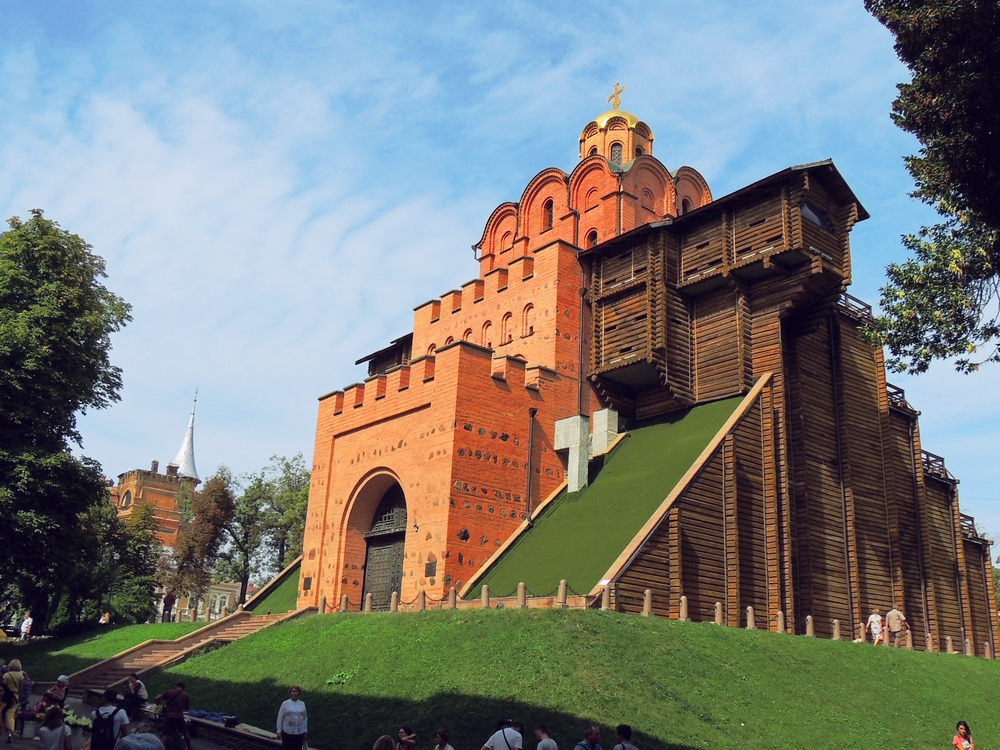

This series traces the history of the land that is now Ukraine, from prehistory to the 1990s, in four articles. This first one covers the period before the Cossacks became a political force, from prehistory to the end of the 16th century. Dates for this period often vary between sources; where sources disagree, this article gives the range rather than choosing one.
5000–3000 BCE — The Trypillia Culture
A culture known as the Trypillia culture existed in the region that is now Ukraine from the Neolithic into the Bronze Age. The Internet Encyclopedia of Ukraine (published by the Canadian Institute of Ukrainian Studies, CIUS, at the University of Alberta) dates it to “approximately 5000 to 3000 BCE.” The Encyclopaedia Britannica likewise describes it as “a Neolithic culture that arose in Ukraine in the fifth millennium BCE.”
The same encyclopedia states that, in the later phase of this culture, large settlements known as “megasites” appeared, with estimated areas of 50 to over 200 hectares and estimated populations of 5,000 to 15,000. The Talianky site covers about 340 hectares. All of these are estimates, not confirmed population figures.
Nomadic Powers of the Steppe and the Greek Cities of the Black Sea Coast
On the steppe of the northern Black Sea coast, the Cimmerians were mentioned by Homer around the 8th century BCE and were driven from the steppe by the Scythians in the 7th century BCE. The Scythians controlled the steppe of southern Ukraine from the 7th to the 3rd century BCE, and the Sarmatians defeated the Scythians in Crimea in the 3rd century BCE. This much comes from the respective entries in the Internet Encyclopedia of Ukraine.
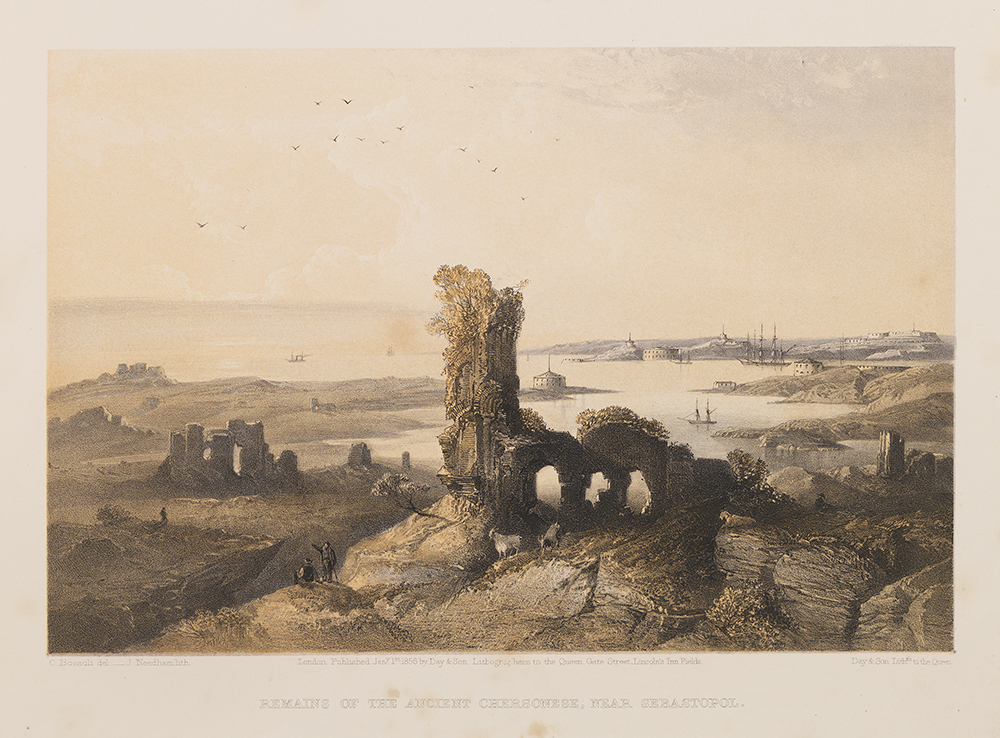
The Greek colonies on the coast were not founded all at once. According to the same encyclopedia, the oldest colony was on Berezan Island in the late 7th century BCE, while most of the others were founded in the 6th century BCE. Olbia was founded by settlers from Miletus in the early 6th century BCE, and Chersonesus was founded by Megarian Greeks from Heraclea Pontica in 422–421 BCE — a gap of more than two hundred years between Berezan and Chersonesus.
.jpg)
The ruins of Chersonesus were inscribed as a UNESCO World Heritage Site in 2013. UNESCO describes them as “the remains of an ancient city built as a Dorian Greek colonial settlement in the 5th century BCE.”
The Goths, Huns, Avars, and Khazars
The Goths moved south in the late 2nd century and reached the Black Sea, and in 375 the Huns conquered the Ostrogothic state. The Avars appeared on the steppe west of the Caspian Sea in the mid-6th century and established a khaganate by the late 560s. The Khazars appeared in southeastern Europe after the Huns withdrew in the 4th century and remained in the region until the 11th century. The Internet Encyclopedia of Ukraine describes the Khazar khaganate as “the first state in Eastern Europe.”
What the sources describe of the East Slavic tribes is the state in which they were already settled in this region by the 8th century. None of the sources cited in this article narrow down, by century, when they spread into the region.
882 and 988 — What the Chronicles Record
Both the Internet Encyclopedia of Ukraine and Britannica record the story of Oleg seizing Kyiv in 882. Britannica, however, makes clear that this comes from the Primary Chronicle, compiled in Kyiv in the 12th century. The year 882 is the date the chronicle gives; it is not an event corroborated by an independent contemporary record.
For Grand Prince Volodymyr’s adoption of Christianity in 988, the Internet Encyclopedia of Ukraine, Britannica, and the UNESCO World Heritage description all give the same year. The Internet Encyclopedia of Ukraine records that under Yaroslav the Wise, the law was codified as the Ruska Pravda (the Rus’ law code). The encyclopedia’s entry on Yaroslav the Wise states that he married Ingigerd, daughter of King Olof Skötkonung of Sweden, and gave his daughters in marriage to King Harald III of Norway, King Henri I of France, and King Andrew I of Hungary, respectively.
Saint Sophia Cathedral in Kyiv was inscribed as a UNESCO World Heritage Site in 1990 (official name: “Kyiv: Saint-Sophia Cathedral and Related Monastic Buildings, Kyiv-Pechersk Lavra”). UNESCO describes it as “one of the major edifices representing the architecture and monumental art of the early 11th century,” built “during the reign of Grand Prince Yaroslav the Wise of Kyiv, with the participation of local builders and Byzantine craftsmen.” It does not specify a construction start year in the Gregorian calendar.
The “Single Old Rus’ Nationality” Was a Framework the Soviet Union Made Official
Describing Kyivan Rus’ as “the medieval history shared by present-day Ukraine, Russia, and Belarus” may sound like a neutral summary. But this framing overlaps with a framework laid down by official Soviet historiography.
According to the Internet Encyclopedia of Ukraine, the framework holding that “Kyivan Rus’ was built by a single Old Rus’ nationality, from which the Ukrainian, Russian, and Belarusian peoples split off in the 14th and 15th centuries” was put forward by a panel of historians commissioned by the Soviet Communist Party in the 1930s. In other words, this is an account of official Soviet historiography, presented at the party’s commission. Under this framework, Kyivan Rus’ is treated not as the beginning of Ukrainian history but as the common source of three peoples who later split apart. The same encyclopedia also records that Ukrainian historiography since Hrushevsky has argued against this, taking the position that the Principality of Galicia-Volhynia was the direct successor to the Kyivan state.
This article follows the view of Ukrainian historiography since Hrushevsky and writes the following section as a continuous line from Kyivan Rus’ to the Principality of Galicia-Volhynia.
1240, and Galicia-Volhynia
Kyiv had already been sacked repeatedly by rival princes before the Mongols arrived. In particular, a sack by Andrei Bogolyubsky of Vladimir-Rostov-Suzdal is recorded for 1169. The Mongol invasion of 1236–40 finally destroyed the state, and Kyiv was thoroughly sacked in 1240. Britannica states only that “the Mongol conquest of the 13th century decisively ended Kyiv’s power,” without specifying the year.
In 1199, Roman Mstyslavych founded the Principality of Galicia-Volhynia. His son Danylo, in order to gain the pope’s support, recognized the pope as the head of the church in his territory and received a crown from the pope in 1253.
In the Grand Duchy of Lithuania, Rus’ Law and Language Survived
The Internet Encyclopedia of Ukraine’s entry on Lithuania states that, of this state, “only 10 percent of the territory was inhabited by Lithuanians,” and that “the official culture, language, legal code (Kyivan Rus’s Ruska Pravda), and religion of this new state became Ruthenian — that is, Ukrainian-Belarusian in character,” with “an Orthodox metropolitanate of Lithuania” established. The same encyclopedia also records that the Lithuanian-Ruthenian nobility later underwent Polonization.
1569 and 1596 — Two Unions
Under the Union of Lublin, signed on 1 July 1569, Podlachia, Volhynia, Podilia, the Bratslav region, and the Kyiv region passed to the Polish Crown.
The Union of Brest of 1596 (the encyclopedia’s entry is titled “Church Union of Berestia”) was an agreement between the Orthodox Church of Rus’ in Poland-Lithuania and the Holy See. The papal bull Decet Romanum Pontificem is dated 23 February 1596. The same encyclopedia traces this lineage down to its revival in present-day Ukraine in the 1990s — a line that leads to today’s Ukrainian Greek Catholic Church.
Cities Did Not Operate Under a Single Law
Magdeburg Law, a system of urban self-government, was brought into the region by German settlers. Its application varied city by city: Lviv before 1352, Kamianets-Podilskyi in 1374, Kyiv in 1494, and so on.
The same encyclopedia states that Kamianets-Podilskyi had “three separate national jurisdictions — Ukrainian, Polish, and Armenian.” Residents of the same city could be subject to different laws depending on which jurisdiction they belonged to.
The Crimean Khanate
Sources vary on the year the khanate was established. The Internet Encyclopedia of Ukraine states that “from the mid-15th century onward, the khanate was an independent state,” while a separate entry gives its independence from the Golden Horde as 1449. Britannica gives 1443 as the year of founding. This article writes “the mid-15th century.”
The year the khanate came under Ottoman suzerainty is also disputed: 1478 in the same encyclopedia, 1475 in Britannica. Since this article cannot decide between the two, it writes “the 1470s.”
It is Ukraine’s Verkhovna Rada that has designated the Crimean Tatars as an indigenous people. Resolution No. 1140-VII of 20 March 2014, “On the Statement of the Verkhovna Rada of Ukraine on Guarantees of the Rights of the Crimean Tatar People within the Ukrainian State,” declares that “Ukraine guarantees the preservation and development of the ethnic, cultural, linguistic, and religious identity of the Crimean Tatar people as an indigenous people, and of all national minorities of Ukraine,” and also expresses support for the UN Declaration on the Rights of Indigenous Peoples. This is a declaration by a state body; this article does not state it as plain fact in the narrative voice without naming who is making the claim.
Multiple sources record that raiding on the steppe and the slave trade caused great harm to the surrounding population. But even Britannica’s entry on “slavery” gives no figures for its scale. That entry offers concrete estimates for the Atlantic slave trade while, for this region, limiting itself to a general characterization. This article likewise gives no figures.
The continuation — from the 1648 uprising to the eve of the First World War — is covered in a separate article.
Sources and article record
Sources and references
- Internet Encyclopedia of Ukraine, "Trypillia culture"confirms the dating of approximately 5000–3000 BCE, megasite areas estimated at 50–200 ha with populations of 5,000–15,000, and the Talianky site at about 340 ha
Published by Canadian Institute of Ukrainian Studies, University of Alberta · Checked: 2026-09-23 - Encyclopaedia Britannica, "Trypillya culture"confirms the description as a Neolithic culture that arose in Ukraine in the fifth millennium BCE
Published by Encyclopaedia Britannica, Inc. · Checked: 2026-09-23 - Internet Encyclopedia of Ukraine, "Cimmerians"confirms the mention by Homer and their expulsion by the Scythians in the 7th century BCE
Published by Canadian Institute of Ukrainian Studies, University of Alberta · Checked: 2026-09-23 - Internet Encyclopedia of Ukraine, "Scythians"confirms their control of the southern Ukrainian steppe from the 7th to 3rd century BCE
Published by Canadian Institute of Ukrainian Studies, University of Alberta · Checked: 2026-09-23 - Internet Encyclopedia of Ukraine, "Sarmatians"confirms their defeat of the Scythians in Crimea in the 3rd century BCE
Published by Canadian Institute of Ukrainian Studies, University of Alberta · Checked: 2026-09-23 - Internet Encyclopedia of Ukraine, "Ancient states on the northern Black Sea coast"confirms that the oldest colony, on Berezan Island, dates to the late 7th century BCE, and that most others were founded in the 6th century BCE
Published by Canadian Institute of Ukrainian Studies, University of Alberta · Checked: 2026-09-23 - Internet Encyclopedia of Ukraine, "Olbia"confirms its founding by settlers from Miletus in the early 6th century BCE
Published by Canadian Institute of Ukrainian Studies, University of Alberta · Checked: 2026-09-23 - Internet Encyclopedia of Ukraine, "Chersonese Taurica"confirms its founding by Megarian Greeks from Heraclea Pontica in 422–421 BCE
Published by Canadian Institute of Ukrainian Studies, University of Alberta · Checked: 2026-09-23 - Ancient City of Tauric Chersonese and its Choraconfirms inscription in 2013 under criteria (ii)(v), and the description as the remains of an ancient city built as a Dorian Greek colonial settlement in the 5th century BCE
Published by UNESCO World Heritage Centre · Checked: 2026-09-23 - Internet Encyclopedia of Ukraine, "Goths"confirms their move south in the late 2nd century and the Huns' conquest of the Ostrogothic state in 375
Published by Canadian Institute of Ukrainian Studies, University of Alberta · Checked: 2026-09-23 - Internet Encyclopedia of Ukraine, "Huns"confirms their defeat of the Goths and Alans in 375
Published by Canadian Institute of Ukrainian Studies, University of Alberta · Checked: 2026-09-23 - Internet Encyclopedia of Ukraine, "Avars"confirms their appearance in the mid-6th century and the establishment of the khaganate by the late 560s
Published by Canadian Institute of Ukrainian Studies, University of Alberta · Checked: 2026-09-23 - Internet Encyclopedia of Ukraine, "Khazars"confirms their presence from the 4th to the 11th century, and the description of their khaganate as "the first state in Eastern Europe"
Published by Canadian Institute of Ukrainian Studies, University of Alberta · Checked: 2026-09-23 - Internet Encyclopedia of Ukraine, "Kyivan Rus'"confirms Oleg in 882, the adoption of Christianity in 988, the codification of the Ruska Pravda under Yaroslav the Wise, the sack of 1169, the Mongol invasion of 1236–40 and the sack of Kyiv in 1240, and the "single Old Rus' nationality" thesis put forward by a panel of historians commissioned by the Soviet Communist Party in the 1930s, along with Ukrainian historiography's response to it
Published by Canadian Institute of Ukrainian Studies, University of Alberta · Checked: 2026-09-23 - Encyclopaedia Britannica, "Kyivan Rus"confirms that Oleg's seizure of Kyiv in 882 is a record from the Primary Chronicle compiled in Kyiv in the 12th century, the adoption of Orthodoxy in 988, and that it records the Mongol conquest only as occurring in the 13th century, without a specific year
Published by Encyclopaedia Britannica, Inc. · Checked: 2026-09-23 - Kyiv: Saint-Sophia Cathedral and Related Monastic Buildings, Kyiv-Pechersk Lavraconfirms inscription in 1990, construction in the early 11th century, the description that it was built during the reign of Yaroslav the Wise with the participation of local builders and Byzantine craftsmen, and the reference to the baptism of 988
Published by UNESCO World Heritage Centre · Checked: 2026-09-23 - Internet Encyclopedia of Ukraine, "Danylo Romanovych"confirms the destruction of Kyiv, Volodymyr, and Galicia by the Mongol invasion of 1240–41, and his coronation by the pope in 1253
Published by Canadian Institute of Ukrainian Studies, University of Alberta · Checked: 2026-09-23 - Internet Encyclopedia of Ukraine, "Galicia-Volhynia, Principality of"confirms its founding by Roman Mstyslavych in 1199
Published by Canadian Institute of Ukrainian Studies, University of Alberta · Checked: 2026-09-23 - Internet Encyclopedia of Ukraine, "Lithuania"confirms that only 10 percent of the territory was inhabited by Lithuanians, that the official culture, language, legal code, and religion became Ruthenian, the establishment of an Orthodox metropolitanate of Lithuania, and the later Polonization of the nobility
Published by Canadian Institute of Ukrainian Studies, University of Alberta · Checked: 2026-09-23 - Internet Encyclopedia of Ukraine, "Lublin, Union of"confirms its signing on 1 July 1569, and the transfer of Podlachia, Volhynia, Podilia, the Bratslav region, and the Kyiv region to the Polish Crown
Published by Canadian Institute of Ukrainian Studies, University of Alberta · Checked: 2026-09-23 - Internet Encyclopedia of Ukraine, "Church Union of Berestia"confirms the 1596 agreement, the date of 23 February 1596 for the papal bull Decet Romanum Pontificem, and the lineage down to its revival in the 1990s; the entry "Union of Brest" merely redirects to this entry
Published by Canadian Institute of Ukrainian Studies, University of Alberta · Checked: 2026-09-23 - Internet Encyclopedia of Ukraine, "Magdeburg law"confirms its introduction by German settlers, the cities and years of its application, and the three national jurisdictions in Kamianets-Podilskyi
Published by Canadian Institute of Ukrainian Studies, University of Alberta · Checked: 2026-09-23 - Internet Encyclopedia of Ukraine, "Crimean Khanate"confirms the description of it as an independent state from the mid-15th century onward, and the year 1478 given for coming under Ottoman suzerainty
Published by Canadian Institute of Ukrainian Studies, University of Alberta · Checked: 2026-09-23 - Internet Encyclopedia of Ukraine, "Crimean Tatars"confirms independence from the Golden Horde in 1449 and Ottoman suzerainty from 1478
Published by Canadian Institute of Ukrainian Studies, University of Alberta · Checked: 2026-09-23 - Encyclopaedia Britannica, "Khanate of Crimea"confirms its founding in 1443 and its becoming an Ottoman vassal state in 1475; this internal Britannica account differs from the Internet Encyclopedia of Ukraine
Published by Encyclopaedia Britannica, Inc. · Checked: 2026-09-23 - Про Заяву Верховної Ради України щодо гарантії прав кримськотатарського народу у складі Української ДержавиResolution No. 1140-VII of 20 March 2014; confirms the wording designating the Crimean Tatar people as an indigenous people (корінний народ) and the statement of support for the UN Declaration on the Rights of Indigenous Peoples
Published by Верховна Рада України (Verkhovna Rada of Ukraine) · Checked: 2026-09-23 - Encyclopaedia Britannica, "Slavery"confirms that, while it gives concrete estimates for the Atlantic slave trade and others, it gives no figures for the scale of slavery connected with the Crimean Khanate
Published by Encyclopaedia Britannica, Inc. · Checked: 2026-09-23 - Internet Encyclopedia of Ukraine, "Yaroslav the Wise"written by Arkadii Zhukovsky, first published in Volume 5, 1993; confirms his marriage to Ingigerd and the marriages of his daughters to Harald III, Henri I, and Andrew I
Published by Canadian Institute of Ukrainian Studies, University of Alberta · Checked: 2026-09-23
If you find an error in this article, please tell us via Corrections. Once we have checked it, we will record in the article what was corrected and why.
More in this series
-
From the End of Cossack Self-Rule to the Ban on Ukrainian-Language Publishing
This article traces the period from the Khmelnytsky Uprising of 1648, through the 1654 Pereiaslav Agreement (whose original document does not survive), the abolition of the office of hetman in 1764 and the destruction of the Sich in 1775, to the bans on Ukrainian-language publishing in 1863 and 1876, up to the eve of the First World War. The harm the Jewish community suffered during the uprising is presented through the divergence between different estimates, rather than a single figure.
-
From the Transfer of Crimea to Giving Up Nuclear Weapons: Half a Century of Postwar Ukraine
This article traces the period from the 1946 famine through the 1954 transfer of Crimea, the 1986 Chornobyl nuclear disaster, the 1991 independence and referendum, the 1994 Budapest Memorandum, and the inflation and currency reform of the 1990s. On the 1954 transfer of Crimea, it presents the two officially stated reasons separately from the motives researchers have inferred. In the referendum of December 1, 1991, a majority of those who voted favored independence in all 27 administrative units.
Related articles
-
How Ukrainian and Russian Differ
Ukrainian and Russian both use the Cyrillic alphabet, but Ukrainian has і, ї, є, and ґ, and lacks ы, э, ъ, and ё. Differences also show up in the sound of "г," in the words for "yes" and "no," and in borrowings from Polish. Together with the history of Ukrainian being dismissed as "just a dialect" under imperial Russia, this article explains how close, and how far apart, the two languages are.
-
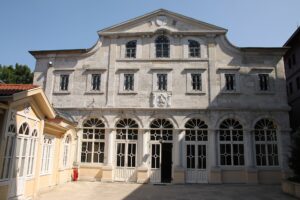
Both Translate Literally as “Orthodox Church of Ukraine”: OCU, UOC, and the 2024 Law
Ukraine has two churches whose names both translate literally as "Orthodox Church of Ukraine": the OCU, granted independence from Constantinople in 2019, and the UOC, which has long belonged to the Moscow Patriarchate. This article traces the story from the 2018 decision revoking an 1686 letter to the proceedings against the UOC's Kyiv Metropolitanate under the 2024 law.
-
Categories 1 Through 4: How Ukrainian Law Defines a “Chornobyl Victim”
In Ukraine, the status of people affected by the Chornobyl nuclear disaster has been defined by a February 1991 law. It separates those who worked on the accident cleanup from residents who were affected, sorting them into categories 1 through 4 with corresponding benefits. This article traces the contaminated-zone system, from the 2014 benefit cuts to the Constitutional Court's rulings, through the text of the law.