Erased in 1946, Back Aboveground 43 Years Later: The Greek Catholic Church
The Ukrainian Greek Catholic Church, which keeps the Eastern rite while being in communion with the Pope of Rome, began with the union of 1596. This article traces its path from being dissolved by the Soviet "sobor" of 1946, through continuing worship underground, to being recognized again in 1989, along with the spread of its faithful shown in a 2025 survey.
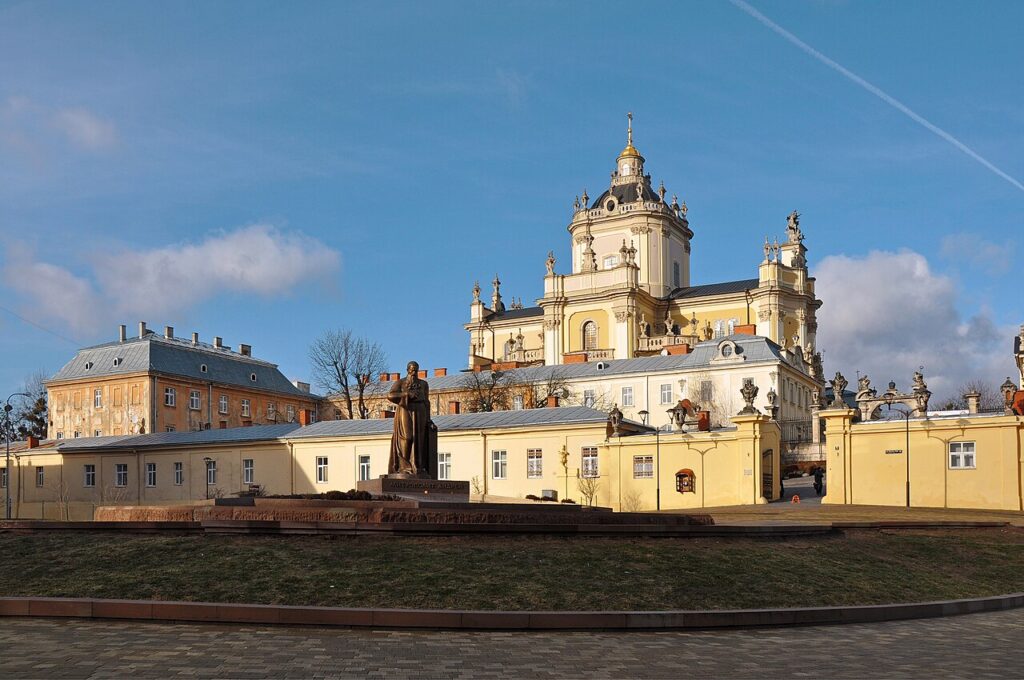

The Ukrainian Greek Catholic Church (Українська греко-католицька церква, abbreviated УГКЦ, or UGCC in English) keeps the same Eastern (Byzantine) rite of worship as the Orthodox Church, while recognizing the authority of the Pope of Rome and being in communion with the Catholic Church. The Internet Encyclopedia of Ukraine (IEU, Canadian Institute of Ukrainian Studies at the University of Alberta) entry “Ukrainian Catholic church” describes this kind of Eastern-rite Catholic church as a “sui iuris church,” with autonomy in matters of hierarchy, canon law, liturgy and culture.
In an opinion poll conducted in November 2025 by the private research body the Razumkov Centre, 11.8% of all respondents identified their religion as “Greek Catholic,” rising to 39.8% in the west; in other regions the figure was 0.4–2.5%. The concentration of the faithful in the west is deeply tied to the history this Church has gone through.
1596: The Union of Berestia
The Church’s starting point is the Church Union of Berestia (Brest) in 1596. According to IEU’s entry “Church Union of Berestia,” the Orthodox Church of Rus’ (Ukraine and Belarus) within Poland-Lithuania recognized the Pope as the head of the Church, and in return the Pope agreed to preserve the Eastern rite and the administrative rights and autonomy of the Kyiv metropolitanate.
The rights of the union were set out in a papal bull of December 23, 1595, and the bull “Decet Romanum Pontificem” of February 23, 1596, and it was proclaimed at a church council held in Berestia from October 16 to 20 of that year. However, this council split between those in favor of and against the union, and two councils were held in parallel. The metropolitan and five bishops accepted the union, while the opposing side remained Orthodox, and the two sides excommunicated each other. From here, the Church of Rus’ divided in two. The course of events from Kyivan Rus’ to the 16th century is covered in our article on the period from Kyivan Rus’ to the 16th century.
The united Church took root in the west, in areas such as Galicia (Halychyna), which later came under Austrian rule. The Lviv eparchy joined the union in 1700. In areas incorporated into the Russian Empire, by contrast, the united Church was abolished by force. IEU states that this happened in Right-Bank Ukraine and Volhynia under Catherine II, in the remaining areas under Nicholas I (1839), and in the Kholm region under Alexander II (1875). The Churches in Galicia and Transcarpathia survived under Austro-Hungarian rule (1772–1918).
Before and After World War II
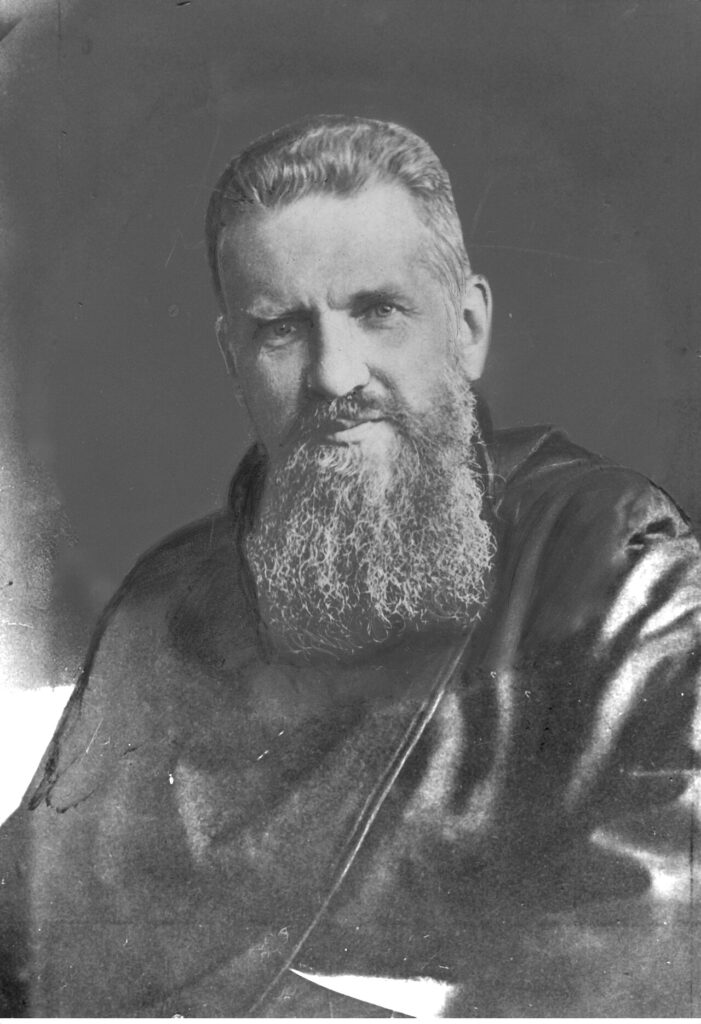
The Church in the first half of the 20th century was led by Metropolitan Andrei Sheptytsky. According to IEU, he became Metropolitan of Halych in January 1901 and held that position until his death in Lviv on November 1, 1944. Under Nazi German occupation, he is recorded as having sent a letter to Heinrich Himmler in early 1942 protesting the treatment of Jews, and as having sheltered Jews himself. The Church’s official site likewise states that hundreds of Jews were sheltered in Lviv’s St. George’s Cathedral and its monasteries.
.jpg)
.jpg#Licensing)
As to the Church’s size at the time, IEU’s entry “Lviv Sobor of 1946” states that, according to 1938 statistics, the Metropolitanate of Halych had 2,354 secular and monastic priests and 3.4 million faithful. The Church’s official site states that, as of 1939, there were 2,387 parishes and 3.6 million faithful. Because the years and scope counted differ, the figures do not match.
The “Lviv Sobor” of March 1946
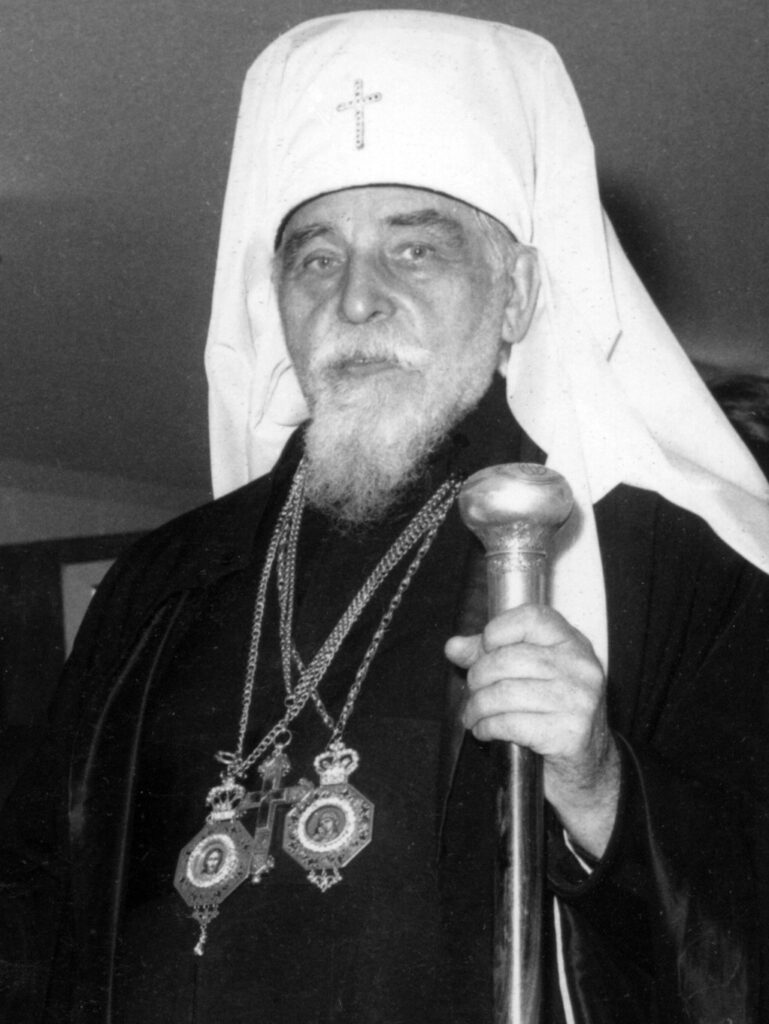
After the war, when Soviet rule returned to the west, the Church was dissolved. According to IEU, on April 11, 1945, Metropolitan Josyf Slipyi, Sheptytsky’s successor, and other bishops were arrested, and in June 1946 they were sentenced to long terms in forced-labor camps for “betraying the homeland” and collaborating with the German occupation forces. The Church’s official site states that the Soviet security services fabricated the case of “collaboration with Germany.”
With the Church left without bishops, an “Initiative Group” backed by the authorities pushed for “reunion” with the Russian Orthodox Church. According to IEU, since none of the arrested bishops agreed to transfer to Orthodoxy, the Moscow Patriarchate ordained the group’s two leaders as Orthodox bishops in February 1946.
Then, from March 8 to 10, 1946, a “sobor” was held at St. George’s Cathedral in Lviv. According to IEU, 216 clergy and 19 laypeople were “invited,” the agenda was not disclosed until the opening, and on the first day a resolution abolishing the Union of Berestia and “returning” to the Russian Orthodox Church was adopted “unanimously” by a show of hands, with no debate. IEU calls this council a “carefully staged spectacle,” and the Church’s official site calls it a “pseudo-sobor,” stating that it had no validity under either canon law or state law. The same method was used to absorb the Churches of Transcarpathia (1949) and Prešov in Czechoslovakia (1950).
The Church Underground
After the sobor, priests and monastics who refused to transfer to Orthodoxy were persecuted. According to the Church’s official site, more than 800 priests were arrested in 1945 and 1946 alone, and sentenced to terms of 10 to 25 years. Many of the detained bishops died in camps and prisons.
Still, the Church continued underground. According to the official site, worship took place in private homes or beside closed churches, mostly at night with doors shut and curtains drawn, with anywhere from a few to a few dozen people gathering. Training of priests also continued in secret, and 15 bishops were secretly ordained between 1945 and 1989. Metropolitan Slipyi spent 18 years in prisons, camps and exile, before being released in February 1963 and moving to Rome (IEU).

1989: Back Aboveground
In the late 1980s, as Soviet controls loosened, the Church came out into the open. According to the Church’s official site, on August 4, 1987, 23 priests led by Bishop Pavlo Vasylyk, together with laypeople, declared that they were coming out from underground. On May 18, 1989, bishops began a hunger strike in Moscow, which continued for five months as clergy and laypeople rotated in and out. On September 17, 1989, a large march to St. George’s Cathedral was held in Lviv.
Sources differ on the date of legalization. The Church’s official site states that, on November 28, 1989, the Council for Religious Affairs attached to the Council of Ministers of the Ukrainian SSR issued a statement recognizing the right of Greek Catholic believers to form and register communities. This was just before the December 1 meeting between Pope John Paul II and Soviet leader Mikhail Gorbachev. IEU’s entry “Lviv Sobor of 1946” states that the authorities of the Ukrainian SSR legalized the Church on December 1, 1989.
| Date | Event | Source |
|---|---|---|
| October 16–20, 1596 | The church council at Berestia; splits between the side proclaiming the union and the opposing side | IEU |
| April 11, 1945 | Metropolitan Slipyi and other bishops arrested | IEU, the Church’s official site |
| March 8–10, 1946 | “Sobor” at St. George’s Cathedral in Lviv; resolves to abolish the union | IEU, the Church’s official site |
| February 1963 | Metropolitan Slipyi is released and moves to Rome | IEU |
| November 28, 1989 | A statement by the Council for Religious Affairs recognizes registration of communities | The Church’s official site |
| December 1, 1989 | Meeting of John Paul II and Gorbachev (IEU treats this as the date of legalization) | The Church’s official site, IEU |
| January 23, 1990 | A church council in Lviv declares the 1946 sobor’s decisions invalid | The Church’s official site |
| March 30, 1991 | Cardinal Myroslav Lubachivsky, the head of the Church, moves from Rome to Lviv | IEU, the Church’s official site |
| August 21, 2005 | The head’s see moves from Lviv to Kyiv | The Church’s official site |
In 1990, St. George’s Cathedral was returned to the Church. A synod held in Lviv in May 1992 also condemned the 1946 sobor as contrary to canon law (IEU).
The See’s Move to Kyiv
According to the Church’s official site, the then head Lubomyr Husar decided in 2004 to move the head’s see from Lviv to Kyiv, with August 21, 2005 regarded as the formal date of the move. From that day, the head has held the title “Major Archbishop of Kyiv-Halych.” In March 2011, Sviatoslav Shevchuk became head. Among the Church’s dioceses within Ukraine, the Mukachevo eparchy in Transcarpathia remains a separate, self-governing church outside the head’s jurisdiction to this day.
The Church describes itself as the largest of the Eastern Catholic Churches, and its official site puts its faithful at more than 6.5 million. This is the Church’s own figure, including believers abroad, and is not an independently compiled count.
The Full-Scale Invasion and the Church in Occupied Territory
Since Russia’s full-scale invasion of February 24, 2022, the Church’s activities have been halted in occupied territory. According to the Church’s official site, in the part of Zaporizhzhia oblast occupied by Russia, the head of the Russian occupation administration, by an “order” dated December 26, 2022, banned the activities of the Church and of the service organizations Knights of Columbus and Caritas, and ordered the Church’s property transferred to the occupation authorities. The Church states that it learned of this document only in December 2023.
In Berdiansk, in the same oblast, two priests of the Church were detained by the occupation authorities on November 16, 2022. According to the Church’s announcement, the two were released on June 28, 2024, through the mediation of the Holy See.
On the calendar, the Church has, from September 1, 2023, celebrated fixed-date holidays such as Christmas by the new calendar. The background is covered in our article on Ukrainian Christmas moving from January 7 to December 25. The circumstances behind Ukraine’s Orthodox Church being split in two are summarized in our article on the OCU and the UOC.
The Spread of the Faithful, as Shown in Surveys
The Razumkov Centre survey cited at the top was conducted face-to-face from November 22 to 29, 2025, among 2,009 people aged 18 and over in areas under government control and not experiencing fighting. The Centre states that the share answering “Greek Catholic” has risen from 8% to 12% since 2014. Among respondents who said they were members of a religious community, members of Greek Catholic communities made up 7% of all respondents.
In the same survey, 97% of Greek Catholic believers agreed that the Russian people bear responsibility for the war. 89% also agreed that the collapse of the Soviet Union brought more good results than bad — both higher shares than any other denominational group shown in the survey. This survey cannot tell us how the memory of the Church being erased in 1946 connects to believers’ views today. Still, the journey of a Church that Soviet rule did not permit to exist publicly — back aboveground as Ukraine approached independence, and eventually establishing its see in the capital, Kyiv — is worth keeping in mind as the history behind the numbers.
Sources and article record
Sources and references
- Church Union of Berestiain print, first published in Volume 1, 1984; author: Atanasii Velyky; the content of the union; the bulls of December 23, 1595 and February 23, 1596; the split at the October 16–20, 1596 council; the metropolitan and five bishops; the Lviv eparchy's union in 1700; abolition in the Russian Empire [1839, 1875]; the 1946–50 abolitions
Published by Internet Encyclopedia of Ukraine (CIUS) · Checked: 2026-09-24 - Lviv Sobor of 1946in print, first published in Volume 3, 1993; author: Bohdan R. Bociurkiw; the 1938 statistics; the April 11, 1945 arrests and the June 1946 sentencing; the February 1946 ordination of bishops; the March 8–10, 1946 sobor — 216 clergy and 19 laypeople, the "unanimous" show of hands; the 1949 and 1950 absorptions; the December 1, 1989 legalization
Published by Internet Encyclopedia of Ukraine (CIUS) · Checked: 2026-09-24 - Ukrainian Catholic churchin print, first published in Volume 5, 1993; authors: Wasyl Lencyk, Vasyl Markus; the Eastern-rite "sui iuris church"; Slipyi's release in February 1963; the return of St. George's Cathedral in 1990; the head's move on March 30, 1991; the May 1992 synod
Published by Internet Encyclopedia of Ukraine (CIUS) · Checked: 2026-09-24 - Sheptytsky, Andreiin print, first published in Volume 4, 1993; his becoming Metropolitan in January 1901; his death on November 1, 1944; the letter of protest to Himmler in early 1942; the sheltering of Jews
Published by Internet Encyclopedia of Ukraine (CIUS) · Checked: 2026-09-24 - Історія УГКЦ: Псевдособор і ліквідація [History of the UGCC: The Pseudo-Sobor and Liquidation]the 1939 size; the April 11, 1945 arrests; the fabricated case; the "pseudo-sobor"; the sheltering of Jews at St. George's Cathedral
Published by Ukrainian Greek Catholic Church (ugcc.ua) · Checked: 2026-09-24 - Історія УГКЦ: Церква в підпіллі [History of the UGCC: The Church Underground]the more than 800 arrests and 10–25 year sentences in 1945–46; the 15 bishops ordained underground; night worship
Published by Ukrainian Greek Catholic Church (ugcc.ua) · Checked: 2026-09-24 - Історія УГКЦ: Патріарх Йосиф Сліпий [History of the UGCC: Patriarch Josyf Slipyi]the 18 years of detention
Published by Ukrainian Greek Catholic Church (ugcc.ua) · Checked: 2026-09-24 - Історія УГКЦ: Церква сьогодні [History of the UGCC: The Church Today]the change of head in March 2011; the Mukachevo eparchy's autonomy; the Church's own figure of more than 6.5 million faithful
Published by Ukrainian Greek Catholic Church (ugcc.ua) · Checked: 2026-09-24 - Історія УГКЦ: Відродження Церкви (1989) [History of the UGCC: The Revival of the Church (1989)]the declaration of August 4, 1987; the hunger strike from May 18, 1989; the September 17 march; the November 28 statement by the Council for Religious Affairs; the December 1 meeting; the January 23, 1990 council; March 30, 1991
Published by Ukrainian Greek Catholic Church (ugcc.ua) · Checked: 2026-09-24 - Історія УГКЦ: Повернення до Києва [History of the UGCC: The Return to Kyiv]the 2004 decision; the August 21, 2005 move of the see and the title; the description as the largest of the Eastern Catholic Churches
Published by Ukrainian Greek Catholic Church (ugcc.ua) · Checked: 2026-09-24 - Окупаційна влада рф заборонила діяльність УГКЦ на окупованій частині Запорізької області (документ) [The Russian Occupation Authorities Banned the UGCC's Activities in the Occupied Part of Zaporizhzhia Oblast (Document)]the "order" dated December 26, 2022; the scope of the ban; the property transfer; learned of in December 2023; the detention of priests on November 16, 2022
Published by Ukrainian Greek Catholic Church (ugcc.ua) · Checked: 2026-09-24 - Священників УГКЦ Івана Левицького та Богдана Гелету звільнили з російського полону [UGCC Priests Ivan Levytsky and Bohdan Heleta Released from Russian Captivity]the release of June 28, 2024; the mediation of the Holy See
Published by Ukrainian Greek Catholic Church (ugcc.ua) · Checked: 2026-09-24 - Рівень релігійності, конфесійний і церковний розподіл та міжцерковні відносини в українському суспільстві (листопад 2025р.) [The Level of Religiosity, Denominational and Church Distribution, and Interchurch Relations in Ukrainian Society (November 2025)]November 22–29, 2025; 2,009 people; Greek Catholic 11.8%, western region 39.8%; the rise from 8% to 12%; 7% community membership; 97% and 89%
Published by Razumkov Centre · Checked: 2026-09-24
If you find an error in this article, please tell us via Corrections. Once we have checked it, we will record in the article what was corrected and why.
Related articles
-
Where Green and Yellow Run Like “Tears”: Kosiv’s Painted Ceramics
In the town of Kosiv, in Ukraine's western Hutsul region, potters have made ceramics by coating vessels in white slip, scratching lines into them with a metal tool, and coloring them in green, yellow and brown. This article covers how this tradition, inscribed on UNESCO's Intangible Cultural Heritage Representative List in 2019, is made, the motifs it has depicted, the potters whose names survive, and its practitioners today.
-
What President Zelensky Said in 12 Minutes to a Parliament 8,193 Kilometers Away
At 6:00 p.m. on March 23, 2022, President Zelensky addressed members of Japan's Diet online. The speech lasted 12 minutes. This article reads, from the provisional Japanese translation published by the House of Representatives, what he said about the danger at the Chornobyl nuclear plant, the damage 28 days into the invasion, and his requests to Japan to keep up sanctions and prepare for reconstruction.
-
The 56 Cooperation Documents Unveiled in Tokyo, and What Followed
At the Japan–Ukraine Conference for Promotion of Economic Recovery and Reconstruction, held on February 19, 2024 at the Keidanren Kaikan in Tokyo, 56 cooperation documents were unveiled, ranging from intergovernmental treaties to memoranda between companies. The tax treaty took effect in August 2025, and JETRO's Kyiv office opened in October 2024. Negotiations to revise the investment agreement were still ongoing as of their 7th round in August 2026.