
All articles
-
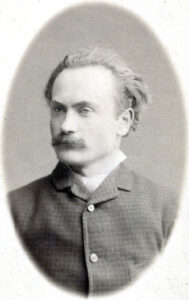
Ivan Franko: The Writer Who Died the Year He Was Nominated for the Nobel Prize
The Nobel Prize nomination archive records the name of Ivan Franko (1856–1916) as a candidate for the 1916 Literature Prize. That May, Franko died in Lviv. This article traces the life of a man born the son of a village blacksmith, arrested three times, who left behind about 6,000 works of fiction, poetry, drama, translation and scholarship, and the university and town that were named after him.
-
The 2019 Orthography Became a “State Language Standard” Seven Years Later
Writing "project" in Ukrainian as проєкт follows a rule from the orthography reformed in 2019. That orthography was ruled invalid at first instance in 2021, then upheld on appeal and by the Supreme Court in 2024. In March 2026, in place of a Cabinet resolution, it became a "state language standard" under the State Language Law. This article summarizes the rules that changed, and the seven years in between.
-
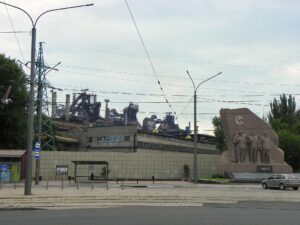
After Losing Azovstal, Where Has Ukraine’s Steel Been Made?
Ukraine's crude steel production fell from 21.4 million tonnes in 2021 to 7.4 million tonnes in 2025. The two steel plants in Mariupol were knocked out of production by occupation, and the remaining plants in Zaporizhzhia and Kamianske have carried most of the production since. Those two have also been shut down by attacks in August and September 2026. This article tracks the plant-by-plant figures through industry-association and company disclosures.
-
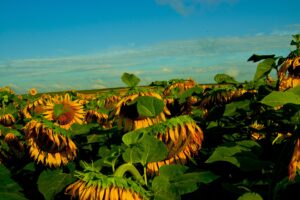
Wheat Harvest and Area Both Down 30%: Ukraine’s Three Big Crops, by the Numbers
According to statistics from the UN Food and Agriculture Organization (FAO), Ukraine's wheat production fell from 32.18 million tonnes in 2021 to 22.44 million tonnes in 2024, and the harvested area shrank by almost the same proportion. This article lays out production, area and yield for 2021-2024 for wheat, maize and sunflower seed together, and explains how the statistical coverage changed starting in 2022.
-
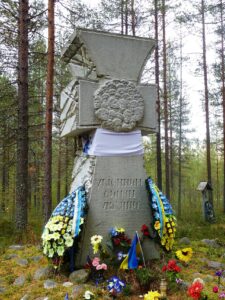
The 1,111 Shot at Sandarmokh in Autumn 1937, and the “Executed Renaissance”
From October 27 to November 4, 1937, in a forest in Karelia, northwestern Russia, 1,111 prisoners from the Solovki camp were shot by the Soviet secret police. Among them were people who had shaped Ukrainian culture in the 1920s, including theater director Les Kurbas and playwright Mykola Kulish. Sources disagree on how many came from Ukraine, ranging from 201 to about 300. This article covers the course of events, the figures, and what happened after the site was found.
-
Honey Quota Rises from 6,000 to 35,000 Tonnes: The EU’s New Tariffs for Ukraine
From June 2022, the EU suspended tariffs and quantity quotas on Ukrainian products for three years. That measure ended on June 5, 2025, and on October 29 a revision of the Association Agreement expanded the duty-free quotas for honey, sugar, wheat and other goods. In exchange for the quotas, Ukraine will align its laws with EU production standards by 2028.
-
Where Green and Yellow Run Like “Tears”: Kosiv’s Painted Ceramics
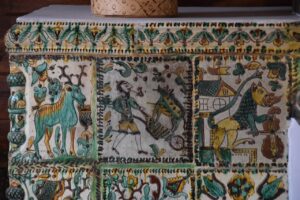
In the town of Kosiv, in Ukraine's western Hutsul region, potters have made ceramics by coating vessels in white slip, scratching lines into them with a metal tool, and coloring them in green, yellow and brown. This article covers how this tradition, inscribed on UNESCO's Intangible Cultural Heritage Representative List in 2019, is made, the motifs it has depicted, the potters whose names survive, and its practitioners today.
-
The Advisory Body Recommended “Deferral” ── The Residence of the Metropolitans of Chernivtsi
The main building of Chernivtsi University was built between 1864 and 1882 as the residence of the Orthodox metropolitans of Bukovina and Dalmatia. In 2011, UNESCO's advisory body recommended deferring its World Heritage listing, but the World Heritage Committee decided to inscribe it anyway. This article covers the architect Hlávka, how the residence became a university, and where the assessments diverged.
-
The Rose Means Woman, the Tulip Means Man: The Crimean Tatar Ornament Ornek
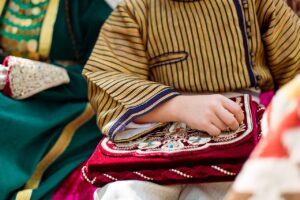
Ornek is a pattern that the Crimean Tatar people have used in embroidery, weaving, pottery and silverwork; each motif carries a meaning, and arranged together they can be read like a story. This article covers the content of the pattern, inscribed on UNESCO's Intangible Cultural Heritage list in 2021 at Ukraine's request, and the difficulty of passing it on in Russian-occupied Crimea.
-
8 of 16, in Ukraine: The Wooden Churches of the Carpathians
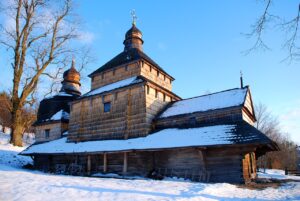
The wooden churches of the Carpathian Mountains, called "tserkvas," are built of horizontally stacked logs, their roofs and walls covered in wooden shingles. Of the 16 churches inscribed as a UNESCO World Heritage Site jointly with Poland in 2013, 8 are in Ukraine. This article covers the four architectural types, the lineup of the 8 churches, and the wartime conservation challenges described in a 2024 report.