
All articles
-
Japan Has 16 National Holidays: The Substitute-Holiday Rule, and a Vernal Equinox Day Decided a Year Ahead
Japan's "National Holidays" are fixed at 16 days a year under the National Holidays Act. This article covers the substitute holiday when one falls on a Sunday, the holiday created when a weekday falls between two holidays, the Vernal and Autumnal Equinox Days that are decided in February of the previous year, the amendments that took the count from 9 days in 1948 to 16, and how the treatment of holidays differs among government offices, schools, and companies (as of September 2026).
-
Lviv’s Armenian Cathedral, and the City’s Armenian Community
Lviv's Armenian Cathedral, begun in 1363, was for centuries the center of the city's Armenian community. This article traces its own law, three theories on the year of union with Rome, the break of 1945, and the 2003 consecration, drawing on encyclopedias and census records.
-
Kyiv’s Golden Gate, and the “1500th Anniversary” of 1982
Kyiv's Golden Gate first appears in the chronicle entry for the year 1037, as the main gate of Yaroslav the Wise's city. What stands there today is a 1982 pavilion built over the 11th-century ruin to mark "1500 Years of Kyiv." This article looks at how each encyclopedia names the structure and what the "1500 years" actually counted.
-
Chernihiv’s Transfiguration Cathedral, and the Chronicle’s Entry for 1036
The Transfiguration Cathedral, begun by Prince Mstyslav of Chernihiv, is recorded in the chronicle's entry for 1036 as having risen, by the time of his death, to a height that a man on horseback could touch with an outstretched hand. This article looks at the year it was finished, the conditions behind the claim that it is the "oldest" such building, and its 18th-century rebuilding and 20th-century preservation, through encyclopedias and the chronicle.
-
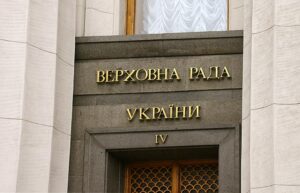
From the Transfer of Crimea to Giving Up Nuclear Weapons: Half a Century of Postwar Ukraine
This article traces the period from the 1946 famine through the 1954 transfer of Crimea, the 1986 Chornobyl nuclear disaster, the 1991 independence and referendum, the 1994 Budapest Memorandum, and the inflation and currency reform of the 1990s. On the 1954 transfer of Crimea, it presents the two officially stated reasons separately from the motives researchers have inferred. In the referendum of December 1, 1991, a majority of those who voted favored independence in all 27 administrative units.
-
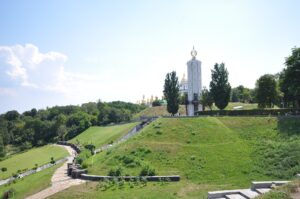
How Many Died in the Holodomor? Why Estimates Range from 2.6 Million to 5 Million
The Holodomor was a man-made famine in Soviet Ukraine in 1932–33. The death toll varies depending on who is counting: from the roughly 3.94 million excess deaths in a 2015 demographic paper, to lower estimates, to higher figures. This article sums up Ukraine's 2006 law, recognition by various countries' parliaments, and the Japanese government's Diet answer that it is “not in a position to assess” the events—attributing who said what.
-
Some Borrow at 3%, Others at 7%: Ukraine’s Mortgage Program “ЄОселя”
Ukraine's government mortgage program “ЄОселя” began in October 2022, and 28,579 loans had been disbursed by September 15, 2026. Service members, medical workers, teachers, researchers, and, from July 2026, war veterans, pay 3% a year; internally displaced people and other citizens pay 7% a year. Both the borrower and the home being bought must meet conditions on citizenship, floor area, and the building's age.
-
Called Up at 25: How Ukraine Rewrote Its Military Service Law in 2024
In April 2024, Ukraine lowered the upper age limit for registration as a conscript from 27 to 25, so that turning 25 now moves a person into the "persons liable for military service" category that can be called up under mobilization. A further amendment that May made updating registration data mandatory and launched the "Reserve+" app. This article sorts out what changed, based on the text as it stood in September 2026.
-

987 Towns and Villages Renamed: Ukraine’s Two Place-Name Laws
In Ukraine, a 2015 law targeted place names honoring communist-party leaders and others for renaming, and a 2023 law targeted names commemorating the Russian Empire and Russian rule. Under the first law, 987 settlements and 25 raions were renamed; under a September 2024 Verkhovna Rada resolution, 327 settlements and 4 raions were renamed. This article sums up the grounds and procedure for these renamings.
-
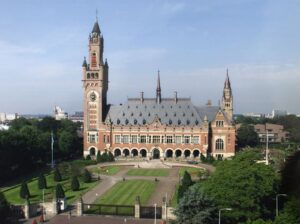
Crimean Tatars, Karaites, Krymchaks: Ukraine’s Law on Indigenous Peoples
In a 2021 law, Ukraine recognized three peoples formed on the Crimean Peninsula — Crimean Tatars, Karaites, and Krymchaks — as indigenous peoples. In April 2026, the Cabinet granted legal status to the Mejlis, the Crimean Tatars' representative body. This article also sums up what the International Court of Justice did and did not find regarding the Mejlis, which Russia has banned.