
All articles
-
No Russian Passport, No Pension, No Home: Citizenship Imposed in Occupied Territory
Since Crimea in 2014, Russia has extended, step by step, a policy of making residents of the Ukrainian territory it occupies take Russian passports. Reports from the Office of the United Nations High Commissioner for Human Rights document, case after case, that people without the passport are disadvantaged in employment, pensions, medical care, and property. This article sums up what Russia's presidential decrees say and how Ukraine treats this citizenship.
-
The EU’s €50 Billion Ukraine Facility: Paying Only for Reforms Delivered
The EU's "Ukraine Facility" is a framework that can provide up to €50 billion to Ukraine between 2024 and 2027. Payments are made quarterly, and only for the portion of promised reform steps that Ukraine is confirmed to have completed. This article sums up how the rules work, the preconditions attached, and the breakdown of the roughly €29.5 billion paid out through June 2026.
-
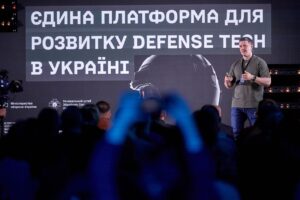
Brave1: Over 1,000 Grants to Grow Ukraine’s Defense Tech
Brave1 is a defense-tech support body that six Ukrainian government agencies launched in April 2023, in the midst of Russia's full-scale invasion. A state fund provides grants of up to 8 million hryvnias per stage that do not need to be repaid, and according to the Ministry of Defense, by September 2026 these had reached over 1,000 grants totaling 6.2 billion hryvnias. This article sums up how the program is run, the legal basis behind it, and where the money goes.
-
Ukraine’s National Cashback: Up to 15% Back on Ukrainian-Made Goods
Since September 2024, Ukraine has run a “National Cashback” program that returns part of the price when people buy Ukrainian-made goods. The refund rate has changed from a flat 10% to 5% or 15% depending on the share of imports in each product category, and in May 2026 the program entered its second stage. Based on the text of the Cabinet resolutions and announcements from the Ministry of Economy, this article sums up how the system works, what the money can be used for, and the scale of its use.
-
“-IX” Is the 9th Convocation of Parliament: A Clue to Reading Ukrainian Laws in the Original
In a Ukrainian law's number, such as “4223-IX,” the “IX” indicates the convocation of the Verkhovna Rada that adopted it. Cabinet resolution numbers restart from 1 every year, and a law has several dates: adoption, promulgation, entry into force, and the start of application. Using real legal acts as examples, this article explains how to read the numbers, dates, status labels, and amendment-consolidated “redactions” in the Verkhovna Rada's legal database.
-
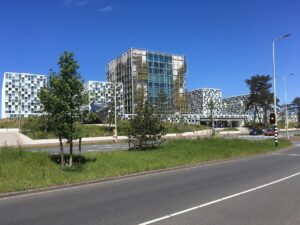
From 200,000 Registered Cases to a Verdict: How Ukraine Prosecutes War Crimes
According to Ukraine's Office of the Prosecutor General, 203,382 cases had had investigations opened under Article 438 of the Criminal Code (war crimes) between the full-scale invasion and the end of 2025. Meanwhile, only 102 people were convicted in this category in 2025. This article sums up the differences between registration, notice of suspicion, indictment, and verdict, the procedure for trying suspects who are abroad, and the division of labor with the International Criminal Court.
-
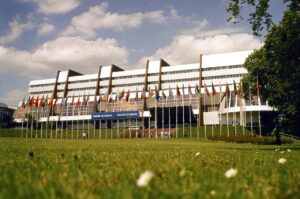
Nearly 200,000 Damage Claims Filed: Where the Machinery to Make Russia Pay and Judge Its Leaders Stands Now
The Council of Europe's Register of Damage for Ukraine, which records damage caused by Russia's aggression, had received nearly 200,000 claims by September 2026. But the Register does not decide compensation amounts. The International Claims Commission, which will decide compensation, and the Special Tribunal, which will judge the leaders who decided on the aggression, had not yet been established as of September 2026. This article sums up the role and progress of all three mechanisms, and Japan's involvement.
-
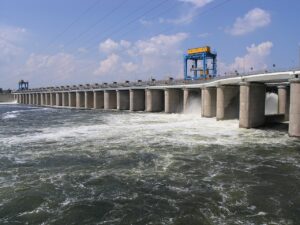
What Happened in Kakhovka the Day the Russian-Controlled Dam Broke
In the early hours of June 6, 2023, the dam of the Kakhovka Hydroelectric Power Plant on the Dnipro River—under Russian military control since February 2022—collapsed in an explosion. Downstream, at least 80 settlements were flooded; upstream, the reservoir that was the drinking-water source for more than 700,000 people began to dry up. The United Nations and the Ukrainian government estimate the damage and losses at nearly $14 billion.
-
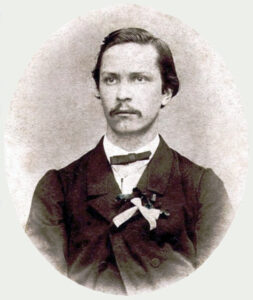
The Composer Mykola Lysenko and the Taras Bulba That Was Never Staged in His Lifetime
Mykola Lysenko (1842–1912), the composer who laid the foundations of modern Ukrainian music. His major work, the opera Taras Bulba, had offers to stage it in Russian but was never performed in its original language during his lifetime; its premiere came only in 1924 in Kharkiv, twelve years after his death. This article traces his life, from collecting folk songs and setting Shevchenko's poems to music, to the 1885 “Prayer for Ukraine” and the school he opened in 1904.
-
How Far Is a Support Organization’s Information Disclosed? — Japanese and Ukrainian Corporate Systems
When choosing whom to support or partner with, how much information the law requires to be disclosed depends on an organization's legal form. This article sets out, following Japanese and Ukrainian statutes and public databases, what an eligibility for a deduction on donations actually guarantees, where to look in accounting and activity reports, and how to check an organization on the Ukrainian side. It does not recommend or evaluate any specific organization.