
The Composer Mykola Lysenko and the Taras Bulba That Was Never Staged in His Lifetime
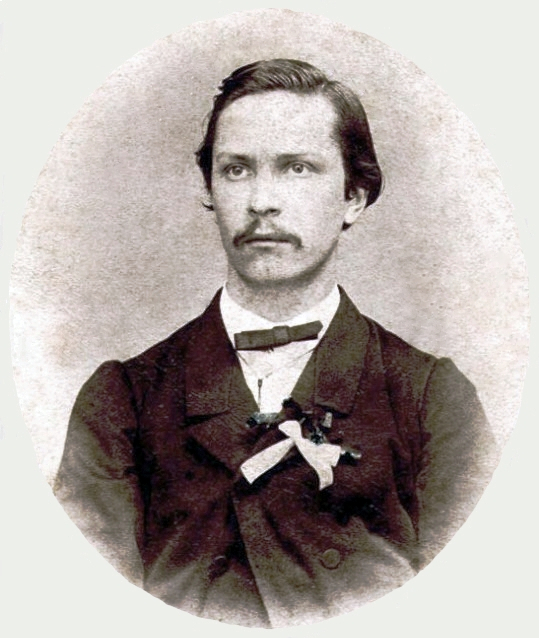
Mykola Lysenko (1842–1912), the composer who laid the foundations of modern Ukrainian music. His major work, the opera Taras Bulba, had offers to stage it in Russian but was never performed in its original language during his lifetime; its premiere came only in 1924 in Kharkiv, twelve years after his death. This article traces his life, from collecting folk songs and setting Shevchenko's poems to music, to the 1885 “Prayer for Ukraine” and the school he opened in 1904.


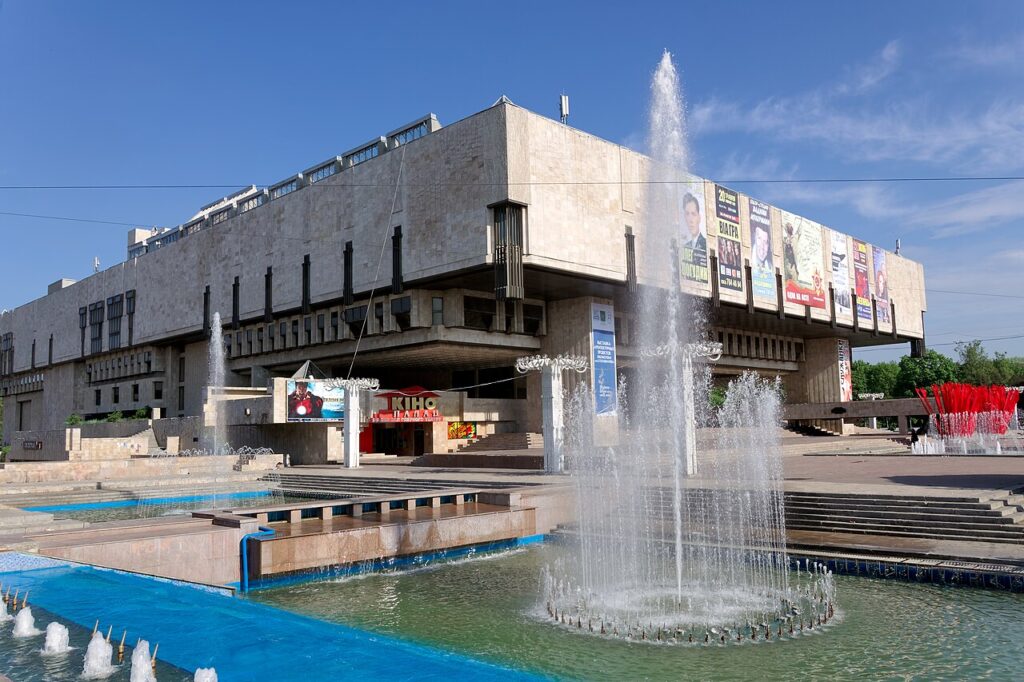
The Kharkiv National Academic Opera and Ballet Theatre bears the name of a single composer: Mykola Lysenko (Микола Лисенко, 1842–1912). According to the theatre’s official website, the world premiere of Lysenko’s opera Taras Bulba took place on this theatre’s stage in October 1924, twelve years after the composer’s death.

The Encyclopedia of Modern Ukraine (ESU), compiled by the National Academy of Sciences of Ukraine, calls Lysenko “the founder of the new Ukrainian national music” and names Taras Bulba his finest opera. Why was this opera never staged during the composer’s lifetime? We trace his life to find out.
A Degree in Natural Science, Then Leipzig
Lysenko was born on 22 March 1842 (10 March by the old calendar) in the village of Hrynky, Poltava Governorate. According to the Internet Encyclopedia of Ukraine (IEU, published by the Canadian Institute of Ukrainian Studies), his family belonged to the nobility descended from the Cossack officer class (starshyna); he received his first piano lessons from his mother, and inherited his love of Ukrainian music and Cossack lore from his grandparents.
At university he studied not music but natural science. He moved from Kharkiv University to a university in Kyiv, obtaining a degree in natural science in 1865. He then studied at the Leipzig Conservatory (1867–69), worked in Kyiv as a music teacher and conductor, and in 1874–76 studied orchestration under Rimsky-Korsakov in St. Petersburg.
In Kyiv he joined the Hromada, a circle of intellectuals who carried the Ukrainian cultural movement. IEU writes that the connections he made there, especially with his relative, the playwright Mykhailo Starytsky, led him to commit himself to studying and developing Ukrainian music.
Collecting Folk Songs, Setting Shevchenko’s Poems to Music
Lysenko had been transcribing folk songs since his student days. He wrote down wedding songs from the Pereiaslav region and dumy (epic songs) sung by the renowned kobzar (singer-storyteller) Ostap Veresai, and in 1874 published a study of the musical characteristics of Veresai’s singing. In 1894 he also compiled a study of Ukrainian folk instruments. The kobzar and their instrument are covered in the article on the bandura.
According to IEU, he arranged around 500 folk songs over his lifetime. The Encyclopedia of the History of Ukraine (Institute of History of Ukraine, National Academy of Sciences of Ukraine) puts the number of folk songs he transcribed at about 1,500.
A special place among his works is held by songs set to poems by Taras Shevchenko. IEU states he set 82 poems from the collection Kobzar to music (ESU and the Encyclopedia of the History of Ukraine give “more than 80”). These take various forms, from solo songs and choral works to cantatas for chorus and orchestra. Shevchenko’s life is covered in the article on Shevchenko. He also set poems by Ivan Franko, Lesia Ukrainka, Heine and Mickiewicz, among others, to music, for more than 120 songs in all.
An Era When the Ukrainian-Language Stage Was Banned
The Kyiv where Lysenko worked was under the rule of the Russian Empire. According to the Encyclopedia of the History of Ukraine, when permission was granted in 1872 to publicly stage plays in Ukrainian, he wrote the operetta Black Sea Cossacks, and the following year, 1873, the opera Christmas Eve, based on Gogol’s story. ESU holds that the performance of Christmas Eve at the Kyiv City Theatre on 24 January 1874 marked the beginning of Ukrainian opera theatre.
Two years later, on 30 May 1876, Tsar Alexander II signed the Ems Ukase. According to IEU, this secret decree not only halted the printing of Ukrainian-language books but also banned staging plays and public readings in Ukrainian, and printing Ukrainian-language lyrics with musical compositions. The content and consequences of the decree are covered in detail in the article on the Ems Ukase.
Under these constraints, Lysenko continued to compose music for Ukrainian plays. In 1883 he wrote the opera The Drowned Maiden, based on Gogol’s May Night, and in 1889 completed a version of Ivan Kotliarevsky’s play Natalka Poltavka to which he had added an overture and interlude music. ESU calls this Natalka Poltavka a work that “enjoyed a fortunate fate.”
Why Taras Bulba Was Never Staged
Taras Bulba is an opera based on Gogol’s novel of the same name, with a libretto by Starytsky. It depicts the fate of the Cossack Taras Bulba and his two sons, Ostap and Andrii. Sources differ slightly on when it was composed: the Encyclopedia of the History of Ukraine gives 1880 to 1890, while ESU gives 1880–91.
An article by Yana Ivanytska (2022), published in a journal of the Kyiv National University of Culture and Arts, describes the circumstances behind its never being staged as follows. According to Starytsky’s recollections, Tchaikovsky and Rimsky-Korsakov both offered their help on several occasions, and conductors at Moscow’s Imperial Theatres also wanted to stage it. But every one of these was for a performance in Russian. Talks were also held with the Bolshoi Theatre in 1911, but the theatre refused to allow a performance in the original language, on the grounds that “Gogol wrote Taras Bulba in Russian.”
According to ESU, only fragments were performed during the composer’s lifetime. The same article states that Lysenko had been preparing to publish the score with a Leipzig publisher, but the piano-vocal score did not appear until 1913, the year after his death. The lyrics appeared in two languages, Ukrainian and Russian.
The premiere came in autumn 1924, at the Kharkiv opera. The same article reports that critical reaction to the premiere ranged widely, from harsh criticism as “old, faded music” to a defence by the writer and composer Hnat Khotkevych. Later performances have centred on a revised version by the composers Levko Revutsky and Borys Liatoshynsky. ESU calls the overture, in their arrangement, one of the most frequently performed instrumental pieces in the history of Ukrainian music.
The 1885 “Prayer for Ukraine”
The Lysenko work most often heard in Ukraine today may be the choral piece “Bozhe velykyi, yedynyi” (“Oh God, Great and Almighty”), also known as “Prayer for Ukraine” (Молитва за Україну). According to ESU’s entry on the poet Oleksandr Konysky, Konysky wrote the lyrics in 1885 and Lysenko set them to music. The official website of the Ukrainian Greek Catholic Church also gives 1885 as the year it was written.
ESU states that in independent Ukraine this choral piece has become the country’s “spiritual anthem,” sung at official state ceremonies and at the end of services in some churches. It is a separate work from the national anthem (the song beginning “Ukraine’s glory and freedom have not yet perished”). The origins of the national anthem are covered in the article on the flag, coat of arms and anthem.
The School He Opened in 1904, and the Places That Carry His Name
In 1904, Lysenko opened a School of Music and Drama in Kyiv. According to IEU, the funds came from money his supporters had raised to give him a country house to mark the 35th anniversary of his career. ESU calls it the first music and drama school in eastern Ukraine to teach in Ukrainian. In 1905 he also formed the choir Boyan of Kyiv.
His students, and composers who followed in his footsteps, included Kyrylo Stetsenko, Oleksandr Koshyts, Levko Revutsky and Mykola Leontovych, known for his arrangement of “Shchedryk” (ESU, IEU). See the article on “Shchedryk” for more on Leontovych.
Lysenko died in Kyiv on 6 November 1912 (24 October by the old calendar). His name lives on today in institutions across the country.
| Named after Lysenko | Details |
|---|---|
| The School of Music and Drama in Kyiv | Named after Lysenko in 1913 (Encyclopedia of the History of Ukraine). Reorganised into the Institute of Music and Drama in 1918 |
| Lviv National Music Academy | According to IEU, formed in 1940 by merging music schools in Lviv into a state conservatory; has held its current name since 2007. Its full name includes “in memory of Lysenko” |
| Kharkiv National Academic Opera and Ballet Theatre | Named after Lysenko in December 1944 (Encyclopedia of the History of Ukraine). The theatre where Taras Bulba premiered |
| The “Column Hall” of the National Philharmonic of Ukraine | Named in 1962, to mark the 120th anniversary of his birth (Encyclopedia of the History of Ukraine) |
| Lysenko International Music Competition | Began in 1962, an international competition since 1992 (Encyclopedia of the History of Ukraine) |
Timeline
| Year | Event |
|---|---|
| 1842 | Born 22 March (10 March, old calendar) in the village of Hrynky, Poltava Governorate |
| 1865 | Obtains a degree in natural science at a university in Kyiv |
| 1867–69 | Studies at the Leipzig Conservatory |
| 1874 | 24 January, Christmas Eve performed at the Kyiv City Theatre (ESU) |
| 1874–76 | Studies under Rimsky-Korsakov in St. Petersburg |
| 1876 | 30 May, the Ems Ukase; also bans staging works and printing lyrics in Ukrainian |
| 1880 | Begins composing Taras Bulba (completed 1890 or 1891) |
| 1885 | “Prayer for Ukraine,” with lyrics by Konysky |
| 1889 | Lysenko’s version of Natalka Poltavka |
| 1904 | Opens a School of Music and Drama in Kyiv |
| 1912 | Dies in Kyiv on 6 November (24 October, old calendar) |
| 1913 | The piano-vocal score of Taras Bulba is published in Leipzig |
| 1924 | October, premiere of Taras Bulba in Kharkiv |
Sources and article record
Sources and references
- Lysenko, Mykoladates and place of birth, the village of Hrynky, the Cossack officer-class family, the 1865 degree in natural science, Leipzig 1867–69, Rimsky-Korsakov 1874–76, the 1904 school, about 500 arranged folk songs, 82 Kobzar poems, more than 120 songs, the composers he influenced; revised 2010
Published by Internet Encyclopedia of Ukraine (Canadian Institute of Ukrainian Studies) · Checked: 2026-09-24 - Лисенко Микола Віталійовичdates of birth and death, old and new calendars; “the founder of the new Ukrainian national music”; the 24 January 1874 performance of Christmas Eve; Natalka Poltavka, 1889; Taras Bulba, 1880–91 and only fragments performed in his lifetime; the arrangement of the overture; “Bozhe velykyi, yedynyi” becoming a spiritual anthem; the 1904 school; the 1905 Boyan; institutions named after him; his students
Published by Енциклопедія Сучасної України · Checked: 2026-09-24 - Лисенко Микола Віталійовичthe 1872 performance permit and Black Sea Cossacks; Christmas Eve, 1873; Taras Bulba, 1880–1890; about 1,500 transcribed folk songs; the school named after him in 1913; the Lviv conservatory of 1939–40; the Kharkiv theatre named after him in December 1944; the Column Hall and the competition in 1962; vol. 6, published 2009
Published by Енциклопедія історії України (Інститут історії України НАН України) · Checked: 2026-09-24 - Іваницька Я. Оригінал та редакції опери «Тарас Бульба» М. Лисенкаthe offers of collaboration being for performances in Russian; the 1911 Bolshoi Theatre talks; the 1913 piano-vocal score; the autumn 1924 Kharkiv premiere and its reception. Visnyk KNUKiM. Seriia: Muzychne mystetstvo, 2022, 5(1), 69–82, DOI 10.31866/2616-7581.5.1.2022.258149
Published by Kyiv National University of Culture and Arts · Checked: 2026-09-24 - Тарас Бульбаthe world premiere in October 1924, the theatre named after Lysenko
Published by Kharkiv M. V. Lysenko National Academic Opera and Ballet Theatre · Checked: 2026-09-24 - Ems Ukase30 May 1876; the ban on performances, public readings and printing lyrics
Published by Internet Encyclopedia of Ukraine (Canadian Institute of Ukrainian Studies) · Checked: 2026-09-24 - Lysenko Music and Drama Schoolthe opening in 1904, the source of funding, the 1918 reorganisation
Published by Internet Encyclopedia of Ukraine (Canadian Institute of Ukrainian Studies) · Checked: 2026-09-24 - Lviv National Music Academyfounded 1940, its name since 2007
Published by Internet Encyclopedia of Ukraine (Canadian Institute of Ukrainian Studies) · Checked: 2026-09-24 - Кониський Олександр Яковичin 1885, the lyrics of “Bozhe velykyi, yedynyi (Prayer for Ukraine),” music by Lysenko
Published by Енциклопедія Сучасної України · Checked: 2026-09-24 - Молитва за Україну «Боже великий, єдиний»1885; music by Lysenko, lyrics by Konysky
Published by Ukrainian Greek Catholic Church · Checked: 2026-09-24
If you find an error in this article, please tell us via Corrections. Once we have checked it, we will record in the article what was corrected and why.