

Section
Culture & History
Food, music, literature and crafts: Ukrainian culture and the history behind it.
-
A Week Later Than the West in 2026: How Ukraine’s Churches Set the Date of Easter
In 2026, Easter fell on April 5 for the Roman Catholic Church and on April 12 for the Orthodox Church of Ukraine and the Greek Catholic Church. Though the 2023 calendar reform moved Christmas to December 25, both churches left the Easter calculation unchanged. This article works through how the equinox and full moon are fixed, why the gap shifts from year to year, the holidays counted from Easter, and how Easter is treated as a state holiday, based on church decisions and the church calendar.
-
From Hlukhiv to Bologna: Three 18th-Century Ukrainian Composers
In 1771, Berezovsky, born in Hlukhiv, passed the examination of Bologna's Accademia Filarmonica. Bortniansky, born in the same town, also staged operas in Italy, while Vedel, in Kyiv, wrote choral concertos. From the singing school that sent boys to the imperial court choir to the birth years and work counts that differ from one encyclopedia to the next, this article traces the three men's paths through three encyclopedias and school records.
-
Seven Years on Record, and a Legend Told for Generations: Dovbush, Leader of the Opryshky
In the first half of the 18th century, Oleksa Dovbush led the opryshky, bands who raided landlords and merchants in the Carpathian highlands. Sometimes called "the Ukrainian Robin Hood," this article traces, through two encyclopedias and a folklore collection, the seven years of events (1738-1745) that encyclopedias record, the legends gathered in 1910, and how views of him as a "noble bandit" diverge.
-
Twenty Years Before Release: Brief Encounters and Director Kira Muratova
Completed at the Odesa Film Studio in 1967, Brief Encounters went almost entirely unscreened for about 20 years. Its director, Kira Muratova, was released together with Long Farewells (1971) in 1987. This article follows her life through encyclopedias, presidential decrees, and the Berlin International Film Festival's records, and sets side by side the years that differ from one source to the next.
-
Two Rounds of Member Voting: The Golden Dzyga and the Ukrainian Film Academy
Ukraine's national film prize, the "Golden Dzyga" (Золота Дзиґа), decides most of its award winners by a vote of the members of the Ukrainian Film Academy, an organization of film professionals. In July 2026 it held its tenth ceremony. This article sets out membership eligibility, the two-round vote, the editions delayed by the full-scale invasion, and the committee that selects Ukraine's entry for the U.S. Academy Awards, drawing on the Academy's own bylaws and announcements.
-
Kyiv’s Golden Gate, and the “1500th Anniversary” of 1982
Kyiv's Golden Gate first appears in the chronicle entry for the year 1037, as the main gate of Yaroslav the Wise's city. What stands there today is a 1982 pavilion built over the 11th-century ruin to mark "1500 Years of Kyiv." This article looks at how each encyclopedia names the structure and what the "1500 years" actually counted.
-
Chernihiv’s Transfiguration Cathedral, and the Chronicle’s Entry for 1036
The Transfiguration Cathedral, begun by Prince Mstyslav of Chernihiv, is recorded in the chronicle's entry for 1036 as having risen, by the time of his death, to a height that a man on horseback could touch with an outstretched hand. This article looks at the year it was finished, the conditions behind the claim that it is the "oldest" such building, and its 18th-century rebuilding and 20th-century preservation, through encyclopedias and the chronicle.
-
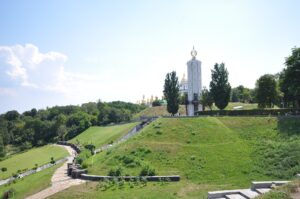
How Many Died in the Holodomor? Why Estimates Range from 2.6 Million to 5 Million
The Holodomor was a man-made famine in Soviet Ukraine in 1932–33. The death toll varies depending on who is counting: from the roughly 3.94 million excess deaths in a 2015 demographic paper, to lower estimates, to higher figures. This article sums up Ukraine's 2006 law, recognition by various countries' parliaments, and the Japanese government's Diet answer that it is “not in a position to assess” the events—attributing who said what.
-
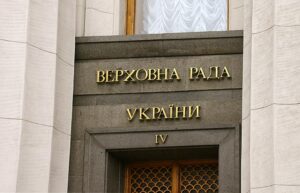
From the Transfer of Crimea to Giving Up Nuclear Weapons: Half a Century of Postwar Ukraine
This article traces the period from the 1946 famine through the 1954 transfer of Crimea, the 1986 Chornobyl nuclear disaster, the 1991 independence and referendum, the 1994 Budapest Memorandum, and the inflation and currency reform of the 1990s. On the 1954 transfer of Crimea, it presents the two officially stated reasons separately from the motives researchers have inferred. In the referendum of December 1, 1991, a majority of those who voted favored independence in all 27 administrative units.
-
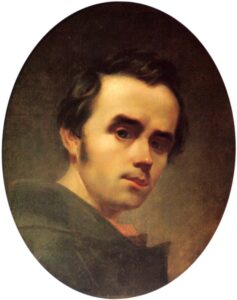
Where to Start With Ukrainian Literature — Books Available in Japanese, by Genre and Era
Trying to read Ukrainian literature runs, before you even choose a book, into the question of where to draw the line around "Ukrainian literature" at all. This article sets out that line first, then lists books confirmed to exist in Japanese translation, organized by genre and era. It also notes that the katakana spelling of a name can differ from book to book. This is not a ranked recommendation.