

Section
Culture & History
Food, music, literature and crafts: Ukrainian culture and the history behind it.
-
The Man Who Designed Ukraine’s First Banknotes and Stamps ── Heorhii Narbut
9 March 2026 marked 140 years since the birth of the graphic designer Heorhii Narbut (1886–1920), who designed the first banknotes and postage stamps of the Ukrainian People's Republic, taught at the Academy of Arts founded in Kyiv in 1917, and later served as its rector. This article covers his work on banknotes, the coat of arms, lettering and books, and his 34 years of life.
-
From the End of Cossack Self-Rule to the Ban on Ukrainian-Language Publishing
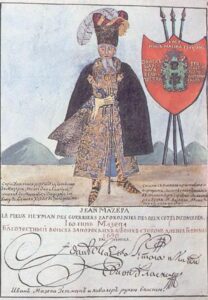
This article traces the period from the Khmelnytsky Uprising of 1648, through the 1654 Pereiaslav Agreement (whose original document does not survive), the abolition of the office of hetman in 1764 and the destruction of the Sich in 1775, to the bans on Ukrainian-language publishing in 1863 and 1876, up to the eve of the First World War. The harm the Jewish community suffered during the uprising is presented through the divergence between different estimates, rather than a single figure.
-
Jugs, Pitchers and Clay Animals ── The Pottery of Opishnia, Poltava Oblast
Blessed with good-quality local clay, the town of Opishnia in Poltava Oblast has made pottery for centuries. This article covers what was designated as intangible cultural heritage in 2012, a family of potters, the factory that began as a cooperative in 1929 and stopped operating in 2002, and the national ceramics museum-reserve founded in 1986. As of September 2026, it is not on UNESCO's list.
-
From the Founding of Heian-kyō to the Ōnin War: What Was Happening in Kyiv
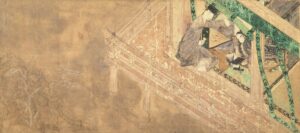
From the move of the capital to Heian-kyō in 794 to the end of the Ōnin War in 1477, this article lines up what was happening in and around Kyiv during the same years. The year 882, taken as the beginning of Kyivan Rus', comes from a chronicle compiled more than two hundred years after the events it describes. The periodization of Japanese history also varies by source in when each era is said to begin.
-
Patterns Made by Weaving, Not Embroidery ── The Rushnyky of Krolevets
In the town of Krolevets in Sumy Oblast, northeastern Ukraine, the red patterns on the ceremonial cloth called rushnyk have been produced not with a needle but on the loom. This article covers the “pick-up weaving” technique and its patterns, how rushnyky are used at weddings and funerals, the differing start dates given by different encyclopedias, and the town's listing on the national register of intangible cultural heritage since 2012 and its geographical-indication registration in 2020.
-

220 Years from the Founding to the Destruction of the Sich: Japan from Sengoku to Edo
This article lines up the roughly 220 years from around 1552, when a Sich was founded on the Dnipro River, to 1775, when the last Sich was destroyed, against Japan during the same period. The Sich was not a single site; there were eight of them. No original document of the Pereiaslav agreement survives. The Battle of Poltava has two dates.
-
Summer Life Above the Treeline ── Hutsul Mountain Herding and Brynza
In Ukraine's western Carpathian Mountains, sheep and cattle have been driven up each summer to the high pastures above the treeline known as polonyna, where herders live in huts and pens and make the salty cheese brynza from the milk. This article covers the form of these seasonal settlements, the scale of the herding in the 1930s, its listing on the national register of intangible cultural heritage, and the geographical-indication registrations of 2019 and 2020.
-
The Year After Ukrainian-Language Publishing Was Banned in the Russian Empire, the University of Tokyo Opened in Japan
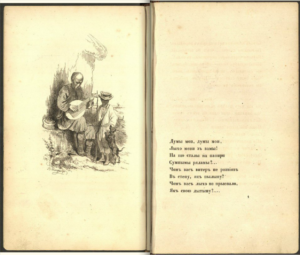
The Ems Ukase of 1876 banned the printing of Ukrainian-language books within the Russian Empire. The following April, in 1877, the University of Tokyo opened in Japan. Starting from Eneida (1798) and Kobzar (1840), published before the ban, this article lines up events from Perry's arrival to 1919, taking care over the difference between the two countries' calendars.
-
The Movable-Frame Hive of 1814 ── The Beekeeper Petro Prokopovych
Ukrainian encyclopedias name Petro Prokopovych as the man who built a movable-frame hive in 1814 that let beekeepers take honey without killing the bees. This article covers the shift from hollow-log hives to frame hives, the beekeeping school he opened in 1828, how to read the claim that he was “the first in the world,” the conflicting hive counts given in different encyclopedias, and today's honey production as recorded by FAOSTAT.
-

Seventy Years as a Soviet Republic, and Japan During Those Years
This article lines up the period when Ukraine was a Soviet republic — from the 1932 famine to independence in 1991 — against Japan during the same years. It notes who counted the figures of 3.9 million, 33,771, and about 200,000, and how.