
Section
Culture & History
Food, music, literature and crafts: Ukrainian culture and the history behind it.
-
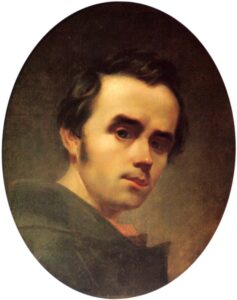
Taras Shevchenko: The Poet the Tsar Forbade to Write or Paint
Born a serf, Shevchenko had his freedom bought with the proceeds of a portrait raffle and was also a painter trained at the Academy of Arts. After his arrest in 1847, he spent 10 years under the Tsar's order forbidding him to write or paint — and still wrote poems and made pictures. This is the life of the poet who made Ukrainian the language of modern literature.
-
Independence Day Is August 24, but Martial Law Has Suspended What “Holiday” Means in Ukraine
Ukraine's Independence Day marks the declaration of independence on August 24, 1991. But the first day observed as an “Independence Day” was actually July 16, tied to the 1990 declaration of sovereignty. This article explains, from the text of the law, the nine holidays set out in the Labor Code and how the provision on days off for holidays has not applied since martial law began in March 2022.
-
Kharkiv, Capital of Soviet Ukraine, and the Derzhprom Building
From late 1919 until June 1934, the capital of Soviet Ukraine was not Kyiv but Kharkiv. To bring the capital's government offices together in one place, the authorities built Derzhprom (the House of State Industry), nine blocks linked by bridges. This article sets out when Kharkiv became and stopped being the capital, how the building came to be, its listing on UNESCO's Tentative List, and the damage it suffered in 2024.
-
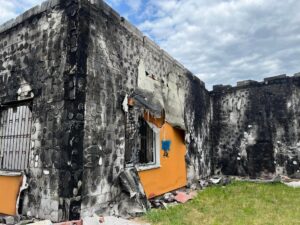
The 14 Paintings Carried Out of a Burning Museum: Painter Maria Prymachenko
Painter Maria Prymachenko spent her life in a village in Kyiv Oblast painting fantastical animals and flowers. Immediately after the full-scale invasion, the museum in Ivankiv that held her work burned down, and the 14 paintings that staff and residents carried out were shown in Kyiv in September 2022. This article traces her life and work, the 100th anniversary of her birth in which UNESCO was involved, and the plan to rebuild the museum.
-
The National Film Archive: 30 Years of the Dovzhenko Centre
The Dovzhenko Centre in Kyiv, Ukraine's largest film archive, was created by a 1994 presidential decree and, as of January 2025, holds more than 62,000 items of film. This article sets out what it preserves and has recovered, how the 2022 “reorganization” order and the ensuing court case ended, and the path to its being granted national status in 2025.
-
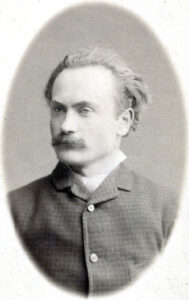
Ivan Franko: The Writer Who Died the Year He Was Nominated for the Nobel Prize
The Nobel Prize nomination archive records the name of Ivan Franko (1856–1916) as a candidate for the 1916 Literature Prize. That May, Franko died in Lviv. This article traces the life of a man born the son of a village blacksmith, arrested three times, who left behind about 6,000 works of fiction, poetry, drama, translation and scholarship, and the university and town that were named after him.
-
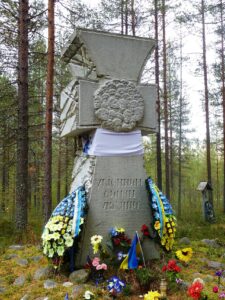
The 1,111 Shot at Sandarmokh in Autumn 1937, and the “Executed Renaissance”
From October 27 to November 4, 1937, in a forest in Karelia, northwestern Russia, 1,111 prisoners from the Solovki camp were shot by the Soviet secret police. Among them were people who had shaped Ukrainian culture in the 1920s, including theater director Les Kurbas and playwright Mykola Kulish. Sources disagree on how many came from Ukraine, ranging from 201 to about 300. This article covers the course of events, the figures, and what happened after the site was found.
-
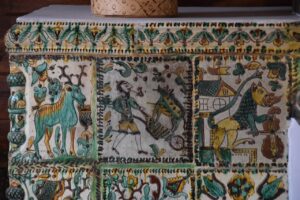
Where Green and Yellow Run Like “Tears”: Kosiv’s Painted Ceramics
In the town of Kosiv, in Ukraine's western Hutsul region, potters have made ceramics by coating vessels in white slip, scratching lines into them with a metal tool, and coloring them in green, yellow and brown. This article covers how this tradition, inscribed on UNESCO's Intangible Cultural Heritage Representative List in 2019, is made, the motifs it has depicted, the potters whose names survive, and its practitioners today.
-
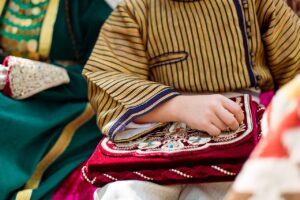
The Rose Means Woman, the Tulip Means Man: The Crimean Tatar Ornament Ornek
Ornek is a pattern that the Crimean Tatar people have used in embroidery, weaving, pottery and silverwork; each motif carries a meaning, and arranged together they can be read like a story. This article covers the content of the pattern, inscribed on UNESCO's Intangible Cultural Heritage list in 2021 at Ukraine's request, and the difficulty of passing it on in Russian-occupied Crimea.
-
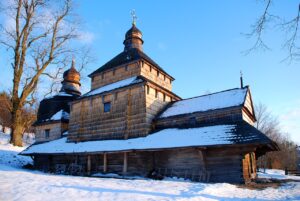
8 of 16, in Ukraine: The Wooden Churches of the Carpathians
The wooden churches of the Carpathian Mountains, called "tserkvas," are built of horizontally stacked logs, their roofs and walls covered in wooden shingles. Of the 16 churches inscribed as a UNESCO World Heritage Site jointly with Poland in 2013, 8 are in Ukraine. This article covers the four architectural types, the lineup of the 8 churches, and the wartime conservation challenges described in a 2024 report.