

Section
Culture & History
Food, music, literature and crafts: Ukrainian culture and the history behind it.
-
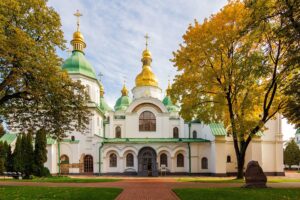
Ukraine’s Cities and Their World Heritage
Kyiv, Lviv, Odesa, Kharkiv, Dnipro. Eight UNESCO World Heritage sites, three of which are on the List of World Heritage in Danger; seven intangible cultural heritage elements; and 545 cultural sites confirmed as damaged as of 29 July 2026. This article traces Ukraine's cities and cultural heritage through UNESCO's published materials.
-
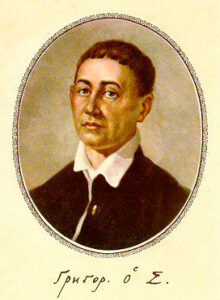
“The World Tried to Catch Me, But Could Not”: The Philosopher Skovoroda
Hryhorii Skovoroda (1722–1794), the figure portrayed on the 500-hryvnia banknote, was a philosopher who, after being dismissed from his teaching post, spent 25 years walking from place to place and writing poems and dialogues while staying with friends. Drawing on encyclopedias, this article traces his life and works and his idea of "congenial work," and records how the museum dedicated to him was destroyed by a Russian missile in 2022, the year of his 300th birth anniversary.
-
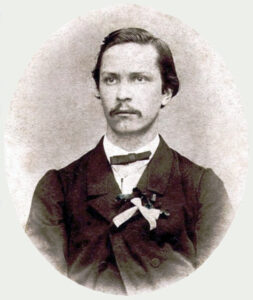
The Composer Mykola Lysenko and the Taras Bulba That Was Never Staged in His Lifetime
Mykola Lysenko (1842–1912), the composer who laid the foundations of modern Ukrainian music. His major work, the opera Taras Bulba, had offers to stage it in Russian but was never performed in its original language during his lifetime; its premiere came only in 1924 in Kharkiv, twelve years after his death. This article traces his life, from collecting folk songs and setting Shevchenko's poems to music, to the 1885 “Prayer for Ukraine” and the school he opened in 1904.
-
Mountain Spirits and a Summer of Shepherding: Kotsiubynsky’s Shadows of Forgotten Ancestors
Shadows of Forgotten Ancestors (1911), the novella by Mykhailo Kotsiubynsky that inspired the film of the same name (also known as Wild Horses of Fire), is set in a Hutsul village high in the Carpathians. This article traces the novella itself — Ivan and Marichka, born into feuding families, life at the summer mountain pastures, and mountain spirits and a sorcerer — while checking the writer's life and the years he stayed in the village against the encyclopedias.
-
55 of 400 Tales Feature the Fox: Ukraine’s Animal Folktales, Published in 1916
In Ukrainian, folk tales with animals as the main characters are called “baika,” distinct from “kazka,” tales in which people are the main characters. In 1916 the folklorist Volodymyr Hnatiuk collected 400 of these tales and organised them by animal into a two-volume book. Drawing on the book's preface and table of contents, this article traces who recorded the tales and where, how tales of the fox and the wolf were classified, and how the war delayed publication.
-
How to Arrange 14,000 Proverbs: The Collections of Nomys and Franko
Ukrainian proverbs were compiled into numbered books in the 19th century. Nomys's 1864 collection arranges tens of thousands of proverbs by theme, while Franko's collection of 1901–10 arranges them alphabetically by keyword. This article introduces the man behind the pen name, the difference in how they were arranged, and seven proverbs with their original numbers and page references.
-
The Cossack Songs of Dnipropetrovsk Oblast, Which Cannot Be Sung Without a Starter and a High Voice
One person starts the song, another leads the melody in a high voice, and the rest support it in the middle and low voices. The Cossack songs sung by village choirs in Dnipropetrovsk Oblast were inscribed on UNESCO's Urgent Safeguarding List in 2016. This article draws on the nomination file and the committee's decision to look at the age of the bearers, the roles of each voice, the reasons the songs were judged urgent, and the contents of the 2020 report.
-
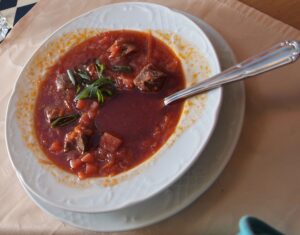
Ukraine’s Table — Borscht’s UNESCO Listing, and Cuisine That Changes by Region
Borscht's UNESCO listing is not on the Representative List but on the List of Intangible Cultural Heritage in Need of Urgent Safeguarding. This article covers grain porridges, the eastern and western forms of paska bread, regional groupings of cuisine, and drinks and pork products. Claims of origin that could not be verified are gathered at the end of the article.
-
Kateryna Bilokur, the Painter Who Made Her Own Brushes and Paints
Kateryna Bilokur (1900–1961), who spent her whole life in the village of Bohdanivka in Kyiv Oblast, never went to school and began painting flowers with brushes and paints she made herself. This article covers her works depicting more than 100 kinds of flowers, the letter to a singer that brought her to public attention, the 1954 exhibition in Paris, and the origin of the often-quoted “words of Picasso.”
-
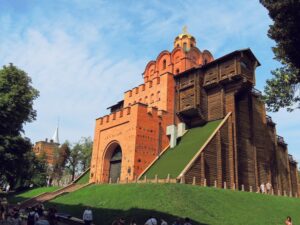
From Kyivan Rus’ to the 16th Century — Galicia-Volhynia and Two Unions
This article traces the history of the land that is now Ukraine before the Cossacks emerged as a political force: from the Trypillia culture of around 5000 BCE, through the Greek colonies on the Black Sea coast, Kyivan Rus', and the Grand Duchy of Lithuania, to the Union of Lublin in 1569 and the Union of Brest in 1596. The view of Kyivan Rus' as the state of a single "Old Rus' nationality" is the official framework put forward by a panel of historians commissioned by the Soviet Communist Party in the 1930s. Ukrainian historiography since Hrushevsky has regarded the Principality of Galicia-Volhynia as the successor to the Kyivan state.