
Section
Understanding Society
The institutions, economy and social trends behind the news.
-

Crimean Tatars, Karaites, Krymchaks: Ukraine’s Law on Indigenous Peoples
In a 2021 law, Ukraine recognized three peoples formed on the Crimean Peninsula — Crimean Tatars, Karaites, and Krymchaks — as indigenous peoples. In April 2026, the Cabinet granted legal status to the Mejlis, the Crimean Tatars' representative body. This article also sums up what the International Court of Justice did and did not find regarding the Mejlis, which Russia has banned.
-
“-IX” Is the 9th Convocation of Parliament: A Clue to Reading Ukrainian Laws in the Original
In a Ukrainian law's number, such as “4223-IX,” the “IX” indicates the convocation of the Verkhovna Rada that adopted it. Cabinet resolution numbers restart from 1 every year, and a law has several dates: adoption, promulgation, entry into force, and the start of application. Using real legal acts as examples, this article explains how to read the numbers, dates, status labels, and amendment-consolidated “redactions” in the Verkhovna Rada's legal database.
-

From 200,000 Registered Cases to a Verdict: How Ukraine Prosecutes War Crimes
According to Ukraine's Office of the Prosecutor General, 203,382 cases had had investigations opened under Article 438 of the Criminal Code (war crimes) between the full-scale invasion and the end of 2025. Meanwhile, only 102 people were convicted in this category in 2025. This article sums up the differences between registration, notice of suspicion, indictment, and verdict, the procedure for trying suspects who are abroad, and the division of labor with the International Criminal Court.
-

Nearly 200,000 Damage Claims Filed: Where the Machinery to Make Russia Pay and Judge Its Leaders Stands Now
The Council of Europe's Register of Damage for Ukraine, which records damage caused by Russia's aggression, had received nearly 200,000 claims by September 2026. But the Register does not decide compensation amounts. The International Claims Commission, which will decide compensation, and the Special Tribunal, which will judge the leaders who decided on the aggression, had not yet been established as of September 2026. This article sums up the role and progress of all three mechanisms, and Japan's involvement.
-
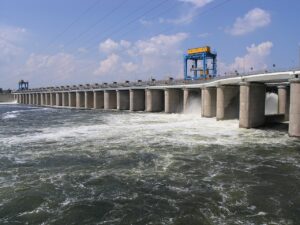
What Happened in Kakhovka the Day the Russian-Controlled Dam Broke
In the early hours of June 6, 2023, the dam of the Kakhovka Hydroelectric Power Plant on the Dnipro River—under Russian military control since February 2022—collapsed in an explosion. Downstream, at least 80 settlements were flooded; upstream, the reservoir that was the drinking-water source for more than 700,000 people began to dry up. The United Nations and the Ukrainian government estimate the damage and losses at nearly $14 billion.
-

Ukraine’s Rivers Flow to Three Seas — Water Systems, Climate, and Chernozem
Ukraine's river water heads not only to the Black Sea but also to the Sea of Azov and the Baltic Sea. This article sets out the basins of Ukraine's major rivers as recorded in the National Water Cadastre, its natural zones and climate, and the extent and degradation of its chernozem, attaching the issuing body and date to every figure. Even Japan's own public bodies do not agree on the country's area.
-
How Far Is a Support Organization’s Information Disclosed? — Japanese and Ukrainian Corporate Systems
When choosing whom to support or partner with, how much information the law requires to be disclosed depends on an organization's legal form. This article sets out, following Japanese and Ukrainian statutes and public databases, what an eligibility for a deduction on donations actually guarantees, where to look in accounting and activity reports, and how to check an organization on the Ukrainian side. It does not recommend or evaluate any specific organization.
-
Ukraine’s Currency, the Hryvnia: Its Yen Exchange Rate and Features | Tips for Paying, Too
Ukraine’s currency, the hryvnia, is essential to any account of the country’s history, culture, and economic development. This article explains the hryvnia’s exchange rate against the yen, its features, its economic impact, and practical information for Japanese tourists. If you’re interested in Ukraine’s economy or tourism, please use this article as a reference. The History of Ukraine’s Currency, the Hryvnia (UAH) Ukraine’s currency, the hryvnia, was officially introduced on September 2, 1996. This was not simply the birth of a new currency; it was an important milestone in Ukraine beginning…
Published in
-
The History of Ukraine’s Economic Situation | IMF and International Support Explained
This article was published in July 2024, and its figures were revised in September 2026. The assumptions to state when citing wartime economic statistics (the area covered, the exchange rate, and whether a figure is an estimate or confirmed) are covered in Ukraine’s Economic Figures in Wartime — Telling Apart Scope, Exchange Rates, and Estimates. Ukraine’s economy has weathered many difficult periods, from the turmoil after the Soviet collapse to the 2008 global financial crisis. Then, on February 24, 2022, Russia began its full-scale invasion of Ukraine. The large-scale fiscal…
Published in
-

The Career of Ukraine’s President Zelenskyy | An Unusual Turn from Actor, and the Background
In recent years, Ukraine’s President Zelenskyy has appeared more and more often in Japanese news as well. Relatively young for a president, he has drawn attention from around the world as the leader of a Ukraine facing Russian aggression. But did you know that President Zelenskyy was originally a comedic actor? This time, we take a closer look at President Zelenskyy’s career. The Career of Ukraine’s President Zelenskyy President Zelenskyy was born in a city known for mining, and dedicated himself to his studies. Here is his career, from childhood…
Published in