
Japan-Ukraine Relations | History, Trade, and Economic Support Explained
This article was published in July 2024 and revised in September 2026. Please also read A Japan-Ukraine Timeline — From the 1965 Sister-City Agreement to Yen Loans, which lists events with dates and the body that announced them.
News of Japan supporting Ukraine has become more common since Russia’s full-scale invasion of Ukraine began on February 24, 2022. So when and where did the relationship between Japan and Ukraine begin before that?
This time, we explain the relationship between Ukraine and Japan, focusing on history, trade, and economic support. If you’re interested in the relationship between Ukraine and Japan, please read to the end.
The Historical Relationship Between Ukraine and Japan

The relationship between Ukraine and Japan began relatively recently. Here, we explain that historical relationship in detail.
We look at Yeroshenko, a writer who was active in Japan, and the establishment of diplomatic relations after Ukraine’s independence.
This article does not attempt to identify how far back a point of contact between Japan and Ukraine can be traced. The oldest point of contact whose date can be confirmed is the sister-city agreements discussed below (Yokohama and Odesa in 1965, Kyoto and Kyiv in 1971).
Vasyl Yeroshenko, a Writer Active in Japan
As a writer active in Japan, we look here at Vasyl Yeroshenko.
Yeroshenko was a blind poet and fairy-tale writer who came to Japan in 1914 and was expelled from the country in 1921. During his stay in Japan, he worked on spreading Esperanto and publishing poetry, and interacted with Japanese cultural figures such as the playwright Ugo Akita (Shinjuku Nakamuraya, “People Connected to Our Founder”). Sources disagree on where he was born, so this article does not identify it.
Yeroshenko’s work became known to Japanese readers through poems and fairy tales published in magazines.
Yeroshenko was expelled from Japan in 1921, ending his activities there. This article does not state the reason for his expulsion, since it could not be confirmed against a primary source.
Diplomatic Relations After Ukraine’s Independence
Ukraine became independent from the Soviet Union in 1991. Shortly afterward, Japan and Ukraine formally established diplomatic relations.
Japan recognized Ukraine as a state on December 28, 1991, and diplomatic relations between the two countries were established on January 26, 1992 (Ministry of Foreign Affairs, “Basic Data on Ukraine,” as of September 3, Reiwa 8 [2026]). The same date can also be confirmed from Prime Minister Kiichi Miyazawa’s policy speech at the January 28, 1992 plenary session of the House of Representatives (“On January 26, we established diplomatic relations with Ukraine and four other republics”).
The Japanese government welcomed Ukraine’s independence, and has supported Ukraine’s development for many years through economic support and technical cooperation. In recent years, Japan’s support for Ukraine’s economic reform and infrastructure development has drawn attention.
Since Ukraine’s independence, Japan has supported Ukraine’s economic recovery through ODA (Official Development Assistance), cooperating in many fields including infrastructure development and medical support.
Between the two countries, an agreement on technical cooperation and grant aid was concluded in June 2004, and an agreement on cooperation to promote the follow-up response to the nuclear power plant accident was concluded in May 2012 (from the list of bilateral treaties and arrangements in the Ministry of Foreign Affairs’ “Basic Data on Ukraine”; that list gives only the year and month, and does not specify for each entry whether the date is of signing or entry into force). This article does not name individual support projects related to the Chornobyl nuclear accident, since primary sources could not be confirmed.
This has further strengthened the relationship between the two countries, building a partnership that matters to both.
The Trade Relationship Between Ukraine and Japan

Here, we present the items and figures listed in the Ministry of Foreign Affairs’ “Basic Data on Ukraine” (as of September 3, Reiwa 8 [2026]), together with their source and reference date.
We explain exports from Ukraine to Japan, exports from Japan to Ukraine, and the trade balance, so if you’re interested in the economy, please use this as a reference.
What’s Exported from Ukraine to Japan
The main exports from Ukraine to Japan are as follows.
- Ores
- Tobacco
- Aluminum
- Seafood
- Chemical products
- Processed wood products
These items are listed in the Ministry of Foreign Affairs’ “Basic Data on Ukraine” as “main items (2020: State Statistics Service of Ukraine).” Whether the order reflects value is not stated on that page. This article does not describe how each item is used in which Japanese industry, since primary sources could not be confirmed.
What’s Exported from Japan to Ukraine
There are also many items exported from Japan to Ukraine. The main exports are as follows.
- Automobiles
- Machinery and equipment
- Optical instruments
- Pharmaceuticals
- Electrical and electronic equipment
This, too, comes from the “main items (2020: State Statistics Service of Ukraine)” in the Ministry of Foreign Affairs’ “Basic Data on Ukraine.” This article does not name individual companies or describe how these products are received in the Ukrainian market, since primary sources could not be confirmed.
The Ukraine-Japan Trade Balance
The figures are as given in the Ministry of Foreign Affairs’ “Basic Data on Ukraine” (as of September 3, Reiwa 8 [2026]), quoting Ministry of Finance trade statistics. Both “exports” and “imports” are given from Japan’s perspective.
2024 Trade Figures
| Direction | Amount (2024) |
|---|---|
| Exports from Japan to Ukraine | ¥66.02 billion |
| Imports from Ukraine to Japan | ¥11.76 billion |
Features of the Trade Balance
These two figures differ greatly depending on direction. In 2024, exports from Japan to Ukraine were ¥66.02 billion, while imports from Ukraine to Japan were ¥11.76 billion — imports amount to just under a fifth of exports (calculated from ¥66.02 billion and ¥11.76 billion). Lumping this together as “Japan-Ukraine trade” and looking only at the combined total obscures this difference.
Year-by-year trends can be checked in the Ministry of Finance’s trade statistics (Trade Statistics of Japan), under the “Time-Series Tables of Exports and Imports by Region (Country).” Ukraine’s trade is explained in detail in the article below — please take a look.
Reference: Ukraine’s Export Rankings | Its Main Trading Partners, and Current Challenges
The Economic Relationship Between Ukraine and Japan

The economic relationship between Ukraine and Japan plays an important role in each country’s development.
After Russia’s full-scale invasion of Ukraine, which began February 24, 2022, Japan’s support expanded across the humanitarian, financial, and recovery/reconstruction fields. Meanwhile, 38 Japanese companies have a presence in Ukraine (as of October 2023, Ministry of Foreign Affairs).
Here we explain in detail Japan’s economic recovery support for Ukraine and the state of Japanese companies’ presence there.
Economic Recovery Support for Ukraine
The Japanese government supports Ukraine through ODA (Official Development Assistance) and other means. On its scale, the Ministry of Foreign Affairs states the following.
The Ministry of Foreign Affairs states, “Since Russia’s invasion of Ukraine in February 2022, Japan has announced and implemented a total of approximately $20 billion in support across the humanitarian, financial, and recovery/reconstruction fields (as of the end of 2025)” (Ministry of Foreign Affairs, “Basic Data on Ukraine,” as of September 3, Reiwa 8 [2026]).
When quoting this sentence, don’t drop its qualifications. As it says “announced and implemented,” this figure combines amounts merely announced with amounts already carried out, and the breakdown has not been published. Neither the split between grants and loans, nor how much has actually been disbursed, can be determined from this statement. And the reference point is the end of 2025 — not a current figure.
Japanese Companies Entering Ukraine, and 56 Cooperation Documents
38 Japanese companies have a presence in Ukraine (as of October 2023, Ministry of Foreign Affairs), and Japan’s outstanding direct investment in Ukraine stands at $180.5 million (as of the end of December 2023, National Bank of Ukraine). Both figures come from the Ministry of Foreign Affairs’ “Basic Data on Ukraine” (as of September 3, Reiwa 8 [2026]); note that their reference point is 2023.
This article does not describe the preferential measures the Ukrainian government offers foreign companies, since primary sources could not be confirmed.
Also, on February 19, 2024, the “Japan-Ukraine Conference for Promotion of Economic Reconstruction” was held at the Keidanren Kaikan in Tokyo. It was hosted by the Japanese government, Keidanren, JETRO, and the Ukrainian government (Ministry of Foreign Affairs).
According to the Ministry of Foreign Affairs’ “Japan-Ukraine Conference for Promotion of Economic Reconstruction, Leaders’ Session (Overview)” (February 19, Reiwa 6 [2024]), a total of 56 cooperation documents were signed and unveiled that day in the presence of the two leaders. These documents covered emergency recovery support, economic reconstruction and industrial upgrading, and basic institutional groundwork, among other things, and the Japan-Ukraine tax treaty was also signed the same day. On attendance, Keidanren states “approximately 350 people in total.”
At the conference, Prime Minister Fumio Kishida listed five actions to promote Japanese private investment and create jobs in Ukraine: signing the tax treaty, starting negotiations to revise the investment agreement, and establishing a JETRO office in Kyiv, among others (Ministry of Foreign Affairs, “Japan-Ukraine Conference for Promotion of Economic Reconstruction, Leaders’ Session (Overview),” February 19, Reiwa 6 [2024]).
Cultural Exchange Between Ukraine and Japan
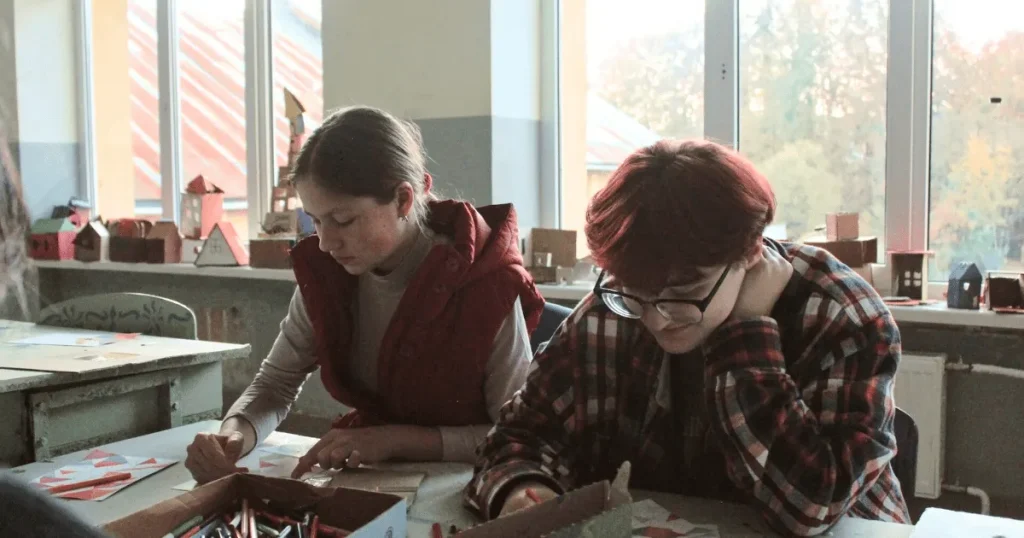
Cultural exchange between Ukraine and Japan has developed through a wide range of interactions from the past to the present. As concrete examples of cultural exchange between the two countries, here is a detailed look at the sister cities that have formed and the active exchange events taking place.
Sister Cities Formed Between Ukraine and Japan
As part of cultural exchange between Ukraine and Japan, several sister-city relationships have been formed. This has activated exchange at the citizen level between the two countries, deepening mutual understanding.
Sister cities are an important initiative promoting cooperation in education, culture, the economy, and other fields, supporting friendly relations between the two countries.
Kyoto and Kyiv formed their sister-city agreement on September 7, 1971 (Showa 46) (City of Kyoto). This was more than 20 years before diplomatic relations were established between Japan and Ukraine, when Kyiv at the time was part of the Soviet Union.
Also, Yokohama and Odesa formed their sister-city agreement on July 1, 1965 (Showa 40) (City of Yokohama). Arranged in chronological order, the relationship between Japan and Ukraine begins with these two city partnerships — before diplomatic relations between the two countries themselves.
On April 7, 2024, “Clown Parade 2024 in KANAGAWA” was held at KAAT Kanagawa Arts Theatre (in Yokohama). It was planned in the style of “Komediada,” a clown festival held every April in Odesa, and was hosted by the Clown Parade Project, co-hosted with KAAT Kanagawa Arts Theatre. Performers who had taken part in that festival appeared, and the venue also featured a photo exhibition of Komediada and a report on Odesa from an evacuee. Attendance figures could not be confirmed.
The sister-city relationships between Ukraine and Japan symbolize the friendship between the two countries, and more cities are expected to deepen cultural exchange in the years ahead.
Active Exchange Events
Cultural exchange between Ukraine and Japan is actively carried out through many events.
Cultural events between the two countries deepen mutual understanding among citizens. They are also a valuable experience for younger generations, and form an important foundation for building friendly relations in the future.
For example, events introducing Ukrainian folk music and dance to Japan have been held regularly. Traditional Ukrainian music and dance are fresh to Japanese audiences, and offer a chance to deepen understanding of another culture.
Conversely, traditional Japanese culture has also been introduced in Ukraine, with tea ceremony, flower arrangement, and performances of traditional Japanese instruments shown to people there.
Film festivals and art exhibitions have also been held, providing a venue for artists and creators from both countries to present their work to each other.
Cultural exchange between Ukraine and Japan will likely continue through many more events, further strengthening the relationship between the two countries.
The Future of the Ukraine-Japan Relationship

The relationship between Ukraine and Japan is expected to remain an important partnership going forward. This is because the two countries have supported each other’s development through economic cooperation and technical support.
Here, we explain in detail the concrete outlook for the future and the fields of cooperation expected ahead.
Deepening Economic Cooperation and Technical Support
Japan’s support for Ukraine’s economic recovery will likely continue, contributing to infrastructure development and industrial modernization.
Japan supports Ukraine through ODA (Official Development Assistance), but this article does not name individual ongoing projects, since primary sources could not be confirmed. The latest projects can be checked through announcements from the Ministry of Foreign Affairs and the Japan International Cooperation Agency (JICA).
Japanese companies are also entering the Ukrainian market, supporting Ukraine’s economic development through technology transfer and investment.
In particular, Japanese companies are increasingly entering fields such as manufacturing and IT, making use of Ukraine’s talented workforce and resources to improve their competitiveness.
Political Stability and Economic Growth
As both countries pursue political stability and economic growth, the relationship between Ukraine and Japan is expected to play an important role regionally and in the international community as well.
Japan’s support for Ukraine’s security and regional stability also matters for the stability of the international community as a whole.
The two countries also cooperate on international issues, sharing common views on matters such as climate change, promoting international trade, and human rights.
Japan supports the development of Ukraine’s democracy and market economy, and will likely continue strengthening this partnership to help Ukraine achieve stable growth.
Ukraine and Japan Will Continue to Maintain an Important Partnership
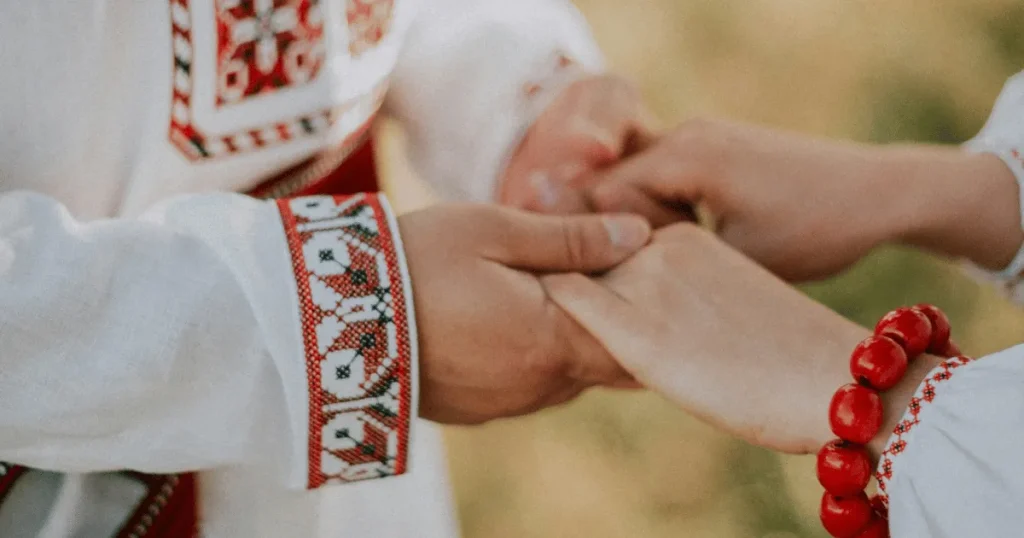
The relationship between Ukraine and Japan has built deep bonds across a range of fields, from politics and economics to culture. Going forward, it will remain important to support Ukraine’s development through economic cooperation and technical support, and to strengthen the friendly relationship between the two countries.
Through exchange at the citizen level and cooperation in education, a friendly relationship spanning generations is also expected to be built.
Ukraine and Japan will likely maintain an important partnership regionally and in the international community, working toward a future of shared prosperity.
Sources and article record
Sources and references
- ウクライナ基礎データas of September 3, Reiwa 8 [2026]
Published by Ministry of Foreign Affairs · Checked: 2026-09-23 - 日・ウクライナ経済復興推進会議首脳セッション(概要)February 19, Reiwa 6 [2024]
Published by Ministry of Foreign Affairs · Checked: 2026-09-23 - 日・ウクライナ経済復興推進会議February 20, Reiwa 6 [2024]
Published by Ministry of Foreign Affairs · Checked: 2026-09-23 - 日・ウクライナ経済復興推進会議 オンライン配信についてFebruary 16, Reiwa 6 [2024]
Published by Ministry of Foreign Affairs · Checked: 2026-09-23 - 日・ウクライナ経済復興推進会議を開催Keidanren Times, March 14, 2024, No. 3629
Published by Japan Business Federation (Keidanren) · Checked: 2026-09-23 - 日・ウクライナ経済復興推進会議で56件の協力文書が締結JETRO Business News, March 2024
Published by JETRO (Japan External Trade Organization) · Checked: 2026-09-23 - ウクライナ経済復興推進準備会議(第四回会合)の開催summary of results, January 30, 2024
Published by Cabinet Secretariat · Checked: 2026-09-23 - キーウ(キエフ)市(ウクライナ)姉妹都市提携1971年9月7日
Published by City of Kyoto · Checked: 2026-09-23 - オデーサ市 姉妹都市提携日1965年7月1日
Published by City of Yokohama · Checked: 2026-09-23 - 創業者ゆかりの人々 ワシリー・エロシェンコ
Published by Shinjuku Nakamuraya · Checked: 2026-09-23 - 笑いで平和を クラウンパレード2024 in KANAGAWAApril 7, 2024
Published by KAAT Kanagawa Arts Theatre · Checked: 2026-09-23 - 第123回国会 衆議院本会議 1992年1月28日 宮澤喜一内閣総理大臣施政方針演説
Published by National Diet Library, Diet Minutes Search System · Checked: 2026-09-22 - Yeroshenko, Vasyl
Published by Internet Encyclopedia of Ukraine (Canadian Institute of Ukrainian Studies, University of Alberta) · Checked: 2026-09-23
Corrections and updates
- The statement that Japan's support for Ukraine totaled “$40.5 billion in 2023” was an error, and has been replaced with the Ministry of Foreign Affairs' "Basic Data on Ukraine" (as of September 3, Reiwa 8 [2026]) statement that “since Russia's invasion of Ukraine in February 2022, a total of approximately $20 billion has been announced and implemented (as of the end of 2025),” with the fact that the breakdown has not been published now stated explicitly. Also removed were statements whose source could not be confirmed (the claim that the Koji Ruien is the oldest record of Japan-Ukraine relations, the 2020 trade figures of ¥54.18 billion and ¥56.88 billion, a conference attendance of “approximately 300 people” and a “seven fields” framing, descriptions of specific uses for trade items and individual company names or market reception, and a list of ongoing ODA projects), and the following were added or corrected from primary sources: the date diplomatic relations were established (January 26, 1992), the sister-city agreement dates (Kyoto and Kyiv = September 7, 1971; Yokohama and Odesa = July 1, 1965), the 2024 trade figures (¥66.02 billion in exports, ¥11.76 billion in imports), and the 56 cooperation documents and the date of that conference (February 19, 2024, at the Keidanren Kaikan).
- This article had described Vasyl Yeroshenko as “a Ukrainian writer,” but since sources disagree on his birthplace and his nationality/ethnicity cannot be stated definitively, this has been changed to “a writer active in Japan.”
If you find an error in this article, please tell us via Corrections. Once we have checked it, we will record in the article what was corrected and why.
Related articles
-
Free Public Housing and One-Time Payments: Where Municipal Support for Ukrainian Evacuees Stands Now
Since spring 2022, prefectures and municipalities across Japan have offered vacant public housing rent-free and handed out their own one-time payments. Four years on, Hyogo Prefecture closed applications for its living-support payment in March 2025, and the city of Maebashi stopped accepting new arrivals in March 2026. Drawing on municipalities' official pages, this article lines up how these programs began and where they stand now.
-
The Odesa Film Studio Where Dovzhenko Began Making Films
The Odesa Film Studio was founded in 1919 and was the center of Ukrainian filmmaking in the 1920s. It was here that Dovzhenko made his first films. From the 1930s it went through a period of being used as a base for Moscow studios, and today it is a private joint-stock company that has also seen a court battle over the state's stake. This article traces its changes of name, its major works, and its current ownership.
-
The Causes of the Chornobyl (Chernobyl) Nuclear Disaster, and Where Things Stand Today
On April 26, 1986, the world’s worst nuclear accident occurred at the Chornobyl (Chernobyl) Nuclear Power Plant. A huge quantity of radioactive material was released into the atmosphere, and residents nearby were forced to evacuate. This article explains the background to the Chornobyl disaster, its effects on the natural environment and on people, and the situation there today. If you want to know about Chornobyl today, or want to compare it with the Fukushima nuclear accident, please use this as a reference. Where Is Ukraine’s Chornobyl Nuclear Power Plant? The…
Published in