
машина Takes Seven Different Forms: Case and Declension in Ukrainian Nouns
Ukrainian nouns change form into seven cases depending on their role in a sentence. This article draws on the 2019 orthography and Ukrainian-language encyclopedias to set out the names and main functions of the nominative, genitive, dative, accusative, instrumental, locative, and vocative, the four declension types, how prepositions combine with cases, and examples where Japanese particles do not map one to one.
The Ukrainian word for “car” is маши́на. Yet in a sentence it can appear as маши́ни, маши́ні, маши́ну, маши́ною, маши́но — the ending keeps changing. This mechanism, in which a noun changes form according to the role it plays in a sentence, is called “case” (відмінок). Ukrainian nouns have seven cases.
What follows sets out the names and main functions of the seven cases, the four declension types for nouns, and how they combine with prepositions, drawing on the 2019 edition of the orthography (правопис) and Ukrainska Mova. Entsyklopediia (the Ukrainian Language Encyclopedia, 2nd ed., 2004; hereafter “the encyclopedia”), compiled by the Institute of Linguistics and the Institute of the Ukrainian Language of the National Academy of Sciences of Ukraine. Confirmed as of September 2026.
One Noun, Seven Forms
The orthography sets out noun declension in a table, and its very first example is маши́на.
| Case | Abbreviation | Singular | Plural |
|---|---|---|---|
| називний | Н. | маши́на | маши́ни |
| родовий | Р. | маши́ни | маши́н |
| давальний | Д. | маши́ні | маши́нам |
| знахідний | Зн. | маши́ну | маши́ни |
| орудний | Ор. | маши́ною | маши́нами |
| місцевий | М. | (на) маши́ні | (на) маши́нах |
| кличний | Кл. | маши́но | маши́ни |
As with the singular маши́ни (genitive) and the plural маши́ни (nominative, accusative, and vocative), the same form can represent different cases. The encyclopedia lists the fact that the same ending can represent multiple cases as a feature of Ukrainian noun declension. For example, the ending -і can appear in школі (“at school,” dative), у лісі (“in the forest,” locative), and учителі (“the teachers,” nominative plural) alike.
The Internet Encyclopedia of Ukraine (IEU), published by the University of Alberta’s Canadian Institute of Ukrainian Studies, gives as an example of the same ending’s form being distinguished by stress: ха́ти (“of the house,” singular genitive) versus хати́ (“houses,” plural nominative and accusative). This is one reason to check the stress marks given in a dictionary or in the orthography’s tables.
The Names of the Seven Cases, and Their Main Functions
According to the encyclopedia’s entry “відмінок” (case), the number of cases varies by language: Ukrainian has seven, Russian and Belarusian have six, German has four. The same entries state that the term “відмінок” was first used in 1893, in the grammar by Smal-Stotsky and Gartner, and that the individual names of the seven cases were first used in the 1907 grammar by Krymsky.
The same entry states that each case has a central function: the nominative marks the subject of an action or state, the accusative the object of an action, the dative the recipient, the instrumental the instrument, and the locative primarily marks location. The table below sets out the explanations and example sentences given in each case’s own entry.
| Case (abbreviation) | English name | Central function | Encyclopedia’s example |
|---|---|---|---|
| називний (Н.) | Nominative | Subject of the sentence. The dictionary headword form | «Світ палає» (“The world is burning”) |
| родовий (Р.) | Genitive | Modifies a noun, like “of” | спів матері (“the mother’s song”), сміливість хлопця (“the boy’s courage”) |
| давальний (Д.) | Dative | Recipient of an action | «Подарував народові» (“gave it as a gift to the people”) |
| знахідний (Зн.) | Accusative | Object of an action | «Зрубали яблуню» (“They cut down the apple tree”) |
| орудний (Ор.) | Instrumental | The instrument or means of an action | «Їхали саньми» (“They rode by sleigh”) |
| місцевий (М.) | Locative (also called prepositional) | Location. Always used with a preposition | «лежали в садку» (“they lay in the garden”) |
| кличний (Кл.) | Vocative | Address | «Зупиніться, поети!» (“Stop, poets!”) |
The “central function” in the table is each case’s most typical use. Every case also has other functions — for instance, the genitive is also used after many prepositions and in numerical expressions. IEU likewise states that the nominative marks the subject while every other case expresses some dependency on the verb or another word, and adds that the genitive and instrumental can express time, place, or cause.
The Locative Is Never Used Without a Preposition
Of the seven cases, the locative is the only one never used without a preposition. According to the encyclopedia, it combines with the prepositions в (у), на, по, при, and, when expressing time, о (об). IEU likewise writes that the locative is used only with a preposition, and mostly expresses relations of time and place. This is why (на) has been added before М. in the маши́на table above.
The Vocative Is the Form for Addressing Someone
The vocative is the form used to address a person or thing. According to the encyclopedia, for a long time Ukrainian grammar more commonly used the term “клична форма” (“the form of address”) instead. IEU writes that in casual speech, the nominative is sometimes used in place of the vocative. How name forms change when calling someone is covered in section 4 of “Ukrainian Personal Names: Romanization, Patronymics, and Forms of Address.”
Nouns Decline According to Four Types
Which endings a noun takes is fixed for each noun. §66 of the orthography divides nouns into four “declensions” (відміна) by gender and ending.
| Declension | Nouns included | Orthography’s examples | Singular genitive |
|---|---|---|---|
| First declension | Nouns ending in -а or -я in the nominative. Mainly feminine, but also including masculine nouns and nouns used for either gender | маши́на, наді́я, Мико́ла | маши́ни, наді́ї |
| Second declension | Masculine nouns ending in a consonant or -о, and neuter nouns ending in -о, -е, or -я | коза́к, ба́тько, крило́, по́ле | козака́, крила́ |
| Third declension | Feminine nouns ending in a consonant, and ма́ти (“mother”) | тінь, по́дорож, гі́дність | ті́ні, гі́дності / гі́дности |
| Fourth declension | Neuter nouns ending in -а or -я that take -ат-, -ят-, or -ен- when declined | курча́, теля́, ім’я́ | курча́ти, і́мені / ім’я́ |
The first and second declensions are further divided into three groups — hard, soft, and mixed (§67). Depending on whether the last consonant of the stem is hard, soft, or a sibilant such as ж, ч, ш, щ, the vowel of the ending changes. The encyclopedia states that of the four declensions, the first and second are the most productive (most readily take in new words).
The reason the third declension’s genitive has both гі́дності and гі́дности is that the 2019 orthography also recognizes the -и form. The 2019 revision of the orthography is covered in “The 2019 Orthography Became the ‘State Language Standard’ Seven Years Later.”
The genitive ending varies even among masculine nouns of the same second declension, some taking -а and others -у. The encyclopedia lists -и (стіни), -а (ясена), and -у (будинку) as endings marking the singular genitive. Which one a given word takes is fixed by the word itself, so it is checked against the ending shown beside the headword in a dictionary. How to read dictionary headwords is set out in “Type лютого and Get ‘Lutheran’: How to Use a Ukrainian Dictionary.”
Prepositions and Case
According to the encyclopedia’s entry “прийменник” (preposition), there are now more than 200 prepositions in Ukrainian, and they combine with every case except the nominative. The genitive combines with the most prepositions — more than 150.
- Combine with only one case: для (genitive), всупереч (dative), про (accusative), поряд з (instrumental), при (locative)
- Combine with two cases: на, о (об), по (accusative and locative), над, під, перед (accusative and instrumental)
- Combine with three cases: в (genitive, accusative, and locative), за, між (genitive, accusative, and instrumental)
The same preposition can change meaning depending on the case. In the encyclopedia’s examples, в місті (“in the town,” locative) versus в місто (“into the town,” accusative), and над озером (“above the lake,” instrumental) versus над озеро (“toward above the lake,” accusative), show that the locative and instrumental express being in that place, while the accusative expresses heading toward it. Even for the same place, the preposition differs: іду в полі (“I am walking within the field”) versus іду по полю (“I am walking across the field”).
No One-to-One Match With Japanese Particles
Case plays a role similar to the Japanese particles ga, no, ni, o, and de. But the match is not one to one. Translating the encyclopedia’s example sentences into English makes this clear.
- “To”: in «Подарував народові» (“gave it as a gift to the people”), “to the people” is dative. In «Я лежу на возі» (“I am lying on the cart”), “on the cart” is locative. в місто (“toward the town”) is accusative
- “By/with”: in «Їхали саньми» (“They rode by sleigh”), “by sleigh” is instrumental. в садку (“in the garden”) is locative
- The subject of a state: in «Федькові досадно» (“Fedko feels frustrated”), the person feeling frustrated is in the dative. The encyclopedia lists this dative use — marking the subject of a state — as one of its functions
- The object: the object of an action is usually accusative, but the encyclopedia notes that in negative sentences the genitive predominates, and that the accusative is increasingly spreading into that role
Case also behaves differently when combined with numbers. According to the encyclopedia, a numeral such as п’ять (“five”) puts the noun into the genitive in the nominative and accusative (п’ять хлопців, “five boys”), while in other cases the noun takes the same case as the numeral (п’ятьом хлопцям, “to five boys”). The basics of combining numerals with nouns are covered in “March Is Birch, November Is Fallen Leaves: Ukrainian Months, Dates, and Numbers.”
When learning what each case does, you will make fewer mistakes if, rather than mapping it onto a Japanese particle, you think about what the word is doing in the sentence — who is doing what, what it is directed at, where it is, or what is being used.
Sources and article record
Sources and references
- Ukrainskyi pravopys, 2019 edition§66: the four declensions of nouns, §67: hard, soft, and mixed groups, §68: examples of declension [маши́на, коза́к, тінь, по́дорож, гі́дність, курча́, ім’я́, and others]
Published by Ukrainian National Commission on Orthography (version posted on the site of the Ukrainian Center for Educational Quality Assessment) · Checked: 2026-09-24 - Ukrainska mova. Entsyklopediia, 2nd ed.2004. "Відмінок" [I. R. Vykhovanets]: Ukrainian 7, Russian and Belarusian 6, German 4; the 1893 term; central functions; Федькові досадно, п’ять хлопців / п’ятьом хлопцям. "Відмінювання": the shared ending -і, the genitive endings -и, -а, -у, and productivity of declension. Entries for each case [Називний, Родовий, Давальний, Знахідний, Орудний, Місцевий, Кличний відмінок]: that the terminology comes from Krymsky's 1907 grammar, and example sentences. "Прийменник": the number of prepositions and their case combinations, в місті / в місто
Published by National Academy of Sciences of Ukraine, O. O. Potebnia Institute of Linguistics, Institute of the Ukrainian Language (M. P. Bazhan Ukrainian Encyclopedia Publishing House) · Checked: 2026-09-24 - Ukrainian languagean overview of case functions, that the locative is used only with a preposition, that the nominative replaces the vocative in colloquial speech, and the stress-based distinction of ха́ти / хати́. First appeared in the 1993 print edition, by G. Y. Shevelov
Published by Internet Encyclopedia of Ukraine (Canadian Institute of Ukrainian Studies) · Checked: 2026-09-24
If you find an error in this article, please tell us via Corrections. Once we have checked it, we will record in the article what was corrected and why.
Related articles
-
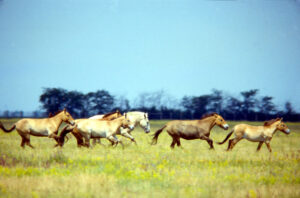
In Ukraine’s Protected Areas: Steppe That Was Never Plowed, and 28 Lakes
In southern Ukraine, steppe that has never been plowed survives; at the western edge, in the Carpathians, old-growth beech forest remains; and in the northwest, in Polissia, lakes and peat wetlands endure. The nature reserves at the heart of these areas were established not as tourist sites but as places of research. Drawing on the records of biosphere reserves and Ramsar wetland sites, this article traces what is being protected, and what is studied there.
-
The Danube Delta Reserve and Twenty Years Over the Bystre Canal
On the Ukrainian side of the Danube Delta, a biosphere reserve was established by presidential decree in 1998, and 302 bird species have been recorded there. When the Bystre Canal, running through the reserve, opened in 2004, Romania invoked the inquiry procedure under the Espoo Convention, and in 2006 the inquiry commission concluded that a significant adverse transboundary impact was likely. The case was closed at a meeting of the parties in December 2024.
-
Where to Learn Ukrainian in Japan: Courses at Tokyo University of Foreign Studies, Osaka University, and the University of Tokyo
There are not many places to learn Ukrainian in Japan. In fall 2026, the only course open to the general public that runs a full term is Tokyo University of Foreign Studies' online course (15 sessions, ¥25,000). Osaka University offers a free public course that touches on many languages, and the University of Tokyo offers a for-credit class, “Introduction to Ukrainian.” Whether classes at Kyoto University and elsewhere, as mentioned by the Embassy, are still running cannot be confirmed from official pages.